
The Architecture of Real-Time Feedback
The patent, authored by S. D’Alo’, M. Lerro, M. Noioso, and N. Piazza, describes a closed-loop system intended to solve a fundamental challenge in live performance: the lag between a performer’s actions and their understanding of the audience’s reaction. In a typical rock concert or orchestral setting, a performer may not realize a tempo has wavered or that the audience’s engagement has waned until the set is over.
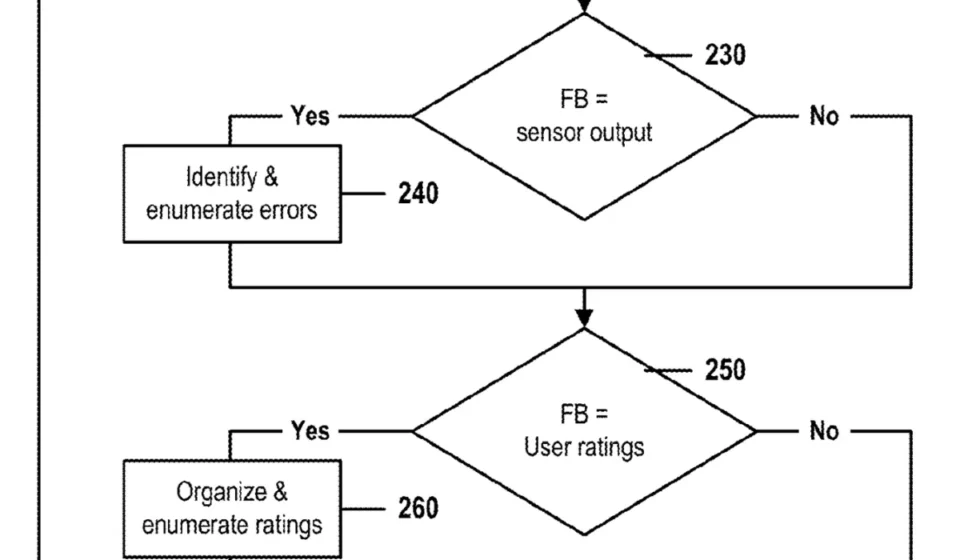
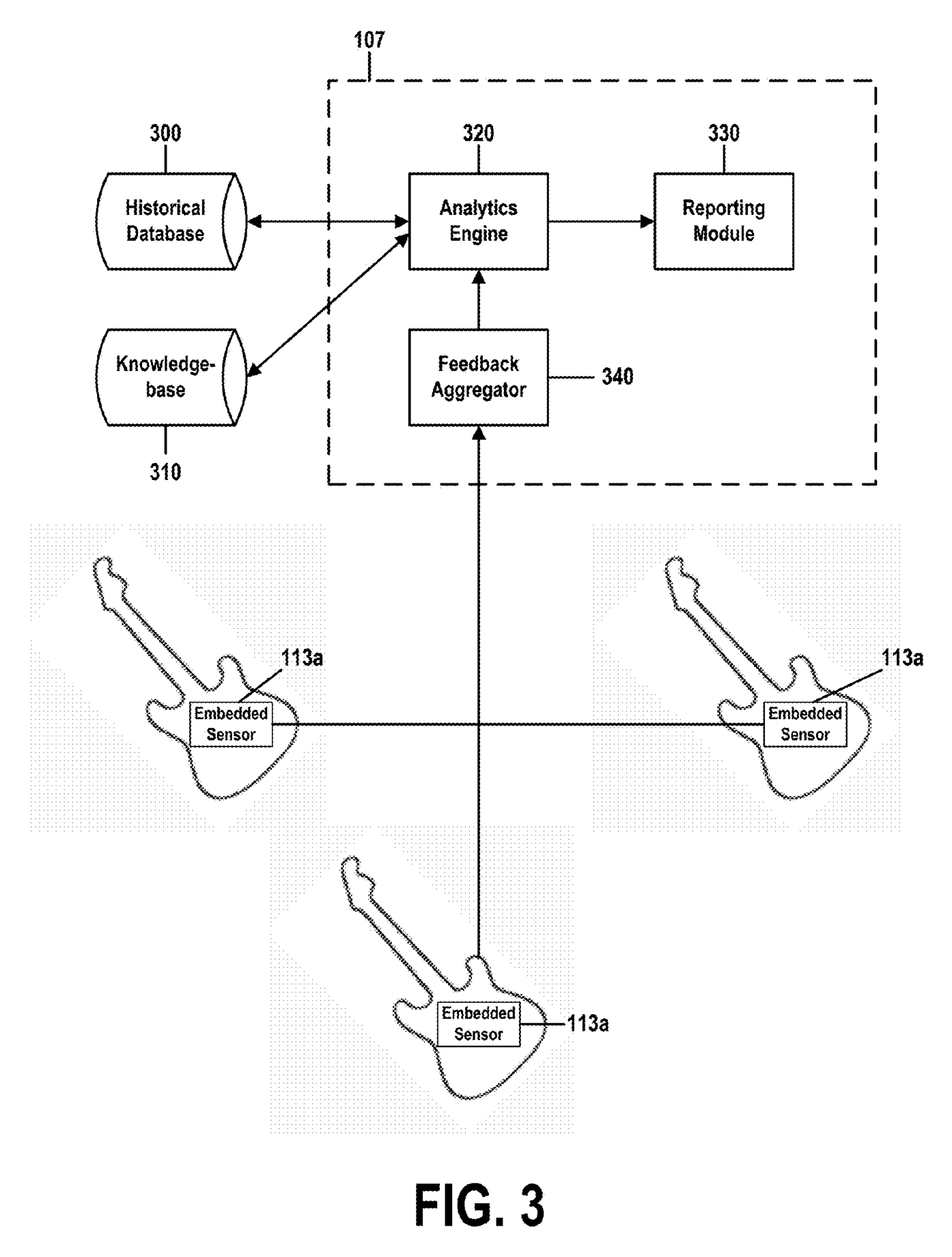
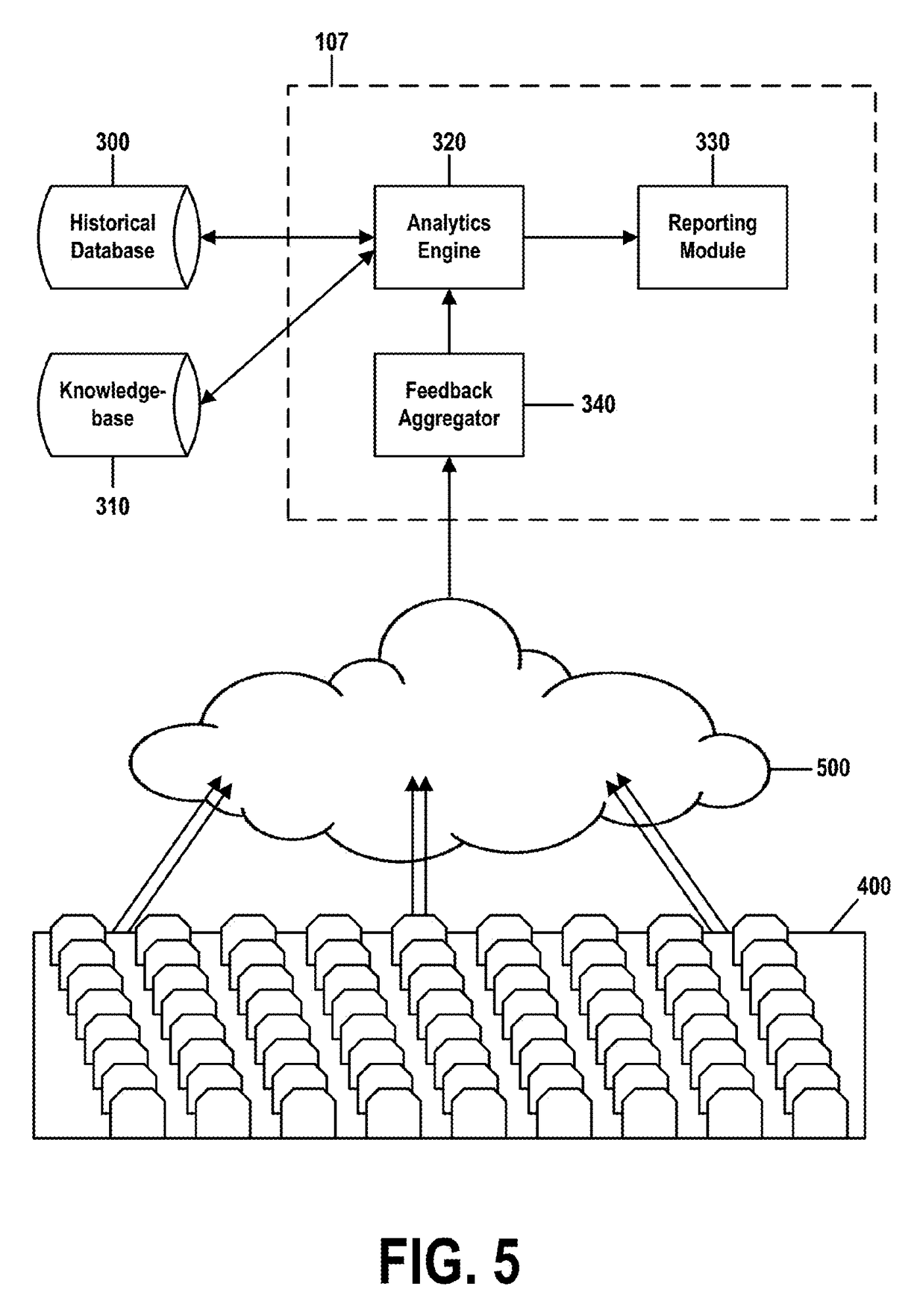
The IBM framework proposed a seven-part architecture to bridge this gap. At the foundation lies perception, categorized into three distinct modalities. First, embedded sensors within instruments and microphones—ranging from MIDI and tactile sensors to ultrasonic and infrared variants—capture objective performance parameters such as pitch, intonation, and timing. Second, cameras equipped for low-light environments utilize computer vision to analyze the facial expressions and body language of the audience. Finally, a digital network path aggregates deliberate feedback, such as "likes," "dislikes," and real-time comments submitted via mobile devices.
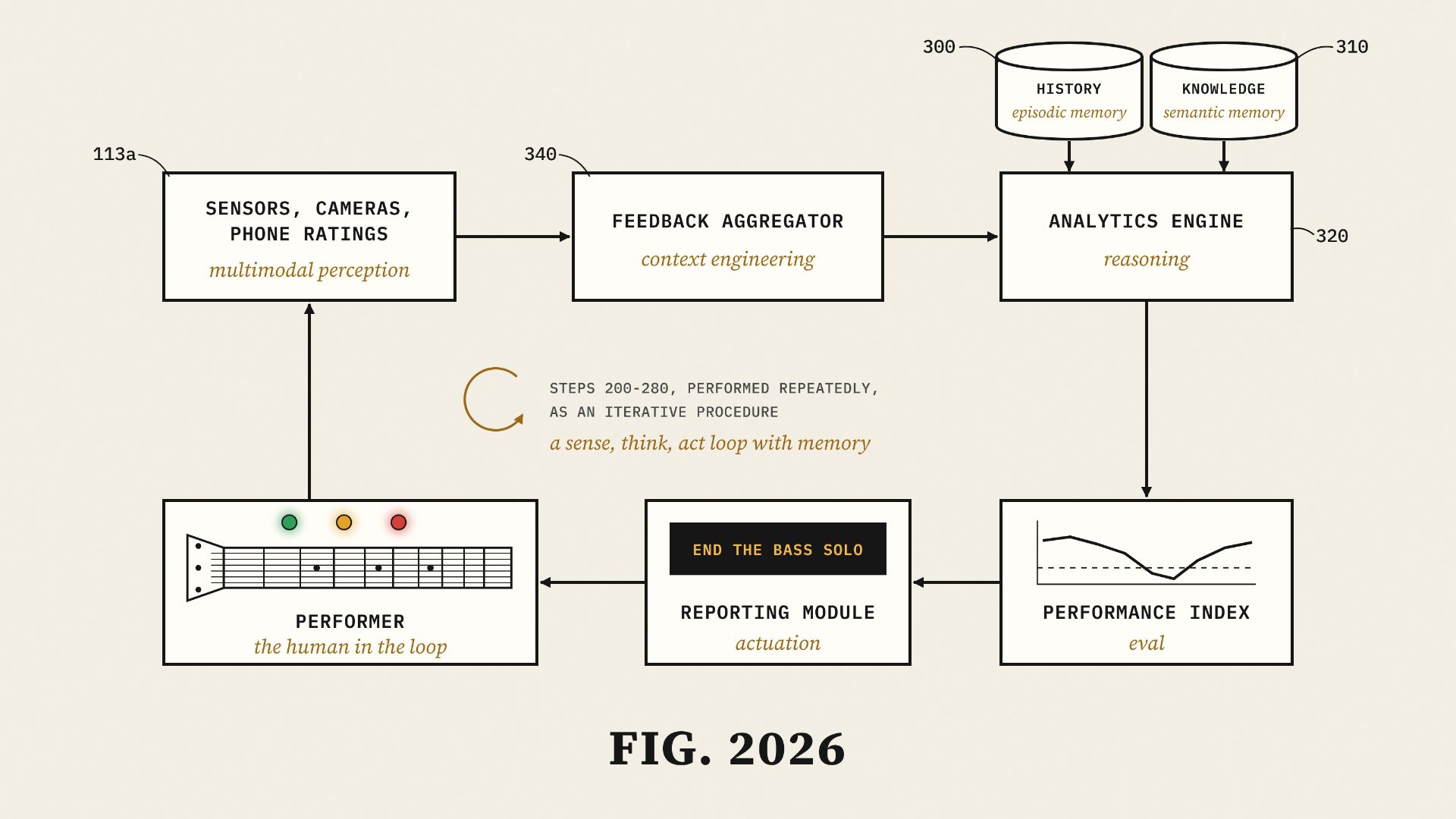
This data is funneled into a "feedback aggregator," which performs what modern engineers call context engineering. This component tags data by source and type, ensuring that the reasoning engine receives a structured, prioritized stream of information.
Mapping 2016 Concepts to 2026 AI Standards
A retrospective look at the patent’s "artificially intelligent analytics engine" highlights a striking alignment with the anatomy of modern AI agents. The 2016 specification details an inference process grounded in two specific types of data repositories: a "historical database" of past performances (episodic memory) and a "knowledgebase" containing domain-specific information like musical scores (semantic memory).
In the context of 2026 data architectures, this mapping is precise. The "episodic memory" allows the system to recall that specific tempos historically correlate with audience fatigue, while the "semantic memory" allows it to compare live sensor data against a stored score to detect if a guitarist is playing in the wrong key. This memory-grounded architecture is the same framework currently used in Retrieval-Augmented Generation (RAG) and agentic workflows to prevent "hallucinations" and ensure factual accuracy.
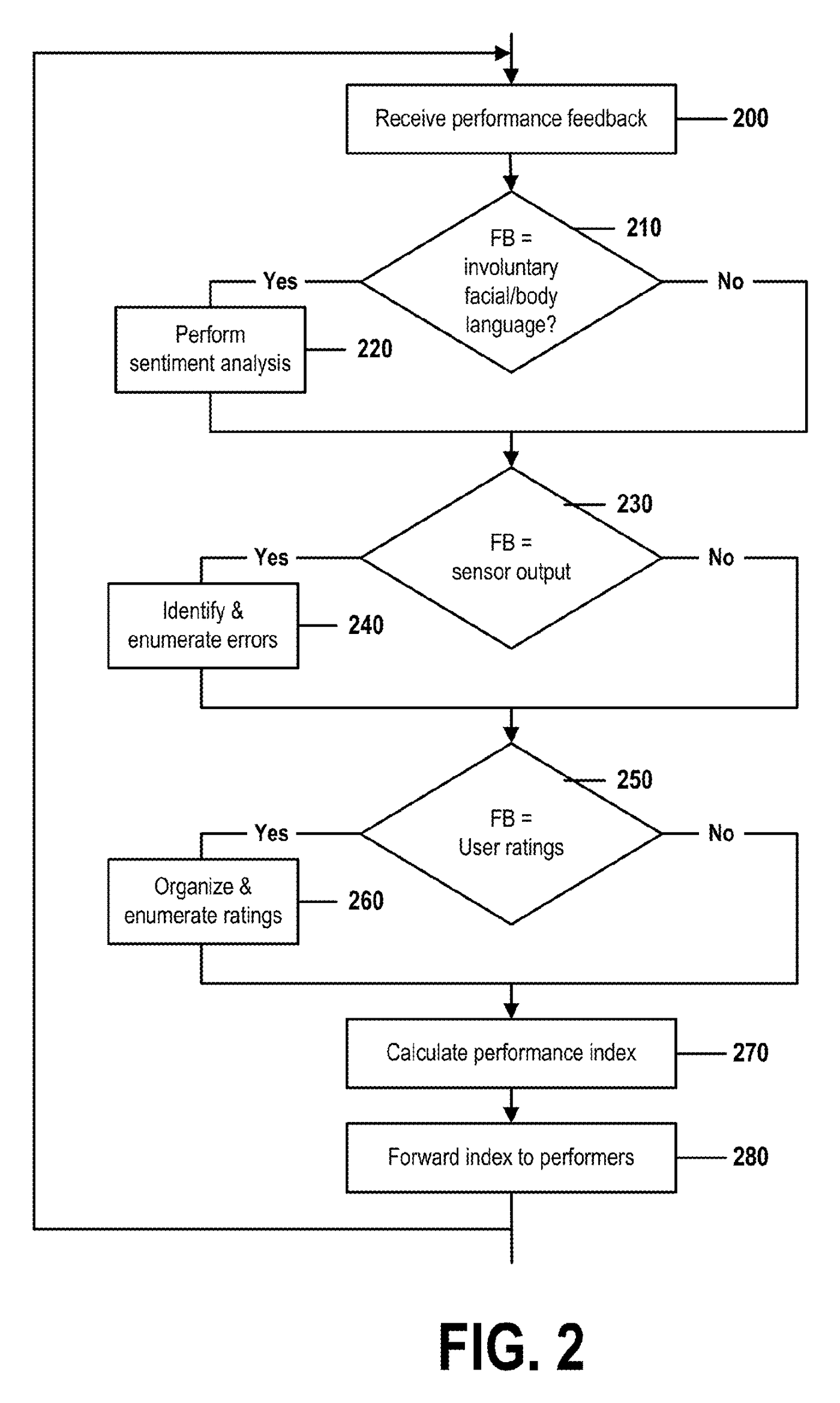
The system’s "performance index" serves as an evaluation function. By fusing positive social media interactions, facial sentiment, and objective musical accuracy into a normalized, thresholded number, the system creates a quantifiable metric of success. This index then informs the "reporting module," which acts as the interface to the human performer. In one of the patent’s most cited embodiments, an LED on the neck of a guitar serves as the actuator: green indicates a correct performance, yellow warns of a wavering tempo, and red signals a wrong note.
Chronology of Technological Evolution: 2016 to Present
To understand the significance of this patent, one must examine the technological landscape of 2016. This was the era of IBM’s "Watson" dominance in the cognitive computing market. The industry was focused on "Big Data" and predictive analytics, yet the underlying models—largely based on rules, ontologies, and early classifiers—were relatively "weak" reasoners by modern standards.
- November 2016: IBM files the patent application, emphasizing the "sense-think-act" loop.
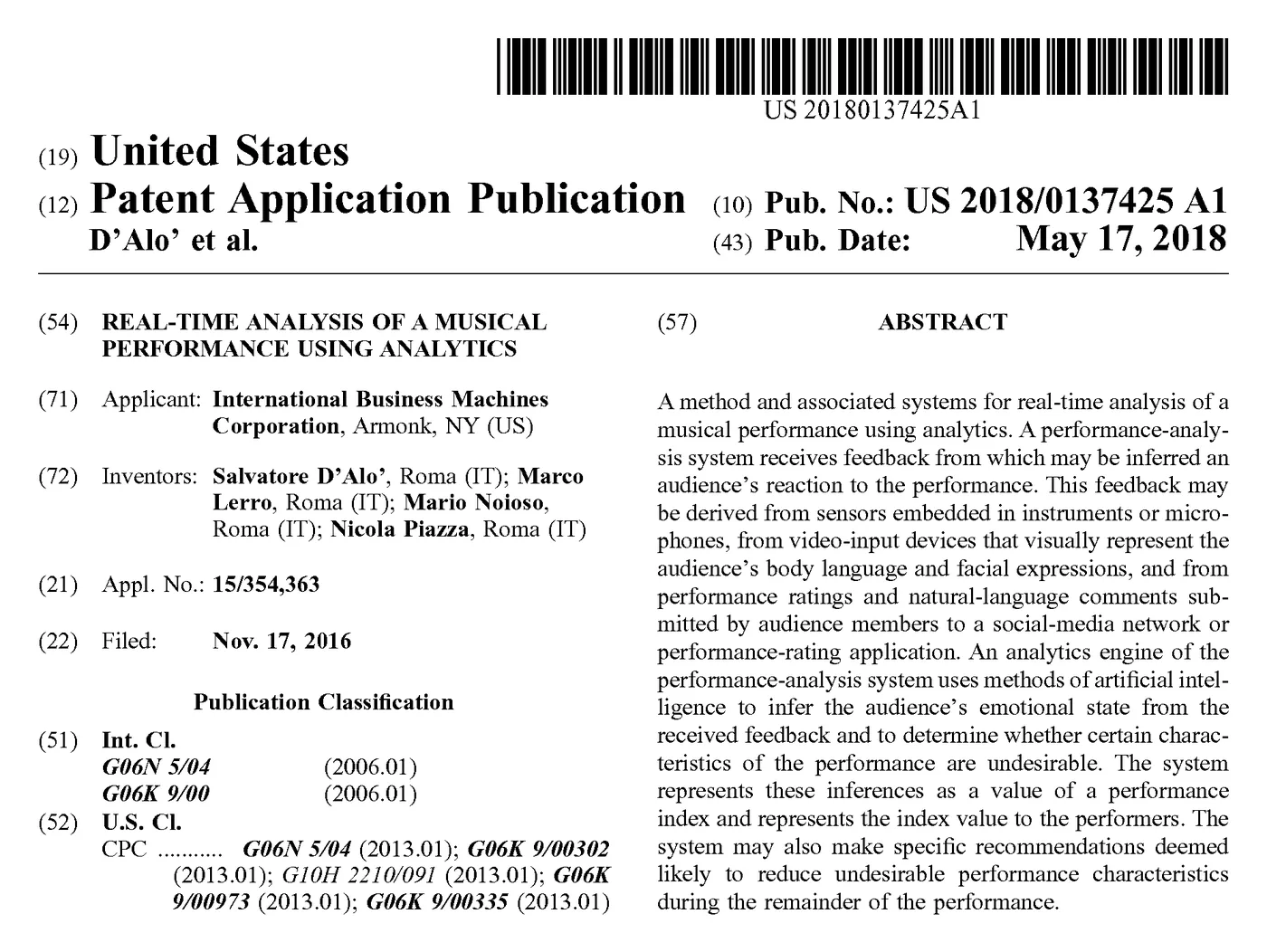
- May 2018: The patent is published (US 2018/0137425 A1) just as the General Data Protection Regulation (GDPR) becomes enforceable in the European Union, fundamentally changing the legality of the audience-tracking features described in the filing.
- 2020–2023: The rise of Large Language Models (LLMs) and foundation models provides the "strong" reasoning engine that was missing in 2016.
- 2024–2026: The industry shifts from standalone models to "Agentic AI," where the focus returns to the "loop" specified in the IBM patent—memory, tools, and iterative action.
The Real-Time Constraint and Data Engineering
A critical element of the 2016 specification is its insistence on a "hard real-time" budget. For the system to be viable, the loop—from sensor ingestion to the LED flashing on the guitar neck—must complete within seconds, and ideally under one second. This requirement highlights a persistent truth in AI deployment: the value is not in the inference alone, but in the speed and reliability of the closed cycle.
The patent’s success in predicting modern agentic structures stems from its focus on data engineering rather than model science. The authors identified that evidence has "provenance" and "class." By distinguishing between involuntary signals (facial expressions) and deliberate signals (app ratings), the system anticipated the "context-quality" thinking required for high-stakes AI applications today. In modern enterprise agents, weighing tool outputs against user assertions remains a central challenge, one that this 2016 musical framework addressed through multi-signal fusion.
Retrospective Analysis: Gaps and Ethical Blind Spots
Despite its structural foresight, the 10-year gap since the patent’s conception reveals significant limitations, particularly regarding data lifecycles and ethics.
The Problem of Eternal Memory
The 2016 specification treated the historical database as an append-only resource. In the original vision, data never decayed or expired. Modern AI architects now recognize that "designed forgetting" is an essential capability. Without retention limits and decay functions, agentic memories become cluttered with stale facts, leading to "poisoned" decision-making and significant legal liabilities regarding data privacy.
The Regulatory Void
The most glaring omission in the 2016 patent is the lack of a permissions or consent layer. The document describes zoom lenses selecting individual audience members for continuous sentiment analysis without mentioning user entitlement or privacy rights. The subsequent implementation of GDPR and various biometric privacy laws (such as Illinois’ BIPA) would render the audience-tracking portion of the patent nearly impossible to deploy in its original form without a massive, built-in "consent and entitlement" architecture.
The Learning Gap
While the 2016 system could infer and recommend, it lacked a self-improvement mechanism. The weights and rules were essentially frozen. Modern agentic systems strive for "recursive improvement," where the outcome of an action (e.g., the performer correcting their tempo after seeing a yellow light) is fed back into the system to refine future inferences.
Implications for Modern Agent Builders
The "Real-Time Analysis of a Musical Performance Using Analytics" patent serves as a case study for the current generation of AI developers. It demonstrates that the "agentic pattern"—perception, aggregation, memory-grounded inference, and bounded actuation—is a long-standing engineering discipline that has finally found its "brain" in modern foundation models.
Industry experts suggest that the scarce skill in the current AI boom is not the ability to prompt a model, but the data architecture discipline required to build the loop around it. This includes:
- Engineering context with provenance: Ensuring the AI knows where its data came from and how much to trust it.
- Auditable evaluation: Creating scoring functions that are transparent and interpretable, much like the patent’s "performance index."
- Human-in-the-loop (HITL) design: Treating the human as an architectural component whose cognitive load and reaction time must be respected.
The 2016 vision of an LED on a guitar neck remains a poignant metaphor for the goal of agentic AI: a system that is allowed to know enough, and remembers enough, to provide one true, timely, and actionable insight. As the industry moves toward 2030, the success of AI agents will likely depend less on the raw power of the underlying models and more on the rigor of the "sense-think-act" loops first articulated in niche applications like live musical performance analysis.