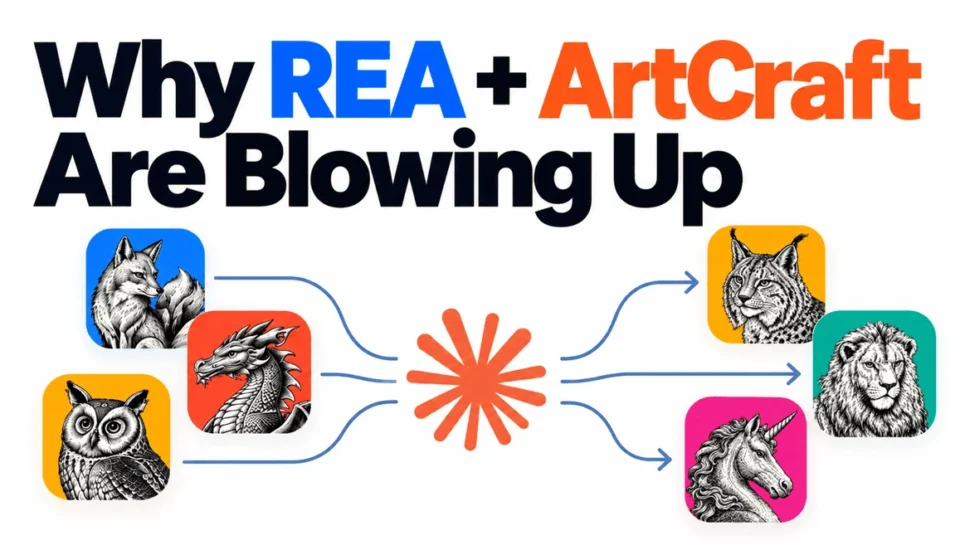

The software development landscape is undergoing a seismic shift, marked by a burgeoning trend of individual developers leveraging advanced AI coding agents to replicate complex commercial software suites. This phenomenon, exemplified by projects like Reverse Engineer Anything (REA) and ArtCraft, is challenging traditional software development paradigms and raising questions about the future of proprietary software. What was once the domain of large, well-funded engineering teams is now being approached by individuals, potentially democratizing access to sophisticated tools and disrupting established markets.
For years, the software industry has seen the emergence of free and open-source alternatives to popular commercial applications. Tools like GIMP have served as open-source counterparts to Adobe Photoshop, Inkscape to Adobe Illustrator, and LibreOffice to Microsoft Office. However, a significant barrier to adoption for these alternatives has consistently been the "switching cost." Users who have invested years in mastering the intricate interfaces, unique shortcuts, and established workflows of industry-standard software often find the transition to a new, albeit free, application a daunting and time-consuming endeavor. The learning curve associated with a completely different user experience has, for many, outweighed the financial benefits of adopting open-source solutions.
The new wave of AI-powered software clones aims to circumvent this long-standing challenge. Instead of developing entirely novel user interfaces and interaction models, these projects are focused on meticulously recreating the familiar layouts, menus, keyboard shortcuts, and core functionalities of their commercial counterparts. The aspiration is to offer users a seamless transition, allowing them to open a free alternative and immediately find their way around, minimizing the need for extensive tutorials or retraining. This approach promises not only cost savings but also a drastically reduced friction point for adoption, potentially appealing to a vast segment of users currently locked into expensive subscription models. While the quality and compatibility of these nascent clones are still under development and vary significantly, the underlying concept has ignited considerable interest within the developer community and among software consumers alike.
REA: Democratizing Reverse Engineering with AI
At the forefront of this movement is Reverse Engineer Anything (REA), an AI-powered toolkit designed to simplify and accelerate the process of software reverse engineering. Since its emergence, REA has rapidly gained traction, amassing an impressive number of over 130,000 stars on GitHub, a testament to its perceived utility and potential impact.
Traditionally, reverse engineering software has been a complex and resource-intensive undertaking, requiring deep technical expertise, specialized tools such as disassemblers and debuggers, and a significant investment of time for manual analysis. REA fundamentally alters this paradigm by acting as an intelligent intermediary, connecting powerful AI coding agents like Claude Code, OpenAI’s Codex, and Cursor with established reverse engineering frameworks such as Ghidra, Hopper, and IDA Pro.
The core innovation of REA lies in its ability to leverage AI for the analysis of compiled software binaries. Developers can feed an application’s executable file into the REA system, and its integrated AI agents can then dissect its functions, map out dependencies, understand its underlying architecture, and analyze its internal behavior—all without requiring access to the original source code. This capability opens up unprecedented avenues for understanding how complex software operates, a crucial step in developing functional alternatives or replicating specific features.
Early applications of REA have already demonstrated its promise. Developers have used the toolkit to reconstruct the sophisticated clipboard functionality of Notion, a popular productivity application. It has also been employed to reverse-engineer sound calculations from the classic game DX-Ball and to recover intricate mathematical routines from older PC-98 era games. The implications for commercial software are profound: imagine applying this same analytical power to expensive proprietary applications, understanding their core mechanics, and then using that knowledge to build and share open-source alternatives that offer similar, or even improved, functionality.
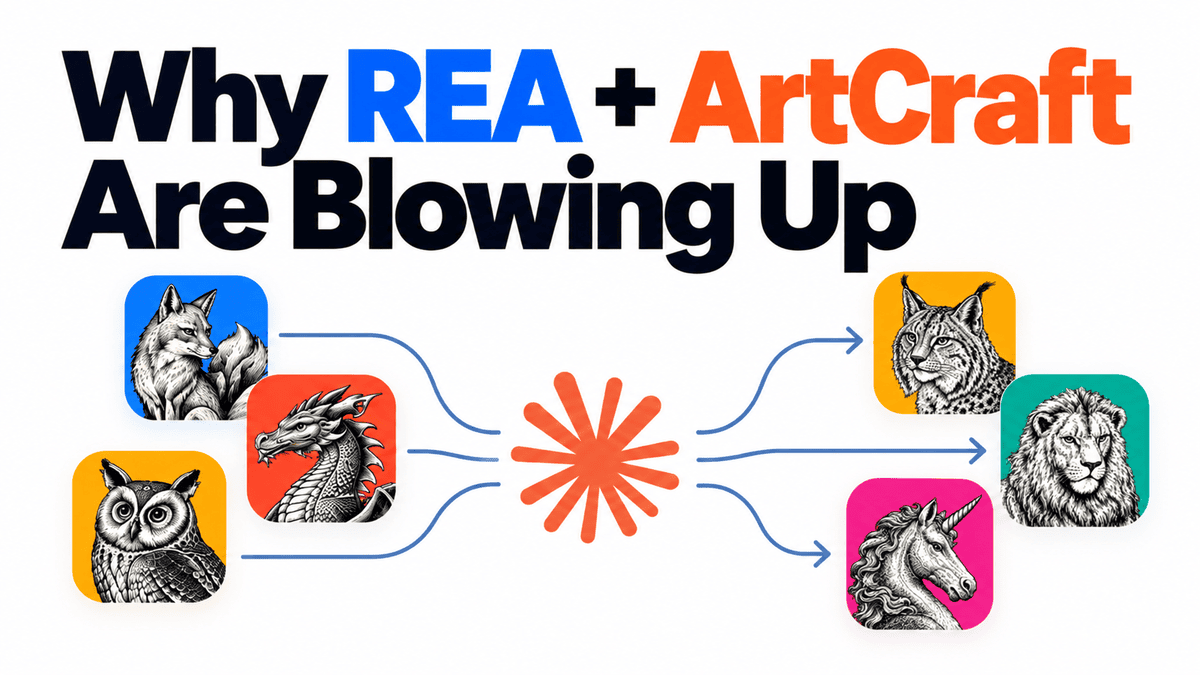
While REA does not promise an automated, one-click solution for creating perfect software clones, its strength lies in significantly lowering the barrier to understanding complex existing software. This enhanced comprehension is the critical enabler for independent developers seeking to build accessible alternatives.
ArtCraft: A Singular Vision for AI-Driven Software Replication
Parallel to the development of REA, individual developers are making significant strides in building functional software clones from scratch, guided by AI. Brandon Thomas, a developer who has garnered considerable attention, is spearheading the ArtCraft ecosystem. Using AI coding agents such as Claude and the Rust programming language, Thomas is actively developing a suite of applications designed to mirror the functionality and user experience of industry-leading Adobe and Microsoft products.
The ArtCraft initiative includes projects like PhotoCraft, envisioned as a direct competitor to Adobe Photoshop, offering similar image editing capabilities. VectorCraft aims to provide an Illustrator-like experience for vector graphics design, while FilmCraft is being developed as a Premiere Pro alternative for video editing. Thomas’s initial ambition was to achieve complete feature parity with Adobe’s Creative Cloud applications within a remarkably short timeframe of one month. This ambitious goal, while met with some skepticism regarding its feasibility, has nonetheless captivated many within the developer community.
The scope of the ArtCraft project extends beyond Adobe’s creative suite. The ecosystem is expanding to encompass Microsoft Office-inspired applications, suggesting a comprehensive strategy to replicate core functionalities of widely used productivity software. While the actual development progress and feature completeness of these projects are still evolving, the sheer audacity and speed at which an individual developer can conceptualize and begin to construct such a broad range of complex applications using AI is a significant indicator of the technology’s transformative power.
Industry Reaction and Community Sentiment
The emergence of REA and ArtCraft has elicited a mixed but predominantly enthusiastic response from the software development community and the broader tech-savvy public. On one hand, there is widespread awe at the capabilities AI coding agents now possess, enabling individuals to tackle projects that previously demanded extensive teams and years of development. Creators and small businesses, in particular, are expressing excitement about the prospect of accessing powerful software tools at a significantly reduced cost, or even for free, without compromising on the familiar user experience they have come to rely on.
However, this enthusiasm is tempered by a healthy dose of skepticism. Concerns are being raised about the long-term viability, reliability, and performance of these AI-generated clones. Critics question whether applications built with the assistance of AI can truly match the robustness, optimization, and feature depth of mature software products that have undergone decades of refinement and real-world testing. Early users and testers have indeed reported encountering bugs, missing functionalities, and performance inconsistencies, which are typical for nascent software projects.
Despite these reservations, the underlying sentiment is one of profound curiosity and a growing challenge to the status quo. The conversation has shifted towards questioning the necessity of expensive subscription models when AI-powered alternatives can potentially offer a comparable user experience at no cost. This sentiment is particularly potent in an era where recurring subscription fees for software have become a significant operational expense for many individuals and businesses.
The Broader Implications and Future Outlook
The speed at which these AI-driven initiatives are gaining momentum is striking. REA, for instance, experienced an exponential surge in popularity, garnering approximately 134,000 GitHub stars in a matter of days, highlighting the immediate resonance of its concept. This rapid adoption underscores the pent-up demand for more accessible and affordable software development tools and end-user applications.
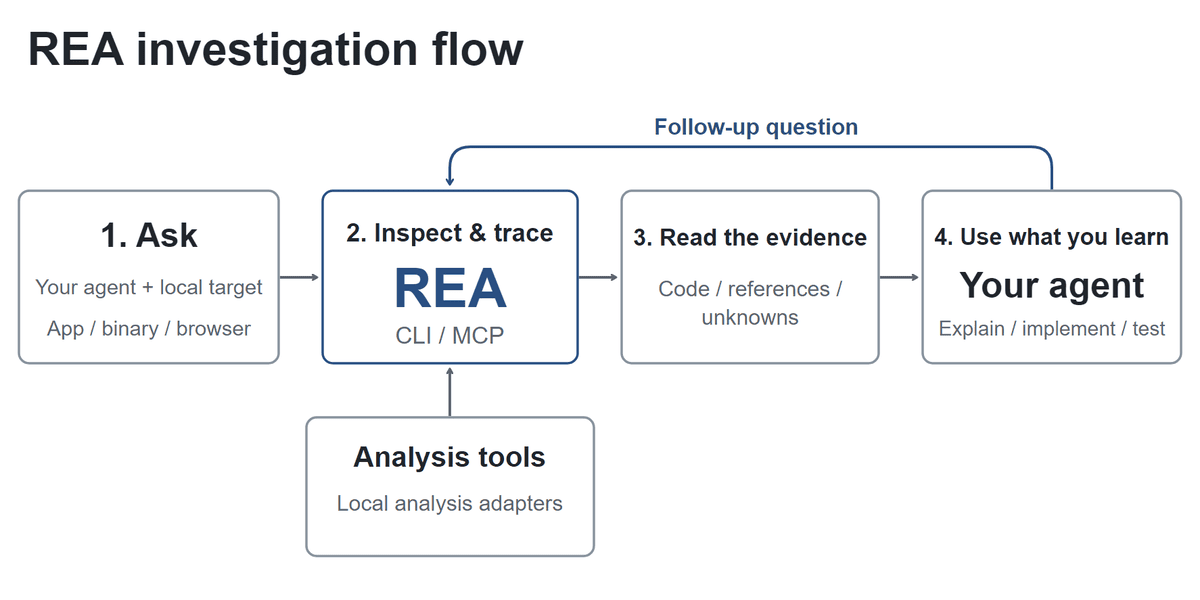
The ability for developers to leverage AI for reverse engineering and feature replication has the potential to democratize access to sophisticated software. By making complex functionalities more understandable and replicable, REA and similar tools could foster a new generation of open-source software that rivals proprietary offerings in terms of usability and core features.
ArtCraft serves as a prime example of a larger trend where individuals and small teams are now capable of undertaking software development projects that were once considered insurmountable without substantial resources. This shift could lead to a more distributed and innovative software ecosystem, where niche needs are addressed rapidly and creatively.
Perhaps the most significant implication of this trend is the potential disruption of traditional software ownership models. The reliance on perpetual licenses and recurring subscriptions has been a hallmark of the software industry for decades. However, the rise of AI-built alternatives that offer familiar interfaces and essential functionalities without the associated costs could fundamentally alter user expectations and market dynamics. Users may increasingly opt for software that they can run, customize, and truly own, rather than relying on access granted through ongoing payments.
The challenges for these emerging clones remain substantial. Issues related to software reliability, cross-platform compatibility, and, critically, intellectual property rights and copyright infringement will need to be addressed as these projects mature. The legal ramifications of replicating copyrighted software interfaces and functionalities are complex and will likely be a significant area of contention.
However, the core threat to established players like Adobe and Microsoft is not merely the existence of another free alternative. It is the prospect of software that seamlessly integrates into existing user workflows, delivers the indispensable features users need, and removes any compelling justification for continued subscription payments. As AI continues to advance, the capability to create these familiar yet cost-effective alternatives will only grow.
The current developments represent just the beginning of a transformative period in software development. The innovative spirit and rapid execution demonstrated by developers in projects like REA and ArtCraft signal a future where sophisticated software is more accessible, customizable, and potentially owned by its users, rather than merely licensed. The next few years will undoubtedly reveal the full extent of this AI-driven revolution in the software industry.