Mastering Hybrid Work: A Structured Approach to Enhanced Productivity and Well-being

The evolving landscape of professional employment, significantly reshaped by the global pandemic, continues to see a substantial shift towards hybrid work models. For many, this translates into a blend of on-campus or in-office presence and dedicated work-from-home days, a paradigm that, while offering unprecedented flexibility, also presents unique challenges to productivity and personal well-being. One academic professional, navigating a new semester with at least three work-from-home days per week, has articulated a common struggle: the pervasive feeling of being busy yet unproductive, often leading to extended screen time without tangible progress on key tasks or personal care. In response, a structured approach rooted in established productivity methodologies has been implemented, leveraging weekly templates, time blocking, and time tracking to reclaim efficiency and foster a healthier work-life integration.
The Hybrid Work Revolution and its Productivity Paradox
The transition to hybrid work, accelerated by the exigencies of COVID-19, has become a fixture in professional life across numerous sectors, including academia. Data from various surveys consistently indicate that a significant percentage of the global workforce now operates under some form of hybrid arrangement. For instance, a 2023 report by Gartner revealed that 82% of companies plan to operate a hybrid model, while Stanford University’s Institute for Economic Policy Research found that remote work days, on average, remain significantly higher than pre-pandemic levels. While lauded for benefits such as reduced commute times, increased autonomy, and improved work-life balance, hybrid work also introduces complexities. The blurred lines between professional and personal spaces can lead to "always-on" cultures, digital fatigue, and a perceived decrease in productivity, even when employees are genuinely engaged. The academic, for example, noted the paradox of spending an entire day in front of a screen without accomplishing essential tasks like responding to emails, taking a walk, or managing household chores. This sentiment is echoed by countless professionals who find that the flexibility of working from home can paradoxically make it harder to delineate work hours and achieve focused output.
Establishing a Foundation: The Weekly Template
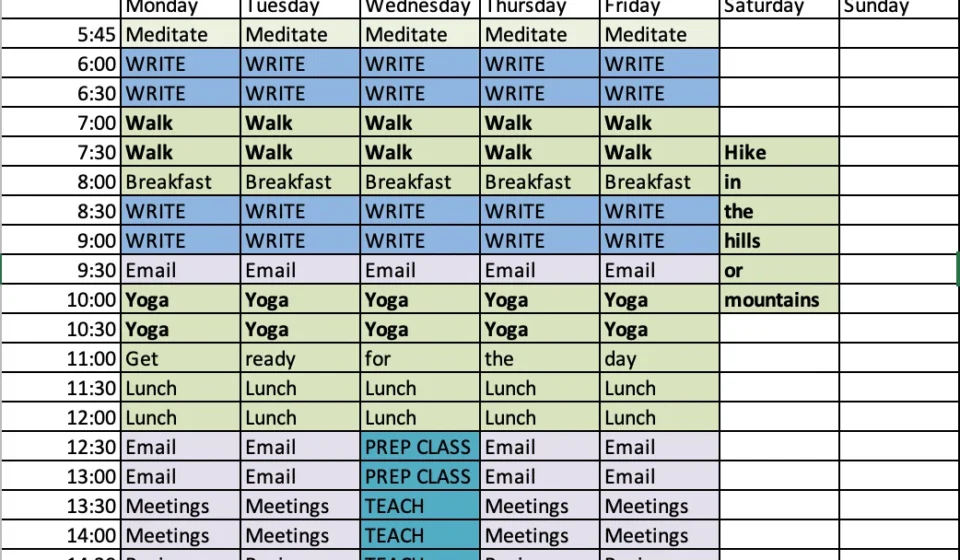
Central to the academic’s new system is the development of a comprehensive weekly template. This foundational step, drawing inspiration from productivity luminaries such as Kerry Ann Rockquemore, Raul Pacheco-Vega, and Cal Newport, provides a high-level overview of recurring commitments and prime work periods. The concept of a weekly template encourages individuals to proactively allocate time slots for different categories of tasks—teaching, meetings, research, writing, administrative duties, and even personal development—before the week officially begins. This pre-planning minimizes decision fatigue and ensures that critical, often deep-work-intensive activities, are not sidelined by reactive responses to daily demands.
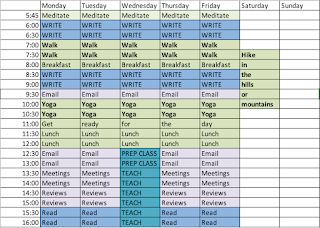
In the described case, the academic’s Fall semester template reflects a strategic allocation of "prime time" for writing in the mornings, recognizing this period as their most productive for cognitively demanding tasks. Afternoons are then systematically blocked for teaching responsibilities and various meetings, reflecting the heavy meeting culture prevalent in many academic and corporate environments. This strategic division of the day is not merely about scheduling but about optimizing cognitive performance. Research in chronobiology suggests that individuals have varying peak performance times, and aligning complex tasks with these "prime times" can significantly enhance efficiency and the quality of work output. By dedicating mornings to writing, the academic ensures that their most mentally taxing activity receives focused attention during their optimal period, thereby maximizing creative and analytical output.

Operationalizing Productivity: Time Blocking and Time Tracking
Beyond the static weekly template, the system incorporates dynamic time blocking and meticulous time tracking. Time blocking involves breaking down the day into specific time segments, each dedicated to a particular task or activity. This granular scheduling transforms the abstract concept of a "work day" into a series of actionable, manageable units. For instance, on a given Thursday, the academic adapted their general template to a specific daily plan, accounting for an early start due to jet lag and pre-scheduled meetings at noon and 3 PM. This daily adjustment demonstrates the system’s flexibility: the template serves as a guide, but real-time conditions necessitate practical modifications. The plan incorporated not just work tasks but also personal aspirations, such as meditation, a walk, and virtual yoga, underscoring the holistic nature of effective time management.
Time tracking, the second operational component, involves diligently recording how time is actually spent, typically in small increments (e.g., 30 minutes). This practice provides invaluable data, offering an objective assessment of work patterns versus planned activities. The academic’s experience on the aforementioned Thursday illustrates this perfectly: while two hours of writing were planned, the actual execution did not perfectly align with the scheduled slots. However, by tracking, it became evident that the two hours were indeed completed, alongside a pending review, all necessary emails, and scheduled meetings. The tracking also revealed a conscious decision to prioritize a nap over yoga, a choice that, despite deviating from the plan, was recorded and acknowledged.
The profound insight derived from time tracking lies in its ability to demystify the workday. The academic observed that a day starting at 4:45 AM and concluding at 4:30 PM, which might otherwise feel like an exhausting 12-hour grind, was objectively revealed to be 7.5 hours of actual work. The remaining time was demonstrably spent on self-care—napping, exercising, and addressing basic needs. This data-driven clarity is crucial for preventing burnout and fostering a sense of accomplishment. It allows individuals to make informed decisions about when to conclude their workday, knowing they have achieved their objectives and balanced them with personal well-being. Without such data, the perception of an endless workday can lead to chronic stress and dissatisfaction.
The Intellectual Roots: Experts in Time Management
The system’s efficacy is largely attributable to its grounding in methodologies espoused by prominent productivity experts:
- Kerry Ann Rockquemore: Known for her work with academics, Rockquemore emphasizes the importance of developing consistent writing habits and structuring one’s academic life to protect time for deep work, particularly writing. Her "Semester Needs a Plan" philosophy advocates for proactive scheduling to prevent research and writing from being perpetually deferred.
- Raul Pacheco-Vega: A proponent of hyper-detailed scheduling, Pacheco-Vega’s "scheduling my academic life to the very minute" approach, including weekly templates, aims to eliminate decision fatigue and ensure that all critical tasks, from research to self-care, are intentionally allocated time. His methods encourage a rigorous, almost scientific, approach to time management.
- Cal Newport: A leading voice in "deep work" and digital minimalism, Newport advocates for planning every minute of the workday to maximize focus and minimize distractions. His concept of "deep habits" underscores the importance of intentional scheduling to create space for cognitively demanding tasks, shielded from the constant interruptions of modern digital life.
These experts collectively highlight that effective time management is not about working harder, but working smarter and more intentionally. Their frameworks provide the intellectual scaffolding for the practical system adopted by the academic, transforming what might feel like restrictive scheduling into a liberating tool for achieving professional goals while safeguarding personal time.
Broader Implications for Hybrid Work Success
The academic’s case study offers valuable insights for individuals and organizations grappling with the complexities of hybrid work. For employees, adopting such a structured approach can lead to:
- Enhanced Productivity: By protecting "prime time" and reducing distractions, individuals can achieve more focused work in shorter, more effective bursts.
- Improved Work-Life Balance: Clearly delineating work and non-work activities, supported by time tracking, empowers individuals to switch off without guilt, fostering better mental health and personal relationships.
- Increased Autonomy and Empowerment: Taking control of one’s schedule instills a sense of agency, a critical factor in job satisfaction and motivation in flexible work environments.
- Reduced Burnout: Objective data on actual work hours helps combat the "always-on" mentality, allowing for intentional rest and recovery.
For organizations, promoting such productivity frameworks can contribute to:
- Sustainable Hybrid Models: By equipping employees with tools to manage their time effectively, companies can build more resilient and productive hybrid workforces.
- Employee Well-being Initiatives: Integrating time management training into professional development programs can be a tangible way to support employee mental health and prevent exhaustion.
- Fairer Workload Distribution: Understanding actual time allocation can help managers assess workloads more accurately and distribute tasks equitably.
- Data-Driven Insights: While this system is individual, aggregate data (if adopted organization-wide) could offer insights into workflow efficiencies and areas for improvement.
Conclusion: A Blueprint for Intentional Work in a Flexible World
In an era defined by flexibility and distributed work, the challenge is no longer merely where one works, but how one works effectively and sustainably. The academic’s experience underscores that without intentional structures, the promise of hybrid work can devolve into unfocused effort and diminished well-being. While the detailed nature of weekly templates, time blocking, and time tracking might initially appear "extra," its proven benefits in bringing clarity, control, and objective assessment to the workday are undeniable.
This system serves as a powerful reminder that productivity is not solely about output, but also about the conscious allocation of time and energy, including dedicated periods for self-care and personal pursuits. As hybrid work continues to evolve, the adoption of such deliberate time management strategies will be crucial for individuals seeking to thrive professionally and personally, transforming potential chaos into structured accomplishment and empowering them to confidently conclude their workday, knowing their efforts have been both productive and balanced.