Scholarly Publishing Society Announces 2027 Annual Meeting in Providence, Rhode Island, Centered on Redefining Industry’s Future Amidst AI Revolution

The Society for Scholarly Publishing (SSP) has officially announced its 2027 Annual Meeting, scheduled to convene from June 2-4 in Providence, Rhode Island. This pivotal gathering will bring together a global assembly of scholarly publishing professionals to confront and deliberate upon the industry’s most pressing challenges, best practices, and innovative trajectories. Under the overarching theme, "Defining Our Future: Reassessing What, How, and Why We Publish," the conference aims to ignite a critical re-evaluation of the foundational principles of scholarly communication, particularly in light of rapidly advancing technological landscapes, most notably artificial intelligence.
The call for participation for this significant event is now open, inviting professionals to contribute to the discourse through various formats. Educational session proposals are being accepted until Monday, November 9, 2026, offering a prime opportunity for experts to shape the agenda. Further opportunities for engagement include submissions for posters, concise 5-minute previews, and specialized Industry Breakout sessions, with deadlines for these categories slated for February 2027. The organizing committee, featuring prominent figures such as Greg Fagan, Senior Director of Business Development at Aptara; Marianne Calilhanna, Vice President of Marketing at Data Conversion Laboratory (DCL); and Audrey Grey, Senior Account Manager at Silverchair, emphasizes the urgency of collective intellectual engagement to navigate the transformative era ahead.
A Deep Dive into the 2027 Theme: Reassessing Foundations
The chosen theme, "Defining Our Future: Reassessing What, How, and Why We Publish," reflects a profound recognition within the scholarly publishing community that long-held assumptions are being challenged. Historically, the purpose of scholarly publishing has been unequivocally understood: to meticulously record scientific discoveries, to broadly disseminate critical information, and to foster continuous learning and human progress. This process has often been distilled into three fundamental principles: "what" is published (discoveries/knowledge), "how" it is published (journals and books), and "why" it is published (for human progress).
While previous decades and numerous SSP annual meetings have seen vigorous debates around issues such as publication costs, speed of dissemination, and access models (e.g., the rise of Open Access), the core tenets of what, how, and why have largely remained immutable. However, the SSP organizing committee asserts that this foundation no longer feels stable. The rapid pace of technological innovation, coupled with evolving societal expectations, is exerting unprecedented pressure on these established paradigms, necessitating a comprehensive re-evaluation.
The Genesis of Scholarly Communication: A Historical Context
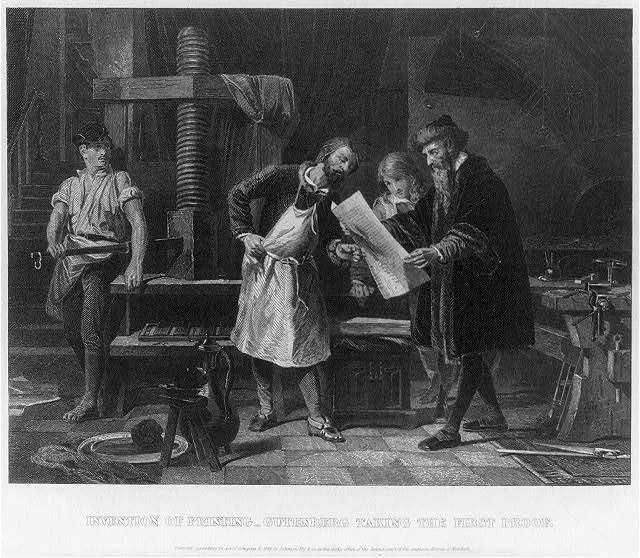
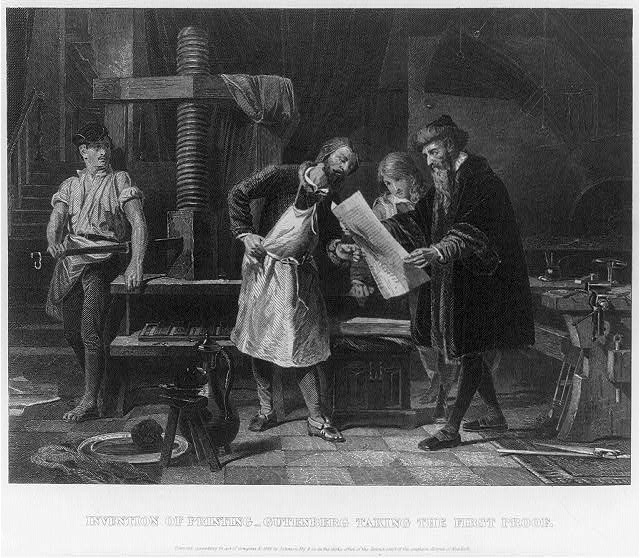
To fully appreciate the current juncture, it is valuable to reflect on the historical evolution of scholarly publishing. The illustration of Gutenberg taking the first proof of his printing press, as referenced by the Library of Congress, serves as a powerful reminder of the transformative power of technology in disseminating knowledge. Johannes Gutenberg’s invention in the mid-15th century revolutionized the production of books, democratizing access to information and laying the groundwork for the scientific revolution and the Enlightenment. Before Gutenberg, knowledge dissemination was painstakingly slow, relying on scribal copying, limiting reach and fostering fragmented understanding.
The first peer-reviewed scientific journals emerged in the late 17th century, notably the Philosophical Transactions of the Royal Society in 1665. This marked a crucial shift from personal correspondence to formalized public dissemination, introducing the concepts of peer review, scholarly record, and attribution that have defined the industry for centuries. Over the subsequent centuries, scholarly publishing evolved, adapting to new printing technologies, expanding disciplines, and grappling with the increasing volume of research. The 20th century saw the professionalization of academic publishing, the rise of commercial publishers, and the gradual digitization of content. The advent of the internet in the late 20th century brought another seismic shift, moving from print-centric models to digital-first, online platforms, and the emergence of open access movements advocating for free and immediate access to research. Each of these historical junctures presented challenges to the "how" of publishing, but none arguably threatened the "what" and "why" as profoundly as current developments.
The AI Imperative: A Disruptive Undercurrent
The most significant and pervasive challenge confronting scholarly publishing today, as highlighted by the SSP, is the advent and rapid integration of artificial intelligence (AI). While acknowledging a collective "fatigue" from constant discussions surrounding AI, the committee underscores its unparalleled disruptive potential, describing it as "a disruptive current running beneath all other challenges."
The implications of AI for scholarly publishing are multifaceted and profound:
- Content Generation and Summarization: AI systems are increasingly capable of reading, summarizing, and even generating literature at speeds and scales far beyond human capacity. This raises critical questions about authorship, originality, research integrity, and the value proposition of traditional human editorial processes. A 2023 report by Springer Nature, for instance, indicated that nearly 70% of researchers are already using AI tools in their work, with summarization and drafting being common applications.
- Traditional Containers Under Scrutiny: The long-standing formats of journal articles and books, optimized for human consumption and linear reading, may not be ideal in an AI-driven discovery ecosystem. If AI agents primarily consume and synthesize information, what becomes of the structured article or monograph? This challenges the "how" of publishing, prompting exploration into new modular content structures, data-rich outputs, and dynamic knowledge graphs.
- Redefining Distribution and Discovery: AI-powered search engines and recommendation systems are reshaping how researchers discover information. Traditional indexing and abstracting services, once paramount, may be augmented or even supplanted by AI-driven semantic discovery tools that can identify nuanced connections and synthesize information across vast datasets. This shifts the focus from simple keyword matching to contextual understanding, impacting content visibility and researcher engagement.
- Purpose and Value Proposition: If AI can rapidly process and synthesize vast amounts of scholarly content, what remains the unique purpose of human publishers? The "why" of publishing—disseminating critical information for human progress—is re-examined. Publishers may need to pivot towards roles such as curators of trust, validators of integrity, facilitators of data sharing, and developers of innovative knowledge platforms, moving beyond mere content aggregation.
- Impact on Peer Review and Research Integrity: AI tools are being developed to assist in peer review, from identifying potential conflicts of interest to detecting plagiarism and even evaluating manuscript quality. While promising efficiency gains, this also raises concerns about bias in algorithms, the potential for AI-generated fake research, and the ethical responsibilities of human oversight in maintaining the integrity of the scholarly record. The Committee on Publication Ethics (COPE) has already issued guidelines and discussions around AI in research and publishing, reflecting the urgency of these concerns.
These challenges extend far beyond previous discussions on evolving publishing models, peer review mechanisms, or production workflows. AI forces a fundamental re-assessment of the very ontology of scholarly communication.
Broader Industry Challenges and the Role of the SSP
Beyond AI, the scholarly publishing industry continues to grapple with a myriad of interconnected challenges that the SSP Annual Meeting consistently addresses. These include:
- Financial Sustainability: The transition to Open Access (OA) models, while promoting wider dissemination, has fundamentally altered traditional revenue streams based on subscriptions. Publishers, particularly non-profit societies, are navigating complex business models like Article Processing Charges (APCs), transformative agreements (Read & Publish), and philanthropic funding to ensure financial viability. The global scholarly publishing market is estimated to be worth over $30 billion annually, but growth is increasingly tied to innovation and adaptation.
- Research Reproducibility and Data Sharing: A growing crisis in research reproducibility across various fields has emphasized the need for greater transparency, robust data sharing practices, and enhanced methodological reporting. Publishers are increasingly expected to facilitate the sharing of underlying data, code, and materials, moving towards a more open and verifiable research ecosystem.
- Diversity, Equity, and Inclusion (DEI): The industry is increasingly recognizing its responsibility to foster greater DEI in authorship, peer review, editorial boards, and the representation of diverse voices and perspectives within published research. Initiatives to address biases and promote equitable participation are becoming central to ethical publishing practices.
- Digital Preservation and Archiving: As content becomes predominantly digital, ensuring its long-term preservation and accessibility remains a critical concern. Publishers, libraries, and archival organizations collaborate to develop robust strategies to safeguard the scholarly record for future generations.
- The Evolving Role of the Researcher: Researchers today are not just content creators but also data managers, social media communicators, and advocates for their work. Publishing platforms and services must adapt to support these evolving roles and provide tools that empower researchers across the entire research lifecycle.
The SSP, as a leading professional organization, plays a crucial role in fostering dialogue and collaboration to address these challenges. Founded in 1978, the SSP is dedicated to advancing scholarly communication and providing a forum for all stakeholders involved in the creation, dissemination, and preservation of scholarly information. Its annual meeting serves as the premier venue for sharing knowledge, networking, and collaboratively shaping the future of the industry. The collective experience of its members – from publishers and librarians to technology providers and researchers – is invaluable in tackling complex issues.
An Invitation to Shape the Future
The 2027 Annual Meeting is more than just a conference; it is an urgent call to action. The SSP organizing committee extends a cordial invitation to all members of the scholarly publishing community to contribute their insights and ideas. "As a scholarly publishing community, let us activate our collective knowledge to meet the next generation of researchers, readers, and the tools they use with intentionality," states the committee.
The scale of the challenges, particularly those posed by AI, necessitates a collaborative approach. The strength of the scholarly publishing ecosystem lies in its diverse perspectives and its ability to converge these insights to drive progress. From the development of new editorial workflows that leverage AI while preserving human oversight, to the creation of innovative content formats that cater to both human and machine intelligence, to ethical frameworks that guide the responsible use of AI in research and publishing – every idea is crucial.
Attendees can expect a program rich with discussions, workshops, and presentations that explore:
- New business models for an AI-driven publishing landscape.
- Ethical considerations and guidelines for AI in research and publication.
- Innovative approaches to peer review in the age of generative AI.
- The evolution of research metrics and impact assessment.
- Strategies for enhancing research integrity and combating misinformation.
- The role of publishers in fostering open science and data sharing.
- Developing future-proof skills for publishing professionals.
The SSP 2027 Annual Meeting in Providence promises to be a landmark event, not merely reflecting on the past or reacting to the present, but proactively forging the future of scholarly communication. The organizers eagerly anticipate a robust exchange of ideas and look forward to welcoming professionals from across the globe to contribute to this vital endeavor. The time for reassessment and intentional definition of the future is now.