AI is Changing Tech at a Rapid Pace, and Software Clones Are the Latest Manifestation

Love it or hate it, artificial intelligence is rapidly reshaping the technological landscape, and one of its most striking recent manifestations is the reverse-engineering of major software packages into open-source alternatives. Developers are now leveraging AI to create functional clones of established, proprietary software, which are then released online for free public use. This phenomenon appears to be affecting companies of all sizes, with even giants like Adobe finding their legacy software being replicated. The latest example is "PhotoCraft," a free, AI-generated clone of Adobe Photoshop, which, despite not being perfect, demonstrates a remarkable degree of similarity to its professional counterpart.
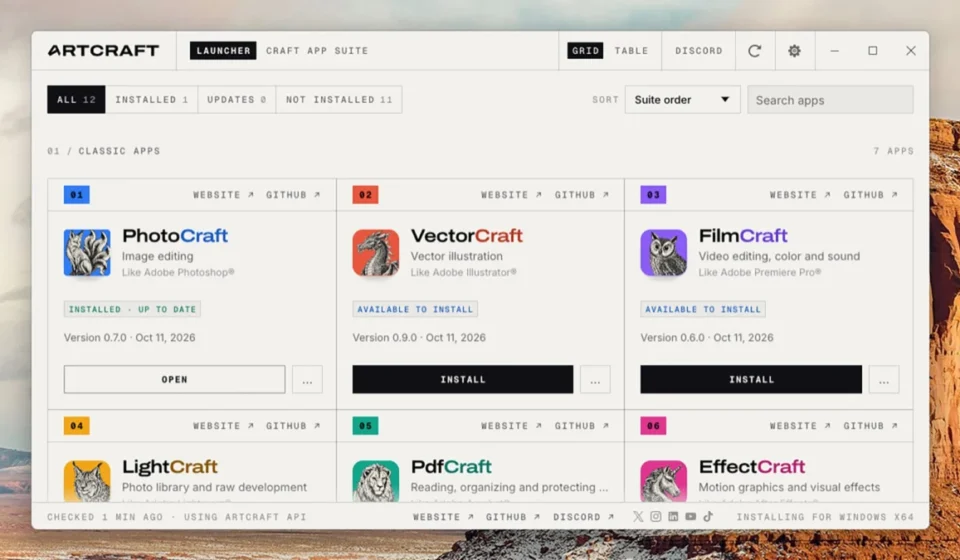
The genesis of these AI-driven software clones can be traced to a growing frustration among some developers with the prevailing business models of large software corporations, particularly concerning subscription fees and perceived "dark patterns" in their user agreements. Brandon Thomas, a seasoned software engineer, has emerged as a prominent figure in this movement. He has reportedly utilized advanced AI models, such as Claude Opus 5.5, to meticulously recreate a suite of Adobe’s flagship applications, including Photoshop, Illustrator, Premiere, Lightroom, Acrobat Pro, After Effects, and InDesign. These recreated tools, now bearing new names like PhotoCraft for Photoshop and FilmCraft for Premiere, aim to offer features and user interfaces that closely mirror their Adobe originals, thereby challenging the necessity of costly monthly subscriptions.

Thomas’s stated motivation stems from what he describes as an excessive reliance on "dark pattern ‘cancellation fees’" and a desire to "take back tech" to a pre-subscription era. He posits that current AI capabilities allow for the creation of "1:1 functional equivalents, clean room, that are highly performant and cross-platform." This sentiment is further underscored by his declaration that "Software is over," suggesting a belief that the traditional software development and distribution model is becoming obsolete. Beyond Adobe, Thomas has indicated plans to develop similar AI-generated clones of Microsoft Office applications, indicating a broader ambition to disrupt the established software market.
The technical process behind these AI clones is often described by developers as "vibe coding," a term that hints at an AI’s ability to infer functionality and design through observation and analysis of existing software. While the exact methodologies remain proprietary, it’s understood that these AI models are trained on vast datasets of human-generated code, enabling them to learn complex programming patterns and user interface designs. Thomas’s approach, as suggested by his public statements, prioritizes creating functional equivalents over direct code copying, a crucial distinction in the complex legal landscape of software intellectual property. He has also expressed a critical view of existing open-source alternatives, arguing that some "broken software" is not worth preserving, thus positioning his AI-driven recreations as a more valuable path forward.
The legality of these AI-generated software clones is a complex and largely untested area. While reverse engineering is often permissible under copyright law, provided that no proprietary code is directly copied, the creation of tools that closely replicate the "look and feel" of existing software can lead to potential legal challenges, including accusations of trademark infringement or trade dress violations. Ars Technica has highlighted this legal ambiguity, noting that the precise boundaries of what constitutes permissible AI-driven replication are still being defined. Furthermore, the legality of the AI models themselves, trained on extensive amounts of code often without explicit permission from the original creators, remains a subject of ongoing debate and potential litigation.

Adobe, as a company heavily reliant on its subscription-based Creative Cloud suite, is undoubtedly monitoring these developments closely. While no official statement has been released by Adobe regarding PhotoCraft or similar initiatives, the company’s legal and product development teams are likely evaluating the potential impact on their market share and intellectual property. The availability of these "early alpha" tools on the ArtCraft website, which are described as "in development," suggests that their creators are anticipating a period of refinement and potential legal scrutiny. Thomas has estimated that achieving 99% feature parity with Adobe’s equivalents could take "months and not years," indicating a rapid development cycle driven by AI.
A Hands-On Look at PhotoCraft
To assess the capabilities of these AI-generated clones, a direct evaluation of PhotoCraft was undertaken. The ArtCraft web portal provides a launcher application that allows users to manage the entire suite of ‘Craft’ tools. Focusing on PhotoCraft, the initial impression is striking: the application bears a strong resemblance to Adobe Photoshop. This visual similarity extends to the color scheme, the arrangement of panels, and the organization of menus, with the notable exception of the "Plugins" section, which is still under development. Keyboard shortcuts appear to be largely identical, and the preference screens offer a similar array of options and layouts.

For users who primarily engage in tasks such as cropping, combining images, adjusting color balance, and exporting in specific formats, as is common for content creators and writers, PhotoCraft demonstrates a surprising level of competence. The transition from Adobe Photoshop to PhotoCraft appears to be relatively seamless, with familiar workflows being maintained through the replication of essential panels, dialogs, and tools, ranging from the clone stamp to the magic wand.
While many image editors have historically attempted to emulate Photoshop’s functionality, PhotoCraft seems to represent a more profound level of replication. The application is noted for its speed and responsiveness, and during initial testing, it appeared to be free from significant bugs. Minor issues were observed with snapping and selection operations, which, while not critical, indicate areas where further refinement is needed.
More experienced users of Photoshop may identify more nuanced discrepancies. As noted by some users on platforms like X (formerly Twitter), there are underlying issues that may become apparent when utilizing more advanced features, particularly complex layer functions. This suggests that while AI can effectively mimic the outward appearance and basic functionalities of sophisticated software, replicating the intricate internal logic and performance optimizations of decades-old, highly refined applications remains a significant challenge. The methodology of AI observing and replicating, rather than direct coding from foundational principles, may inherently limit the depth of performance and stability achievable in the early stages.

Despite these potential limitations, for the specific tasks of image manipulation, adjustments, and layer control required for everyday content creation, PhotoCraft performed commendably. The long-term viability of such AI-generated applications hinges on the continued development and refinement of AI-written code, as well as the potential for Adobe’s legal intervention.
Broader Implications and the Future of Software Development
The emergence of AI-driven software clones like PhotoCraft signifies a potential paradigm shift in the software industry. It challenges the economic models that have underpinned software development for decades, particularly the subscription services that have become ubiquitous. For consumers, these free alternatives offer compelling options, especially for those who find premium software prohibitively expensive or are dissatisfied with existing vendor practices.

However, this trend also raises profound questions about the future of software development, intellectual property, and the value of human creativity in the digital age. While AI can accelerate the creation of functional software, it also introduces questions about the originality, long-term support, and ethical implications of code generated by machines. The debate over whether AI can truly innovate or merely imitate is central to this discussion.
The current situation with PhotoCraft and its ilk is a clear indicator that AI’s capabilities extend beyond content generation to complex technical fields. As AI models become more sophisticated, the ability to reverse-engineer and replicate intricate software will likely improve, potentially leading to further disruption across various sectors of the tech industry. While personal subscriptions to established software may remain the preferred choice for many professionals due to trust, comprehensive features, and dedicated support, the rise of AI clones presents a significant development that the industry, and users alike, must contend with. The landscape of software creation and consumption is undoubtedly entering a new, AI-influenced era.