
Crafting Compelling Non-Fiction: The Indispensable Role of Argument, Framework, and Structure

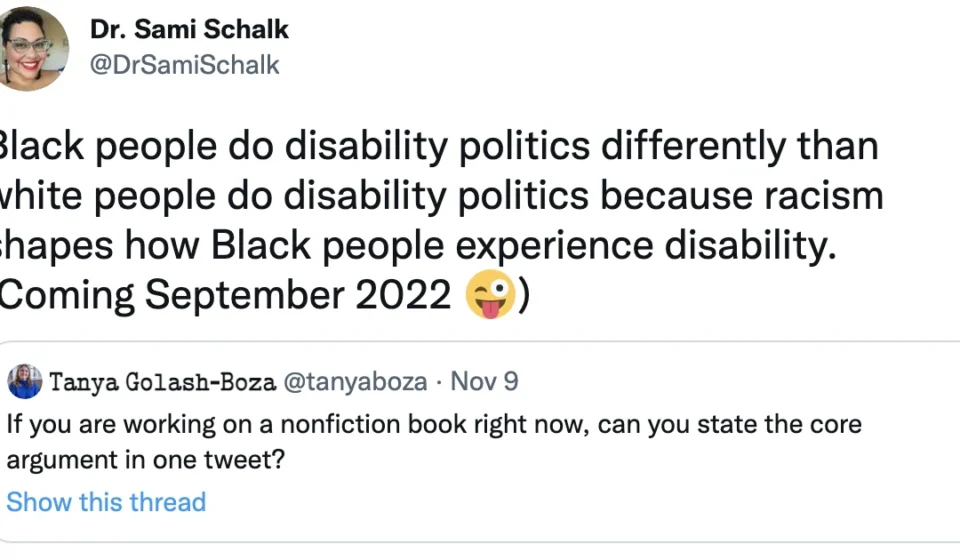
A recent initiative on Twitter, spearheaded by an experienced author, highlighted a fundamental challenge for non-fiction writers: distilling the core argument of their book into a concise tweet. This exercise, while seemingly simple, underscores a critical yet often overlooked phase in the manuscript development process, revealing the universal struggle many authors face in articulating the essence of their extensive work. The ability to clearly and succinctly state a book’s central thesis is not merely a stylistic flourish but a foundational necessity for any impactful non-fiction publication.
The Elusive Core: Defining the Non-Fiction Argument
At the heart of every compelling non-fiction book lies a robust argument. This is often misunderstood as merely a topic or a descriptive list of themes. However, publishing experts and experienced authors universally agree that an argument transcends mere subject matter. As author Wendy Belcher articulates in her seminal work on academic writing, an argument is fundamentally "a statement someone can disagree with." This distinction is crucial; a topic like "climate change" is broad, but an argument such as "current climate policies exacerbate social inequalities" presents a specific, debatable claim.
Helen Sword, another prominent voice in academic writing, further clarifies this by emphasizing that every non-fiction book must pose a question. The entire narrative journey of the book, from its opening pages to its conclusion, is dedicated to leading the reader from that initial question to a well-reasoned, evidence-backed answer. This journey is the argument. Without a clear question, the answer—and thus the argument—lacks direction and purpose.
The challenge of articulating this core argument is not exclusive to novice writers. Even seasoned authors, including the individual who initiated the Twitter discussion, admit to grappling with this clarity well into their writing process. It’s a testament to the iterative nature of authorship that the definitive argument often emerges only after significant drafting and critical reflection. This process of refinement is not a sign of weakness but a necessary evolution, transforming nascent ideas into sharp, impactful statements.
For instance, one author working on a book since 2017 initially articulated their argument in academic language: "Disinvestment and coercive investment in Black communities in DC have displaced and dispossessed Black residents, making gentrification through racialized reinvestment possible." While academically precise, this dense phrasing presented a barrier to broader understanding. Through the lens of the Twitter challenge, the author recognized the value of simplicity, subsequently refining their argument to a more accessible and potent statement: "The choice to use prisons and policing to solve the problems faced by Black communities in DC in the 20th century, instead of investing in schools, community centers, social services, health care, drug treatment, and violence prevention, is what made gentrification possible in the 21st century." This revised argument, easily debatable and directly answering the guiding question of what factors led to gentrification, demonstrates the power of clear, concise articulation.
Why a Strong Argument Matters: Publishing Insights and Reader Engagement
In the competitive landscape of non-fiction publishing, a well-defined argument serves multiple critical functions. For literary agents and publishing houses, it acts as a crucial filter, signaling a book’s potential for intellectual contribution and market appeal. Publishers seek works that offer fresh perspectives, challenge existing narratives, or provide novel solutions to pressing issues. A vague or absent argument makes it difficult for acquisitions editors to envision the book’s place in the market or its potential audience. Industry data consistently indicates that non-fiction proposals with clearly articulated arguments and unique contributions are significantly more likely to secure publishing contracts.
For readers, a clear argument is the cornerstone of engagement and comprehension. In an age of information overload, readers are increasingly discerning, seeking books that promise to deliver specific insights or expand their understanding in meaningful ways. A strong argument provides a roadmap, setting expectations and guiding the reader through complex information. Studies on reading comprehension suggest that when readers can identify the author’s central claim early on, their ability to process and retain information improves dramatically. Conversely, books lacking a discernible argument can leave readers feeling adrift, leading to disengagement and ultimately, abandonment.

Beyond the Argument: The Theoretical Framework’s Imperative
While a clear argument forms the backbone of a non-fiction book, a compelling theoretical framework provides its intellectual muscles. The theoretical framework explains how an author’s argument is novel, how it builds upon or challenges existing scholarship, and how it contributes meaningfully to the broader discourse surrounding the topic. It’s the "so what?" factor that elevates a book from a collection of observations to a significant intellectual intervention.
The framework situates the book within a scholarly conversation, demonstrating the author’s mastery of the field and their ability to push its boundaries. Without it, even a groundbreaking argument risks being perceived as isolated or uninformed. For example, Michelle Alexander’s seminal work, The New Jim Crow, presented the powerful argument that "mass incarceration is the New Jim Crow." Her theoretical framework meticulously connected contemporary incarceration patterns to historical systems of racial control, drawing on sociological, legal, and historical scholarship to build an unassailable case. An author attempting to make the same argument today, without acknowledging Alexander’s foundational work and offering a novel contribution beyond it, would struggle to find a publisher, as the intellectual groundwork has already been laid.
It is important to differentiate the theoretical framework in an academic book from the exhaustive literature review typically found in a dissertation. While dissertations often dedicate entire chapters to reviewing existing literature, academic books streamline this process. The introduction of a successful academic book typically integrates the theoretical framework and a concise overview of relevant scholarship, highlighting gaps and demonstrating the author’s unique intervention within a few focused paragraphs. This approach ensures that the book immediately establishes its intellectual contribution without overwhelming the reader with overly detailed background information.
For the author discussing gentrification in DC, their manuscript engages with three distinct yet interconnected fields: housing inequality, the War on Drugs, and gentrification. Their theoretical framework, articulated in the introduction, explains how the book intervenes in these areas. It details how Black communities, even those with high rates of homeownership, have experienced dispossession; how poor, working, and middle-class Black communities endured systematic disinvestment followed by coercive investment; and how contemporary reinvestment is deeply racialized. This intricate framework provides the necessary context for the core argument, demonstrating how the author’s work weaves together disparate threads of scholarship to offer a cohesive and original explanation for complex urban phenomena. The consistent focus on these core concepts—dispossession, disinvestment, coercive investment, and racialized reinvestment—maintains a tight thematic coherence, ensuring every part of the book reinforces the central argument.
Structuring the Narrative: Building a Coherent Case
Once the core argument and theoretical framework are firmly established, the next crucial step is to craft a structure that effectively builds the argument throughout the book. Each chapter must serve a clear purpose, contributing incrementally to the overarching thesis. A well-structured book is not merely a collection of related essays; it’s a meticulously constructed edifice, where each block supports the next, leading to an undeniable conclusion.
There are various effective structural approaches in non-fiction, depending on the nature of the argument. The author’s current manuscript on DC gentrification employs a thematic and chronological structure, systematically unfolding the argument over three parts:
- Part I: Disinvestment
- Chapter 1: Disinvestment in Black DC
- Chapter 2: The Violence of Disinvestment
- Part II: Coercive Investment
- Chapter 3: Crack in the Neighborhood
- Chapter 4: Bringing in the Feds
- Part III: Reinvestment
- Chapter 5: Chocolate City No More
- Chapter 6: Racialized Reinvestment
This structure directly mirrors the core argument, demonstrating how initial disinvestment and subsequent coercive investment laid the groundwork for gentrification through racialized reinvestment. Each section, comprising two chapters, delves into a specific facet of the argument without attempting to prove the entire thesis in one go, thereby allowing for a detailed and nuanced exploration of complex processes.
Another example is the author’s book Deported, which adopted a chronological, journey-based structure. This book followed the trajectory of a deportee, beginning with their upbringing in their country of origin, crossing the border, growing up in the United States, encountering legal issues, detention, and finally, life after deportation. This narrative arc allowed the author to meticulously explain how global capitalism influenced each stage of the migrant journey, making a complex argument accessible through a human-centered narrative.

For authors struggling to visualize their book’s structure, a mind map can be an invaluable tool. By writing the core argument in the center of a page and branching out with lines and circles representing key concepts, sub-arguments, and supporting evidence, authors can visually map the connections between ideas. This process helps to identify the logical flow of information, pinpoint areas requiring further development, and make informed decisions about chapter divisions and content allocation. Visualizing the argument’s progression ensures that the book’s structure serves to reinforce, rather than obscure, its central message.
The Iterative Journey: Refining a Non-Fiction Manuscript
The process of writing a non-fiction book is rarely linear. It is an inherently iterative journey, characterized by cycles of drafting, reflection, revision, and refinement. Authors should not expect to produce a perfect manuscript in a single draft. Instead, the journey typically involves writing a substantial draft, pausing to identify or clarify the true argument, and then rewriting the manuscript to align more closely with that argument. This often leads to a reciprocal process: the argument itself might be refined further based on discoveries made during the rewriting phase. This continuous feedback loop between argument and manuscript is vital for achieving coherence and impact.
This iterative nature is widely recognized within the publishing industry. Editors often work closely with authors through multiple rounds of revisions, focusing not only on prose and evidence but also on the strength and clarity of the argument and its structural presentation. Peer reviewers, particularly in academic publishing, play a crucial role in challenging an author’s claims and pushing for greater precision in both argument and framework. The sustained effort, which often spans several years, necessitates resilience and a willingness to critically re-evaluate one’s own work.
Given the demanding and often solitary nature of book writing, fostering a supportive community is paramount. Authors benefit immensely from critique partners, writing groups, and professional mentorship. The Twitter thread that sparked this discussion, for example, inadvertently created a platform for authors to connect, share their arguments, and seek mutual support. This communal aspect of writing helps authors navigate periods of doubt, receive constructive feedback, and maintain momentum over the long haul. The shared experience of refining complex ideas within a supportive network can significantly enhance both the quality of the manuscript and the author’s perseverance.
Broader Implications for Non-Fiction Publishing
The rigorous pursuit of a clear argument, a robust theoretical framework, and a coherent structure has profound implications for the non-fiction publishing landscape. Books that master these elements are not only more likely to be published but also to achieve critical acclaim, resonate with readers, and contribute significantly to public discourse. They inform, challenge, and inspire, shaping understanding and influencing policy.
For publishers, investing in books that exemplify these qualities is a strategic decision. Such books have a higher probability of enduring relevance, strong sales, and positive reviews. For readers, these principles translate into a richer, more rewarding reading experience, where complex ideas are presented with clarity and persuasive power. Ultimately, the emphasis on a strong argument, a well-defined framework, and a logical structure elevates the standard of non-fiction, ensuring that published works contribute meaningfully to the intellectual fabric of society.