The Underground Economy: How Mycorrhizal Fungi Manage Earth’s Carbon and Nutrient Trade

Beneath the surface of almost every terrestrial ecosystem exists a vast, sophisticated biological marketplace that has functioned for nearly half a billion years, yet only recently have scientists begun to decode its complex economic strategies. This subterranean network, composed of mycorrhizal fungi, acts as a primary circulatory system for the planet, facilitating a massive exchange of resources between the soil and approximately 80% to 90% of all land plant species. Recent research led by Toby Kiers, an evolutionary biologist at Vrije Universiteit Amsterdam and a MacArthur Fellow, reveals that these brainless, decentralized organisms behave with a level of strategic sophistication previously thought to be the exclusive domain of cognitive beings. These fungi do not merely transport nutrients; they actively manage a global trade in carbon, phosphorus, and nitrogen that sequesters approximately 13 billion tons of atmospheric carbon dioxide annually—an amount equivalent to roughly one-third of the world’s total fossil-fuel emissions.
The Mechanics of the Subterranean Marketplace
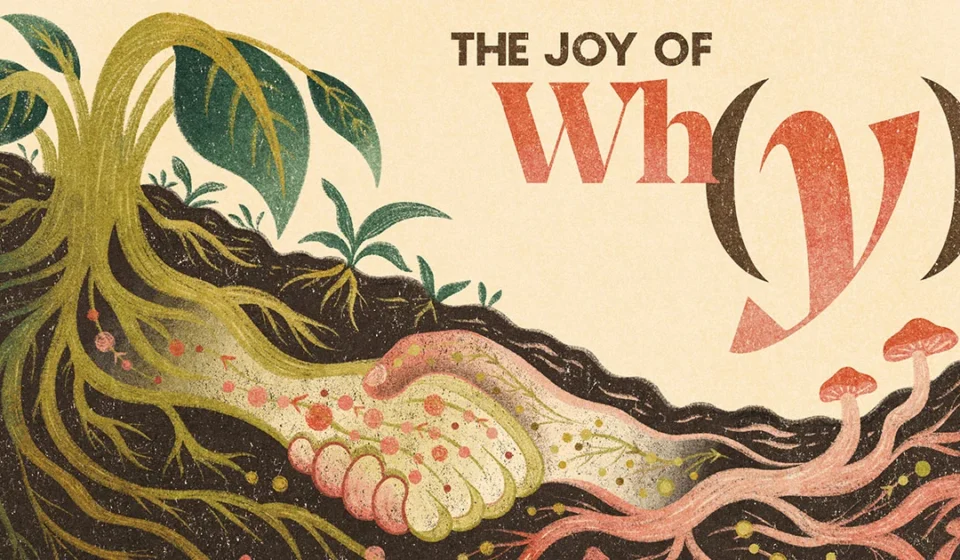
The relationship between plants and mycorrhizal fungi is defined as a mutualistic symbiosis, but through the lens of evolutionary biology and economics, it is increasingly viewed as a system of "reciprocal exploitation." In this arrangement, plants provide the fungi with carbon-rich sugars and lipids produced through photosynthesis. In exchange, the fungi forage through the soil to extract essential minerals like phosphorus and nitrogen, which they deliver back to the plant’s roots.
The scale of this operation is immense. While the threads of the fungi—known as hyphae—are thinner than a human hair, they form dense, interconnected webs that can extend for kilometers. These networks are particularly adept at "eating rocks," utilizing specialized enzymes and partnering with bacteria to dissolve hard-to-access minerals. The efficiency of this system is such that up to 80% of a plant’s phosphorus requirements are met through fungal trade. This means that the phosphorus forming the backbone of human DNA likely passed through a fungal network before entering the food chain.
Professor Kiers’ research has demonstrated that these organisms, despite lacking a central nervous system, possess a form of decentralized intelligence. They are capable of information processing, allowing them to discriminate between "cooperative" and "less cooperative" partners. In controlled laboratory settings, Kiers has shown that fungi will actively shift resources toward plant roots that offer higher "prices" in carbon, while plants will similarly restrict carbon flow to fungal strains that fail to provide adequate nutrients.
Technological Innovations in Mycology
To visualize this hidden world, the Kiers Lab employs a suite of advanced technologies that bridge the gap between biology and physics. One of the most significant breakthroughs involves the use of "imaging robots" developed in collaboration with the Biophysics Institute (AMOLF) in Amsterdam. These robots allow researchers to track hundreds of thousands of "nodes" or decision points within a fungal network simultaneously.
To track the flow of nutrients, researchers use fluorescent "quantum dots"—nanoparticles that can be attached to phosphorus. By using different colors of quantum dots, scientists can observe how fungi move resources across their networks in real-time. This has led to the discovery of "price-gouging" and hoarding behaviors. For instance, observations have shown fungi taking up phosphorus from a resource-rich area and transporting it to a distant part of the network where a plant is more "desperate," thereby commanding a higher carbon reward.
Furthermore, the physical movement within these networks is a marvel of biological engineering. Fungal hyphae are essentially open-pipe systems where flows can move in opposite directions simultaneously. This is achieved through a combination of molecular motors—protein "trains" that drag lipid droplets along internal tracks—and pressure-driven flows regulated by specialized pores called aquaporins. This "lava lamp" effect allows the fungus to maintain a complex supply chain across vast distances.
An Evolutionary Chronology of Symbiosis
The partnership between plants and fungi is not a recent development; it is the foundation upon which terrestrial life was built. Approximately 450 million years ago, when the first plants began to migrate from aquatic environments to land, they lacked the complex root systems necessary to survive in soil. Mycorrhizal fungi served as the de facto root systems for these ancestral plants for tens of millions of years, providing the mineral intake necessary for colonization.
Over evolutionary time, this relationship has diversified into various forms. The most common are arbuscular mycorrhizal (AM) fungi, which penetrate the cells of plant roots to facilitate direct exchange. Another group, ectomycorrhizal fungi, forms a sheath around the root and is responsible for producing many of the visible mushrooms found on the forest floor.
Despite their ancient origins, these networks are currently facing unprecedented threats from modern human activity. Industrial agriculture, deforestation, and the use of chemical fertilizers disrupt the delicate balance of the soil. When plants are provided with synthetic fertilizers, they often cease "investing" in fungal networks, leading to the degradation of the soil’s physical structure and the loss of its carbon-sequestering capabilities.
Global Mapping and the Society for the Protection of Underground Networks (SPUN)
Recognizing that underground biodiversity has been largely ignored in global conservation efforts, Toby Kiers co-founded the Society for the Protection of Underground Networks (SPUN) in 2021. The organization’s mission is to map the world’s mycorrhizal biodiversity and advocate for its protection, much like the efforts dedicated to coral reefs or rainforests.
SPUN’s initiatives include:
- The Underground Atlas: A digital tool that uses machine learning and remote sensing to predict hotspots of fungal diversity.
- Global Expeditions: Funding "Underground Explorers" in over 80 countries to collect soil samples from remote and understudied regions, such as the high-altitude ecosystems of Bhutan and the tundra of the Arctic.
- Conservation Advocacy: Highlighting the fact that 90% of the world’s mycorrhizal "hotspots" currently fall outside of protected areas.
The data collected by SPUN is vital for understanding how soil life regulates the climate. Research published in 2023 indicates that the loss of these networks could accelerate global warming, as the carbon currently stored in "sticky" fungal compounds could be released back into the atmosphere if the soil is disturbed or the fungi die off.
Broader Implications for Science and Society
The study of mycorrhizal networks challenges fundamental biological concepts, particularly the definition of an individual. Some fungal networks contain multiple distinct genomes within a single continuous structure, a phenomenon that complicates traditional views of genetics and reproduction. These organisms also demonstrate that complexity and strategic behavior do not require a brain, suggesting that decentralized systems can be just as effective at managing large-scale resource distribution as centralized ones.
In the context of the climate crisis, mycorrhizal fungi represent a "library of solutions." By understanding which fungal strains are most effective at sequestering carbon or breaking down pollutants, scientists can develop more effective reforestation and land restoration strategies. For example, "innoculating" degraded soil with specific fungal communities can jumpstart the recovery of entire ecosystems.
The agricultural implications are equally profound. As the world faces food security challenges, leveraging the natural nutrient-gathering abilities of fungi could reduce the reliance on environmentally damaging chemical fertilizers. This "regenerative" approach to farming seeks to work with the existing underground economy rather than bypassing it.
Conclusion: A Shift in Perspective
The work of Toby Kiers and her colleagues serves as a reminder that the soil is not merely "dirt" but a living, breathing, and trading entity. The 59% of Earth’s species that live underground constitute a majority of the planet’s biodiversity, yet they remain the most marginalized in terms of policy and protection.
As research continues to reveal the "operatic" tension and innovation inherent in these networks, the scientific community is calling for a paradigm shift. Protecting the "Wood Wide Web" is no longer seen as a niche interest for mycologists but as a central pillar of climate stability and ecological health. By making the invisible visible, researchers are providing the tools necessary to preserve the ancient, brainless, yet brilliant systems that make life on land possible.