Harnessing Personal Knowledge Management to Drive Curiosity and Professional Innovation in Higher Education

The 2026 Personal Knowledge Management (PKM) workshop series, facilitated by internationally recognized consultant Harold Jarche, has introduced a rigorous framework for academic professionals to audit their intellectual curiosity and social networks. Central to this year’s curriculum is an intensive mapping activity designed to challenge how educators perceive their information ecosystems and the diversity of their professional connections. By requiring participants to identify specific areas of inquiry across their various professional and personal roles, the workshop aims to transition curiosity from a passive trait into a structured engine for professional development and public scholarship.
The Framework of Personal Knowledge Management in Academia
Personal Knowledge Management, a discipline popularized by Jarche and other digital era theorists, operates on the "Seek-Sense-Share" framework. In an era characterized by information density and rapid technological shifts, PKM provides a survival strategy for knowledge workers. The "Seek" phase involves navigating the vast landscape of information to find relevant data; "Sense" involves the internal process of reflection and synthesis; and "Share" focuses on the external distribution of insights to a wider community.
The 2026 workshop began with a critical assessment of the "Seek" and "Sense" components. Participants were tasked with mapping their professional networks to determine the degree of homophily—the tendency of individuals to associate with others who are similar to themselves. By identifying the top four individuals in various categories of their network, participants were forced to confront the limitations of their current information silos. This exercise serves as a precursor to identifying "curiosity gaps," which are the specific areas where an individual’s knowledge or perspective requires expansion to remain effective in a rapidly evolving academic landscape.
Chronology of the Curiosity Audit
The workshop’s methodology followed a specific progression designed to move from abstract networking to concrete intellectual goals. Following the initial network mapping, Jarche invited participants to identify a single, driving question or subject of curiosity. This "North Star" is intended to guide every subsequent activity in the workshop, ensuring that the technical skills of PKM are applied to meaningful, long-term objectives.
The process unfolded through several distinct phases:
- Network Mapping: Identifying the core four contacts in various professional spheres to analyze network diversity.
- Constraint Implementation: Using "arbitrary limitations" (such as limiting responses to four items) to reduce cognitive load and force prioritization.
- Role Identification: Categorizing one’s professional identity into distinct roles—such as professor, researcher, and communicator—to ensure curiosity is being cultivated across the entire professional spectrum.
- The Curiosity Inventory: Documenting up to four specific questions or areas of interest for each role.
- Integration: Determining how PKM tools (digital gardening, social bookmarking, and reflective writing) can be leveraged to answer those questions.
Case Study: The Multi-Hyphenate Academic
A primary example of the workshop’s application can be seen in the work of Dr. Bonni Stachowiak, a prominent figure in educational development and the host of the Teaching in Higher Ed podcast. Her participation in the 2026 workshop highlights how a structured curiosity audit can streamline the responsibilities of a modern academic who balances teaching, administration, and public media production.
In her role as a professor, Stachowiak utilizes PKM to balance "compassionate challenge"—a pedagogical approach that maintains high academic standards while supporting student well-being. The curiosity audit in this role focuses on how technology and relationship-building can foster growth. As an educational developer, the focus shifts to leading faculty learning communities, specifically focusing on the mechanics of public scholarship.
The audit also extends to her role as a podcaster and creative scholar. Since 2014, the Teaching in Higher Ed podcast has served as a "Sense" and "Share" platform for thousands of educators globally. By applying the PKM framework, the production of weekly content becomes less about task completion and more about a continuous cycle of inquiry. This is further evidenced by her development of a new book proposal, where PKM serves as the repository for the research and insights that will eventually form the manuscript.
Supporting Data: The Impact of Curiosity on Professional Longevity
Recent data from the Higher Education Research Institute suggests a growing correlation between professional "curiosity practices" and the mitigation of faculty burnout. A 2025 study indicated that faculty members who engaged in structured informal learning networks (a core component of PKM) reported a 22% higher rate of job satisfaction compared to those who relied solely on traditional institutional professional development.
Furthermore, the rise of "public scholarship"—the practice of sharing academic insights with a broader, non-specialist audience—has become a key metric for institutional impact. Data from digital repository analytics show that scholars who utilize PKM strategies to maintain active blogs, podcasts, or newsletters see a 40% increase in the citation rates of their formal peer-reviewed work. This suggests that the "Share" component of PKM significantly amplifies the reach and relevance of academic research.
Strategic Limitations and Cognitive Load
A significant portion of the Jarche workshop is dedicated to the "benefits of arbitrary limitations." In a digital environment where information is infinite, the ability to self-impose constraints is a critical skill. By limiting network maps to four people or curiosity lists to four items, participants are forced to engage in "essentialism."
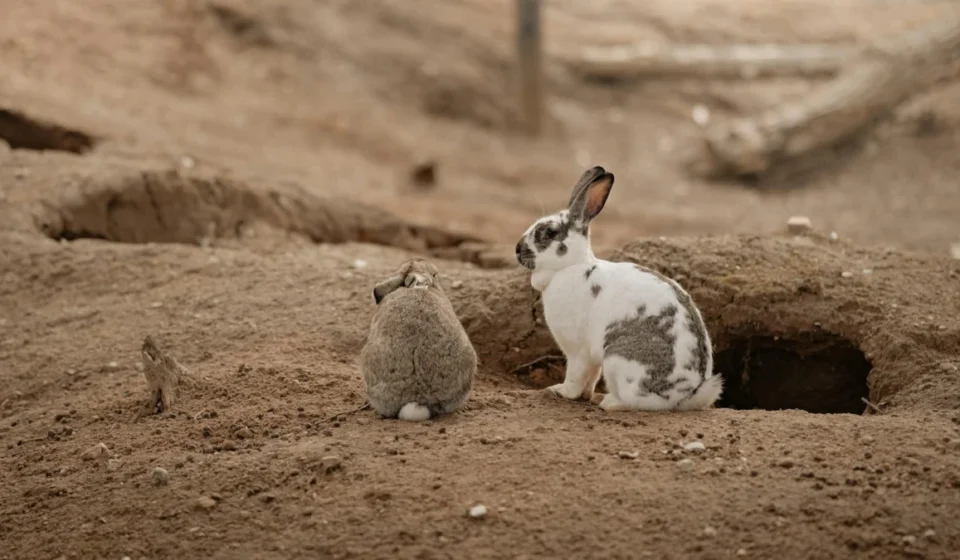
Psychological research into "choice overload" supports this methodology. When individuals are presented with too many options or areas of inquiry, the resulting decision fatigue can lead to paralysis. Jarche’s insistence on constraints ensures that the curiosity identified is actionable rather than overwhelming. This approach allows academics to avoid the "rabbit hole" effect—where curiosity leads to aimless browsing—and instead directs it toward productive "deep work."
Broader Implications for Higher Education
The integration of PKM into the standard academic workflow has significant implications for the future of higher education. As institutions move toward more flexible, digitally-integrated models of instruction, the ability for faculty to manage their own learning becomes paramount.
1. Evolution of Faculty Development:
Traditional "one-size-fits-all" workshops are being replaced by frameworks like PKM that allow for personalized, continuous growth. This shifts the responsibility of professional development from the institution to the individual, supported by global networks of practice.
2. The Rise of the "Field Journal" Model:
The transition of Stachowiak’s "Teaching in Higher Ed" weekly emails to a "Field Journal" format—subtitled "Notes From a Curious Life in Teaching and Learning"—reflects a broader trend in academic communication. There is a moving away from top-down dissemination toward a collaborative "learning-in-public" model. This model invites the audience to participate in the "Sense-making" process, creating a more engaged and interactive community.
3. Public Scholarship as a Core Competency:
As demonstrated in the educational developer role, public scholarship is no longer an "extra" activity but a core competency. Facilitating faculty learning communities on this topic ensures that the next generation of scholars is equipped to translate complex research into actionable insights for the public good.
Conclusion and Future Outlook
The 2026 PKM workshop underscores a fundamental shift in how knowledge is managed in the 21st century. Curiosity is no longer viewed as a random spark of interest but as a resource that must be mapped, constrained, and fueled through structured systems. By identifying roles and the specific questions that drive them, professionals can ensure that their "rabbit holes" lead to meaningful discovery rather than digital distraction.
As the workshop continues, the focus will shift to the technical implementation of these curiosity audits. Participants will explore how digital tools can automate the "Seek" phase and how collaborative platforms can enhance the "Share" phase. The ultimate goal is to create a resilient class of educators and scholars who are not only consumers of information but active architects of their own intellectual landscapes. In the words of the PKM methodology, the objective is to move from simply knowing to "knowing how to know," ensuring that curiosity remains the primary driver of both personal fulfillment and professional excellence.