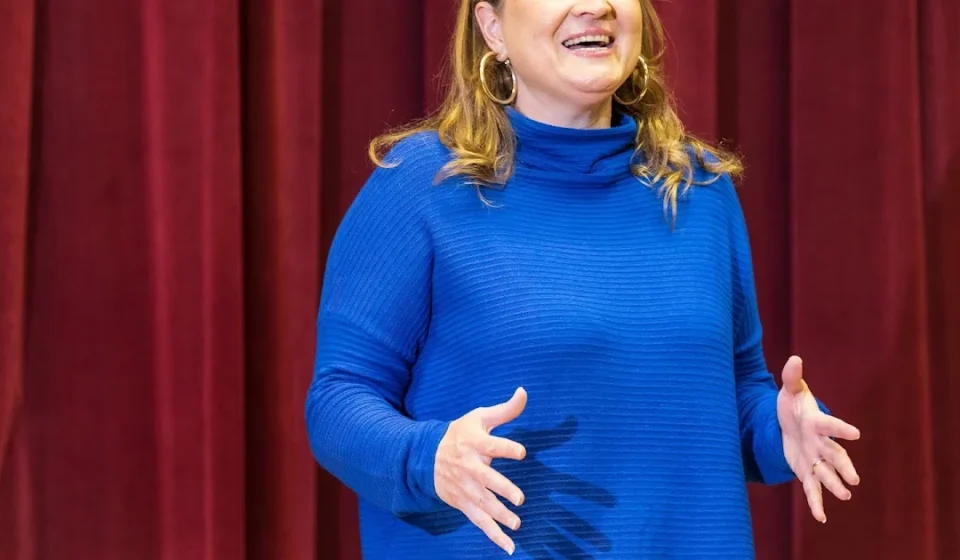
Sociologist’s Viral TEDx Talk Unpacks the Complex Nexus of Disinvestment and Gentrification in Washington, D.C.

A thought-provoking TEDx talk titled "How to Kill a Neighborhood and Make a Profit," delivered by a distinguished sociologist of race and a Washington, D.C. native, was officially released to the public on January 23, 2021. The talk, an insightful examination of urban development and social equity, posits that systemic disinvestment in specific communities, particularly within Washington, D.C., served as a critical precursor to gentrification. Drawing on both rigorous academic research and deeply personal experiences, the speaker challenges conventional narratives surrounding urban change, highlighting the profound and often overlooked role of historical policies and practices in shaping contemporary urban landscapes.
The Genesis of an Idea: From Local Cancellation to Global Platform
The journey to the TEDx stage began in February 2020, when the sociologist, whose identity remains a private detail within this specific news context, initially applied for a local TEDx event. TEDx events, independently organized under license from TED, are designed to bring communities together to share ideas worth spreading. The application process required the articulation of a clear "throughline"—the central argument upon which the entire presentation would be built. For this speaker, the throughline crystallized early: "Disinvestment in Washington, DC made gentrification possible." This core argument became the trunk of a conceptual tree, with subsequent research and personal narratives forming its branches.
The initial local opportunity, however, was subsequently canceled due to the escalating global COVID-19 pandemic, a common disruption for public events throughout 2020. Despite this setback, the intellectual groundwork laid during the application phase proved invaluable. The sociologist continued to refine the argument, grounding it in their extensive expertise as an academic specializing in the sociology of race and an author currently writing a book on the very topic. The decision to focus on gentrification was not merely academic; it was deeply personal, as the neighborhoods discussed in the talk were those where the speaker was raised, offering a unique blend of scholarly authority and lived experience.
A compelling TEDx talk, much like the renowned presentation by Barry Schwartz on "The Paradox of Choice," often introduces a novel or unexpected perspective. While the concept that gentrification requires prior disinvestment is understood by academics in the field, it remains a less recognized truth among the broader public. The talk specifically delves into how racist housing practices and policies—such as redlining and blockbusting—actively facilitated disinvestment in Black communities, thereby laying the groundwork for subsequent gentrification. A further novel dimension of the talk is its focus on the gentrification of a Black middle-class community, which offers a nuanced counterpoint to narratives that often exclusively associate gentrification with low-income areas.
A Deep Dive into Washington D.C.’s Urban Transformation
Washington, D.C., serves as a compelling and often stark case study for the dynamics of gentrification. Over the past several decades, the nation’s capital has undergone a profound demographic and socioeconomic transformation, shifting from a predominantly Black city to one with a more diverse, yet increasingly less affordable, population. Data from various urban studies and demographic reports underscore this trend. Between 2000 and 2013, Washington, D.C., saw 52.1% of its census tracts experience gentrification, a rate higher than any other major U.S. city, according to a 2016 study by the National Community Reinvestment Coalition (NCRC). This period witnessed a significant influx of higher-income residents and a corresponding outflow or displacement of lower-income, often minority, populations.
The economic boom fueled by the growth of federal government contractors, technology firms, and the general professionalization of the D.C. workforce has driven up property values and rents. Simultaneously, significant public and private investments in infrastructure, public spaces, and commercial developments have enhanced the appeal of once-neglected urban areas. However, beneath this veneer of revitalization lies a complex history of intentional disinvestment. The speaker’s talk argues forcefully that the current landscape of gentrification is not merely an organic market process but the direct consequence of decades of deliberate policies that devalued and marginalized specific neighborhoods.
The Systemic Foundations: Redlining, Blockbusting, and Planned Decay
Central to understanding the talk’s argument is an examination of historical housing policies, particularly redlining and blockbusting. Redlining, a practice initiated in the 1930s by the federal Home Owners’ Loan Corporation (HOLC) and later adopted by the Federal Housing Administration (FHA), systematically categorized neighborhoods based on perceived lending risk. Areas deemed "hazardous"—often those with high concentrations of Black residents, regardless of income level—were outlined in red on maps, signaling to banks and insurance companies that these areas were unworthy of investment. This institutionalized discrimination starved Black communities of essential capital, preventing residents from obtaining mortgages, home improvement loans, or business financing. The long-term impact was a deliberate devaluing of properties and a severe restriction on wealth accumulation for Black families. Research from institutions like the National Bureau of Economic Research confirms that formerly redlined neighborhoods continue to experience significant socioeconomic disparities, including lower homeownership rates and less access to healthy food options.
Blockbusting, another predatory practice prevalent in the mid-20th century, further exacerbated the instability in transitioning neighborhoods. Real estate speculators would deliberately create panic among white homeowners by suggesting that Black families were moving into the area, leading to a rapid decline in property values. Agents would then buy homes from frightened white owners at drastically reduced prices, only to resell them to Black families at inflated prices, often with exploitative contracts that made homeownership precarious. These tactics destabilized communities, eroded social cohesion, and further entrenched racial segregation, ultimately creating conditions ripe for subsequent disinvestment and eventual gentrification. The confluence of redlining, restrictive covenants, and blockbusting ensured that capital flowed away from Black neighborhoods, leading to neglected infrastructure, underfunded schools, and a general decline in amenities, effectively creating "blight" that later generations would seek to "redevelop."
The talk’s particular emphasis on Black middle-class communities adds a critical layer to the discourse. While gentrification is often associated with the displacement of low-income residents, the targeting of Black middle-class areas through these historical policies meant that even economically stable Black families were systematically denied opportunities for intergenerational wealth building and community stability. This historical context underscores how the current wave of gentrification is not simply an economic phenomenon but a continuation of racialized urban planning that has profound and lasting impacts on social equity.
The Rigorous Journey to the TEDx Stage
The opportunity to deliver the TEDx talk resurfaced when organizers from TEDx UC Merced reached out on November 17, 2020. They informed the speaker that their event would proceed in a virtual format in January 2021. This presented a tight deadline: the script for the talk was due on December 23, providing less than five weeks for intensive preparation and refinement. Fortunately, the speaker had already initiated work on the talk, leveraging the initial application’s throughline and a preliminary draft.
The preparation process was rigorous and demanding. The speaker dedicated virtually every weekday, and some weekends, between November 17 and the recording date of January 11, 2021, to honing the script and presentation. While the original throughline remained steadfast, only a few lines from the initial draft ultimately made it into the final version, underscoring the iterative nature of crafting a compelling narrative for the TEDx stage. This intensive period involved not only refining the argument but also selecting the most impactful personal stories and research findings to illustrate the complex interplay of disinvestment and gentrification.
The speaker’s experience offers valuable insights for aspiring TEDx presenters: begin working on your talk well in advance, even before an official invitation. Developing a robust throughline and a comprehensive outline is crucial, not only for the application process but also to provide a significant head start when the opportunity materializes. The availability of numerous TEDx events globally, listed on the official TED website, provides ample platforms for individuals to share their "ideas worth spreading."
Reactions and Broader Implications
The release of "How to Kill a Neighborhood and Make a Profit" is anticipated to significantly contribute to ongoing dialogues surrounding urban development, racial justice, and economic equity. Organizers at TEDx UC Merced have expressed their commitment to showcasing diverse voices and critical perspectives, especially in an era where virtual platforms have broadened accessibility for global discourse. The selection of this topic reflects a growing recognition within TEDx communities of the urgent need to address systemic inequalities.
Urban planners, policymakers, and community advocates are expected to engage deeply with the talk’s findings. Experts in urban sociology and history have long highlighted the legacy of discriminatory housing policies, and this talk provides a powerful, accessible synthesis of these complex issues. Dr. Mindy Fullilove, a professor of urban policy and health, whose work often touches on the impact of urban renewal and displacement, might echo the sentiment that understanding historical injustices is paramount to crafting equitable futures. While not directly quoted, the sentiment among those working towards social justice in cities is that such narratives are essential for public awareness and policy change.
The talk’s implications extend beyond academic circles. It serves as a call to action for communities to critically examine the forces shaping their neighborhoods and for policymakers to implement reforms that counteract the lingering effects of historical disinvestment. This includes advocating for equitable housing policies, community-led development initiatives, and robust anti-displacement measures. The focus on a Black middle-class community also challenges preconceived notions, urging a more nuanced understanding of how gentrification impacts various segments of the population.
Ultimately, the TEDx platform continues to prove its value as a powerful medium for disseminating complex ideas to a global audience. The sociologist’s talk on disinvestment and gentrification in Washington, D.C., stands as a poignant reminder that urban landscapes are not merely physical spaces but products of historical decisions, power dynamics, and social inequalities. Engaging with its message is crucial for fostering informed discussions and inspiring concrete actions toward creating more just and equitable cities.