How to Build a Local Zero Cost Agentic AI Workflow with Hermes Agent and Ollama

The rapid evolution of generative artificial intelligence has moved beyond simple conversational interfaces toward "agentic" systems—AI entities capable of executing tasks, managing files, and navigating the web autonomously. While industry giants like OpenAI and Anthropic offer robust agentic capabilities via cloud APIs, the financial and privacy costs associated with these services have created a growing demand for local alternatives. According to recent cost breakdowns from Nous Research, a typical coding session using cloud-based AI can range from $0.60 to $0.80, with intensive automated workflows potentially climbing as high as $20 per session. For developers, students, and privacy-conscious organizations, these recurring expenses and the inherent risk of sending proprietary data to third-party servers have necessitated a shift toward local-first architectures.
This shift is now being realized through the integration of Hermes Agent, an open-source framework from Nous Research, and Ollama, a popular local model serving tool. By combining these two technologies, users can establish a zero-cost, fully local agentic workflow where every line of code and project file remains strictly on the user’s hardware. This development marks a significant milestone in the democratization of high-level AI automation, providing a blueprint for a private, persistent, and highly capable digital assistant.
The Architecture of Local Agency: Understanding Hermes and Ollama
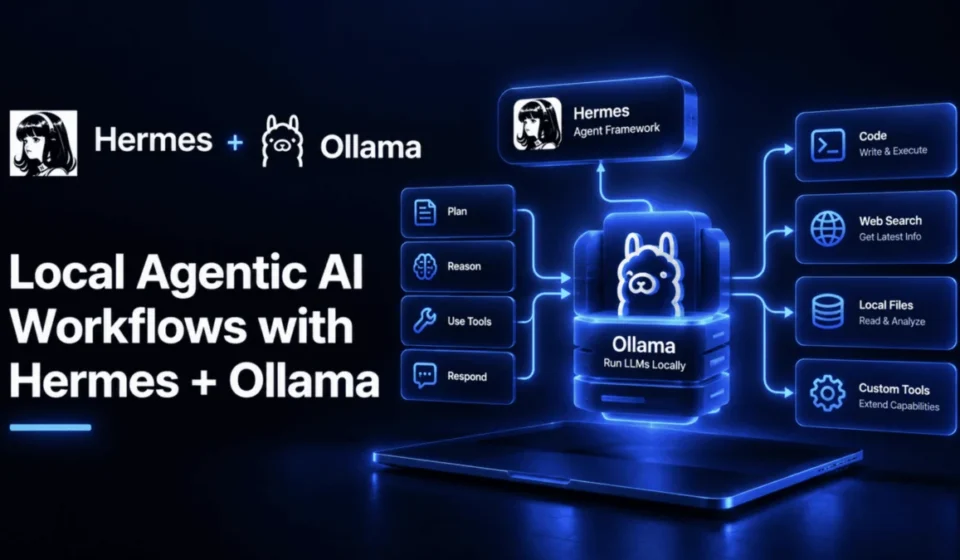
To understand the impact of this local workflow, one must first distinguish between a standard chatbot and an AI agent. While a chatbot generates text based on prompts, an agent like Hermes is designed to interact with its environment. Released under the MIT license, Hermes Agent (currently at version 0.21.1) functions as a sophisticated intermediary between the user and the computer’s operating system. It possesses the capability to edit files, execute terminal commands, browse the internet, and even delegate complex tasks to specialized sub-agents.
A defining feature of Hermes Agent is its persistent memory. Unlike stateless chat sessions that reset after every interaction, Hermes retains knowledge of previous projects and can generate reusable "skills" based on past problem-solving sessions. This allows the agent to become more efficient over time as it adapts to a user’s specific codebase or organizational style. Furthermore, Hermes incorporates a sandboxing system that supports isolation backends such as Docker, SSH, and Singularity, ensuring that the commands executed by the AI do not inadvertently compromise the host system’s security.
Beneath the agentic layer sits Ollama, the engine responsible for model management and inference. Ollama serves as a local API that mimics the structure of standard cloud endpoints, such as OpenAI’s /v1/chat/completions. This compatibility is crucial because it allows agentic frameworks like Hermes to communicate with locally hosted models using the same protocols they would use for expensive cloud services. In this setup, the division of labor is distinct: Ollama manages the weight-heavy language models, while Hermes provides the logic, tool-calling capabilities, and user interface.
The Economic and Privacy Imperative for Local-First AI
The movement toward local AI is driven by two primary factors: data sovereignty and long-term cost sustainability. In a corporate environment, the transmission of proprietary source code or sensitive financial documents to a cloud provider represents a significant liability. Even with enterprise-grade privacy agreements, the "black box" nature of cloud processing remains a concern for many cybersecurity professionals. By keeping the workflow local, organizations can ensure that their intellectual property never leaves their internal network.
From a financial perspective, the cumulative cost of cloud API tokens can become a barrier to entry for hobbyists and researchers. For instance, a student running frequent experiments with automated agents could easily accrue hundreds of dollars in monthly fees. A local setup, while requiring an initial investment in hardware, operates at a marginal cost equivalent to the electricity required to power the computer. This "zero-cost" operational model allows for unrestricted experimentation, enabling users to run agents for hours on end without fear of a mounting bill.
Hardware Requirements and Performance Benchmarks
Building a local agentic system requires a nuanced understanding of hardware capabilities. The performance of an agent is directly tied to the size of the language model it utilizes and the speed of the underlying processor. While modern CPUs can handle smaller models, agentic tasks—which often involve complex reasoning and multi-step tool use—benefit significantly from high-RAM environments and GPU acceleration.
According to technical specifications for the Hermes-Ollama stack, the minimum requirement for a functional experience is 8 GB of RAM, suitable for running 3-billion parameter (3B) models. However, for a truly "intelligent" agent capable of reliable reasoning, 32 GB of RAM or more is recommended to support 27B or 31B parameter models. Storage requirements are relatively modest, with 5 GB to 30 GB needed depending on the number of models downloaded.
Performance benchmarks indicate that a 9B model running on a modern 8-core CPU can generate approximately 10 tokens per second. While this is sufficient for basic chat, larger 31B models on the same CPU may drop to 2 to 5 tokens per second. For interactive use, an NVIDIA GPU with at least 8 GB of VRAM is highly recommended, as it allows for partial or full offloading of the model layers, drastically increasing response times and the fluidity of the agentic actions.
Chronology of Implementation: Setting Up the Local Environment
The deployment of a local agentic workflow follows a logical sequence of installation and configuration. The process begins with the installation of Ollama, which provides the foundation for model hosting. Users typically utilize a standard curl script to install the Ollama binary and verify that the local server is listening on the default port (11434).
The most critical decision in the setup process is the selection of the language model. Not all models are created equal when it comes to agency. For an AI to function as an agent, it must support "tool calling"—the ability to recognize when a task requires an external action, such as reading a file or running a script. While smaller models like Llama 3.2 (3B) or Gemma 2 (9B) are excellent for fast conversational tasks, they often lack the sophisticated reasoning required for reliable tool use. Analysts suggest that Gemma 4:31b is currently the optimal starting point for local agency, as it provides the necessary complexity to handle file organization and web searching without the latency of even larger models.
Once the model is pulled via Ollama, Hermes Agent is configured to point toward the local endpoint (http://localhost:11434/v1). By setting the provider to "custom" in the Hermes configuration file, the agent bypasses standard cloud authentication and establishes a direct link to the local hardware.
Optimization Strategies for Enhanced Agentic Performance
To transform a basic local setup into a professional-grade assistant, several optimizations are necessary. One of the most significant hurdles in local AI is the "context window"—the amount of information the model can "remember" during a single session. Ollama defaults to a 2,048-token context, which is insufficient for agentic work where the model must process entire file structures or long terminal outputs. By creating a custom "Modelfile" and setting the num_ctx parameter to 64,000, users can provide the agent with the "breathing room" required for complex projects.
Additionally, managing the model’s memory state is vital for responsiveness. By default, Ollama unloads models after five minutes of inactivity to save system resources. However, for an agent intended to be available throughout the workday, users can implement a "keep_alive" command, instructing the system to hold the model in memory for 24 hours. This ensures that the agent responds instantly to new prompts without the 30-to-60-second delay associated with reloading large model weights from disk.
Expanding the Surface: Mobile Integration and Gateway Access
The versatility of the Hermes-Ollama stack is further demonstrated through its messaging gateway capabilities. By leveraging the Telegram Bot API, users can expose their local agent to their mobile devices. This configuration allows a user to interact with their home-based AI agent while on the go. For example, a developer could message their Telegram bot to ask for a summary of a project folder or to trigger a long-running script on their home workstation.
This integration is achieved by adding a Telegram token to the Hermes configuration and running the software in "gateway mode." Importantly, the underlying model and data remain on the local hardware; the messaging app merely serves as a remote interface. This hybrid approach offers the convenience of cloud-based assistants like Siri or Google Assistant while maintaining the privacy and power of a local, tool-capable LLM.
Analysis of Implications: The Future of "Local-First" Software
The emergence of local agentic workflows represents a broader trend in the software industry toward "Local-First" development. As large language models become more efficient through techniques like quantization and distillation, the gap between cloud-based performance and consumer-grade hardware performance is narrowing.
This transition has profound implications for several sectors:
- Education: Students can access powerful research and coding assistants without the burden of subscription fees.
- Cybersecurity: Security researchers can use agents to analyze malware or sensitive logs within air-gapped or isolated environments.
- Small Business: Independent developers can automate repetitive administrative and technical tasks using the hardware they already own.
The implementation of fallback providers—where a local agent can "escalate" a particularly difficult question to a cloud model like Claude 3.5 Sonnet—suggests a future where AI usage is tiered. In this model, 90% of tasks are handled locally and for free, while paid cloud resources are reserved only for the most complex reasoning challenges. This hybrid approach ensures maximum efficiency and cost-effectiveness.
In conclusion, the combination of Hermes Agent and Ollama provides a robust, scalable, and entirely private solution for those seeking to leverage the power of agentic AI. By reclaiming control over their data and their digital workflows, users are no longer dependent on the pricing structures or privacy policies of major tech conglomerates, marking a new era of personal and professional AI autonomy.