Mastering the Lesson Plan: A Strategic Framework for Effective Instructional Unit Design

The landscape of modern education is increasingly defined by a shift toward evidence-based instructional design, as educators seek to bridge the gap between abstract state standards and tangible student achievement. Effective teaching is rarely the result of improvised daily activities; rather, it is the product of a rigorous, systematic approach to planning that ensures every classroom minute contributes to a larger learning objective. In response to the growing complexity of curriculum requirements and the high rates of teacher burnout associated with inefficient planning, a refined framework for unit design has emerged. This methodology, often referred to as backward design, prioritizes the identification of desired results before the selection of instructional activities, providing a roadmap for both novice and veteran educators to enhance the efficacy of their classroom practice.
The Foundational Hierarchy: Standards, Curriculum, and Units
To understand the mechanics of effective instruction, one must first distinguish between the three pillars of educational planning: standards, curriculum, and units. While these terms are frequently used interchangeably in casual discourse, they represent distinct layers of the instructional architecture.
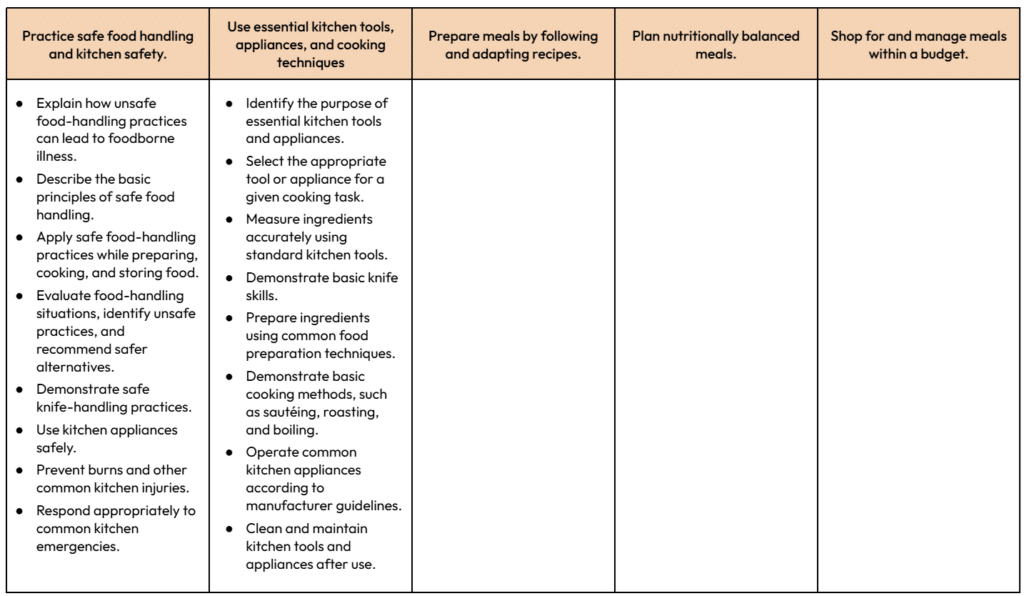
Standards serve as the high-level goals established by state or local governing bodies. They define what a student should know and be able to do by the conclusion of a course or grade level. For instance, in a vocational course such as "Cooking Fundamentals," a standard might dictate that students must "practice safe food handling and kitchen safety." However, standards do not provide a methodology for instruction; they are purely outcome-oriented.
The curriculum acts as the organizational bridge, sequencing these broad standards into a logical order and grouping them into manageable clusters. A robust curriculum ensures that the progression of knowledge is cumulative, preventing gaps in student understanding while avoiding unnecessary repetition.
The unit is the primary vehicle for delivering the curriculum. A unit consists of a thematic or topical collection of individual lessons spanning several days or weeks. For an eight-week cooking course, a teacher might organize the curriculum into six distinct units, such as Food Safety, Kitchen Tools, Food Prep Techniques, Meal Preparation, Nutrition, and Grocery Budgeting. This granular structure allows teachers to focus on specific competencies while maintaining a clear view of the overarching course objectives.

A Chronology of Instructional Design Evolution
The methodology behind modern unit planning has evolved significantly over the last century. Understanding this timeline provides context for why certain planning strategies are currently favored by educational experts.
- Early 20th Century: Instructional planning was largely textbook-driven. Teachers followed the sequence of a chosen text, with little emphasis on measurable outcomes beyond rote memorization.
- 1956: Benjamin Bloom published the "Taxonomy of Educational Objectives," which introduced a hierarchy of cognitive skills. This shifted the focus toward higher-order thinking, such as analysis and evaluation.
- 1991: Grant Wiggins and Jay McTighe introduced "Understanding by Design" (UbD). This popularized the concept of "backward design," arguing that teachers should start with the final assessment and work toward the first lesson.
- 2010s-Present: The rise of digital learning and competency-based education has necessitated even more precise unit planning. Educators now integrate diagnostic and formative assessments more frequently to personalize instruction in real-time.
The Three-Step Process for Backward Unit Design
The core of the "Mastering the Lesson Plan" framework is a three-step process rooted in the principles of backward design. This approach mitigates the risk of "aimless coverage," where teachers move through material without ensuring students have grasped the underlying concepts.
Step 1: Establishing Measurable Objectives
The planning process begins with the translation of standards into measurable learning objectives. An objective is considered measurable only if it describes an observable action rather than an internal mental process. Educational researchers emphasize that terms like "understand" or "learn" are insufficient because they cannot be directly witnessed. Instead, objectives should utilize active verbs such as "identify," "describe," "demonstrate," or "calculate."
In the context of a "Safe Food Handling" unit, measurable objectives might include:
- Identifying the four basic steps of food safety (Clean, Separate, Cook, Chill).
- Describing how to prevent cross-contamination during meal preparation.
- Identifying the minimum internal temperatures required for various types of meat.
- Explaining the "Danger Zone" temperature range and its impact on bacterial growth.
By framing objectives this way, the teacher creates a clear criterion for success, which serves as the foundation for the subsequent steps.
Step 2: Designing the Summative Assessment
Contrary to traditional methods where a test is written after the lessons are completed, backward design mandates that the assessment be designed immediately after the objectives are set. This ensures that the "test" is an authentic reflection of the goals.
The assessment need not always be a multiple-choice exam. Depending on the objectives, it could be a performance task, a portfolio, a project, or a scenario-based open-response test. For the food safety unit, an effective assessment might involve presenting students with a written scenario of a person preparing a meal. The students would then be required to identify food safety errors within the narrative and propose corrective actions. This measures the application of knowledge in a real-world context, which is a higher level of cognitive processing than simple recall.
Step 3: Mapping the Daily Lessons
Only after the destination (objectives) and the evidence of arrival (assessment) are established does the teacher begin planning the daily activities. This stage involves selecting the instructional strategies—such as direct instruction, collaborative group work, or hands-on labs—that will best equip students to meet the objectives. This alignment ensures that every activity has a purpose, reducing "filler" content and maximizing instructional time.
Supporting Data and Educational Analysis
The shift toward structured unit planning is supported by a wealth of data regarding teacher efficiency and student outcomes. According to a study by the National Center for Education Statistics (NCES), teachers who utilize highly structured planning frameworks report lower levels of work-related stress and feel more prepared to handle classroom management challenges.
Furthermore, research into "Alignment Theory" suggests that when instructional activities are tightly aligned with assessments, student achievement scores increase by an average of 20 to 30 percentile points. This is largely because students are no longer "guessing" what will be on the test; the lessons have intentionally built the exact skills required for the final evaluation.
However, the implementation of such frameworks requires significant professional development. A 2023 survey of K-12 educators found that while 85% of teachers believe backward design is effective, only 40% feel they have enough planning time during the school day to implement it faithfully. This discrepancy highlights the need for streamlined processes and comprehensive training courses, such as the "Mastering the Lesson Plan" series, to help teachers work more efficiently.
Expert Reactions and Sector Implications
Educational consultants and school administrators have largely praised the return to foundational planning principles. "We are seeing a ‘pedagogical gap’ in many new teachers who entered the profession during the pandemic," notes Dr. Sarah Jenkins, an instructional coach. "They are often given digital tools but lack the underlying logic of how to sequence a unit. Frameworks that emphasize backward design provide the ‘why’ behind the ‘what,’ which is essential for long-term career success."
From a district-wide perspective, standardized unit planning allows for better collaboration among grade-level teams. When all teachers in a department follow the same three-step process, they can share resources and data more effectively, ensuring that all students receive a consistent quality of education regardless of their specific classroom assignment.
Broader Impact and Future Outlook
As the education sector continues to grapple with the integration of Artificial Intelligence (AI) and personalized learning platforms, the role of the teacher as an instructional designer becomes even more critical. While AI can generate lesson ideas or quiz questions, it cannot replace the human element of strategic unit design—the ability to understand the specific needs of a student population and craft an essential question that sparks curiosity.
The "Mastering the Lesson Plan" framework represents more than just a set of steps; it is a commitment to professional excellence. By focusing on measurable objectives, authentic assessments, and intentional lesson mapping, educators can move away from the "survival mode" of day-to-day planning and toward a more sustainable, impactful practice. In the coming weeks, the focus of this instructional series will shift to the nuances of assessment plans, the mechanics of daily lesson delivery, and the complexities of differentiation, providing a holistic toolkit for the modern classroom.