

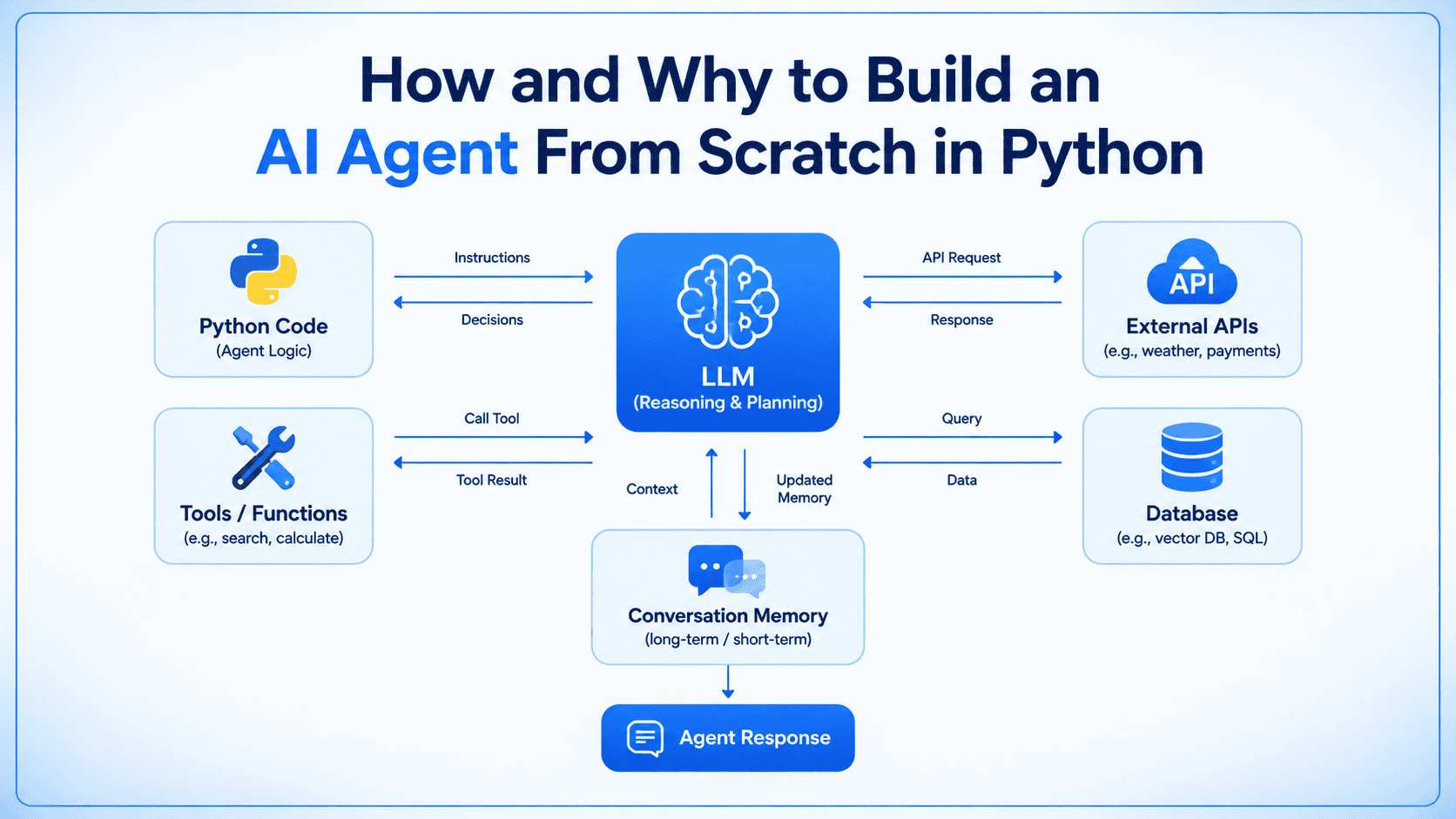
The evolution of artificial intelligence has moved rapidly from simple text generation to the development of autonomous agents capable of interacting with the physical and digital worlds. While large language models (LLMs) like Claude or GPT-4 are remarkably proficient at synthesizing information contained within their training data, they remain fundamentally isolated from real-time systems and private databases. To bridge this gap, developers are increasingly turning to agentic workflows—systems where the model acts as a reasoning engine that can invoke external tools to perform tasks. While many rely on complex orchestration frameworks to build these systems, constructing an AI agent from scratch in plain Python using the Anthropic API provides a level of transparency and control that is often lost in abstraction.
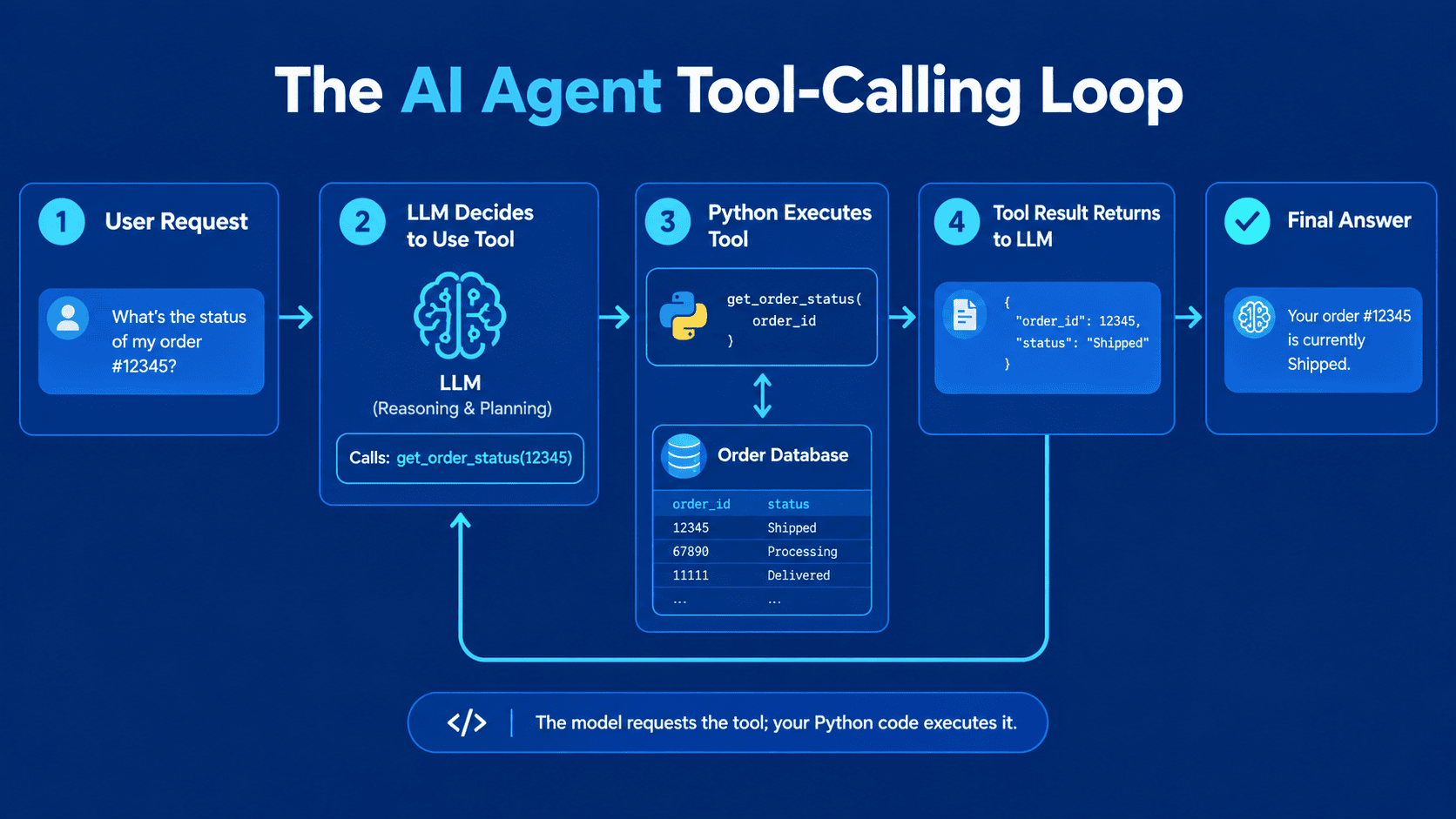
The shift toward agentic AI represents a significant departure from the "chatbot" era. In a standard interaction, a user provides a prompt and the model provides a response based on internal weights. In an agentic interaction, the model is given a "toolbox" of functions. When faced with a query that requires external data—such as checking a live order status or querying a SQL database—the model does not guess. Instead, it pauses its response, requests a specific tool execution, waits for the result, and then incorporates that data into its final answer. This iterative cycle of reasoning and action is what defines an AI agent.
The Strategic Shift Toward Custom Agentic Architectures
The artificial intelligence industry is currently experiencing a period of "framework fatigue." For much of 2023 and 2024, orchestration layers like LangChain and Index served as the primary entry points for developers. However, as AI applications move from prototypes to production, a growing segment of the engineering community is advocating for a "back to basics" approach. Building from scratch using the raw Anthropic API allows developers to avoid the overhead of third-party dependencies, simplify debugging, and maintain full ownership of the logic flow.
Market data suggests that enterprise adoption of AI is increasingly focused on these specialized agents. According to a 2024 McKinsey report on generative AI, the most significant value for businesses lies not in general-purpose chat, but in "task-oriented agents" that can integrate with existing Enterprise Resource Planning (ERP) systems. By building these agents in Python without heavy frameworks, companies can ensure that their AI implementations remain lightweight and easier to secure against emerging threats like prompt injection or unauthorized tool usage.
Technical Foundation: The Anthropic API and Model Landscape
Building a functional agent requires a model with high reasoning capabilities and a robust "tool-use" (also known as function calling) implementation. Anthropic’s Claude 3.5 Sonnet has emerged as a preferred choice for many developers due to its balance of speed and advanced logic. However, the lifecycle of these models is finite. Anthropic has officially signaled that Claude Sonnet 4.5 is slated for retirement on November 30, 2026. This timeline highlights the importance of building modular code; when a specific model version is deprecated, a well-structured Python agent can be updated simply by swapping the model string in the API configuration.
To begin the construction of a custom agent, the environment must be configured with the Anthropic Python SDK and a valid API key. Industry best practices dictate that these keys should never be hardcoded into the source code. Instead, they are managed via environment variables, ensuring that the credentials remain secure during deployment.
The Mechanics of Tool Calling: Defining the Model’s Capabilities
The primary differentiator between a standard LLM call and an agent is the "tool schema." A tool is essentially a Python function that the model is permitted to use. To make the model aware of this tool, the developer must provide a structured JSON definition—a metadata map that includes the function’s name, a detailed description of what it does, and a schema for the parameters it requires.
The description is perhaps the most critical component. In an agentic system, the model uses this description to decide when to "reach" for a tool. For instance, if a developer provides a function called get_order_status, the description must explicitly state that this tool should be used whenever a user asks about a specific order ID. Without this semantic guidance, the model may attempt to hallucinate an answer rather than performing a database lookup.
When the model decides to use a tool, it does not actually execute the code. Instead, it sends a structured request back to the Python script, indicating which function it wants to call and with what arguments. The Python script then executes the local function, captures the output, and sends that result back to the model in a second API call. This "round-trip" architecture ensures that the developer maintains ultimate control over what code actually runs on their servers.
The Iterative Execution Loop: The Heart of the Agent
A truly autonomous agent must be capable of multi-step reasoning. A user’s query might be complex, requiring the model to call multiple tools in sequence or even the same tool multiple times with different parameters. To handle this, the agent is wrapped in an execution loop.
The loop continues as long as the model’s "stop reason" is identified as a tool request. In a sophisticated implementation, a max_iterations cap is implemented to prevent "infinite loops." This is a critical safety feature; if a model becomes confused and repeatedly calls tools without reaching a conclusion, the cap ensures the process terminates, protecting the developer from excessive API costs and preventing system hang-ups.
This loop-based architecture allows for complex problem-solving. For example, if a user asks, "Where is my package, and can I change the delivery address?" the agent might first call a get_order_status tool to find the carrier, then a get_tracking_info tool to find the current location, and finally a get_policy tool to determine if address changes are permitted for that specific carrier. The Python loop manages this entire orchestration, passing the results of each step back to the model until a comprehensive final answer is generated.
Implementing Persistent Memory and Contextual Awareness
One of the most significant challenges in building AI agents is the stateless nature of APIs. By default, every call to an LLM is a fresh start; the model has no memory of what was said in previous turns. For an agent to be effective in a conversation, it must have "memory."
In a custom Python implementation, memory is achieved by maintaining a persistent list of messages within a class structure. Each time the user speaks, the message is added to the list. Each time the model calls a tool or provides an answer, those interactions are also appended. When the next API call is made, the entire history is sent back to the model. This allows the model to resolve pronouns—such as knowing that "it" refers to the order number mentioned three turns ago.
However, as conversations grow longer, they risk exceeding the model’s "context window"—the maximum amount of text it can process at once. Professional-grade agents often include logic to summarize older parts of the conversation or prune less relevant metadata to keep the most important context within the model’s view.
Security and Ethical Implications of Autonomous Agents
The rise of agentic AI brings new security considerations that differ from traditional software. When a model is given the power to call functions, it effectively becomes a user of your internal APIs. This introduces the risk of "indirect prompt injection," where a model might be manipulated into calling a tool with malicious parameters.
To mitigate these risks, developers building agents from scratch must implement strict validation at the function level. An agent should never be given "blank check" access to a database. Instead, it should interact with well-defined, read-only functions that have their own internal security checks. Furthermore, for actions that have real-world consequences—such as deleting a record or making a purchase—developers often implement a "human-in-the-loop" requirement, where the agent must pause and wait for a manual confirmation before proceeding.
Future Outlook: The Transition to Agent-First Software
The transition from framework-dependent AI to custom-built Python agents marks a maturing of the field. As developers gain a deeper understanding of how tool calling and execution loops function, the "magic" of AI orchestration is being replaced by standard software engineering principles.
The broader impact of this shift is profound. By moving away from "black box" frameworks, developers can build agents that are more reliable, easier to audit, and more cost-effective. As Anthropic and other providers continue to refine their models’ reasoning capabilities, the ability to build these systems from scratch will become a fundamental skill for the next generation of software engineers.
In conclusion, building an AI agent from scratch is more than just a technical exercise; it is a strategic approach to creating robust, transparent, and highly capable systems. By focusing on the core components—the model call, the tool schema, the execution loop, and the memory management—developers can create AI solutions that are perfectly tailored to their specific data and business needs. As the industry moves toward the 2026 model transitions and beyond, the simplicity and power of plain Python will likely remain the gold standard for high-performance AI architecture.