Julia 1.13 Release Signals a Major Leap in Performance and Developer Experience

The Julia programming language community has officially announced the release of Julia version 1.13, marking a significant milestone in the language’s evolution toward resolving the "Time to First Plot" (TTFX) latency issues and refining the developer experience. This latest iteration introduces substantial improvements to precompilation speeds, garbage collection efficiency, and the interactivity of the REPL (Read-Eval-Print Loop). Developed through a collaborative effort involving hundreds of contributors and extensive community testing, Julia 1.13 represents a concerted effort to optimize the language for both high-performance scientific computing and general-purpose software development.
A New Benchmark in Latency Reduction
Since its inception at MIT, Julia has been celebrated for its ability to bridge the gap between the ease of high-level languages like Python and the performance of low-level languages like C++. However, a persistent hurdle for users has been latency—specifically the delay caused by package precompilation and the just-in-time (JIT) compilation of code upon first execution. Julia 1.13 addresses this directly with a series of optimizations that reduce package precompilation time by approximately 30% compared to version 1.12. When measured against the Long-Term Support (LTS) version 1.10, the improvements remain significant, ranging from 10% to 20% depending on hardware architecture.
The development team, led by Ian Butterworth and a cohort of community contributors, implemented a systematic measurement framework using the "Julia-TTFX-Snippets" repository. This allowed developers to benchmark real-world workflows rather than isolated synthetic tests. This data-driven approach led to a 20% improvement in startup time. For instance, a standard "empty" startup now takes approximately 56.7 milliseconds, down from 69.1 milliseconds in the previous version. These marginal gains in startup and precompilation accumulate into a significantly more responsive environment for developers who frequently restart sessions or work with large dependency trees.
Evolution of the Julia REPL and Windows Support
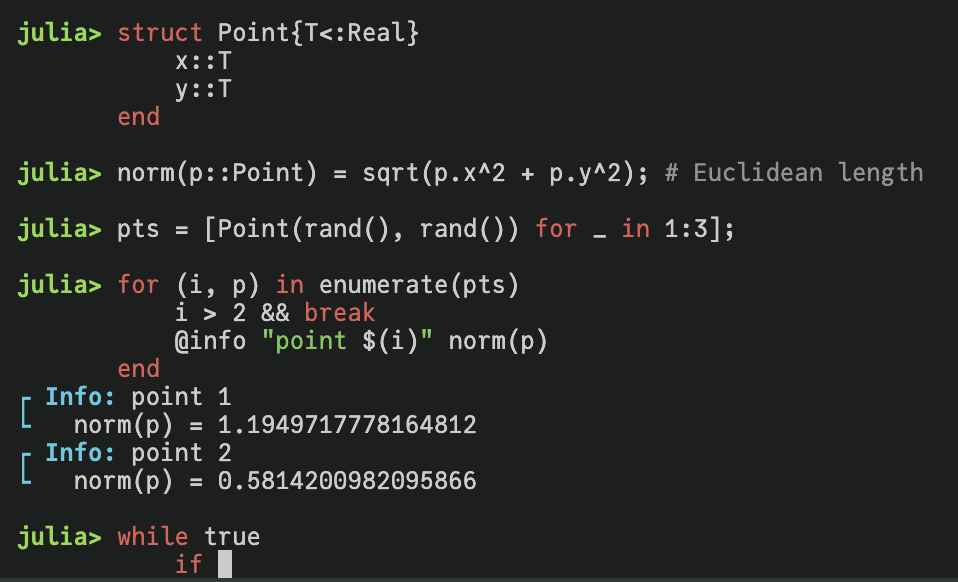
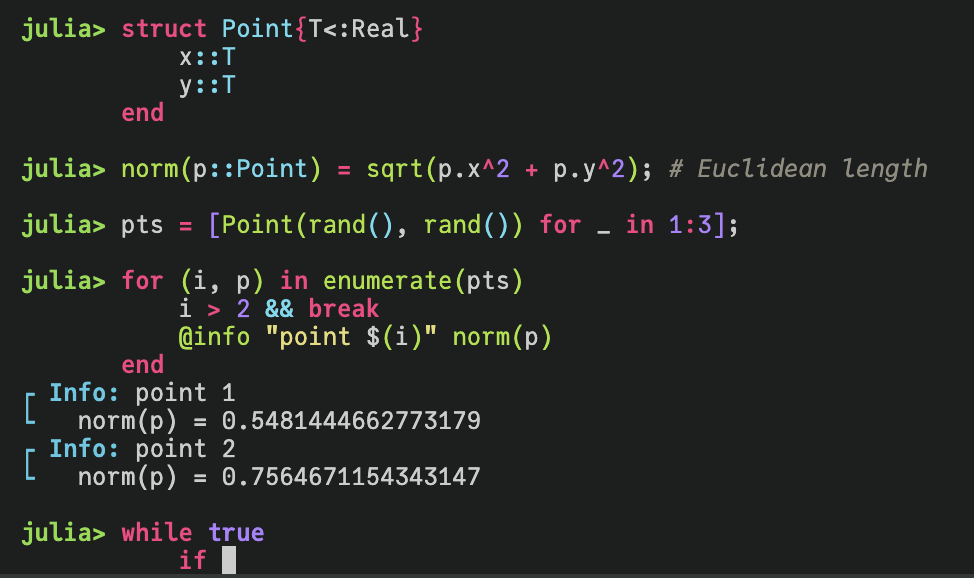
The REPL is the heart of the Julia development workflow, and version 1.13 introduces features that bring it closer to modern Integrated Development Environments (IDEs). For the first time, the Julia REPL includes native syntax highlighting without requiring external packages like OhMyREPL.jl. While the default color scheme is conservative to ensure accessibility, it is fully customizable, supporting popular themes such as Monokai.
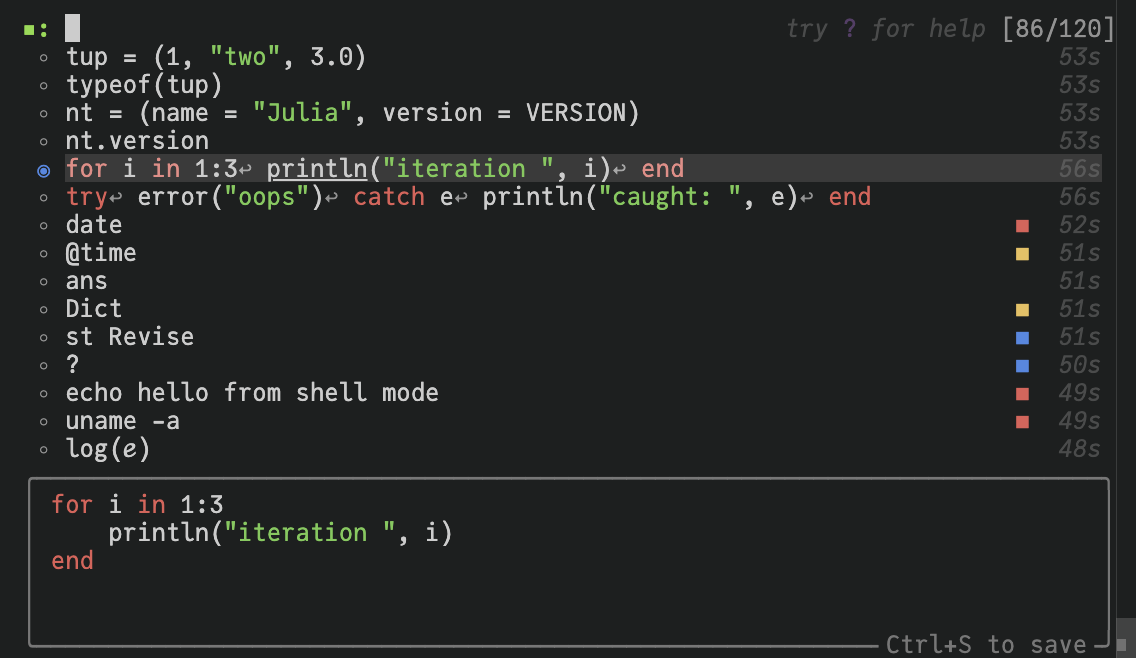
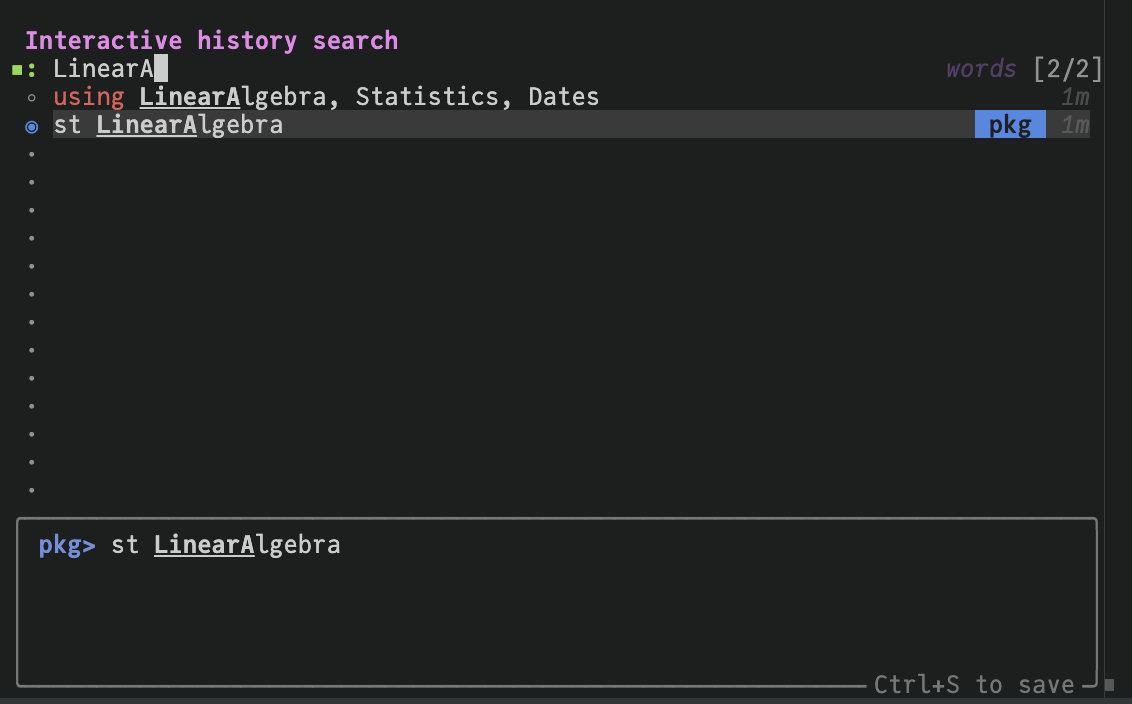
Furthermore, the history search functionality (Ctrl-R) has been redesigned to mimic the behavior of fzf, a popular command-line fuzzy finder. This allows users to search through their command history with greater fluidity and precision. Windows users, in particular, receive a long-awaited quality-of-life update with the implementation of "bracketed paste." This feature allows the terminal to distinguish between typed text and pasted blocks of code, preventing the REPL from attempting to evaluate code line-by-line during a large paste operation. This fix resolves a long-standing performance bottleneck on Windows, where pasting a 500-line function could previously cause the terminal to hang or stutter.
Structural Changes to Garbage Collection and Hashing
One of the most technically profound updates in Julia 1.13 is the optimization of the Garbage Collector (GC). Previously, a full garbage collection cycle required the system to "mark" every object in the heap to determine reachability. This included objects within the "system image" and "package images"—static components like method tables and compiled constants that are effectively permanent and rarely mutated. As users loaded more packages, the cost of GC grew linearly with the amount of code loaded, even if the user’s actual data heap remained small.
In version 1.13, objects within these images are loaded as "permanently marked." The GC mark phase now skips these objects entirely, tracking only the rare instances where an image object is mutated to point to a new heap object. The result is a dramatic reduction in GC overhead. In a bare session, a full collection that previously took 35 milliseconds now completes in just 2 milliseconds. For complex environments involving heavy packages like GLMakie, GC time has been slashed from 187 milliseconds to 68 milliseconds. This change ensures that the performance of a Julia session no longer degrades simply because a large library has been imported.
Parallel to GC improvements, Julia 1.13 has replaced its primary hashing algorithm. The language has moved from MurmurHash3 to RapidhashNano, a streaming, non-cryptographic hash function implemented in pure Julia. This transition offers two primary benefits: it is significantly faster—reducing the time to hash long strings from 8.5 microseconds to 1.7 microseconds—and it improves maintainability by moving the implementation out of C. The new hashing logic also improves "avalanche" characteristics, ensuring that small changes in input data result in significantly different hash values, which is critical for the performance of dictionaries and sets.
Package Management and Ecosystem Efficiency
The Julia package manager, Pkg, remains a cornerstone of the ecosystem’s success. In 1.13, Pkg has transitioned its default compression algorithm from gzip to zstd. Data released by the development team indicates that for common package downloads (such as Plots.jl or ModelingToolkit.jl), zstd provides a better compression ratio and reduces decompression time by nearly 40%. Total download sizes for a typical stack were reduced from 307 MB to 239 MB in internal testing.
Other notable Pkg updates include:
- Smart Versioning: When adding a new package to an environment,
Pkgnow prioritizes versions that match already-loaded dependencies. This prevents unnecessary re-precompilation cycles during a session. - Registry Tracking: Manifests now automatically record the registry source of each package, simplifying the process of instantiating environments across different machines or CI/CD pipelines.
- Testing Improvements:
Pkg.testno longer defaults to strict bounds checking (--check-bounds=yes). This allows the test process to reuse existing precompile cache files, drastically shortening the time between initiating a test and seeing the first results.
Tooling and Advanced Introspection
Julia 1.13 introduces the --trace-eval command-line flag, a tool designed to assist developers in debugging slow-loading scripts or identifying hangs in CI environments. By providing a real-time trace of top-level evaluations, developers can pinpoint exactly which line of a script or which dependency is causing a delay.
The language’s introspection macros, such as @which and @code_typed, have also been enhanced. They now support type annotations directly in the call expression. This allows developers to copy a frame from a stack trace (e.g., sort!(::VectorInt)) and paste it directly into an introspection macro to find the specific method implementation. This feature streamlines the debugging process, particularly when dealing with Julia’s complex multiple dispatch system.
For deployment, the "JuliaC" project—aimed at producing small, standalone executables—has been formalized into the JuliaC.jl package. Improvements in code "trimming" allow for the removal of unused finalizers and internal functions, leading to smaller binary sizes and more efficient standalone applications.
Broader Impact and Industry Implications
The release of Julia 1.13 is more than a incremental update; it is a strategic response to the evolving needs of the scientific and industrial computing sectors. By aggressively targeting latency and garbage collection overhead, the Julia Steering Committee is positioning the language to be more competitive in areas where Python and R currently dominate due to their perceived "snappiness."
In the financial sector, where Julia is used for high-frequency trading simulations and risk management, the reduction in GC pauses and the faster hashing of large datasets directly translate to lower operational costs and faster model iteration. In climate science and pharmaceutical research, where researchers often work with massive dependency stacks (like the SciML ecosystem), the 30% reduction in precompilation time removes a significant friction point in the daily research workflow.
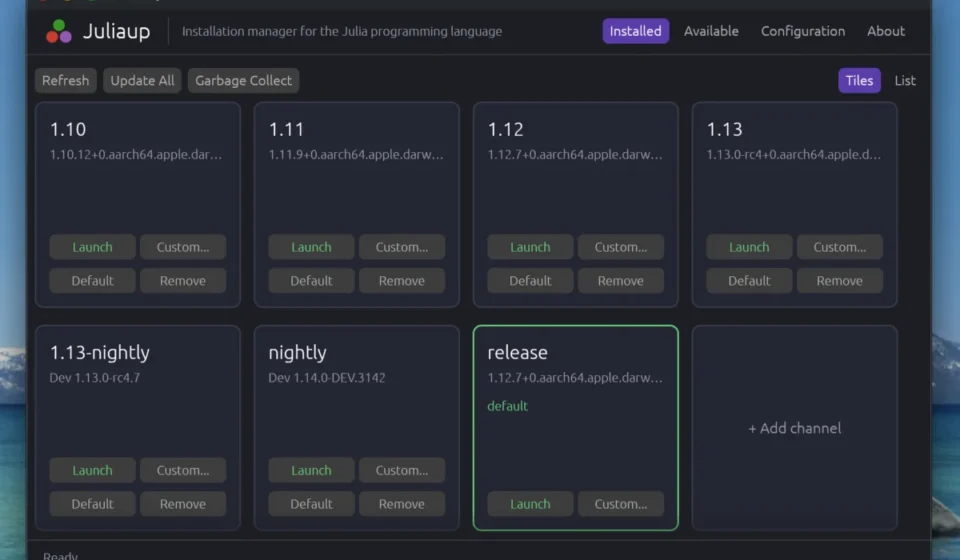
The introduction of the Juliaup GUI also signals a move toward broadening the language’s user base. By providing a graphical interface for version management, the Julia ecosystem becomes more accessible to students and researchers who may be less comfortable with command-line environments.
Chronology of Development
The path to Julia 1.13 began shortly after the release of version 1.12, with a focus on stabilizing the internal task scheduler. A key milestone was reached on September 7, 2026, when the project launched its automated performance tracking at perf.julialang.org/ttfx. This allowed the core team to monitor the impact of every code commit on latency in real-time. Throughout late 2026 and early 2027, the community conducted several rounds of beta testing, identifying regressions in the new scheduler and hashing algorithms before the final stable release.

Looking ahead, the development team has indicated that work on a formal task cancellation mechanism is already underway, slated for inclusion in Julia 1.14. This will address one of the final remaining gaps in Julia’s concurrency model, providing developers with more control over long-running asynchronous tasks.
In summary, Julia 1.13 delivers on the community’s promise of a faster, more reliable, and more user-friendly programming environment. By optimizing the core internals of the language while simultaneously enhancing the frontend tools that developers use every day, this release solidifies Julia’s position as a premier language for the modern era of high-performance computing.