Crafting an Impactful TEDx Talk: An Academic’s Journey Through Rigorous Rehearsal and Refinement

The arduous process of preparing a TEDx talk, a platform renowned for its concise and compelling delivery of "ideas worth spreading," often demands an unprecedented level of dedication, particularly from academics accustomed to more elaborate discourse. One recent endeavor to translate complex sociological research into an accessible 12-minute presentation involved an intensive, multi-stage refinement process, highlighting the unique challenges and rewards of public scholarship. This journey, which saw an academic invest over 120 hours in writing, revising, and rehearsing a single script, underscores the meticulous craft required to distill years of research into a potent, engaging narrative for a general audience.
The initial impetus for this demanding undertaking was the opportunity to deliver a TEDx talk, a format that necessitates precision, brevity, and a strong narrative arc. Unlike traditional academic lectures, which often prioritize comprehensive data presentation and nuanced argumentation, a TEDx talk thrives on clarity, emotional resonance, and a memorable core message. For an academic, this shift from extensive exposition to focused storytelling represents a significant paradigm change, akin to exercising an entirely new intellectual muscle. The strict time limit of 12 minutes or less was a primary driver for the decision to meticulously script the talk rather than relying on an outline, a common practice in academic settings but a potential pitfall for time-constrained public speaking.
Navigating the Academic-to-Public Speaking Divide
The transition from academic writing to crafting a TEDx script is often described as a challenging reorientation. Academics are trained to write for peers, employing specialized jargon, detailed methodologies, and extensive bibliographies. Public speaking, especially on a platform like TEDx, demands the opposite: clarity, universality, and emotional connection. This particular academic, a seasoned writer within their field, quickly recognized the need for external expertise to bridge this gap. This led to an unconventional, yet ultimately crucial, decision: enlisting a professional speaking coach. Organizations like Speaking Your Brand specialize in guiding experts through this transformation, focusing on message clarity, audience engagement, and confident delivery. The coach provided invaluable feedback, reviewing multiple drafts and listening to rehearsals, steering the content away from a purely academic lecture toward a more dynamic public presentation.
Further support was sought from a developmental editor, Audra Wolfe, known for her work in podcast and radio editing. Her insights emphasized the importance of storytelling that appeals to the senses and emotions, a dimension often less prioritized in academic prose. While the academic initially found the idea of invoking "smells" daunting, the focus on vivid visuals and evocative sounds proved to be a powerful technique for grounding abstract concepts in relatable human experience. This multi-faceted feedback mechanism—from professional coaches and editors to a diverse array of colleagues and friends—became the bedrock of the talk’s evolution.
The Evolution of a Narrative: From Policy to Personal Stories
The initial draft of the TEDx talk reflected the academic’s comfort zone: a detailed exploration of place-based and historical references, replete with explanations of complex policies such as redlining, White flight, and slum clearance. The core argument aimed to demonstrate the interconnectedness of segregation, mass incarceration, and gentrification, positing that policies creating segregation laid the groundwork for mass incarceration, which in turn facilitated gentrification. The proposed explanation was structured as follows:
"If you read The Color of Law, then you know that federal policies created racial segregation. If you read The New Jim Crow, then you know that Black communities were devastated by mass incarceration. And, if you read How to Kill a City, then you know that gentrification has led to the displacement of working class and Black people from cities. Now, what you might not know is that segregation, incarceration, and gentrification are connected. My research into the neighborhood where I grew up has taught me that policies that created segregation laid the groundwork for mass incarceration, which in turn made gentrification possible."
While intellectually robust, this approach, when presented to the speaking coach, elicited feedback that it felt like a "fascinating academic lecture," not a TEDx talk. The critical distinction lay in the need for more storytelling and less policy description. The coach advised cutting this dense introductory paragraph, recognizing that most general audience members would not have read these seminal texts and therefore would not immediately grasp the implied connections. This marked a pivotal shift in the drafting process: the necessity of foregrounding personal narrative and emotional engagement over purely factual exposition.
Subsequent feedback from humanities colleagues reinforced this direction, urging the academic to "slow down and really tell the stories," specifically incorporating more personal experiences and those of friends, adding "more details and texture." This iterative process of refinement meant systematically paring down the intricate policy discussions to create space for compelling human narratives.
The Sociologist’s Dilemma: Balancing Structure and Story
For a sociologist, striking a balance between rigorous structural analysis and evocative storytelling presents a profound challenge. The academic found it difficult to cut what seemed like "all so important" policy discussions. Specific cuts included:

- Details on the Washington Real Estate Board’s code of ethics promoting racial segregation.
- Information on White individuals accessing federally-backed loans in the 1940s to open businesses, alongside the stark statistic that only 2% of FHA-insured loans went to Black borrowers.
- The alarming wealth gap in Washington, D.C., where White residents possess 81 times the wealth of their Black counterparts.
These statistics, while crucial for a comprehensive academic understanding of systemic inequality, were deemed too complex to be fully explained within the restrictive time frame of a TEDx talk without detracting from the narrative flow. The principle guiding these difficult editorial decisions was clear: "There is no use giving a random fact if you can’t flesh it out." This meant sacrificing breadth for depth in the chosen stories. For instance, an entire narrative about a family leaving during White flight was cut to allow for a richer, more detailed exploration of other personal accounts.
Crafting a Call to Action: The Ethical Imperative
One of the most challenging aspects of the talk’s development was formulating a compelling and authentic call to action for the conclusion. After detailing the "violence of disinvestment, lives lost, and people displaced and imprisoned," the academic struggled to find policy suggestions that adequately addressed the profound scale of the issues. Standard proposals like "more affordable housing," "changing lending laws," or "providing jobs to formerly incarcerated people" felt insufficient in the face of such systemic injustice.
This ethical dilemma led to a critical discussion with family members who shared the academic’s political leanings but were outside the academic sphere. The initial ideas about "lessons learned" or "White supremacy encoded into laws" were met with blunt, insightful critiques. Brother Sean challenged, "Why just acknowledge the harms? Why not abolish the police?" Brother Ian provided a powerful analogy: "You wouldn’t end a talk enumerating the harms of chattel slavery by vaguely talking about profits over people and the deep roots of White supremacy, right?" These interventions proved instrumental in aligning the talk’s conclusion with the academic’s core values, pushing for a more direct and impactful message. The revised conclusion, crafted with the help of a colleague, Crystal, strategically called back to the personal stories woven throughout the talk, providing a resonant and emotionally charged close.
The Power of Collective Feedback and Collaborative Refinement
The journey to the final script was a testament to the power of collaborative feedback. Over the course of eight weeks, the academic sought input from at least 27 friends and colleagues, each offering unique perspectives. Close friends from Washington, D.C., provided crucial insights, suggesting the addition of at least one uplifting story to balance the heavy subject matter. Further reviews from another brother, Justin, and his girlfriend, Tina, pinpointed areas needing additional explanation. Colleagues like Anthony offered detailed tips on phrasing and pacing for maximum impact, while the academic’s mother advised narrowing down the talk’s key points. Friend Christina emphasized the need for clearer argumentation.
Beyond the script, the performance aspect required dedicated attention. The talk contained emotionally challenging sections, necessitating specific delivery techniques. A friend and colleague, Nicole, a theatre professor, generously provided coaching on performance, helping the academic navigate the emotional landscape of the script effectively.
The Final Presentation: Beyond the Script
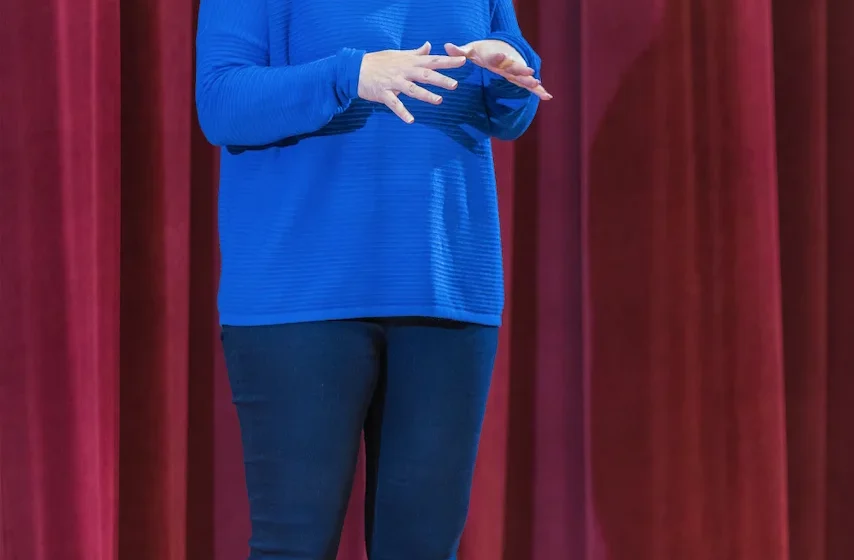
The culmination of this extensive preparation was the professional recording of the talk on a stage, a setting that allowed for a more polished presentation than a typical virtual conference. The university’s support was vital, providing a student to assist with graphics and a media team to integrate video and visual elements, significantly enhancing the talk’s production quality.
The sheer volume of effort invested in this project is staggering. The academic estimated at least 80 hours dedicated to writing and revising the script over eight weeks, alongside an additional 40 hours spent practicing. This consistent daily practice, often during afternoon walks, ensured not only memorization but also the natural and impactful delivery of the meticulously crafted narrative.
Implications for Public Scholarship and Engagement
This rigorous process offers valuable lessons for academics and experts aiming to engage broader audiences. It highlights:
- The Necessity of Specialised Coaching: Bridging the gap between academic rigor and public engagement often requires external expertise from speaking coaches and communication specialists.
- The Power of Storytelling: Complex societal issues, such as systemic racism and inequality, are often best understood and internalized when presented through relatable human stories, even if it means simplifying dense policy explanations.
- The Iterative Nature of Communication: Effective public speaking is rarely a first-draft phenomenon. It demands multiple rounds of feedback, revision, and rehearsal from diverse perspectives.
- Ethical Considerations in Advocacy: Crafting a call to action on sensitive topics requires deep reflection, authenticity, and sometimes, the courage to challenge conventional solutions.
- The Value of Interdisciplinary Collaboration: Engaging experts from fields like theatre, editing, and even non-academics, enriches the final product significantly.
The dedication demonstrated in crafting this TEDx talk underscores the evolving landscape of public scholarship. In an era where information overload is prevalent, the ability to distil complex ideas into compelling, concise, and emotionally resonant narratives is more critical than ever. The effort to deliver this particular talk—on the interconnected legacies of segregation, incarceration, and gentrification—serves as a powerful example of how academic insight, when combined with a commitment to effective communication, can profoundly impact public understanding and discourse on pressing social issues. The talk, now available for public viewing, represents not just an idea shared, but a masterclass in the demanding art of public engagement.