
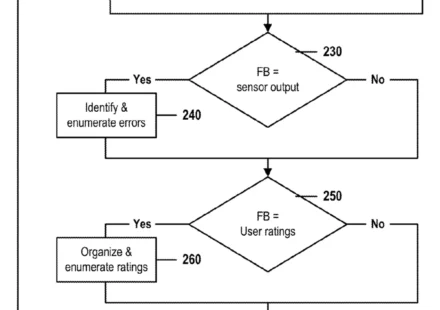
We Specified an AI Agent in 2016. We Called It Analytics.

The Architecture of Real-Time Feedback The patent, authored by S. D’Alo’, M. Lerro, M. Noioso, and N. Piazza, describes a closed-loop system intended to solve a fundamental challenge in live performance: the lag between a performer’s actions…
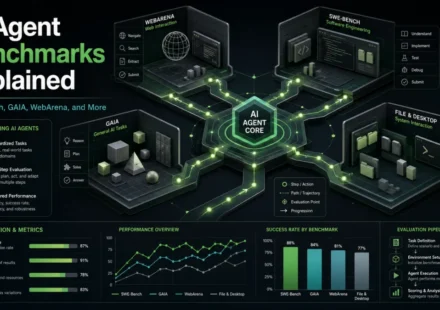
Navigating the Evolving Landscape of AI Agent Benchmarks and the Search for Reliable Autonomous Performance Metrics

The rapid transition from static large language models to autonomous AI agents represents one of the most significant shifts in the history of artificial intelligence, moving the industry from systems that simply "know" to systems that can…

Architecting the Future: Six Strategic Patterns for Scaling Production-Ready Agentic AI Systems

The landscape of generative artificial intelligence is undergoing a seismic shift as enterprise requirements evolve from simple conversational interfaces to sophisticated agentic workflows. While conversational AI dominated the initial wave of adoption,…

The Evolution and Withdrawal of Python Enhancement Proposal 842 The Export Statement

The Python steering council and the broader developer community recently concluded a significant debate regarding the structural integrity and visibility of module-level names, following the formal withdrawal of Python Enhancement Proposal (PEP) 842.…

Comprehensive Evolution of knitr: A Three-Year Review of Versions 1.46 to 1.52 Enhancing R Dynamic Document Generation

The landscape of dynamic document generation within the R programming environment has undergone a significant transformation between 2024 and 2026, marked by a series of strategic updates to the knitr package. As a cornerstone of reproducible research…
Julia Internals and Ecosystem Development Update for November 2025: A Comprehensive Overview of Language Evolution and Community Progress
The release of the November 2025 update on Julia internals, curated by Stefan Krastanov and a specialized collective of core contributors, marks a significant milestone in the ongoing maturation of the Julia programming language. This monthly briefing…

The Evolution of Automated Decision-Making: A Comparative Analysis of OpenAI’s Decisions API and TypesafeAI’s JEV

The landscape of artificial intelligence has shifted from purely generative capabilities toward specialized, high-velocity decision-making frameworks designed for seamless software integration. This transition was marked most notably by the recent…

PEP 844 Adding public and private to Builtins

Python core developer Barry Warsaw has officially introduced a draft proposal to integrate two new functions, public() and private(), into the language’s built-in namespace. Designated as PEP 844, this Standards Track proposal aims to modernize how…

Adding Temporal Reasoning to Graph-RAG Tracking Fact Freshness and Staleness
The rapid evolution of Retrieval-Augmented Generation (RAG) has transformed how large language models (LLMs) interact with proprietary and real-time data. However, as enterprise adoption scales, a critical flaw has emerged in standard architectures: the…

The Future of the R Markdown Ecosystem and the Sustainability of Open Source Development

The landscape of reproducible research and data science documentation is facing a significant transition as the formal maintenance structure for the R Markdown ecosystem undergoes a major shift. Following a two-and-a-half-year contractual arrangement…
