Building a Lightweight RAG Pipeline with Scikit-Learn and Open-Source LLMs

The rapid evolution of generative artificial intelligence has led to the widespread adoption of Retrieval-Augmented Generation (RAG), a technique that bridges the gap between static large language models (LLMs) and dynamic, private, or specialized datasets. While the current industry standard often involves complex infrastructures—comprising paid API services like OpenAI, heavyweight frameworks like LangChain, and managed vector databases like Pinecone—a growing movement toward "Lean AI" is emerging. This movement emphasizes the use of established machine learning libraries such as scikit-learn and lightweight, open-source models to create efficient, cost-effective, and private RAG pipelines. By leveraging the NearestNeighbors algorithm within scikit-learn and sentence-transformer models from Hugging Face, developers can now deploy functional RAG systems that run entirely in-memory, bypassing the latency and financial overhead of cloud-based AI ecosystems.
The Architectural Shift Toward Local and Lightweight RAG
The traditional RAG architecture was born out of a necessity to provide LLMs with context they were not trained on. Initially, this required significant computational power and specialized storage solutions known as vector databases. These databases store "embeddings"—numerical representations of text that capture semantic meaning—allowing a system to "search" for information based on concept rather than just keywords.
However, as the field matures, the "bigger is better" philosophy is being challenged. For small-to-medium datasets, such as internal corporate wikis, technical documentation, or personal research archives, the overhead of a dedicated vector database often outweighs its benefits. Industry data suggests that for document collections under 100,000 segments, the brute-force search capabilities of scikit-learn’s NearestNeighbors can match or exceed the retrieval speed of complex distributed systems, with the added benefit of zero infrastructure costs.
Furthermore, the rise of Small Language Models (SLMs) has changed the generation landscape. Models like Alibaba’s Qwen2.5-0.5B-Instruct provide surprising reasoning capabilities with a fraction of the memory footprint required by GPT-4 or Llama 3. This enables the entire RAG cycle—from embedding and retrieval to text generation—to occur on a single local machine or a free-tier cloud environment like Google Colab.
The Technical Framework: From Raw Text to Semantic Retrieval
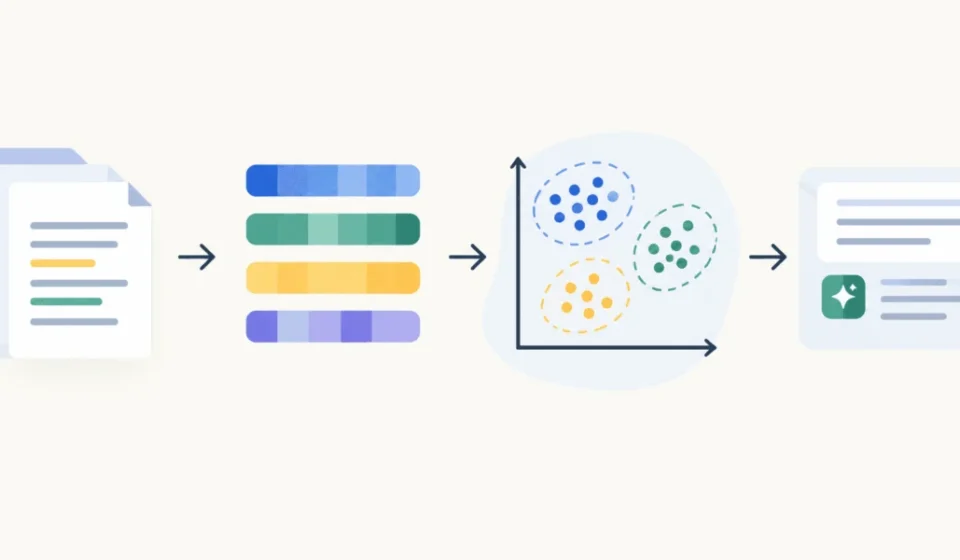
Building a transparent RAG pipeline requires a chronological progression through four distinct stages: data ingestion, semantic chunking, vector indexing, and generative response.
1. Data Ingestion and Environment Setup
The first step in constructing a local RAG system involves assembling the necessary open-source toolkit. Unlike commercial solutions that abstract these layers, a scikit-learn-based approach requires explicit control over the library stack. Key dependencies include sentence-transformers for creating the mathematical vectors and transformers for the LLM interface.
In a typical implementation, researchers utilize datasets of manageable size. For instance, a collection of documents describing various geographical regions or technical specifications serves as the "knowledge base." The process begins by loading these documents into a flat list, ensuring that the raw text is clean and ready for processing.
2. Semantic Chunking and Embedding Generation
A critical challenge in RAG is the "context window" of the language model. Feeding an entire book into an LLM to answer a single question is inefficient and often leads to "lost in the middle" phenomena, where the model ignores the most relevant information. To solve this, documents are broken into "chunks."
Standard practice involves using a sliding window approach. For example, a chunk size of 25 to 50 words with a small overlap ensures that semantic context is preserved across the boundaries of each segment. Once chunked, these text snippets are converted into embeddings using a model like all-MiniLM-L6-v2. This specific model is a favorite among practitioners because it produces high-quality 384-dimensional vectors while remaining small enough to run on a standard CPU.
3. Vector Retrieval with Scikit-Learn
The core innovation in a lightweight pipeline is replacing a managed vector database with scikit-learn’s NearestNeighbors. While vector databases are optimized for millions of records, NearestNeighbors is highly efficient for smaller sets stored in RAM.
By using the "cosine" metric, the system calculates the angle between the vector of a user’s query and the vectors of the stored document chunks. This mathematical approach identifies "semantic similarity" rather than literal word matches. When a user asks a question, the system retrieves the top $k$ (usually 3 to 5) most similar chunks, which will serve as the factual basis for the LLM’s answer.
4. Generation via Open-Source LLMs
The final stage is the "Generation" in RAG. The retrieved chunks are stuffed into a prompt template alongside the user’s original question. A system prompt instructs the model to act as a "helpful assistant" and to answer "ONLY using the provided context."
Using a model like Qwen2.5-0.5B-Instruct allows for rapid inference. This model uses a "chat template" format, which helps it distinguish between the retrieved facts and the user’s inquiry, significantly reducing the likelihood of hallucinations—a common problem where AI generates false information confidently.
Comparative Analysis: Local vs. Cloud RAG
The implications of adopting a scikit-learn-based RAG pipeline extend beyond mere cost savings. Security and data privacy have become paramount for enterprises handling sensitive information.
| Feature | Cloud-Based RAG (API) | Lightweight Local RAG |
|---|---|---|
| Cost | Per-token billing; monthly DB fees | Free (Compute-only) |
| Privacy | Data sent to third-party servers | Data remains on-premise |
| Latency | Network dependent (300ms – 2s) | Local (50ms – 500ms) |
| Scalability | Virtually unlimited | Limited by RAM/VRAM |
| Complexity | High (API keys, environment variables) | Low (Single Python script) |
Technical benchmarks indicate that for a corpus of 1,000 documents, a local scikit-learn retriever can return results in under 10 milliseconds. In contrast, a cloud-based vector database may take 50 to 100 milliseconds due to network overhead. For real-time applications, such as customer service chatbots or internal search tools, these milliseconds are vital.
Industry Perspectives and Expert Reactions
The shift toward smaller, more transparent models is being met with enthusiasm by the developer community. Software architects argue that the "black box" nature of proprietary AI is a liability for regulated industries like finance and healthcare.
"We are seeing a ‘return to basics’ in machine learning," says one senior AI researcher. "The initial hype was about the biggest models and the most expensive databases. Now, the focus is on ‘right-sizing’ the solution. If you can achieve 95% of the performance of a paid API using scikit-learn and a 500-million parameter model, the business case for the expensive alternative collapses."
Furthermore, the open-source community has praised the Qwen model series for its efficiency. By providing high-quality instruction-following capabilities in a tiny package, these models allow developers in regions with limited high-end hardware access to participate in the AI revolution.
Broader Implications and Future Outlook
The ability to build an end-to-end RAG pipeline without paid dependencies marks a milestone in the democratization of AI. It lowers the barrier to entry for startups and individual researchers who may not have the venture capital to fund massive API bills.
However, this approach is not without its limitations. As the document collection grows into the millions, the linear search time of scikit-learn’s "brute force" algorithm will eventually degrade. At that point, developers must transition to Approximate Nearest Neighbor (ANN) algorithms, such as those found in the FAISS library or specialized vector databases.
Nevertheless, for the vast majority of use cases—prototyping, small-scale deployments, and edge computing—the combination of scikit-learn and open-source LLMs represents a robust, transparent, and highly effective architecture. This methodology proves that the power of modern AI lies not just in the size of the model, but in the intelligent integration of classic machine learning techniques with contemporary linguistic capabilities. As hardware continues to improve and SLMs become even more sophisticated, the "lean" approach to RAG is likely to become the preferred standard for localized intelligence.