BioFAIR Data to Discovery and Collaboration Fest Unites Bioinformatics Communities to Enhance Research Software Interoperability

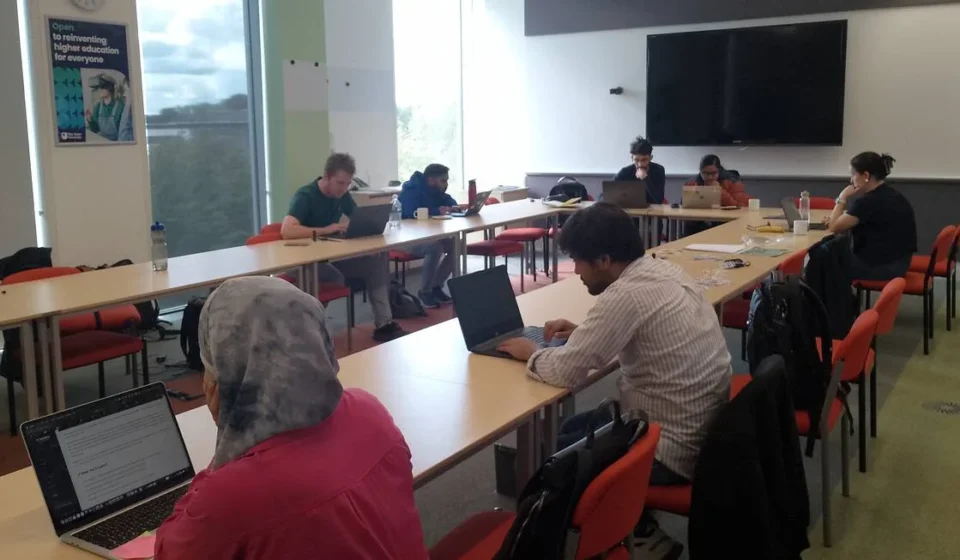
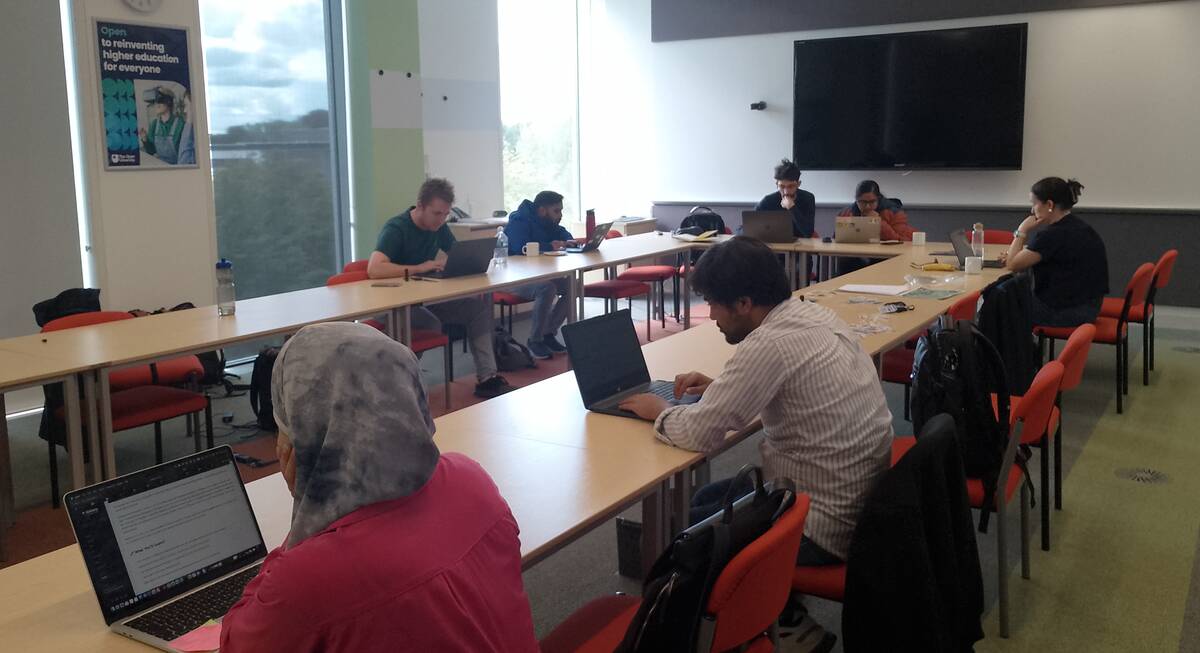
On September 15-17, 2026, a pivotal gathering of leading bioinformatics communities—Bioconductor, Galaxy, and nf-core—took place at The Open University in Milton Keynes, UK. This three-day event, christened BioFAIR Data to Discovery and BioFAIR Collaboration Fest (CoFest), aimed to bridge the divides between different research software ecosystems, fostering greater interoperability and accelerating scientific discovery. The initiative, driven by the BioFAIR Pathfinder project, brought together a diverse international cohort of developers, researchers, and computational biologists, underscoring a growing imperative for seamless data analysis across the burgeoning landscape of bioinformatics tools.
The event was meticulously organized by Marisa Loach, a BioFAIR Fellow, and Kevin Rue-Albrecht, a BioFAIR Pathfinder project lead and Institute for Research Software 2026 Fellow. Their joint leadership steered the confluence of hands-on training and intensive collaborative work, specifically targeting the complex challenge of making research software methods reusable across distinct bioinformatics platforms. Participants, hailing from the United Kingdom, Ireland, Germany, India, and the United States, engaged both in person and remotely, highlighting the global nature of bioinformatics research and the shared ambition to overcome current technical barriers.
The BioFAIR Data to Discovery segment, led by Marisa Loach, provided participants with practical, hands-on training in single-cell data analysis. Utilizing the European instance of the Galaxy platform (usegalaxy.eu), attendees were guided through the intricacies of analyzing complex biological datasets, a crucial area of modern biological research experiencing exponential growth in data generation. Simultaneously, Kevin Rue-Albrecht spearheaded the hybrid CoFest. This segment was dedicated to the critical task of enhancing the accessibility of methods developed within the Bioconductor R package ecosystem. The objective was to streamline their integration into widely adopted infrastructures such as Galaxy and nf-core, thereby democratizing access to advanced analytical tools. A detailed recap of the event from the Galaxy community’s perspective, offering further insights into the training and CoFest activities, can be found on the Galaxy Project news portal.
The Grand Challenge: Enabling Reusability Across Bioinformatics Ecosystems
The modern bioinformatics landscape is characterized by a vibrant ecosystem of specialized communities, each contributing unique strengths to the advancement of biological research. Bioconductor offers an extensive repository of R packages, providing a rich library of established and novel analytical methods. Galaxy, on the other hand, provides an intuitive and accessible graphical user interface (GUI) environment, empowering researchers to conduct, share, and reproduce complex analyses without requiring extensive programming expertise. Complementing these platforms, nf-core offers a robust community framework for developing and deploying portable Nextflow pipelines, designed for efficient execution of large-scale genomic analyses across diverse computational infrastructures.
Despite their complementary roles, a significant hurdle exists in making a single analytical method readily available and usable across these disparate environments. Typically, this requires the creation and meticulous maintenance of separate wrappers, extensive metadata descriptions, and dedicated integration efforts for each platform. This duplication of effort represents a substantial drain on resources and can slow the pace of scientific discovery. The BioFAIR Pathfinder project, the driving force behind this collaborative event, is actively exploring innovative solutions to mitigate this redundancy. A key focus of their research involves developing tooling designed to facilitate the adaptation of Bioconductor methods into functional Galaxy tools and nf-core modules.
A central theme of the CoFest was the exploration and advancement of BiocJobs. This innovative approach aims to define analysis tasks in a manner that is intrinsically linked to Bioconductor packages. The ultimate goal is to leverage these definitions to automatically generate representations compatible with various workflow systems, thereby automating a significant portion of the integration process. This initiative holds the promise of drastically reducing the manual effort required to make sophisticated R-based bioinformatics methods accessible to a broader user base.
Translating Vision into Tangible Progress: A Practical Application
Moving beyond theoretical discussions, the BioFAIR CoFest placed a strong emphasis on practical application. Participants actively engaged in implementing the proposed interoperability approach using a concrete, real-world example: a single-cell RNA sequencing analysis workflow. This exemplar workflow, detailed in a tutorial available on GitHub, provided a tangible testbed for the collaborative efforts.
The group meticulously mapped components of this single-cell workflow to reusable, package-level descriptions within the BiocJobs framework. They then rigorously tested the proposed pathway, tracing the journey from these descriptions, maintained alongside Bioconductor packages, to the generation of functional workflow components. The practical work encompassed critical steps in the single-cell analysis pipeline, including data import, rigorous quality control measures, normalization of gene expression data, dimensionality reduction techniques to visualize complex datasets, and marker gene analysis to identify cell populations.
This hands-on approach offered contributors a concrete and effective means to validate the proposed process. It facilitated the identification of areas requiring improvement in documentation and highlighted the necessary steps to lower the barrier to entry for future contributors. The collaborative nature of the CoFest allowed for immediate feedback and iterative refinement, accelerating the development cycle.
Visualizing the Workflow: From Code to Cross-Platform Deployment
On the concluding day of the event, participants successfully synthesized their work into a comprehensive workflow diagram. This visual representation elegantly illustrated the entire process, commencing with a code commit to a Bioconductor package repository. From there, it depicted the automated building and subsequent publication of tool wrappers. The diagram further showcased how these automatically generated wrappers could be seamlessly integrated and utilized within popular bioinformatics infrastructures such as Galaxy and nf-core, as well as other emerging workflow environments.
The diagram effectively communicated the ambition of creating a streamlined and automated pathway for bioinformatics tool dissemination. While three days were insufficient to fully realize the intricate workflow depicted, the CoFest achieved its primary objective: demonstrating the core principles of the process on a representative subset of workflow steps. Crucially, it laid the groundwork for future contributions by clearly documenting the necessary steps and requirements for others to participate. This established a robust foundation for onboarding new developers and, over time, empowering a larger community of contributors to create wrappers for an ever-expanding array of widely used Bioconductor methods. The implications for accelerating research are significant, as researchers will have faster access to a broader range of validated analytical tools.

Key Takeaways and Learned Lessons
The BioFAIR CoFest yielded several profound insights into the complexities of achieving genuine research software interoperability. Perhaps the most significant lesson learned was that interoperability transcends mere technical integration—the act of writing software that connects one platform to another. It fundamentally involves strategic decisions regarding data provenance, the locus of information maintenance, and the seamless integration of contributions into the established practices of each respective community. Bringing together developers from Bioconductor, Galaxy, and nf-core into a shared physical and intellectual space enabled a holistic, end-to-end perspective on the challenges and solutions, moving beyond the often-insular viewpoints of individual ecosystems.
The event also powerfully reinforced the immense value of grounding development efforts in concrete scientific use cases. By employing a real-world single-cell analysis workflow, participants were provided with a common objective around which to build, test, and discuss their work. This practical application exposed critical questions and potential challenges that might have been easily overlooked in purely theoretical design discussions. The detailed CoFest notes, compiled during the event, capture many of these emergent issues, particularly concerning the optimal structure and composition of reusable computational jobs.
Charting the Path Forward: Sustaining Momentum
The BioFAIR Collaboration Fest was intentionally designed as a foundational step, a catalyst for ongoing progress rather than a singular, isolated effort. The immediate next phase involves a continued commitment to refining the workflow demonstrated during the event. This includes enhancing the underlying tooling, improving the clarity and comprehensiveness of documentation, and systematically testing the approach with a broader selection of Bioconductor methods. A key priority is to further streamline the process, making it as accessible as possible for new contributors to join the effort.
Looking ahead, plans are already underway for follow-up events scheduled for the first quarter of 2027. These future gatherings will provide crucial opportunities to reconvene the involved communities, build upon the successful examples developed in Milton Keynes, and engage a wider array of contributors in extending the interoperability framework to encompass additional widely utilized bioinformatics methods. The overarching long-term objective is elegantly simple yet profoundly impactful: to significantly reduce the friction involved in making software developed within one research community a readily accessible, sustainable, and valuable building block for discovery in another. This will undoubtedly accelerate the pace of innovation across the entire spectrum of biological and biomedical research.
For those interested in contributing to this vital initiative, an invitation is extended to join the Bioconductor Zulip community and participate in the dedicated #biofair2026-workflow-sprint channel. Active engagement with the BiocJobs topic will provide ongoing updates and opportunities for involvement in this transformative project.
© 2026 Bioconductor. Content is published under Creative Commons CC-BY-4.0 License for the text and BSD 3-Clause License for any code. | R-Bloggers