
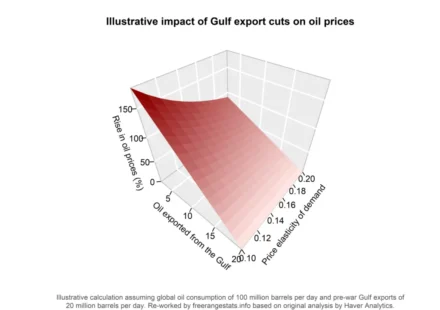
Revisiting the Crude Oil Price Impact: A Data Visualization Deep Dive

The ongoing geopolitical tensions, particularly the heightened conflict between the United States and Iran, have cast a long shadow over global crude oil markets. While the immediate impacts on supply and price are a constant focus, understanding the…

UKRI Unveils Ambitious New Policy to Enhance FAIRness and Public Value of Research Data

The United Kingdom Research and Innovation (UKRI) has announced a significant overhaul of its research data policies, introducing a unified framework designed to bolster the findability, accessibility, interoperability, and reusability (FAIR) of publicly…
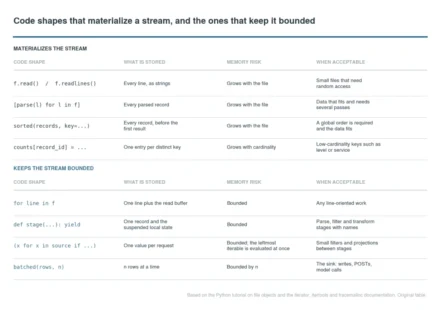
Mastering Python Iterators and Generators for Memory-Efficient Data Processing Pipelines

The transition from small-scale script execution to enterprise-level data processing often reveals a critical vulnerability in modern software architecture: the "eager" evaluation of data. For years, developers have relied on Python’s intuitive…

Participatory Qualitative Data Analysis with Queer Young People: Insights from the QueerPar Project

The QueerPar project, funded by the German Federal Ministry of Education and Research (BMBF) from 2022 to 2024, has published significant findings on participatory qualitative data analysis involving queer young people. The research, which aimed to…

OpenAlex Emerges as Critical Open Infrastructure, Challenging Proprietary Scholarly Data Systems and Calling for Community-Wide Curation Efforts

The scholarly publishing landscape is experiencing a significant shift, with a growing number of research institutions and systems increasingly relying on open infrastructure to map scholarly output. This transition marks a pivotal moment, challenging…

A Novel Exercise Reveals Critical Decisions and Inherent Biases in Research Data Interpretation, Urging Greater Reflexivity Among Academics.
The process of transforming raw data into coherent narratives within academic research is far from a purely objective endeavor. Researchers continually make subtle, yet profoundly influential, decisions about what information to include, what to…

The Imperative of Usable Open Data: Five Practical Steps to Transform Research Accessibility and Impact

Available data isn’t the same as usable data, a fundamental distinction that underpins the efficacy of the global open science movement. While the drive towards open data has gained significant momentum across scientific disciplines, the true value…

Enhancing Data Presentation through Refinements to the knitr kable Function and the September 2026 Development Sprint

The widely utilized R package knitr has undergone a significant series of updates designed to enhance the functionality and accessibility of its primary table-generation function, kable(). These refinements, emerging from a concentrated four-day…
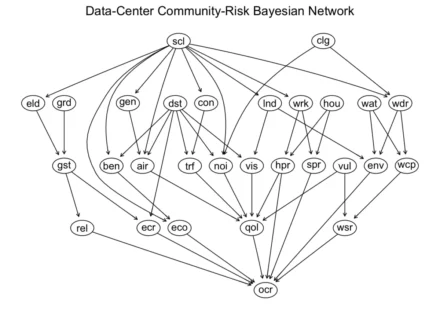
Data Center Risk Model for Community Impact Analysis

The proliferation of data centers, essential infrastructure for the burgeoning field of Artificial Intelligence, has ignited widespread public discourse and concern. As AI companies rapidly expand their digital footprints, local communities are…

UKRI Unveils Landmark FAIR Data Policy for Publicly Funded Research to Enhance Integrity and Public Value
The United Kingdom’s research funding landscape is set to undergo a significant transformation with the introduction of a new, comprehensive policy aimed at ensuring publicly funded research data is Findable, Accessible, Interoperable, and Reusable…
