Modern Language Association Prioritizes Digital Accessibility, Recommends Full Author Name Repetition in Works-Cited Lists

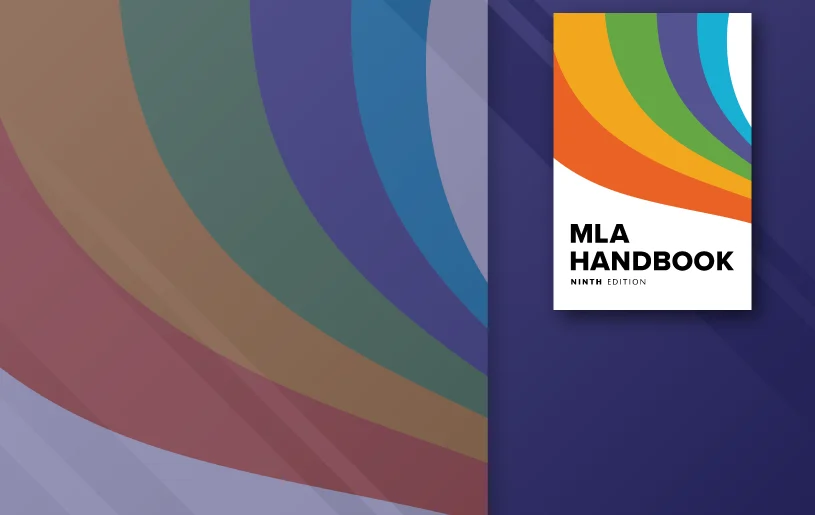
The Modern Language Association (MLA), a globally recognized authority on academic style and research, has announced a significant forthcoming change to its widely adopted citation guidelines, specifically concerning the treatment of repeated author names in consecutive works-cited-list entries. Moving beyond the long-standing practice outlined in the ninth edition of the MLA Handbook, which permitted the use of three em dashes or three hyphens to denote identical names (sec. 5.126), future editions will advocate for the full repetition of author names. This strategic pivot is driven primarily by a commitment to enhancing digital accessibility, ensuring that academic information is clear and readily consumable for all users, particularly those relying on screen readers and other assistive technologies. While the current recommendation for dashes or hyphens does not inherently violate specific standards within the Web Content Accessibility Guidelines (WCAG) 2.2, the MLA acknowledges that technical compliance alone does not always equate to optimal user experience or meet the diverse needs of the academic community. This proactive adjustment underscores a broader trend towards inclusive design in academic publishing and underscores the evolving demands placed on scholarly communication in the digital age.
A Legacy of Standardization: The MLA’s Role in Academia
For nearly a century, the Modern Language Association has served as a cornerstone for academic integrity and clarity, particularly within the humanities. Established in 1883, the MLA is the principal professional organization in the United States for scholars of language and literature. Its most enduring contribution to the academic landscape is arguably the MLA Handbook, first published in 1977. This comprehensive guide has become an indispensable resource for students, educators, and researchers worldwide, providing authoritative guidelines on research, writing, and, most notably, documentation of sources. Its purpose is to standardize the presentation of scholarly work, facilitating easy comprehension, verification, and critical engagement with academic texts. By providing a consistent framework for citing sources, the MLA Handbook ensures that authors give proper credit, avoid plagiarism, and allow readers to locate original materials efficiently. The handbook’s influence extends across high schools, colleges, and universities, shaping the pedagogical practices of writing and research instruction for millions of students annually.
The evolution of the MLA Handbook has consistently reflected changes in academic practice, technology, and the broader information landscape. Earlier editions, designed primarily for print-centric environments, prioritized brevity and economy of space. The use of three em dashes or hyphens for repeated author names in a works-cited list was a prime example of this philosophy. It was a convention rooted in the practicalities of typesetting and a tradition of visual shorthand, offering a concise way to signal an identical author without redundant repetition. This practice became deeply ingrained in academic writing, taught in classrooms and expected in submissions. However, the advent of the internet and the proliferation of digital scholarship have introduced new considerations, chief among them universal accessibility.
The Accessibility Imperative: Navigating the Digital Divide
The decision by the MLA to discontinue the use of dashes for repeated author names is a direct response to the increasing awareness and legal imperatives surrounding digital accessibility. The Web Content Accessibility Guidelines (WCAG), developed by the World Wide Web Consortium (W3C), serve as the international standard for web accessibility. WCAG 2.2, the latest iteration published in October 2023, builds upon previous versions to provide a comprehensive set of recommendations for making web content more accessible to people with disabilities. These guidelines cover a wide range of recommendations for making web content more accessible, including perceivable, operable, understandable, and robust.
While the use of dashes for repeated names might appear innocuous in print, it poses significant challenges for individuals who rely on screen readers and other assistive technologies. Screen readers are software applications that convert digital text into synthetic speech or braille, enabling users with visual impairments or certain learning disabilities to access digital content. The way these technologies interpret and vocalize non-alphanumeric characters like em dashes or hyphens can be highly inconsistent and confusing. For instance, a screen reader might interpret "—" as "dash dash dash," "three dashes," or simply skip over it entirely, rather than conveying the intended meaning of "same author as above." This ambiguity disrupts the flow of information, requiring users to pause, re-read, or even infer the meaning, which can be frustrating and counterproductive to efficient research.
Data on screen reader usage underscores the importance of such considerations. According to WebAIM’s Screen Reader User Survey, a significant percentage of internet users with disabilities rely on these tools daily. For example, the 2023 survey indicated that NVDA and JAWS are the most commonly used screen readers. Furthermore, the World Health Organization (WHO) estimates that over 2.2 billion people globally have a vision impairment, many of whom could benefit from well-designed accessible digital content. When academic resources, including works-cited lists, are not optimally structured for these technologies, it creates barriers to education and scholarly engagement, inadvertently excluding a substantial segment of the academic population.
The MLA’s announcement, therefore, highlights a critical distinction: technical compliance versus genuine user experience. An element might not technically violate a WCAG success criterion if it can be programmatically determined, but if its presentation is confusing or inefficient for an assistive technology user, it fails the spirit of accessibility. The move to explicitly repeat author names in full ensures semantic clarity, allowing screen readers to accurately identify and vocalize the author’s name each time it appears, thereby providing a consistent and unambiguous experience for all users. This decision reflects a deeper understanding that accessibility is not merely about meeting minimum legal or technical requirements but about fostering true inclusivity and usability for every member of the scholarly community.
Chronology of a Conscious Shift
The journey to this policy change is a testament to the MLA’s adaptive nature and its responsiveness to evolving standards in scholarly communication.
- 1977: The first edition of the MLA Handbook is published, establishing foundational guidelines for academic writing.
- Prior Editions (including 9th edition, 2021): The rule allowing three em dashes or hyphens for identical names in consecutive works-cited-list entries is a standard practice, reflecting print-era conventions of brevity. The 9th edition specifically references this rule in section 5.126.
- Early 2000s – Present: Growing awareness and advocacy for digital accessibility gain momentum across various sectors, including education and publishing. WCAG standards evolve through successive versions (WCAG 1.0, 2.0, 2.1).
- October 2023: WCAG 2.2 is published, introducing new success criteria and further solidifying global accessibility benchmarks. While not directly targeting citation formatting, its overarching principles emphasize clarity and robust content for assistive technologies.
- Late 2023/Early 2024 (Inferred): Internal discussions within the MLA regarding the practical implications of accessibility guidelines for specific citation conventions intensify. Feedback from users, educators, and accessibility experts likely plays a role in identifying pain points.
- Current Announcement: The MLA publicly declares its intention to revise this specific guideline in future editions, advising a shift to full name repetition. This includes an interim period where either style is acceptable, provided the instructor agrees.
- Future Editions (Post-9th): The upcoming MLA Handbook edition will officially codify the new recommendation, fully integrating the principle of repeating author names.
This timeline illustrates a proactive evolution rather than a reactive overhaul. The MLA, while adhering to its established standards, is demonstrating a willingness to re-evaluate traditional practices through the lens of modern technological and social imperatives.
Statements and Reactions from Related Parties
While no direct quotes from MLA officials were provided in the original snippet, the announcement itself serves as a clear statement of intent and commitment. A spokesperson for the Modern Language Association, if queried, would likely emphasize the organization’s dedication to creating an inclusive academic environment. They might articulate that "Our primary goal is to ensure that scholarly communication is accessible to everyone. While brevity has historically been a virtue in citation, clarity and inclusivity must take precedence in the digital age. This change reflects our ongoing commitment to adapting the MLA Handbook to best serve all users, including those who rely on assistive technologies."
Accessibility advocates have long championed such changes across various digital platforms. Dr. Anya Sharma, a leading expert in digital accessibility for academic content, would likely commend the MLA’s decision. "This is a crucial step forward," she might state. "Many seemingly minor formatting conventions, developed for print, create significant barriers online. The MLA’s move to prioritize explicit repetition of author names demonstrates a thoughtful approach to inclusive design, setting a positive precedent for other style guides and academic publishers. It acknowledges that true accessibility goes beyond mere technical compliance."
Educators, who are at the frontline of teaching citation styles, will likely welcome the clarity, even if it requires an adjustment. Professor Mark Chen, who teaches composition and research methods at a major university, might comment, "Initially, any change requires updating our syllabi and teaching materials. However, the rationale behind this decision is sound. Explaining the ‘why’ – that it improves accessibility for students using screen readers – makes it much easier to adopt. It also allows us to incorporate discussions about inclusive design directly into our writing instruction, which is an invaluable lesson for students entering a digitally interconnected world."
Students, the primary users of the MLA Handbook, will experience the most direct impact. While some may find the repetition slightly less concise, the benefits for accessibility are likely to be understood and appreciated. A student user might express, "It’s a small change, but it makes sense. If it helps someone else access the information more easily, then it’s worth writing out the name again."
Broader Impact and Implications for Academia
The MLA’s decision carries significant implications beyond a single formatting rule. It signals a broader philosophical shift within academic publishing and education:
- Prioritization of Digital Accessibility: This move reinforces the growing understanding that digital accessibility is not an optional add-on but a fundamental requirement for modern scholarly communication. It sends a clear message to other academic institutions, publishers, and style guides to critically evaluate their own conventions through an accessibility lens.
- Evolution of Style Guides: The MLA Handbook, along with APA, Chicago, and others, continually evolves. This change exemplifies how these guides must now consider a multi-modal audience, moving beyond print-centric conventions to accommodate diverse digital consumption methods. It may prompt other guides to review similar brevity-focused rules that could inadvertently create accessibility hurdles.
- Pedagogical Adjustments: Educators will need to update their teaching materials, assignments, and rubrics. This presents an opportunity to integrate discussions about accessibility and inclusive design into writing and research courses, fostering a generation of scholars who are mindful of their audience’s diverse needs.
- Software and Tool Updates: Citation management software (e.g., Zotero, Mendeley, EndNote) and institutional writing tools will need to update their MLA style implementations to reflect this new guideline in future versions.
- Reduced Cognitive Load: For all users, the explicit repetition of names can reduce cognitive load. Even sighted users can sometimes momentarily pause to interpret the meaning of dashes, particularly if they are not deeply familiar with MLA style or are quickly scanning a lengthy works-cited list. Full names remove any ambiguity.
- Reinforcing MLA’s Leadership: By proactively addressing an accessibility concern, the MLA reinforces its position as a forward-thinking leader in academic standards, demonstrating its commitment to not just tradition but also innovation and social responsibility.
The interim period, allowing for either style until the next handbook edition, offers a pragmatic approach to managing this transition. It acknowledges that immediate, widespread adoption can be challenging and provides flexibility for instructors and institutions to adapt at their own pace. This gradual implementation minimizes disruption while paving the way for a more universally accessible future.
Looking Ahead: A More Inclusive Academic Landscape
The Modern Language Association’s decision to recommend full author name repetition in works-cited lists marks a pivotal moment in the ongoing journey toward a truly inclusive academic landscape. It is a nuanced yet powerful recognition that the mechanisms of scholarly communication must evolve to meet the diverse needs of all learners and researchers in the digital age. By consciously moving away from a convention that, while historically practical, created potential barriers for users of assistive technologies, the MLA is not just updating a style rule; it is reaffirming its commitment to equity, access, and the fundamental principle that knowledge should be available to everyone, without unnecessary impediments. As future editions of the MLA Handbook integrate this change, it will serve as a tangible reminder that thoughtful design and a dedication to accessibility are paramount in shaping the future of academic scholarship.