
Jean Lycke | Addressing Unmet Medical Needs in Mucosal Disease: A Close-to-Market Innovation Approach • scientia.global

The landscape of global healthcare is currently undergoing a period of rapid transformation, driven by a convergence of minimally invasive surgical techniques, translational research in ophthalmology, a deeper understanding of pediatric respiratory health, and the application of high-resolution geospatial data to address systemic inequities in service delivery. These advancements, led by researchers at the University of Queensland, The Leeds Teaching Hospitals NHS Trust, and Deakin University, among others, represent a concerted effort to shift medical paradigms from reactive treatments to proactive, patient-centered interventions. By rethinking established protocols for common conditions such as benign prostatic hyperplasia and age-related macular degeneration, and by leveraging address-level intelligence to map healthcare access in remote regions, the medical community is moving toward a more efficient and equitable future.
Rethinking Prostate Care: The Emergence of Prostate Artery Embolisation
For millions of men globally, the process of aging is inextricably linked with benign prostatic hyperplasia (BPH), a non-cancerous enlargement of the prostate gland. As the prostate grows, it can compress the urethra, leading to lower urinary tract symptoms (LUTS) such as frequent urination, weak flow, and the inability to fully empty the bladder. Historically, the clinical pathway for BPH has remained relatively static: patients are typically prescribed medications like alpha-blockers or 5-alpha reductase inhibitors for years. If pharmaceutical intervention fails, the "gold standard" has long been Transurethral Resection of the Prostate (TURP), a surgical procedure that involves removing portions of the prostate tissue.
However, recent research led by Associate Professor Nicholas Brown at the University of Queensland is challenging this traditional model. Through the P-EASY series of studies, Dr. Brown and his collaborative research group are investigating the efficacy of Prostate Artery Embolisation (PAE). PAE is a minimally invasive procedure performed by interventional radiologists. It involves the insertion of a catheter into the arteries supplying the prostate, followed by the injection of microscopic particles to reduce blood flow. This causes the gland to shrink, thereby alleviating the pressure on the urethra.

The significance of the P-EASY studies lies in their focus on the potential for PAE to be utilized at earlier stages of the disease. While surgery is effective, it often carries risks of sexual dysfunction, incontinence, and a significant recovery period. Medications, on the other hand, can cause dizziness and fatigue. PAE offers a middle ground, providing a day-procedure alternative with fewer side effects and a quicker return to normal activities. As the aging population grows, the demand for such "middle-path" treatments is expected to rise, potentially reducing the long-term burden on surgical departments and improving the quality of life for millions of men who would otherwise remain on life-long medication.
Addressing the Vision Crisis: The TAAP-2 Program in Asia
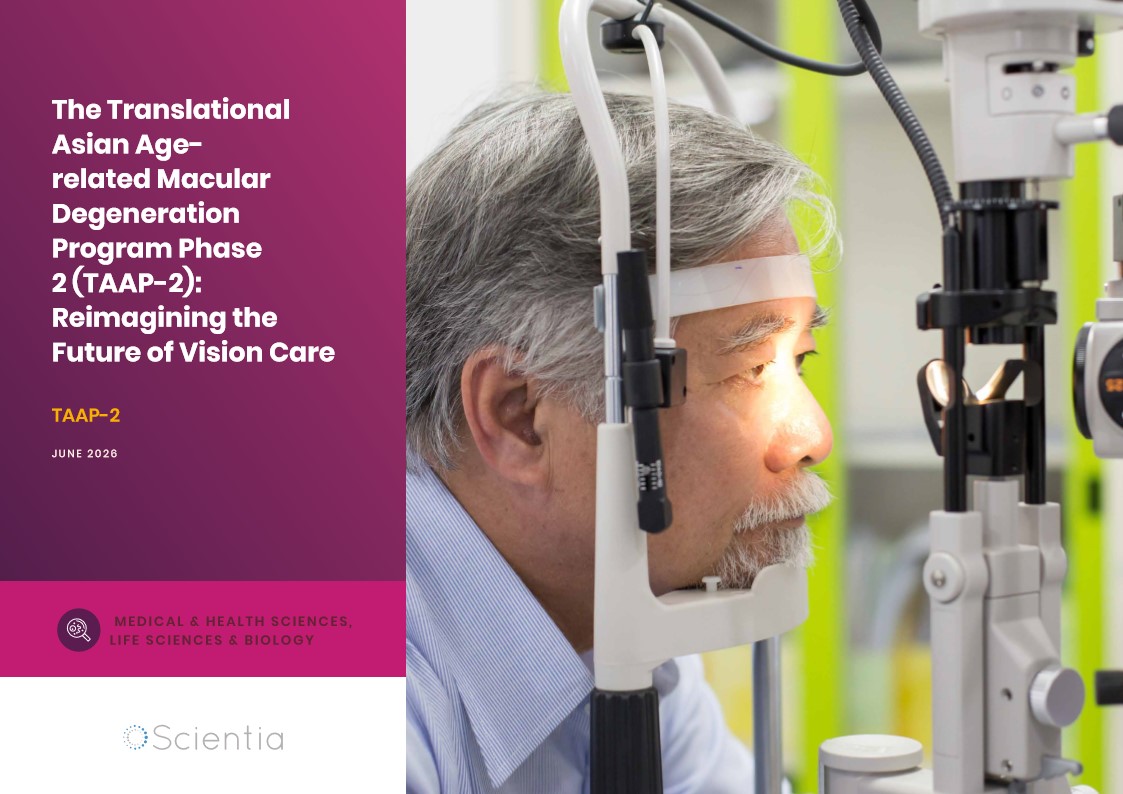
Simultaneously, in the field of ophthalmology, the Translational Asian Age-related Macular Degeneration Program (TAAP) is entering its second phase, aiming to combat one of the leading causes of irreversible blindness. Age-related macular degeneration (AMD) is a condition that affects the central part of the retina, known as the macula, leading to a loss of "straight-ahead" vision. This makes essential tasks such as reading, driving, and facial recognition nearly impossible.
The impact of AMD is particularly acute in Asia, home to some of the world’s fastest-aging populations. The TAAP-2 initiative represents a significant evolution in vision care, shifting from basic research to translational clinical applications. The program focuses on understanding the specific genetic and environmental factors that contribute to AMD in Asian populations, which can differ significantly from Western cohorts. For instance, polypoidal choroidal vasculopathy (PCV), a subtype of AMD, is much more prevalent in Asian patients.
By integrating advanced imaging technologies and biomarkers, TAAP-2 aims to develop personalized treatment regimens. The program’s broader ambition is to reimagine the future of vision care by moving toward early detection and precision therapy. As the economic cost of vision loss—including lost productivity and the need for long-term care—continues to mount, the research conducted under TAAP-2 provides a critical framework for preserving independence among the elderly and mitigating a burgeoning public health crisis.

Beyond Snoring: Investigating Pediatric Obstructive Sleep Apnea
In the realm of pediatric health, research led by Consultant ENT Surgeon Ms. Aikaterini Dritsoula of The Leeds Teaching Hospitals NHS Trust is shedding new light on the complexities of children’s sleep. While snoring in children is often dismissed as a minor nuisance, it is frequently a symptom of Obstructive Sleep Apnea (OSA). This condition occurs when the airway is partially or completely blocked during sleep, leading to fragmented rest and reduced oxygen levels.
The traditional clinical consensus has centered on enlarged tonsils and adenoids as the primary causes of pediatric OSA, with surgery (adenotonsillectomy) being the standard remedy. However, Ms. Dritsoula’s work suggests that the etiology of the condition is often more nuanced, particularly in very young children or those with underlying developmental conditions. The research highlights that even after surgery, some children continue to experience sleep-disordered breathing, suggesting that airway collapse may be occurring at different levels of the throat or may be related to craniofacial structure rather than just tissue mass.
The implications of this research are profound. Untreated OSA in children is linked to a range of complications, including behavioral issues similar to ADHD, cognitive delays, and even cardiovascular strain. By advocating for a more comprehensive diagnostic approach—looking "beyond snoring"—Ms. Dritsoula is pushing for specialized care plans that consider the unique anatomical and physiological profiles of each child. This shift is expected to improve long-term developmental outcomes and reduce the necessity for repeat surgeries.
Geospatial Intelligence and the "Inverse Care Law" in Australia
While clinical innovations are vital, they are only effective if patients can access them. In Australia, the "Inverse Care Law"—the principle that the availability of good medical care tends to vary inversely with the need for it in the population served—remains a significant hurdle. Professors Neil Coffee and Vincent Versace at Deakin University’s Centre for Australian Research into Access (CARA) are addressing this through the use of address-level intelligence.
Rural and remote populations in Australia face unique challenges, including vast distances and a lack of specialized services. Professors Coffee and Versace have developed sophisticated models to quantify healthcare access by combining detailed residential dwelling data with road network analytics. This allows researchers to calculate precise travel times and distances to various health services, from general practitioners to emergency departments.
This data-driven approach moves beyond simple population density maps. By simulating the residential dwelling population at an address level, CARA can identify specific "blind spots" in the healthcare system. This intelligence is invaluable for health planners and policymakers, enabling them to allocate resources more effectively, justify the placement of new clinics, and design mobile health interventions for the most underserved communities. The research also extends to other essential services, such as education, providing a holistic view of how geography dictates opportunity and health outcomes in regional Australia.
Chronology of Progress and Future Implications
The convergence of these diverse research areas signals a broader trend in 21st-century medicine: the move toward "Precision Public Health."
- 2010s: The emergence of PAE and early translational studies in AMD began to challenge established surgical "gold standards."
- 2020-2023: The launch of TAAP-2 and the P-EASY studies provided the clinical data necessary to validate minimally invasive and personalized approaches.
- Current Period: The integration of geospatial mapping by institutions like Deakin University is providing the logistical framework to ensure these medical advancements reach those in need, regardless of their geographic location.
The official responses from the medical community have been cautiously optimistic. While surgical colleges maintain that traditional procedures remain essential for severe cases, there is a growing recognition that "one-size-fits-all" pathways are no longer sufficient. Professional bodies are increasingly calling for multidisciplinary teams—comprising interventional radiologists, urologists, ophthalmologists, and pediatric specialists—to collaborate on patient-centered care.

The broader implications of these studies suggest a future where medical intervention is less traumatic, more accurately targeted, and more equitably distributed. For the elderly man suffering from BPH, it means a future without the risks of major surgery. For the aging adult in Asia, it means the preservation of sight through early, targeted intervention. For the child with sleep apnea, it means a diagnosis that considers their entire airway, not just their tonsils. And for the resident of remote Australia, it means a healthcare system that finally "sees" them through the power of address-level intelligence.
As these research programs continue to evolve, the focus will likely shift toward the integration of artificial intelligence in diagnostic imaging and the further refinement of telehealth to bridge the gap between urban centers and rural outposts. The work of Dr. Brown, Ms. Dritsoula, and Professors Coffee, Versace, and the TAAP team represents the vanguard of a movement dedicated to ensuring that the benefits of modern science are felt by every segment of the global population.