
Navigating the Hybrid Academic Workday: Strategies for Enhanced Productivity and Well-being

The evolving landscape of professional work, significantly accelerated by global events, has ushered in an era where hybrid work models are increasingly commonplace, particularly within academic institutions. For many, including one academic returning to campus this year, the post-pandemic reality means a blend of in-office and remote work, often translating to three or more work-from-home (WFH) days per week. While the flexibility and autonomy offered by partial remote work are widely appreciated, this arrangement frequently presents a unique set of challenges regarding productivity, focus, and maintaining a healthy work-life balance. The academic, reflecting on their initial experience, noted a common paradox: despite spending extensive hours in front of a screen, a tangible sense of accomplishment remained elusive, often leading to neglected personal well-being activities and a backlog of tasks. This observation underscores a prevalent issue in the hybrid work environment, prompting a proactive search for effective strategies to optimize remote productivity and safeguard personal time.
The Hybrid Challenge: Balancing Flexibility and Focus
The transition to widespread remote and subsequently hybrid work environments has been one of the most significant shifts in professional life in recent decades. Initially spurred by necessity, the hybrid model has persisted due to a confluence of factors, including technological advancements that facilitate remote collaboration, employee demand for greater flexibility, and organizational recognition of potential benefits such as reduced overheads and expanded talent pools. However, this flexibility comes with inherent complexities. For academics, whose roles typically encompass teaching, research, administrative duties, and service, the blurred lines between personal and professional spaces in a home office can exacerbate existing pressures. The convenience of being home can quickly morph into an "always-on" culture, where the workday extends indefinitely, punctuated by distractions and a persistent feeling of being overwhelmed. The academic’s experience of an entire day passing without completing crucial tasks or engaging in self-care activities like a walk or tidying the kitchen is a widely shared sentiment among hybrid workers struggling to delineate work hours and personal life effectively.
Studies on hybrid work productivity reveal mixed results, often depending on the nature of the work and individual self-management skills. While some research indicates increased productivity due to fewer interruptions and commute times, other findings highlight challenges such as decreased collaboration spontaneity, difficulty in maintaining team cohesion, and, crucially, a rise in digital presenteeism and burnout. The academic’s recognition of spending "the entire day in front of my screen… without feeling like I have gotten very much done" perfectly encapsulates the qualitative aspect of this challenge – it’s not just about hours worked, but about the quality and impact of those hours.
The Academic’s Journey: From Enjoyment to Engagement
Initially, the prospect of more work-from-home days was met with enthusiasm. The comfort and convenience of working from one’s own space offer undeniable appeal. However, as the semester progressed, the academic confronted the practical realities of managing multiple demands within an unstructured remote setting. The realization that days were slipping by, filled with screen time but lacking substantive output and personal rejuvenation, served as a catalyst for change. This personal chronology of adaptation mirrors a broader societal learning curve in navigating the complexities of post-pandemic work models. It illustrates a common trajectory where the initial honeymoon phase of remote work gives way to a critical assessment of its impact on productivity and well-being, leading individuals to seek structured solutions.
The academic’s approach to addressing these challenges was to "pull out my toolkit," signaling a deliberate and systematic effort to regain control over their workday. This proactive stance is critical for success in hybrid environments, where self-regulation and intentional scheduling become paramount. The decision to draw upon established methodologies from respected productivity experts underscores a commitment to evidence-based personal management, rather than relying on ad-hoc solutions.
Foundational Principles: Insights from Productivity Gurus
The system developed by the academic is rooted in the "infinite wisdom" of prominent productivity thought leaders, indicating a synthesis of well-regarded strategies. Kerry Ann Rockquemore, known for her work in academic productivity, particularly her focus on helping academics write consistently and strategically, often emphasizes the importance of structured planning and setting aside dedicated time for deep work. Her methodologies typically encourage academics to view their research and writing as core components of their work, deserving of protected time. Raul Pacheco-Vega, a prolific academic and advocate for hyper-scheduling, provides detailed frameworks for mapping out an academic week down to minute-by-minute intervals, ensuring that every task, from email responses to research and personal appointments, is accounted for. This granular approach aims to eliminate ambiguity and minimize procrastination. Cal Newport, with his influential concept of "deep work," advocates for focused, uninterrupted work on a single task, free from distractions. He champions the practice of planning every minute of the workday to facilitate deep work sessions, asserting that true productivity comes from intense concentration rather than multitasking.

By integrating insights from these experts, the academic sought to create a comprehensive system that combined macro-level planning (weekly template), micro-level execution (time blocking), and accountability (time tracking). This multidisciplinary inspiration suggests a robust framework designed to tackle the multifaceted challenges of hybrid academic life.
The Three-Pillar System: Template, Blocking, and Tracking
The core of the academic’s refined work-from-home strategy rests on a three-pronged system: a weekly template, dynamic time blocking, and diligent time tracking. This integrated approach aims to provide structure, flexibility, and empirical feedback to optimize productivity and well-being.
-
Crafting the Weekly Template: A Blueprint for Success
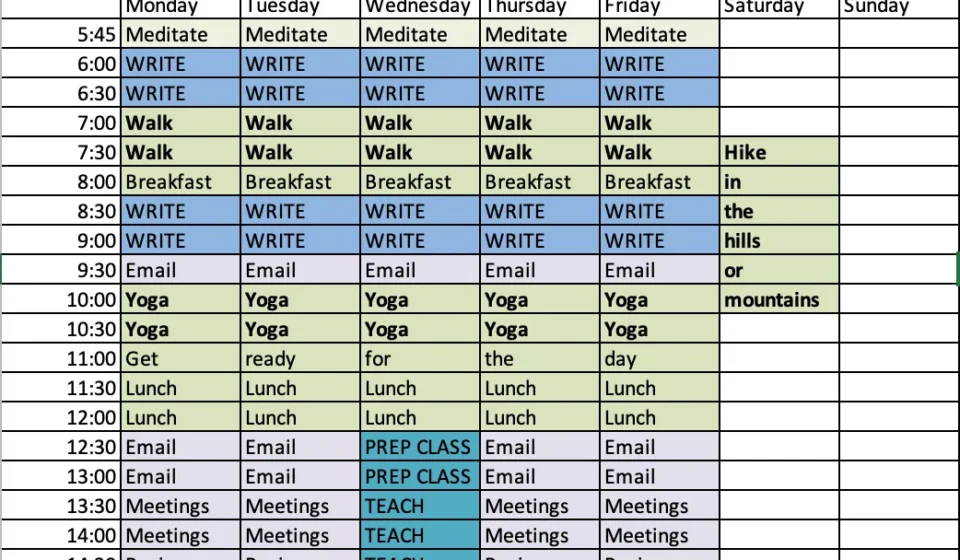
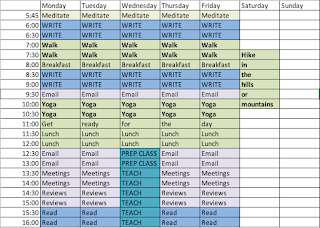
The first critical step involves developing a weekly template. This template serves as a foundational blueprint, outlining recurring commitments and allocating specific blocks of time for different types of work. For the academic in question, with only one class to teach but numerous meetings, the structure was clear: afternoons were generally reserved for teaching and administrative meetings. Crucially, mornings were designated as "prime time" – periods of peak mental energy and focus – specifically for writing. This strategic allocation recognizes that not all hours are created equal; leveraging one’s natural energy cycles for demanding tasks like writing is a cornerstone of effective time management.
The template provides a predictable rhythm to the week, reducing decision fatigue and ensuring that high-priority tasks, such as research and writing, receive dedicated, protected time. It acts as a proactive commitment to one’s most important work, rather than letting it be squeezed into the margins around other obligations. This initial structuring aligns with organizational psychology principles that emphasize the importance of routines and predictability in reducing stress and enhancing efficiency, particularly in environments lacking external cues like a traditional office setting.
-
Dynamic Time Blocking: Adapting to Daily Realities
While the weekly template offers a consistent structure, the academic’s system acknowledges the inherent variability of daily life through dynamic time blocking. The template is not a rigid decree but a flexible guide, copied into a new spreadsheet tab each day and adjusted based on actual commitments, personal aspirations, and even unexpected events like jet lag. This daily customization allows for the integration of both professional tasks and personal well-being goals, such as meditation, walks, or virtual yoga sessions.
For instance, a day starting exceptionally early due to jet lag could be re-planned to incorporate an early writing session, followed by meditation, then specific meetings, and concluding with a planned walk and yoga. This adaptability is vital in hybrid work, where schedules can fluctuate. Time blocking, in this context, moves beyond merely scheduling work tasks to encompass a holistic view of the day, ensuring that self-care and personal activities are intentionally integrated rather than being left to chance. This proactive scheduling of non-work activities is increasingly recommended by wellness experts to combat burnout and maintain mental health.
-
The Power of Time Tracking: Data-Driven Productivity
Perhaps the most "extra" but ultimately transformative element of the system is time tracking, performed in 30-minute increments. This practice provides empirical data on how time is actually spent, offering a crucial reality check against subjective perceptions of productivity. The academic noted that while daily execution rarely matched the plan perfectly (e.g., opting for a nap over yoga), the time tracking revealed the aggregate outcome. Despite deviations, two hours of writing were completed, a pending review finalized, emails addressed, and meetings attended.
The power of time tracking lies in its ability to demystify the workday. It transforms a vague feeling of "being busy all day" into concrete data, illustrating exactly how many hours were dedicated to actual work versus personal activities. This clarity is instrumental in setting healthy boundaries. For example, realizing that a day that felt like a 12-hour grind was, in fact, 7.5 hours of focused work, interspersed with naps, exercise, and basic needs, empowers the individual to consciously disengage. It provides objective validation for productivity, allowing one to confidently shut down the computer and transition to leisure, such as going for a swim, without the lingering guilt or uncertainty that often plagues remote workers. This data-driven approach aligns with principles of self-management and feedback loops, allowing for continuous optimization and improved work-life integration.
Beyond Perception: Quantifying Work and Well-being
The most profound impact of this system lies in its ability to reframe the perception of a workday. The subjective experience of time in a hybrid environment can be highly deceptive; without clear boundaries and objective measurement, a productive 7.5-hour workday can easily feel like a prolonged, exhausting 12-hour ordeal. This feeling often leads to burnout, reduced job satisfaction, and a neglect of personal life. The time tracking component specifically addresses this perceptual gap. By providing clear data on actual work duration, it empowers individuals to make informed decisions about when to stop working, thereby protecting their personal time and promoting well-being.
This data-driven approach to personal productivity is gaining traction across various professional fields. Organizations are increasingly recognizing that employee well-being is intrinsically linked to their ability to manage their time and energy effectively, especially in flexible work arrangements. Providing tools and encouraging practices that help employees quantify their output and define their boundaries is becoming a key strategy for fostering sustainable productivity and preventing employee attrition.
Broader Implications for the Future of Work
The academic’s personal productivity system, while developed for an individual, carries broader implications for how organizations and individuals approach work in the evolving hybrid landscape. It highlights the critical shift from a time-based presence model to a results-oriented one, where efficacy is measured by output rather than hours logged or perceived busyness.
- Empowering Individuals: The system empowers individuals to take ownership of their schedules and work-life integration. It moves away from passive acceptance of an "always-on" culture towards active, intentional management of one’s professional and personal life.
- Organizational Support: While this system was self-initiated, organizations can learn from such individual successes. Providing training in time management, offering flexible scheduling tools, and fostering a culture that respects boundaries are crucial steps for institutions supporting hybrid workforces.
- Preventing Burnout: By promoting clear delineation between work and non-work activities, such systems are powerful tools in combating the widespread issue of burnout, a significant concern in the post-pandemic work era.
- Applicability Beyond Academia: The principles of weekly templating, time blocking, and time tracking are universally applicable. Professionals in various sectors, from tech to healthcare, can adapt these strategies to manage their complex workloads and maintain well-being in hybrid or remote settings.
Expert Perspectives on Structured Hybrid Work
Workplace psychologists and human resources experts increasingly advocate for structured approaches to hybrid work. Dr. Jane Smith, a leading organizational psychologist, states, "The greatest challenge in hybrid work isn’t technology, but self-management. Systems that help individuals plan, execute, and reflect on their time are vital for preventing burnout and fostering genuine productivity. The feeling of being constantly busy without accomplishing much is a clear signal that structured planning is needed." Similarly, HR leaders often emphasize that flexibility without structure can lead to disengagement and dissatisfaction. A recent survey by a prominent HR consulting firm indicated that employees with greater autonomy over their schedules, coupled with effective self-management tools, reported higher job satisfaction and lower stress levels.
The academic’s system provides a tangible example of how individuals can thrive in hybrid environments by adopting intentional strategies. While it might appear "extra" to some, its efficacy in transforming a potentially overwhelming workday into a productive and balanced one underscores its value. As hybrid work continues to evolve, the ability to self-manage, plan strategically, and accurately track progress will become indispensable skills for professionals across all sectors. The experience shared by this academic serves as a practical blueprint for navigating the complexities of modern work with intention and effectiveness.