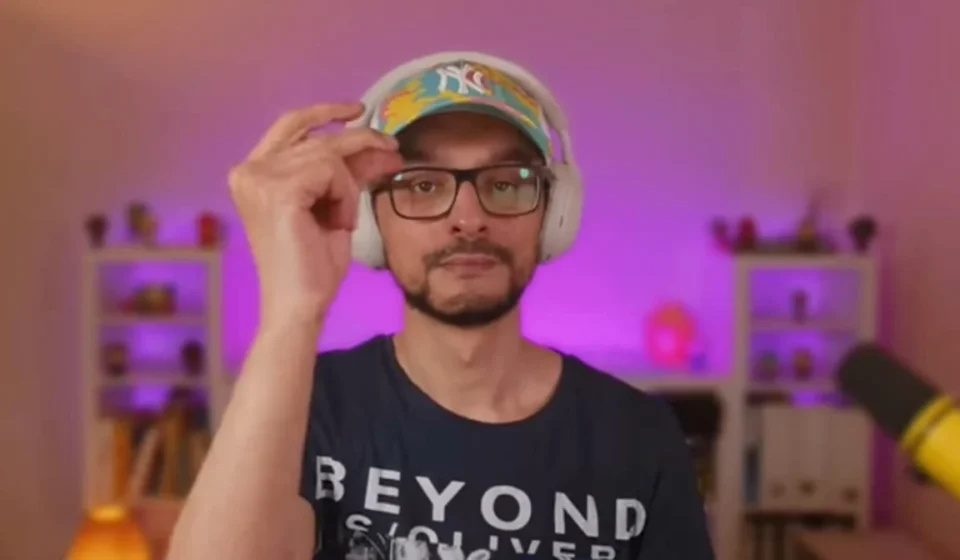
The Evolution of Digital Pedagogy: Virtual Facilitation Masterclass Redefines Online Engagement Strategies

The rapid acceleration of digital transformation in the professional and educational sectors has necessitated a paradigm shift in how information is delivered through virtual mediums, leading to the emergence of specialized training programs such as Said Saddouk’s Virtual Facilitation Masterclass. As organizations transition from temporary remote work solutions to permanent hybrid models, the demand for high-level digital facilitation skills has moved beyond basic proficiency in video conferencing software toward a sophisticated integration of broadcasting tools, hardware automation, and pedagogical optimization. The Virtual Facilitation Masterclass, led by industry expert Said Saddouk, known professionally as "The Facilitainer," represents a significant development in this field, offering a curriculum designed to bridge the gap between traditional presentation methods and professional-grade digital broadcasting.
The Shift Toward Professional-Grade Virtual Facilitation
Since the global shift toward remote operations in 2020, the phenomenon of "Zoom fatigue" has become a documented challenge for educators and corporate leaders alike. Research indicates that passive observation in digital environments often leads to lower retention rates and decreased participant engagement. In response, a new discipline of "facilitation as performance" has emerged, requiring facilitators to adopt the roles of both educator and technical producer. Said Saddouk’s program addresses these challenges by teaching participants how to utilize Open Broadcaster Software (OBS) Studio, a free and open-source tool originally designed for the live-streaming industry.
By integrating OBS Studio into standard video conferencing platforms like Zoom, Microsoft Teams, or Google Meet, facilitators can create dynamic "scenes." These scenes allow for seamless transitions between different visual layouts, such as a technical demonstration mode where the speaker remains visible in a corner "picture-in-picture" frame while demonstrating software on the main screen. Additionally, the use of automated elements, such as countdown timers for breaks and customized graphic overlays, provides a structured and professional atmosphere that mirrors high-budget television productions. This technical elevation is not merely aesthetic; it serves a functional purpose by maintaining visual interest and providing clear cues to the audience, which are often lost in standard screen-sharing configurations.
Technical Integration and Hardware Optimization
A core component of the modern facilitation toolkit, as highlighted in the Masterclass, is the strategic use of hardware to manage the cognitive load of the facilitator. The Elgato Stream Deck, a customizable macro pad originally popularized by the gaming and creative communities, has become a central tool for professional educators. While many users initially employ the Stream Deck for simple tasks such as launching applications, the Virtual Facilitation Masterclass provides a framework for deeper integration.
Through the curriculum, participants learn to map complex OBS scene transitions, Zoom reactions, and audio controls to the physical buttons of the Stream Deck. This allows the facilitator to maintain eye contact with the camera—and by extension, the audience—while executing technical changes without searching for menus or using keyboard shortcuts that might interrupt the flow of the presentation. The ability to mute and unmute, trigger animations, or switch camera angles with a single tactile press represents a move toward "frictionless facilitation," where the technology supports rather than hinders the human connection.
Chronology of the Digital Facilitation Movement
The evolution of these practices can be traced through several distinct phases over the last decade. Initially, virtual facilitation was limited to basic webinars, characterized by one-way communication and static slide decks.
- Pre-2020: The Niche Phase. Virtual facilitation was largely reserved for global corporations and specialized distance learning programs. Tools like OBS were almost exclusively used by hobbyist gamers on platforms like Twitch.
- 2020-2021: The Reactive Phase. The sudden onset of the COVID-19 pandemic forced a mass migration to platforms like Zoom. Facilitation was characterized by "survival mode," where simply maintaining a stable connection was considered a success.
- 2022-2023: The Professionalization Phase. As remote work became standardized, the limitations of basic video calls became apparent. Professionals began seeking ways to differentiate their offerings and combat digital disengagement, leading to the rise of specialized masterclasses.
- 2024-Present: The Integration Phase. Current trends show a move toward "The Facilitainer" model, where technical mastery and pedagogical expertise are treated as inseparable. Programs now focus on creating a community of practice rather than one-off training sessions.
Supporting Data on Virtual Engagement
Industry data supports the necessity of the skills taught in Saddouk’s Masterclass. According to a 2023 report on digital workplace trends, 67% of employees feel more engaged when virtual meetings include interactive and visually diverse elements. Furthermore, a study by the Association for Talent Development (ATD) found that facilitators who use multi-camera setups and professional audio see a 40% increase in positive feedback regarding "presence" and "authority" compared to those using standard laptop peripherals.
The Masterclass also emphasizes the importance of audio and video optimization. Saddouk’s "Zoom Optimization Guide" addresses a common pain point: the compression algorithms used by conferencing software often degrade quality to save bandwidth. By teaching facilitators how to bypass these limitations through high-fidelity audio settings and optimized video bitrates, the program ensures that the facilitator’s message is delivered with maximum clarity. In a pedagogical context, clear audio is particularly critical; research into "cognitive load theory" suggests that poor audio quality forces the brain to work harder to decipher speech, leaving less cognitive energy for learning the actual content.
Broader Implications for Corporate Training and Keynote Speaking
The implications of these advanced facilitation techniques extend far beyond the classroom. For keynote speakers, the ability to deliver a high-impact presentation virtually has opened up global markets without the logistical costs of travel. However, the standard for these presentations has risen. A "virtual keynote" is no longer just a speech delivered over a webcam; it is expected to be a produced experience.
By mastering "scenes" and hardware integration, speakers can replicate the energy of a live stage. For example, a speaker can use a "wide shot" scene to simulate a stage presence and then "zoom in" digitally for an intimate, direct-to-camera moment during a crucial point in their narrative. This level of control allows for a narrative arc that is visually supported, making the virtual format a unique medium with its own strengths, rather than a "lesser" version of in-person speaking.
Official Responses and Participant Feedback
While official corporate responses to such training are often proprietary, the growth of the "Facilitainer" community suggests a strong market validation. Participants in the Masterclass frequently report that the most significant benefit is the reduction of "technical anxiety." By having a pre-configured environment and a physical control surface like the Stream Deck, facilitators can focus on the human elements of teaching—empathy, questioning, and feedback—knowing that the technical production is handled.
Industry analysts observe that the success of Said Saddouk’s approach lies in its scalability. The curriculum does not demand that every facilitator become a professional video editor; instead, it focuses on a "core set of skills" that can be put to use immediately. This modular approach to learning prevents the "overwhelm" often associated with high-end production software. As participants grow more comfortable, they can continue to add layers of complexity to their setups, supported by a community of peers who are navigating the same digital landscape.
Analysis of Future Trends in Virtual Interaction
Looking ahead, the techniques taught in the Virtual Facilitation Masterclass are likely to become the baseline expectation for all professional digital interactions. We are seeing the early stages of "augmented facilitation," where AI-driven tools will likely integrate with OBS to provide real-time transcriptions, sentiment analysis of the audience, and automated scene switching based on the speaker’s voice or gestures.
However, the human element remains the most critical factor. The philosophy promoted by Said Saddouk suggests that technology should be "magic"—invisible to the audience but transformative for the experience. As virtual reality (VR) and augmented reality (AR) begin to enter the workspace, the foundational skills of scene management and multi-source broadcasting learned in current masterclasses will be the building blocks for the next generation of immersive education.
In conclusion, the Virtual Facilitation Masterclass is more than a technical workshop; it is a response to the evolving needs of a digital-first society. By empowering educators and leaders with the tools of broadcasters, the program ensures that the transition to virtual environments does not result in a loss of engagement or educational quality. As the "Facilitainer" community continues to expand, it sets a new standard for how we connect, teach, and lead in an increasingly interconnected world. For those whose roles involve the dissemination of knowledge in online spaces, the transition from a standard user to a "virtual facilitator" is no longer an optional upgrade but a professional necessity.