The Elusive Global Crude Oil Stockpile: Unpacking the Data Behind a Critical Energy Metric

The question of how much crude oil the world has readily available is fundamental to understanding global energy markets and potential vulnerabilities. Yet, obtaining a single, definitive figure for global crude oil stocks is surprisingly complex. While pronouncements often focus on relative changes – "less than at any point since [year]" or "dropped X million barrels in the last month" – precise, consolidated global stock estimates are not readily accessible in a single, publicly available dataset. This scarcity of comprehensive data creates a challenge for policymakers, industry analysts, and the public seeking a clear picture of energy security.
Navigating the Data Landscape: The Role of JODI
A significant effort to bridge this data gap is undertaken by the Joint Organizations Data Initiative (JODI). JODI compiles monthly country-level estimates of oil stocks, which are voluntarily reported by participating nations. This initiative is backed by a reputable consortium of energy organizations, including the APEC Energy Working Group, Eurostat, the Gas Exporting Countries Forum (GECF), the International Energy Agency (IEA), the Latin American and Caribbean Energy Organization (OLACDE), OPEC, and the UN Statistical Division. The collective weight and expertise of these partners lend considerable credibility to the data JODI makes available for download.
However, the JODI dataset, while valuable, comes with inherent limitations. As of October 6, 2026, the latest available data for many key metrics, such as crude oil stocks, pertains to July 2026. This represents a lag of approximately two to three months, a delay that can be significant in the fast-moving energy sector. Furthermore, not all major oil-producing or consuming nations consistently report their data. While the dataset includes crucial reporting countries like the United States, Japan, the United Kingdom, key European nations, Saudi Arabia, South Korea, and Nigeria, significant omissions exist. Notably, major players like China, Russia, and Venezuela are absent from the consistently reporting group, impacting the completeness of a truly global picture.
A Deeper Dive into Available Data
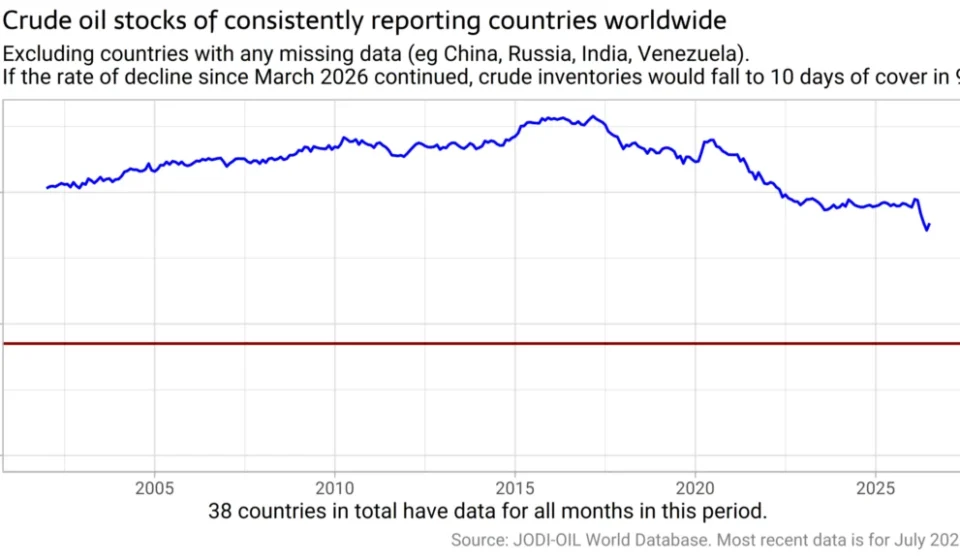
Despite these limitations, the JODI data offers the most comprehensive view currently available of crude oil stocks for a substantial group of reporting countries. An analysis of this data, focusing on countries with complete reporting records, reveals a concerning trend: global crude oil stocks have indeed fallen to their lowest levels since the early 2000s, when these records began.
Quantifying Global Refinery Cover
To contextualize these stock levels, it’s essential to compare them against global crude oil refinery throughput. The average daily global refinery throughput is estimated at approximately 85 million barrels per day. This figure, as cited by a recent IEA Oil Market Report, specifically refers to "crude runs," excluding other liquid fuels like Natural Gas Liquids (NGLs), biofuels, and additives, which contribute to a broader measure of around 105 million barrels per day. The 85 million barrel figure is more pertinent when examining JODI’s "CRUDEOIL" series, which focuses specifically on crude oil.
Based on the available JODI data for consistently reporting countries, current crude oil stocks provide roughly 20 days of refinery cover. While this figure might seem substantial, the rate of decline suggests a potential shift in the energy landscape. At the current pace of depletion, it could take nearly two years to reach a critical threshold of just 10 days of refinery cover. Analysts often point to around 15 days of cover as a level where market panic could begin to set in, signaling a significant vulnerability to supply disruptions. The current trajectory, therefore, highlights a diminishing buffer against unforeseen events that could impact global oil supplies.
Methodological Challenges in Data Aggregation
The process of assembling a coherent picture from the JODI data involves navigating various data formats and addressing missing information. The JODI website provides annual CSV files for each year, dating back to 2002. These files require downloading and importing into data analysis software, such as R, for processing.
The initial step involves consolidating these yearly files into a single historical dataset. This requires careful handling of file paths and ensuring that data from different years are correctly appended. Once imported, the data needs cleaning and standardization. This typically involves converting column names to a consistent format (e.g., using clean_names() in R) and identifying the specific data series of interest. For crude oil stocks, the relevant series is often denoted as CRUDEOIL|CLOSTLV|KBBL, representing closing stocks in kilobarrels. Other series, like TOTCRUDE, which includes NGLs and refinery feedstocks, often have more missing data and may not accurately reflect the specific crude oil inventory levels.
Identifying Data Gaps and Reporting Anomalies
A critical phase in analyzing the JODI data is identifying countries with missing observations. This helps in understanding the representativeness of the aggregated data and assessing potential biases. A common approach involves creating a summary dataset that quantifies the number of missing observations for each country. This allows for the categorization of countries into those with complete reporting, those with some missing data, and those with no data at all for the specific metric of interest.
In the case of crude oil stocks, an analysis reveals a clear division. A significant number of countries consistently report their data. These "good countries," listed by their average crude oil stocks, include major economies and producers such as the United States, Japan, Saudi Arabia, Germany, South Korea, Canada, France, and the United Kingdom, among others. This group forms the bedrock of the aggregated global stock data.
Conversely, a substantial list of countries has never reported any crude oil stock data to JODI. This list includes major economies like China, alongside others such as Russia, Venezuela, India, and Singapore. The absence of reporting from such significant players underscores the inherent limitations in constructing a truly comprehensive global picture. The decision to exclude countries with any missing data, particularly those with substantial historical stock levels or those experiencing unique geopolitical circumstances (like Russia), becomes a pragmatic choice to ensure the reliability and interpretability of the final aggregated figures.
The Implications of Declining Crude Oil Stocks
The observed decline in global crude oil stocks, particularly among consistently reporting nations, carries significant implications for energy market stability and national security. Low inventory levels reduce the buffer available to absorb unexpected supply disruptions, whether caused by geopolitical events, natural disasters, or infrastructure failures. This increased vulnerability can lead to greater price volatility, as markets react more sharply to even minor supply or demand shifts.
Potential Responses and Market Dynamics
While the data paints a concerning picture, market participants and policymakers are constantly monitoring the situation. The IEA, for instance, plays a crucial role in assessing global oil markets and can, if necessary, coordinate the release of strategic petroleum reserves from member countries. Such releases can temporarily alleviate supply shortages and stabilize prices. However, these are emergency measures, and their effectiveness is limited by the volume of reserves available and the duration of the disruption.
A Look Ahead: Towards Enhanced Data Transparency
The challenges in accessing and interpreting global crude oil stock data highlight a broader need for increased transparency and standardization in energy reporting. While JODI represents a significant step forward, further efforts to encourage broader participation and reduce reporting lags would enhance the ability of all stakeholders to make informed decisions. Investing in robust data collection mechanisms and fostering international cooperation on energy statistics are crucial for navigating the complexities of the global energy landscape and ensuring future energy security. The ongoing analysis of available data, while imperfect, serves as a vital tool in understanding current trends and anticipating potential future challenges in the global oil market.