
Julia Programming Language March 2026 Monthly Internal Review and Development Status Report

The Julia programming language continues its trajectory toward increased stability and performance optimization as of March 1, 2026, with the core development team announcing critical milestones in the version 1.13 release cycle alongside steady…
Julia Programming Language Ecosystem Update April 2025 Progress in Core Development and Global Community Expansion

The Julia programming language community has officially entered a high-activity phase for the 2025 calendar year, marked by the opening of ticket sales for its flagship global conference and a call for participation in regional European summits. As of…
Python Enhancement Proposal 824 Proposes Introduction of None-coalescing Operators to Language Specification

Python’s evolution as a language has frequently balanced the tension between readability and conciseness, often favoring explicit keywords over symbolic shorthand. However, a new formal proposal, PEP 824, authored by Marc Mueller and sponsored by Python…
Julia Programming Language Community and Core Development Progress Report for May 2025

The publication of the May 2025 Julia programming language community newsletter, curated by Stefan Krastanov and a collaborative group of core contributors, marks a significant checkpoint in the language’s evolution toward industrial stability and…
The State of the Julia Programming Language A Comprehensive Review of June 2025 Developments and Ecosystem Advancements

The release of the June 2025 Julia internals update, curated by Stefan Krastanov and a collective of core contributors, marks a significant milestone in the language’s transition from a specialized tool for scientific computing to a generalized…
Modern Language Association Prioritizes Digital Accessibility, Recommends Full Author Name Repetition in Works-Cited Lists

The Modern Language Association (MLA), a globally recognized authority on academic style and research, has announced a significant forthcoming change to its widely adopted citation guidelines, specifically concerning the treatment of repeated author…
Julia Programming Community Announces JuliaCon 2026 in Germany Amidst Strategic Push for Core Language Sustainability and Ecosystem Expansion

The Julia programming community has officially announced that JuliaCon 2026 will take place in Germany from August 10th to August 15th, 2026, marking a significant return to Europe for the language’s premier annual gathering. This announcement comes…
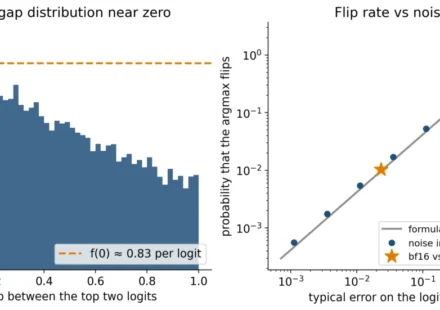
The Subtle Instability of Deterministic Large Language Models: Unpacking the "Feynman Anomaly"
In September 2025, a seemingly simple experiment conducted by Horace He and his team at the Thinking Machines Lab inadvertently illuminated a fundamental fragility within even the most rigorously controlled large language models (LLMs). The researchers…
Julia Internals and Ecosystem Development Update for November 2025: A Comprehensive Overview of Language Evolution and Community Progress

The release of the November 2025 update on Julia internals, curated by Stefan Krastanov and a specialized collective of core contributors, marks a significant milestone in the ongoing maturation of the Julia programming language. This monthly briefing…
Tracing Language Use in (Bilingual) In-Depth Interviews: Collective Knowledge Production on Migration, Remembering Language(s), and Emotions

The landscape of migration research is continually evolving, demanding innovative methodologies to capture the nuanced experiences of individuals within postmigrant societies. A recent study, detailed in a paper published with the DOI…
