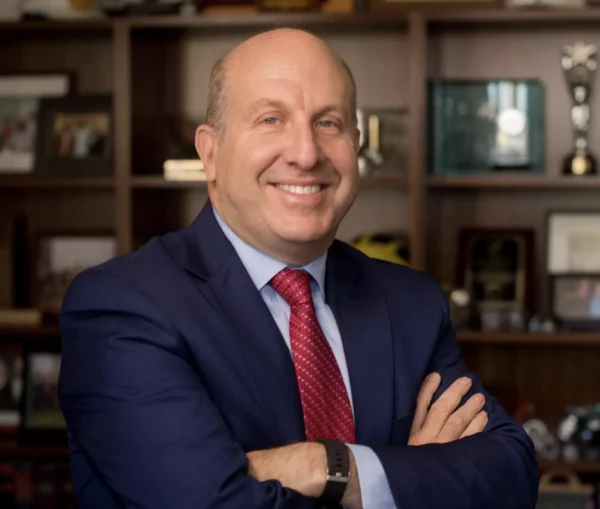
Marvin Krislov Appointed President of Bard College Amidst Leadership Transition and Institutional Renewal Efforts

Marvin Krislov, who has served as the distinguished president of Pace University since 2017, has been unanimously approved by Bard College’s Board of Trustees to assume the presidency of Bard College, effective July 2027. The announcement, made on Friday, marks a pivotal moment for the prestigious liberal arts institution, which has recently navigated a challenging period of leadership transition. Krislov’s appointment for a three-year term signals a new chapter for Bard, as it seeks to reaffirm its commitment to its founding principles and advance its mission within the evolving landscape of higher education. Jonathan Becker, who has diligently served as Bard’s acting president during the interim, will continue in that capacity until Krislov officially takes office, ensuring a smooth and methodical handover following a period of significant upheaval.
A New Era for Bard College Following a Contentious Departure
The decision to appoint Krislov comes after months of intense scrutiny and controversy surrounding Bard’s longtime president, Leon Botstein. Botstein, who had helmed Bard College for an extraordinary 51 years, retired from his presidential duties in the summer of 2026. This retirement followed mounting public and internal pressure stemming from his association with the late convicted sex offender Jeffrey Epstein. The controversy escalated, leading to Botstein’s complete resignation from all remaining Bard-related roles in October 2026, subsequent to the emergence of new allegations further detailing his connections to Epstein.
The institutional statement released by Bard College, while acknowledging Botstein’s 51-year tenure as "transformative," also underscored the college’s forward-looking perspective, noting Krislov’s arrival "at a pivotal moment of growth and expansion." This carefully worded acknowledgment highlights the dual challenge and opportunity facing Bard: to honor its rich legacy while decisively moving beyond the shadow of recent controversies. The college, known for its innovative academic programs, commitment to the arts, and focus on civic engagement, is poised for a period of strategic recalibration under new leadership.
The Context of Controversy: Bard and the Epstein Scandal
The controversy surrounding Leon Botstein and his ties to Jeffrey Epstein cast a long and unwelcome shadow over Bard College, an institution priding itself on its progressive values and intellectual independence. Reports indicated that Epstein, through various foundations, had provided significant financial contributions to Bard over several years, beginning in the early 2000s. These donations, while initially welcomed, became a source of profound ethical concern as the full extent of Epstein’s crimes and the nature of his relationships with prominent individuals became public knowledge.
The allegations against Botstein primarily centered on his continued association with Epstein even after the financier’s initial conviction in 2008 for soliciting prostitution from a minor. Questions arose regarding Botstein’s judgment, the due diligence performed by the college, and the ethical implications of accepting funds from an individual with such a documented criminal history. While Botstein consistently maintained that he was unaware of the true depths of Epstein’s predatory behavior, the sustained public criticism and internal dissent ultimately made his continued leadership untenable. Student groups, faculty members, and alumni voiced their concerns, demanding greater transparency and accountability from the college administration. The saga served as a stark reminder of the ethical complexities universities face in navigating philanthropic relationships and the imperative for institutions to uphold the highest standards of integrity, especially when confronted with moral quandaries. The internal and external pressures ultimately led to his retirement and subsequent full resignation, paving the way for a comprehensive leadership search and the eventual appointment of Marvin Krislov.
Marvin Krislov: A Profile in Higher Education Leadership
Marvin Krislov brings to Bard College a wealth of experience cultivated over decades in diverse leadership roles within higher education. His most recent tenure at Pace University, an institution with a strong emphasis on professional education and experiential learning across its campuses in New York City and Westchester County, began in 2017. During his time at Pace, Krislov was instrumental in advancing the university’s strategic vision, focusing on student success, academic innovation, and robust community engagement. Under his leadership, Pace saw significant investments in its academic programs, particularly in burgeoning fields relevant to the modern economy, and continued to enhance its reputation as a pathway to professional achievement for a diverse student body.
Prior to his presidency at Pace, Krislov served as the president of Oberlin College, a highly selective liberal arts institution in Ohio, from 2007 to 2017. His decade at Oberlin was marked by efforts to strengthen the college’s financial footing, navigate the challenges facing traditional liberal arts colleges, and foster an inclusive campus environment. He oversaw significant capital improvements, bolstered fundraising initiatives, and championed Oberlin’s unique blend of academic rigor and artistic excellence. His experience at Oberlin is particularly relevant to Bard, given both institutions’ shared commitment to liberal arts education and their distinctive academic cultures.
Before his presidential roles, Krislov held a critical position as vice president and general counsel at the University of Michigan, a large public research university. This experience provided him with an invaluable understanding of the legal and governance complexities inherent in large-scale academic institutions. His background as a legal professional, combined with his extensive administrative experience, positions him uniquely to address the multifaceted challenges and opportunities that await him at Bard. The Pace Press, Pace University’s student newspaper, had previously reported that Krislov had informed the university that he would not seek a third five-year term, indicating a premeditated transition in his career trajectory. This context suggests a thoughtful decision to seek new leadership opportunities rather than an abrupt departure, aligning with the narrative of a strategic move to Bard.
Statements and the Vision for Bard’s Future

The official announcement of Krislov’s appointment was met with statements reflecting optimism and a clear vision for Bard’s trajectory. Brandon Weber, chair of Bard’s Board of Trustees, articulated the board’s confidence in Krislov’s leadership, stating, "Marvin Krislov is the ideal leader to guide the College forward at a pivotal moment in the institution’s 166-year history." Weber further emphasized Krislov’s alignment with Bard’s core mission: "Building upon Bard’s legacy of innovation and excellence, Krislov is committed to honoring and advancing the institution’s mission as a private college serving the public good." This statement underscores the board’s desire for continuity in Bard’s distinctive identity while signaling a fresh approach to its future challenges.
While no direct statement from Krislov was included in the initial reports, it is customary for incoming presidents to express enthusiasm for their new role, acknowledge the institution’s legacy, and articulate an initial vision. It can be logically inferred that Krislov will emphasize his commitment to Bard’s academic distinction, its vibrant intellectual community, and its dedication to civic engagement. Given his background, he is likely to highlight themes of institutional stability, responsible governance, and fostering an environment where both academic excellence and ethical conduct are paramount.
The transition also prompts a response from Pace University. It is expected that Pace’s Board of Trustees will issue a statement acknowledging Krislov’s contributions to the university, thanking him for his service, and outlining the process for identifying his successor. Similarly, the Bard community—faculty, students, and alumni—will undoubtedly react to the news, with many expressing hope for renewed stability, transparency, and a focus on the college’s academic mission as it seeks to heal from the recent controversies.
Bard College: A Legacy of Innovation and Public Engagement
Bard College, established in 1860, has long been celebrated for its distinctive approach to liberal arts education. Located in Annandale-on-Hudson, New York, it is renowned for its interdisciplinary curriculum, emphasis on critical thinking, and commitment to preparing students for engaged citizenship. The college operates on a unique model, including the Bard High School Early Colleges (BHSEC) program, which allows students to earn college credits while completing high school, and a robust network of international programs that extend its educational philosophy globally. These initiatives, many of which flourished under Botstein’s long tenure, exemplify Bard’s dedication to expanding access to quality education and fostering a global perspective.
With an undergraduate enrollment typically hovering around 2,000 students, Bard maintains a close-knit academic community characterized by a high faculty-to-student ratio, fostering intimate intellectual engagement. Its academic strengths span the humanities, arts, sciences, and social sciences, with notable programs in areas like music, writing, and environmental studies. The college’s "private college serving the public good" ethos is not merely a slogan but is deeply embedded in its curriculum and outreach efforts, including initiatives focused on civic engagement, human rights, and social justice. This foundational commitment will undoubtedly be a key area for Krislov to champion and potentially expand upon.
Implications for Bard College and the Higher Education Landscape
Marvin Krislov’s appointment carries significant implications for Bard College, both internally and externally. His arrival signals a concerted effort by the Board of Trustees to usher in an era of stability and ethical reaffirmation after the turbulence caused by the Botstein-Epstein scandal.
1. Institutional Healing and Reputation Management: Krislov’s immediate challenge will be to guide Bard through a period of institutional healing. This involves restoring trust among faculty, students, alumni, and the broader public. His legal background and experience navigating complex institutional dynamics at both Oberlin and Pace will be invaluable in addressing lingering questions about governance, transparency, and ethical oversight. Rebuilding the college’s reputation will be crucial for maintaining enrollment, attracting top faculty, and securing philanthropic support.
2. Strategic Growth and Expansion: Bard’s statement references a "pivotal moment of growth and expansion." This suggests that beyond immediate stabilization, Krislov will be tasked with defining and executing a strategic vision for the college’s future. This could encompass several areas:
- Academic Innovation: Continuing Bard’s tradition of pioneering new pedagogical approaches and interdisciplinary programs.
- Financial Sustainability: Strengthening the college’s endowment, diversifying revenue streams, and ensuring long-term financial health, especially important for a private liberal arts institution in a competitive landscape.
- Diversity, Equity, and Inclusion: Furthering efforts to create a truly inclusive and equitable campus environment, which aligns with Bard’s progressive values and is a critical imperative for all modern educational institutions.
- Global Reach: Building upon Bard’s established international networks and partnerships, perhaps exploring new models for global engagement.
3. Leadership Style and Cultural Fit: Krislov’s track record at both Oberlin and Pace suggests a thoughtful, analytical, and collaborative leadership style. His experience at Oberlin, a peer liberal arts institution, provides him with a deep understanding of Bard’s academic culture and the unique challenges and opportunities it presents. His tenure at Pace, a more career-focused university, demonstrates his adaptability and ability to lead different institutional models. At Bard, he will need to artfully balance the preservation of its distinctive intellectual ethos with the implementation of necessary administrative and strategic reforms.
4. Fundraising and Development: Strong leadership is paramount for successful fundraising. After a period of reputational challenge, Krislov will be instrumental in re-engaging alumni and major donors, articulating a compelling vision that inspires renewed philanthropic investment in Bard’s mission. His experience at two different types of institutions will provide a broad perspective on donor relations and capital campaigns.
The broader implications extend to the higher education sector, where institutions are increasingly scrutinized for their governance, ethical conduct, and financial practices. Bard’s experience serves as a cautionary tale regarding donor relationships and the imperative for robust institutional oversight. Krislov’s appointment represents a proactive step by Bard to not only move forward but also to potentially serve as a model for institutional renewal and ethical leadership in a complex academic environment. His success at Bard will be closely watched as a case study in how a revered institution can navigate profound challenges and emerge stronger, reinforcing its commitment to its core values while embracing necessary change.