Christopher Nolan’s Odyssey Ignites Global Debate on Adaptation and Ancient Epics

Summer 2026 has been defined by the cinematic event of Christopher Nolan’s Odyssey, a film that has not only dominated the global box office but also sparked a fervent, often polarized, cultural and academic discourse. Since its highly anticipated premiere, the film has become an unavoidable topic, saturating social media, news cycles, and academic forums with passionate discussions, preemptive judgments, and critical analyses. This widespread engagement, both before and after viewers experienced Nolan’s interpretation, has created a unique moment for examining how ancient literature intersects with modern blockbuster filmmaking and the subsequent implications for education and public scholarship.
The Release and Immediate Impact
Christopher Nolan’s Odyssey, released by Universal Pictures in early July 2026, quickly established itself as a summer phenomenon. Boasting an estimated production budget of $220 million, the film reportedly garnered over $750 million worldwide in its opening weeks, cementing its status as a commercial success. Its arrival was preceded by months of intense speculation, fueled by Nolan’s reputation for ambitious, intellectually challenging cinema. Early trailers hinted at a visually stunning, emotionally raw, and thematically complex retelling of Homer’s epic, promising the director’s signature blend of non-linear narrative, immersive soundscapes, and profound exploration of human psychology.
However, commercial success did not translate into universal critical acclaim, nor did it quell the vigorous public debate. The film’s R-rating, attributed to its stark violence and pervasive profanity, immediately set it apart from many previous adaptations of classical tales. Reviewers noted particularly harrowing sequences, such as the encounters with the Cyclops and Circe, which delivered moments of "uncanny, soul-shaking visible and acoustic horror," according to early reports. These elements, while praised by some for their unflinching portrayal of Odysseus’s brutal journey, raised questions about the film’s suitability for younger audiences, prompting educators to issue caution for those considering it for classroom use.
A Tempest of Criticism and Praise
One of the most significant catalysts for the ongoing debate was the scathing review published in the London Review of Books by famed Odyssey translator Emily Wilson. Her piece, titled "An Uncomplicated Man," offered a trenchant critique of Nolan’s interpretation, arguing that the film fundamentally misrepresented or simplified the epic’s nuanced themes and its protagonist. Wilson’s reputation as a scholar who brought a fresh, accessible, and often feminist perspective to her translation of Homer’s work lent considerable weight to her criticisms, igniting a "tempest worthy of Poseidon" among classicists and film enthusiasts alike.
Conversely, others, including renowned Homerist Richard Martin, adopted a more pragmatic view. As quoted in Variety, Martin stated, "All publicity about Homer is good publicity," suggesting that the very controversy surrounding Nolan’s film served a valuable purpose by drawing unprecedented public attention back to the ancient text. This sentiment was echoed by Universal Pictures, which, while refraining from direct comment on specific critical takes, released a statement acknowledging the "vibrancy of discussion" around the film and expressing pride in bringing "one of humanity’s foundational stories to a new generation." Nolan himself, in a brief interview with The Hollywood Reporter, emphasized his intent to craft a deeply personal and visceral journey, allowing audiences to "experience the brutal reality of a hero’s return, stripped of romanticism."
Nolan’s Vision: A Signature Approach to Antiquity
Christopher Nolan’s filmography is marked by a consistent directorial signature: intricate narratives, often employing non-linear timelines; a focus on psychological realism and moral ambiguity; and a preference for practical effects blended with cutting-edge visuals. From the fragmented memory of Memento to the existential dread of Inception and the historical weight of Oppenheimer, Nolan consistently challenges audiences to engage deeply with complex themes. His Dark Knight trilogy, for instance, recontextualized a comic book hero within a gritty, morally ambiguous urban landscape, exploring the costs of vigilantism and societal collapse.
It is this established "brutalist worldview," as some critics describe it, that Nolan brought to The Odyssey. Rather than a romanticized epic of gods and monsters, his film presents a raw, often bleak account of survival, trauma, and a desperate struggle for homecoming. The manipulation of narrative time, a Nolan hallmark, is reportedly evident in how Odysseus’s journey is presented, potentially mirroring the fractured memory and psychological toll of his decade-long ordeal. This approach, while distinct from traditional epic storytelling, forces viewers to confront the Odyssey‘s darker undertones, including the violence inherent in ancient warfare and the often-unforgiving nature of the gods.
The Academic Response and Educational Opportunities
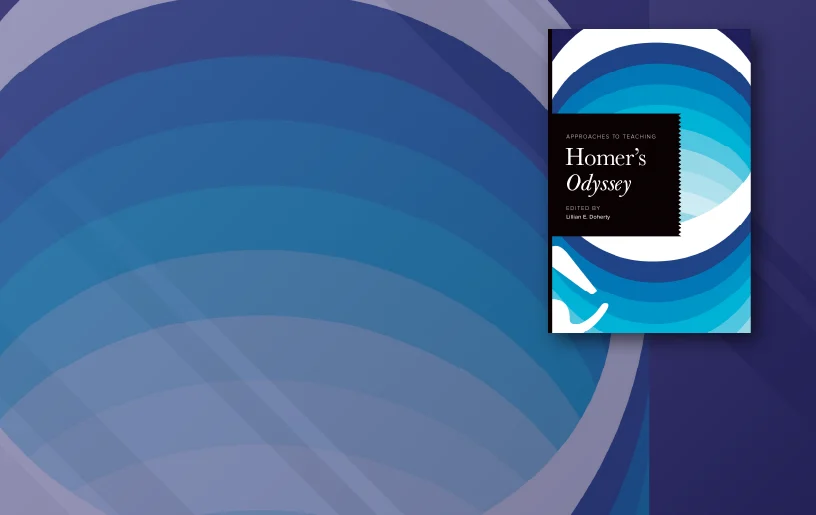
Amidst the swirling currents of public opinion and critical debate, the academic community has recognized a unique pedagogical opportunity. The sheer volume of discourse, however speculative or biased, has highlighted a widespread hunger for engagement with Homer. As a response to this timely moment, the Modern Language Association (MLA) has fortuitously published a new volume, Approaches to Teaching Homer’s Odyssey, edited by Lillian Doherty. This collection of scholarly essays offers educators a valuable resource for navigating the complexities of teaching the ancient epic in contemporary classrooms, especially in the wake of a high-profile adaptation like Nolan’s.
Contributors to the MLA volume, many of whom are seasoned classicists, provide diverse strategies for integrating popular culture into the study of the Odyssey. One chapter specifically addresses teaching the epic through popular culture, leveraging the excitement and pre-existing notions surrounding cinematic events. This approach aims to move students beyond superficial "chatter" and "hobbyhorses," encouraging them to sharpen critical thinking and reading skills by engaging directly with both the ancient text and its modern interpretations.
Pedagogical Strategies for the Nolan Era
Drawing upon the insights compiled in the MLA volume and the broader academic discussion, educators are devising innovative classroom activities designed to harness the energy surrounding Nolan’s Odyssey. These strategies encourage students to delve into the epic with greater depth and critical awareness.
1. Examining Fidelity: Is Nolan’s Odyssey as Loyal as Argos the Dog?
For instructors whose primary goal is to deepen students’ engagement with Homer’s original text, Nolan’s film serves as an excellent comparative tool. Despite some critics’ claims of radical departure, the film reportedly rewards viewers familiar with the Homeric epic. From its opening sequence featuring a bard, through Odysseus’s numerous trials, the intricate scenes with the suitors, and the poignant appearance of Argos, the loyal dog, Nolan’s adaptation retains many foundational elements.
A core classroom exercise involves a comprehensive compare-and-contrast analysis. Students are tasked with identifying what elements Nolan retained from the original epic and what he chose to omit or alter significantly. This extensive list-making naturally leads to a more profound question: Does Nolan’s film constitute an "accurate" or "faithful" adaptation? This question itself prompts a critical discussion about the definitions of "accuracy" and "fidelity" in adaptation studies. Further questions can steer the conversation: What are the central themes of Homer’s Odyssey versus Nolan’s version? Has Nolan acted as a "good steward" of the ancient text, successfully conveying its core concerns? Students are encouraged to support their arguments with specific textual evidence from the poem (by line number) and cinematic evidence from the film (by scene), fostering a robust, evidence-based debate. This exercise often reveals that while Nolan utilizes many "pieces" of the original poem, his ultimate interpretive goals may diverge considerably from those of the ancient epic.
2. The Odyssey as a Christopher Nolan Film: Beyond the Greek Roots
Another powerful approach suggests examining Nolan’s Odyssey not solely as an adaptation of Homer but as a distinct work within the director’s unique oeuvre. This perspective draws parallels to the observation made about Tim Burton’s 1989 Batman film—that it felt more like a "Tim Burton movie" than a quintessential Batman story. Similarly, Nolan’s films often prioritize his characteristic thematic concerns and stylistic choices over strict adherence to source material.
This strategy involves assigning Nolan’s Odyssey alongside other films from his acclaimed career. For instance, pairing it with Memento or Oppenheimer can illuminate Nolan’s recurring fascination with the manipulation of narrative time and the fallibility of human memory in the face of catastrophic events—themes strikingly relevant to Odysseus’s fragmented journey and the trauma of war. Alternatively, a comparison with Batman Begins or The Dark Knight can explore Nolan’s recurring examination of individuals grappling with heroism, moral chaos, and societal collapse.
A particularly intriguing aspect for this approach is Nolan’s reported incorporation of the "Sea People" threat into his Odyssey. While Homer’s epic does not explicitly mention them, historical scholarship on the late Bronze Age posits that mysterious "Sea People" may have contributed to the collapse of Mycenaean palatial centers around the Aegean. Nolan’s decision to "double down on this hypothesis" introduces a layer of historical speculation that can be analyzed through his directorial lens. This choice prompts students to consider if Nolan is using his Odyssey to articulate a contemporary nostalgia or anxiety, reflecting on humanity’s cyclical confrontation with the "end times" and the potential collapse of global order, mirroring the perceived fragility of our own geopolitical landscape.
3. Monstrous Genealogies: Tracing Character Evolution
A third strategy focuses on the rich tradition of "reception studies" surrounding classical antiquity, exploring how characters and narratives from Homer’s Odyssey have been continually reinterpreted across millennia. Nolan’s film, with its memorable portrayals of iconic figures like Polyphemus, the Laestrygonians, Circe, the Sirens, Scylla and Charybdis, the cattle of Helios, and Calypso, offers fertile ground for this exploration.
The "Monster Genealogy Project," as outlined in the MLA volume, encourages students to trace the evolution of these monstrous or divine figures across various artistic and literary interpretations. Students can research ancient depictions in scholarship and resources such as the Lexicon Iconographicum Mythologiae Classicae (LIMC), comparing these with Homer’s textual descriptions and then analyzing Nolan’s cinematic rendition. This project allows students to understand how different eras and artists imbue these figures with new meanings, reflecting contemporary anxieties, cultural values, and artistic sensibilities. By examining the transformations of these characters, students gain insight into the dynamic, living legacy of classical mythology and its enduring power to shape storytelling across different media.
Broader Implications and Lasting Legacy
The summer of Christopher Nolan’s Odyssey in 2026 has unequivocally demonstrated the enduring power of ancient epics to resonate with modern audiences. While the film has generated significant controversy and diverse critical opinions, it has also succeeded in its implicit goal: to make Homer relevant and exciting to a new generation. The widespread public discourse, from social media debates to scholarly articles, serves as a powerful reminder that works from classical antiquity are not static artifacts but tremendous resources for understanding and responding to the multifaceted challenges of contemporary life.
By encouraging students to move beyond the superficial "chatter" and engage critically with both the ancient poem and its modern adaptation, educators are leveraging this cultural moment to sharpen analytical skills, foster an understanding of historical and modern values, and underscore the profound and dynamic legacy of the classics. Nolan’s Odyssey, whatever its ultimate critical standing, has undeniably carved out a significant space in the cultural landscape, proving that the journey of Odysseus—and the debates it inspires—continues to be as vital and transformative as ever.