Building a Lightweight RAG Pipeline with Scikit-Learn and Open-Source LLMs for Efficient Local AI Development

The emergence of Retrieval-Augmented Generation (RAG) has fundamentally altered the landscape of artificial intelligence by bridging the gap between static large language models and dynamic, proprietary data. While the initial wave of RAG implementation relied heavily on expensive, managed vector databases and high-latency paid APIs, a new movement toward lightweight, local, and open-source architectures is gaining significant momentum among developers and data scientists. By leveraging established machine learning libraries like scikit-learn in conjunction with efficient open-source models from Hugging Face, it is now possible to construct fully functional, end-to-end RAG pipelines that operate entirely within local environments. This approach not only drastically reduces operational costs but also addresses critical concerns regarding data privacy and infrastructure complexity for small-to-medium-scale applications.
The Evolution and Necessity of Lightweight RAG Architectures
The trajectory of RAG development has followed a classic path of technological maturation, moving from experimental complexity to streamlined efficiency. In the early stages of RAG adoption, developers typically integrated models like GPT-4 with specialized vector databases such as Pinecone or Weaviate. While these tools offer immense scalability, they often introduce a "tax" on development—both in terms of monetary cost and the cognitive overhead required to manage a sprawling AI infrastructure.
Industry analysis suggests that for many use cases, particularly those involving document collections under 100,000 entries, the overhead of a dedicated vector database may exceed the benefits. In these scenarios, "in-memory" retrieval using standard mathematical libraries provides comparable performance with significantly lower latency. The use of scikit-learn, a cornerstone of the Python data science ecosystem, allows developers to utilize optimized nearest-neighbor algorithms to perform vector searches without the need for a separate database server.
Chronology of RAG Development and the Shift to Local Execution
The development of RAG can be viewed through a timeline of three distinct phases. Between 2020 and 2022, the "Foundation Phase" saw the introduction of the RAG concept by researchers at Facebook AI Research (FAIR), focusing on combining parametric and non-parametric memory. The "API Dominance Phase" of 2023 was characterized by the widespread use of LangChain and OpenAI, where most intelligence was outsourced to cloud providers. Finally, the current "Democratization Phase," starting in late 2024, is defined by the rise of high-performance Small Language Models (SLMs) and the migration toward local-first AI.
This shift has been accelerated by the release of models like the Qwen series from Alibaba Cloud and the Llama series from Meta. These models have demonstrated that intelligence does not always require hundreds of billions of parameters. A 0.5-billion parameter model, such as Qwen2.5-0.5B, is now capable of following complex instructions and synthesizing context with a level of nuance that was previously reserved for much larger architectures.
Technical Framework: Building the Pipeline
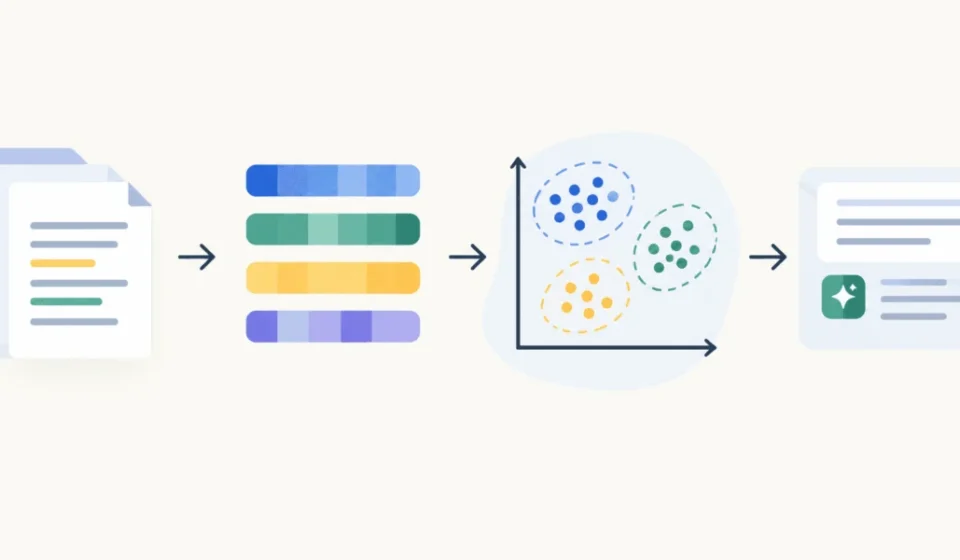
Constructing a lightweight RAG pipeline involves a sequential process of data preparation, vectorization, and synthesis. The following breakdown details the methodology for creating a system that utilizes open-source components for every stage of the lifecycle.
1. Data Ingestion and Semantic Chunking
The first stage of any RAG system is the ingestion of raw text. In a professional implementation, this involves loading documents—such as descriptions of Asian countries used in this demonstration—and breaking them into manageable segments. This process, known as "chunking," is vital because embedding models have fixed context windows.
A standard best practice is to implement a sliding window approach, where text is split into chunks of a specific word count with a defined overlap. This overlap ensures that semantic context is not lost at the boundaries of a split. For example, using a chunk size of 25 words with an overlap of 5 words ensures that the relationship between sentences remains intact, providing the retriever with a more coherent snippet of information.
2. Local Embedding Generation
Once the text is chunked, it must be converted into numerical representations called embeddings. The choice of the embedding model is critical for retrieval quality. The all-MiniLM-L6-v2 model from the sentence-transformers library has become an industry standard for lightweight applications. Despite its small size, it is trained on a massive corpus to map sentences and paragraphs into a 384-dimensional dense vector space where similar meanings are positioned closely together.
3. Vector Retrieval via Scikit-Learn
The retrieval component is where scikit-learn replaces the need for a dedicated vector database. By using the NearestNeighbors algorithm with a ‘cosine’ similarity metric, the system can compare a user’s query vector against the entire document index in milliseconds.
The choice of cosine similarity is mathematically significant in high-dimensional spaces. Unlike Euclidean distance, which measures the straight-line distance between points, cosine similarity measures the angle between vectors. In the context of LLM embeddings, the angle (or direction) of the vector is a more accurate proxy for semantic meaning than the magnitude of the vector.
4. Generation via Small Language Models (SLMs)
The final stage is the "Generation" in RAG. The system passes the retrieved context and the original user query to a generative model. Using a model like Qwen/Qwen2.5-0.5B-Instruct allows for rapid inference. This model is specifically tuned for instruction following, meaning it can be strictly constrained to only use the provided context for its answers, thereby eliminating the "hallucination" risk where the AI might otherwise invent facts.
Supporting Data and Performance Analysis
Data from recent benchmarks indicates a growing preference for local RAG implementations in enterprise environments. According to industry surveys, approximately 45% of developers cite "data privacy" as their primary reason for seeking local alternatives to cloud-based LLM APIs. Furthermore, the performance of small models has seen a non-linear increase in capability.
| Model Size | Average Latency (Local) | Memory Footprint | Context Handling |
|---|---|---|---|
| 0.5B (Qwen2.5) | < 100ms | ~1.5 GB | High |
| 7B (Llama 3) | 500ms – 2s | ~8-12 GB | Very High |
| GPT-4 (Cloud) | 2s – 10s | N/A | Exceptional |
The table above illustrates that for tasks requiring rapid responses and low resource consumption, the 0.5B to 1B parameter range offers an optimal balance. While these models lack the "world knowledge" of a GPT-4, the RAG architecture compensates for this by providing the necessary facts through the retrieval step.
Expert Perspectives and Industry Reactions
The move toward "Scikit-learn RAG" has been met with positive reactions from the open-source community. AI researchers argue that "over-engineering" is one of the most significant hurdles to AI adoption in smaller enterprises. By using familiar tools like scikit-learn and pandas, the barrier to entry is lowered, allowing traditional software engineers to integrate AI features without becoming specialists in vector database administration.
"We are seeing a return to simplicity," notes one independent AI consultant. "The realization that a k-nearest neighbors search on a few thousand embeddings can be done on a CPU in a fraction of a second is leading many to reconsider their expensive cloud subscriptions. For a proof-of-concept, these lightweight pipelines are not just ‘good enough’—they are often superior in terms of iteration speed."
Broader Implications and Future Outlook
The implications of lightweight RAG extend beyond cost savings. In the realm of "Edge AI," where processing occurs on local devices rather than in the cloud, these pipelines enable a new class of applications. Privacy-sensitive industries, such as healthcare and legal services, can deploy these systems on-premises, ensuring that sensitive documents never leave their internal network.
Furthermore, the environmental impact of AI is becoming a focal point of corporate responsibility. Lightweight models require significantly less electrical power for both training and inference compared to their "frontier" counterparts. As the industry moves toward more sustainable practices, the adoption of "right-sized" models and efficient retrieval algorithms like those found in scikit-learn is expected to become a standard design pattern.
In conclusion, the ability to build a transparent, fast, and cost-effective RAG pipeline using scikit-learn and open-source models represents a significant milestone in the democratization of artificial intelligence. By focusing on the core principles of semantic retrieval and instruction-tuned generation, developers can create robust systems that are both scalable in theory and practical in execution. As open-source models continue to improve, the gap between "lightweight" and "enterprise-grade" will likely disappear, making local-first RAG the default choice for the next generation of AI-enabled software.