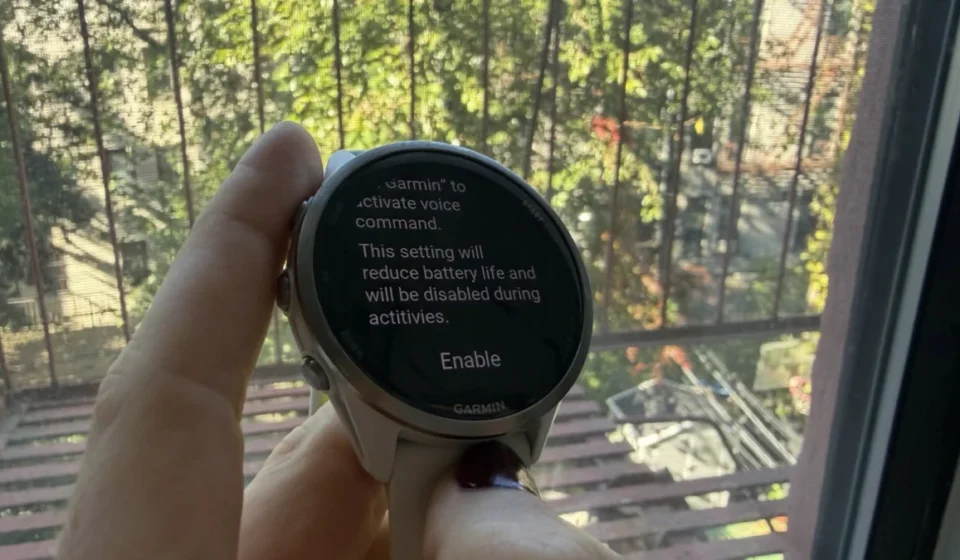
The "OK Garmin" Voice Feature Is Draining Battery Life on Select Smartwatches

Garmin users are reporting a significant and concerning drain on their smartwatch batteries following recent software updates, with many pointing to the newly implemented "OK Garmin" hands-free voice activation feature as the primary culprit. The issue, which has gained traction on Garmin’s official support forums, suggests that the convenience of voice commands comes at a steep cost to device longevity, with some users experiencing battery life reductions of up to 50%. This phenomenon raises questions about the trade-offs between advanced functionality and essential user experience for wearable technology.
The Emergence of "OK Garmin" and the Battery Drain
The "OK Garmin" feature, introduced in Garmin’s September software updates, aims to provide users with a seamless, button-free way to interact with their smartwatches. This innovative functionality rolled out to several popular models, including the Fenix 8 series, Forerunner 570, Forerunner 970, and Venu 4, among others. The update also included enhancements such as all-day fall detection, new Quick Workouts, and expanded Garmin Run Coach plans.
However, the enthusiasm for these new features has been tempered by widespread reports of dramatically reduced battery performance. Users have taken to Garmin’s support forums, such as the thread titled "Battery life dropped dramatically after update 23.39," to voice their frustrations. One user noted that their watch’s projected runtime plummeted from an expected duration to a fraction of its former capacity, attributing the decline directly to the activation of "OK Garmin." The magnitude of this drain has been estimated by some users to be between 35% and 50% of the device’s normal operational time.
Garmin itself acknowledges that enabling certain advanced features, including voice activation, will impact battery life. In their official release notes and support documentation, the company generally states that features requiring continuous listening or processing will consume more power. However, the lack of specific quantitative data regarding the "OK Garmin" feature’s impact has left users feeling blindsided by the severity of the battery reduction. The underlying principle is that the smartwatch’s microphone must remain active to listen for the wake phrase "OK Garmin," a process that inherently requires continuous power consumption. For a device designed for extended use, especially during long outdoor activities or multi-day trips, such a substantial reduction in battery life can be a significant inconvenience, if not a functional impediment.
A Timeline of User Concern and Potential Contributing Factors
The issue appears to have surfaced shortly after the September software rollouts. Users began noticing the battery drain in late September and early October 2026, with discussions intensifying throughout October. While the primary focus has been on the "OK Garmin" feature, it is important to consider other potential contributing factors that might exacerbate battery consumption. Software updates, even those intended to improve performance, can sometimes introduce unforeseen bugs or incompatibilities with hardware components. Additionally, user behavior and settings configurations can play a role. For instance, the frequency of voice command usage, the number of background apps running, and the intensity of GPS tracking can all influence overall battery drain.

However, the consistency of reports linking the drain to the "OK Garmin" feature, and the dramatic nature of the reported reductions, suggests a direct correlation. The fact that disabling the feature appears to restore battery life estimates to previous levels further supports this conclusion. This points to an optimization issue within the software where the wake word detection mechanism is more power-intensive than anticipated or designed for.
Supporting Data and User Experiences
While specific, independently verified data on the precise battery drain caused by "OK Garmin" is scarce, the sheer volume of user complaints provides compelling anecdotal evidence. Forum threads are populated with detailed accounts of users who have meticulously tracked their battery usage before and after the update, and after disabling the voice feature. These accounts often include screenshots of battery percentage drops over specific timeframes, reinforcing the magnitude of the problem.
For example, a user on the Fenix 8 forum reported that their watch, which typically lasted five days on a single charge, was now struggling to reach three days after activating "OK Garmin." Another user with the Forerunner 970 detailed how a typical 10-hour GPS activity, which previously consumed only 10-15% of their battery, was now using closer to 25-30% with the voice feature enabled. These real-world experiences, while not scientific studies, paint a clear picture of a widespread issue affecting a significant portion of the user base.
The economic implication for users is also noteworthy. High-end Garmin smartwatches represent a considerable investment, often ranging from several hundred to over a thousand dollars. Users expect these devices to offer robust performance and reliable battery life commensurate with their price point. A feature that halves the device’s operational time can diminish the perceived value of the purchase and lead to user dissatisfaction.
Garmin’s Stance and Potential Solutions
Garmin’s official acknowledgment of the battery impact, while present, has been somewhat general. The company typically advises users to manage their settings to optimize battery life, implying that users have control over the trade-offs. In this instance, the direct implication is that users must choose between the convenience of hands-free voice commands and extended battery performance.
The most straightforward solution, as indicated by user reports and logical deduction, is to disable the "OK Garmin" feature. Garmin provides clear instructions on how to do this through the device’s settings menu. Users can navigate to Settings > System > Voice and deactivate "OK Garmin." The option to switch off the Phone Assistant wake word from the same menu is also available. It is important to note that disabling this feature does not remove voice command functionality entirely; users can still activate voice commands manually using the physical buttons on their watches.

Beyond disabling the feature, users can also explore other battery-saving tips, such as reducing screen brightness, limiting the use of GPS, and managing background app activity. However, for those specifically affected by the "OK Garmin" drain, disabling the feature is likely to yield the most significant improvement in battery life.
Broader Impact and Implications for Wearable Technology
The "OK Garmin" battery drain incident highlights a recurring challenge in the development of smart wearable devices: the delicate balance between introducing cutting-edge features and maintaining core functionality, particularly battery life. As manufacturers strive to pack more advanced capabilities into smaller form factors, power consumption becomes an increasingly critical consideration.
This situation has several broader implications:
- User Expectations: Consumers are becoming increasingly reliant on their wearable devices for a multitude of tasks, from fitness tracking and health monitoring to communication and payments. Extended battery life is often a primary purchasing criterion, and significant deviations from advertised or expected performance can erode trust.
- Software Optimization: The incident underscores the importance of rigorous testing and optimization of software features, especially those that involve continuous background processes like voice recognition. Developers must accurately assess the power draw of new functionalities and provide transparent information to users about the potential impact.
- Transparency and Communication: Garmin’s general acknowledgment is a step in the right direction, but more specific communication regarding the expected battery impact of features like "OK Garmin" would empower users to make informed decisions. Detailed breakdowns of power consumption for different features could be beneficial.
- The Future of Voice Interaction: While the current implementation has faced challenges, the drive towards hands-free interaction in wearables is likely to continue. Future iterations of voice technology will need to be more power-efficient to become a truly seamless and unobtrusive part of the user experience. This might involve advancements in low-power microprocessors, more efficient wake-word detection algorithms, and intelligent power management strategies that activate listening only when necessary.
- Competitive Landscape: In the competitive smartwatch market, battery life remains a key differentiator. Competitors who can offer comparable features with superior battery performance may gain an advantage. Garmin’s response to this issue will be crucial in maintaining its reputation for robust and reliable devices.
While the immediate solution for Garmin users experiencing battery drain is to disable the "OK Garmin" feature, the long-term implications of this incident will likely influence how manufacturers approach the integration of power-intensive features in future wearable technology. The incident serves as a reminder that innovation must be coupled with a deep understanding of user needs and the practical constraints of device hardware.