Advancing Public Health and Social Equity Through Address Level Intelligence Mental Health Justice and Pediatric Neuromuscular Research

In a series of landmark studies aimed at addressing some of the most pressing challenges in modern society, researchers across the globe are utilizing advanced data modeling, clinical insights, and sociological analysis to reshape public policy and healthcare delivery. From the vast, underserved expanses of rural Australia to the complex intersections of the criminal justice system and the intricate biological pathways of childhood motor disorders, these academic contributions represent a significant shift toward precision-based intervention. By leveraging address-level intelligence, longitudinal mental health data, and neuromuscular science, experts from Deakin University, the University of New South Wales, Stanford University, and other leading institutions are providing the empirical foundations necessary for a more equitable and healthy future.
Geographic Intelligence: Bridging the Healthcare Gap in Rural Australia
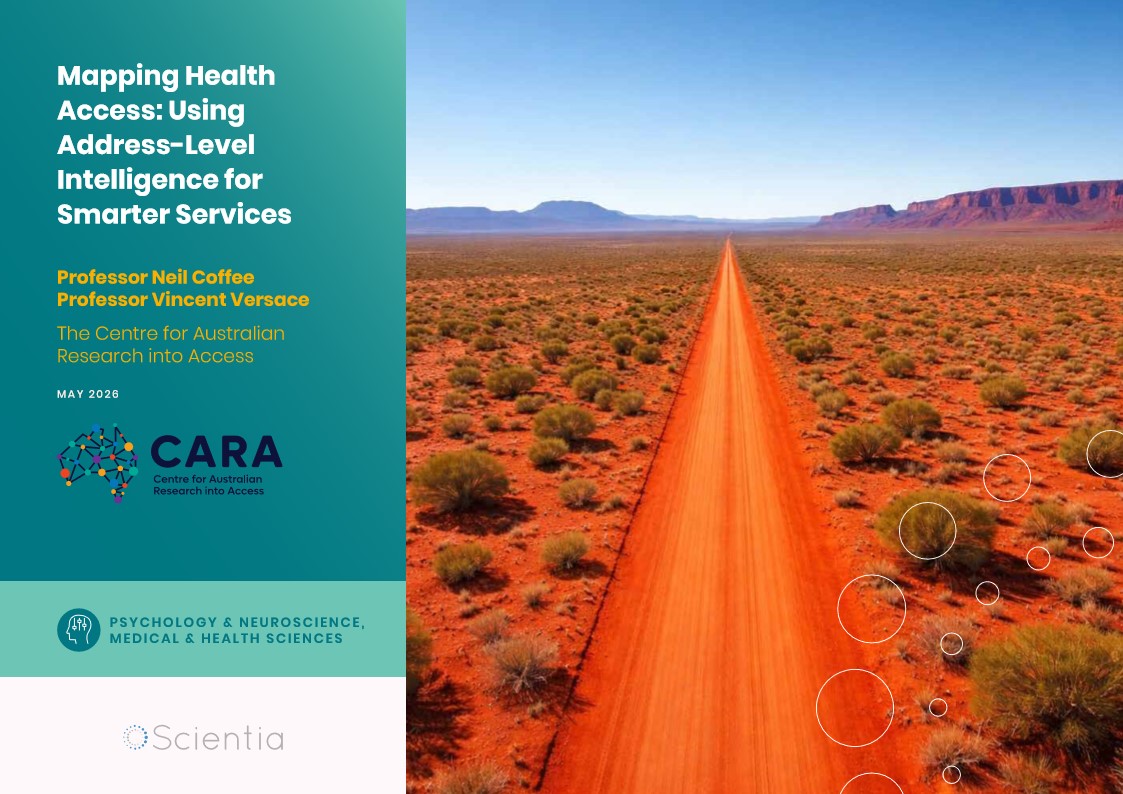
Accessing healthcare remains a fundamental challenge for those living outside major metropolitan hubs, particularly in a nation as geographically diverse as Australia. Professors Neil Coffee and Vincent Versace, leading the Centre for Australian Research into Access (CARA) at Deakin University, have pioneered a new methodology to quantify this disparity. Their research focuses on "Mapping Health Access," a project that moves beyond traditional broad-brush statistics to utilize address-level intelligence for smarter service distribution.
For decades, health planning in Australia relied on postcode-level data, which often masked significant internal variations in accessibility. A single postcode in the Outback can span thousands of square kilometers, making "average" travel times virtually meaningless for residents at the periphery. The CARA team has addressed this by curating a massive dataset of individual residential dwellings and integrating it with comprehensive road network data. This allows for the calculation of highly specific metrics, including exact travel time and distance to the nearest primary care provider, emergency department, or specialist clinic.

Data and Methodology in Spatial Health Research
The researchers utilize a simulated residential dwelling population to model how real-world changes in service location—such as the closure of a regional clinic or the opening of a new telehealth hub—impact the community. Key findings from their modeling suggest that distance is not the only barrier; the quality of infrastructure and the availability of specific service types are critical variables. By quantifying the exact percentage of the population living with "poor access," Professors Coffee and Versace provide a roadmap for policymakers to allocate resources where they are most needed.
The implications of this work extend beyond healthcare. The address-level intelligence framework is currently being adapted to assess access to educational facilities, emergency services, and social support networks. This "spatial epidemiology" approach ensures that the "tyranny of distance" no longer serves as an excuse for systemic inequality in service delivery.
Mental Health as a Critical Pathway in the Criminal Justice System
While geographic barriers hinder physical health, systemic barriers often prevent adequate mental health care for vulnerable populations within the legal system. Professor Tony Gerard Butler of the University of New South Wales (UNSW) has dedicated his research to unravelling the complex relationship between mental health disorders and the criminal justice system. His work highlights a transformative potential: viewing mental health treatment not merely as a medical necessity, but as a critical pathway for reducing reoffending rates and enhancing public safety.
In many developed nations, the prevalence of mental illness among the incarcerated population is significantly higher than in the general public. Statistics indicate that up to 40% of inmates may have a diagnosed mental health condition, yet the "revolving door" of the prison system often fails to provide the continuity of care required for long-term recovery.
The Economics and Ethics of Justice-Involved Care
Professor Butler’s research navigates the nuances of these interventions. By analyzing the correlation between psychiatric treatment and recidivism, his findings suggest that targeted mental health support can drastically lower the likelihood of an individual returning to custody. This shift in focus from punitive measures to rehabilitative care represents a major evolution in criminological theory.
Official responses from justice advocates suggest that implementing Butler’s recommendations could lead to significant fiscal savings. The cost of maintaining a high prison population far exceeds the cost of community-based mental health programs. However, the challenge remains in the implementation—bridging the gap between correctional facilities and community health providers to ensure that when an individual is released, their treatment plan remains intact.
Neuromuscular Science: Enhancing Mobility in Cerebral Palsy
Moving from the societal level to the biological, Professor Jessica Rose at Stanford University is leading groundbreaking research into cerebral palsy (CP), the most common childhood motor disorder. Cerebral palsy results from early brain injury, which has a cascading effect on muscle development and neuromuscular control. For children with CP, every step is a challenge, and the science behind their walking patterns is the key to improving their quality of life.
Working alongside colleagues at the Lucile Packard Children’s Hospital, Professor Rose’s research reveals that the difficulties in walking associated with CP are not just a result of the initial brain lesion, but also a consequence of how that injury disrupts muscle growth over time. As a child grows, the mismatch between bone growth and muscle elongation can lead to contractures and reduced mobility.

Advancements in Gait Analysis and Intervention
The research team utilizes advanced gait analysis technology to track how neuromuscular signals are transmitted from the brain to the limbs. By understanding the specific disruptions in these pathways, clinicians can tailor interventions—ranging from physical therapy and bracing to surgical procedures—to the individual needs of the child.
The broader impact of Professor Rose’s work lies in its focus on early intervention. By identifying specific markers of neuromuscular dysfunction in infancy and early childhood, the medical community can act sooner to preserve muscle function and promote more natural walking patterns. This research emphasizes that "every step matters," highlighting the importance of precision medicine in pediatric rehabilitation.
Navigating the Developmental Complexity of Adolescence
Complementing these studies on health and justice is the work of Dr. David Hansen and Abhishek Juneja, who explore the transitional stage of adolescence. Often characterized as a period of "storm and stress," adolescence is a critical window for growth, learning, and the development of "active balancing."
This research frames adolescence not as a problem to be managed, but as a dynamic period of physiological and psychological recalibration. Dr. Hansen’s work focuses on how adolescents learn to balance increasing autonomy with social responsibility, and how their developing brains manage the transition from childhood dependency to adult independence.

Chronology of Developmental Milestones
The study outlines a chronology of adolescent development, noting that the "coming of age" process involves a complex interplay of hormonal changes and cognitive maturation. The researchers argue that supporting adolescents during this phase requires a holistic approach that considers their physical health, emotional stability, and social environment. By understanding the mechanics of this "active balancing," educators and parents can better support young people as they navigate the challenges and opportunities of their teenage years.
Broader Impact and Policy Implications
The collective findings of these researchers point toward a future where data and science drive social and medical progress. The work of Coffee and Versace in Australia provides the tools to ensure that no citizen is left behind due to their location. Professor Butler’s insights offer a more humane and effective approach to criminal justice, prioritizing health over incarceration. Meanwhile, the specialized research of Professors Rose, Hansen, and Juneja ensures that the most vulnerable stages of human life—childhood and adolescence—are supported by the latest scientific understandings of development and mobility.
As these studies move from the laboratory and the field into the hands of policymakers, the potential for systemic change is profound. The integration of "address-level intelligence" into social planning, the adoption of mental health-centric justice policies, and the application of neuromuscular science in pediatrics represent a multi-faceted strategy for improving global well-being.
Summary of Future Directions
- Healthcare Equity: Continued investment in GIS-based health modeling to eliminate "medical deserts" in rural regions.
- Justice Reform: Shifting legislative focus toward mandated mental health screenings and treatment within the legal system to curb recidivism.
- Pediatric Innovation: Expanding access to high-tech gait analysis and early intervention programs for children with motor disabilities.
- Adolescent Support: Developing educational curricula that recognize the unique developmental needs of the adolescent brain.
The research highlighted by Scientia Global underscores a fundamental truth in modern science: progress is most effective when it is interdisciplinary, data-driven, and focused on the real-world experiences of the individuals it serves. Whether through the lens of a map, a courtroom, or a clinical laboratory, the goal remains the same—to create a world where access to care and the opportunity for a healthy life are universal.