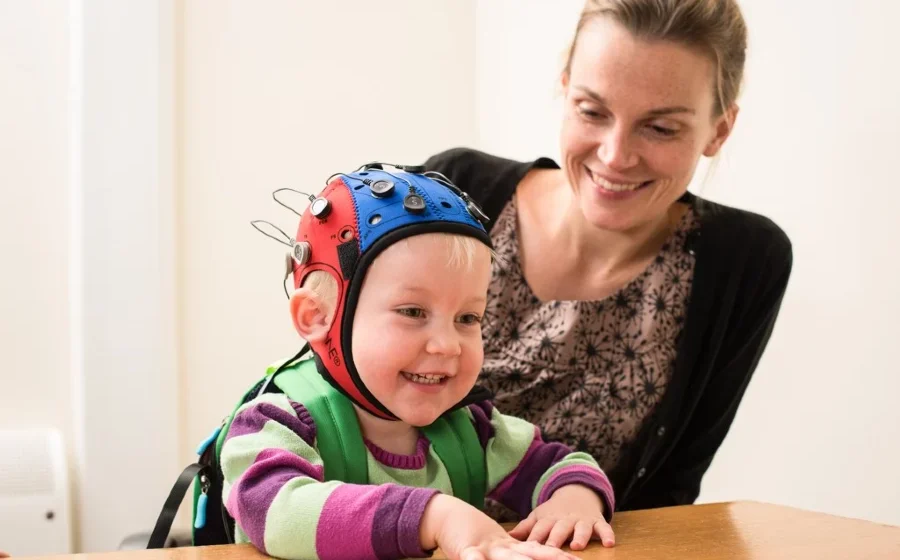

A landmark £50 million investment has been announced by the Medical Research Council (MRC) to establish a new Centre of Research Excellence (CoRE) dedicated to understanding human neural development. This ambitious initiative, spearheaded by King’s College London in collaboration with University College London (UCL) and the University of Manchester, is poised to address critical knowledge gaps in how the human brain grows and develops from conception through early childhood. The centre’s primary objective is to illuminate the fundamental mechanisms underpinning this crucial period, with the ultimate goal of informing the development of more effective interventions for developmental disorders and neurological conditions.
The establishment of this CoRE marks a significant step forward in a field that has historically faced considerable challenges in direct human study. For decades, researchers have relied on animal models or indirect observations to infer the intricacies of human brain development. However, recent technological advancements have opened unprecedented avenues for investigation, allowing for more precise and detailed examination of the developing human brain. The new centre will leverage these cutting-edge technologies to provide deep insights into the cerebral cortex, the brain’s outermost layer responsible for higher cognitive functions such as language, planning, abstract thought, and creativity.
Unlocking the Secrets of Early Brain Development
The £50 million investment underscores the UK’s commitment to pioneering research in neuroscience and child health. The MRC CoRE for Human Neural Development will bring together a multidisciplinary team of world-leading experts in developmental neuroscience, genetics, imaging, computational modelling, and clinical pediatrics. This integrated approach is designed to foster a holistic understanding of brain development, moving beyond isolated observations to a comprehensive picture of interconnected processes.
Historically, studying the developing human brain has been fraught with ethical and practical limitations. Direct observation of fetal brain development or invasive procedures on infants are not feasible for extensive research. Consequently, much of our understanding has been extrapolated from animal studies or derived from examining individuals with diagnosed developmental conditions. While these approaches have yielded valuable insights, they often fail to capture the nuanced trajectory of typical human brain maturation. The new CoRE aims to bridge this gap by employing non-invasive imaging techniques, advanced genetic sequencing, and sophisticated computational analyses to create detailed maps of neural circuitry formation and functional maturation.
The centre’s research agenda will focus on several key areas:
- Mapping Neural Circuitry: Utilizing advanced imaging technologies, researchers will meticulously map the formation and refinement of neural connections, from the earliest stages of neuronal migration and differentiation to the establishment of complex functional networks. This will involve tracking the development of specific brain regions and their interconnections.
- Understanding Gene-Environment Interactions: The centre will investigate how genetic predispositions interact with environmental factors, both prenatal and postnatal, to shape brain development. This includes exploring the impact of maternal health, nutrition, exposure to toxins, and early life experiences.
- Identifying Developmental Trajectories: By studying a cohort of infants and children over time, the centre will aim to establish normative data on brain development. This will allow for the identification of critical periods and key developmental milestones, providing a benchmark against which deviations can be assessed.
- Developing Biomarkers: A crucial outcome of this research will be the identification of reliable biomarkers that can indicate healthy brain development in babies and children. These markers could be measured through non-invasive methods and used in clinical settings to monitor development, identify potential risks early on, and evaluate the effectiveness of interventions.
A Transformative Opportunity for Children’s Futures
Dr. Ceri Williams, Executive Director of Challenge Led Themes at the MRC, expressed enthusiasm for the initiative, stating, "We are delighted to announce this new MRC CoRE for Human Neural Development, backed by £50 million of public investment. By untangling the mysteries of human brain development in the very early stages, this centre offers a powerful opportunity to transform lives, giving us the tools to make earlier and fairer interventions for a future where every child has the best possible chance to realise their full potential."
This statement highlights the profound societal implications of the CoRE’s work. Disruptions in early brain development, whether caused by genetic mutations or environmental factors, can have lifelong consequences, impacting cognitive abilities, emotional regulation, and social functioning. These challenges disproportionately affect minority groups and individuals from economically disadvantaged backgrounds, exacerbating existing inequalities. By understanding the root causes of these disruptions, the centre aims to develop targeted interventions that can mitigate these effects and promote more equitable developmental outcomes.
The early years of life are a period of unparalleled brain plasticity. The foundational architecture of the brain is laid during this time, and the quality of this development has a cascading effect on an individual’s health, education, and overall well-being throughout their lifespan. Conditions such as autism spectrum disorder, ADHD, learning disabilities, and mental health issues often have their origins in early developmental processes. The ability to identify and address these issues at their earliest stages holds the promise of dramatically improving the lives of affected children and their families.
Addressing the "Black Box" of the Developing Brain
Professor Oscar Marín, the Centre Lead based at King’s College London, eloquently described the challenge ahead: "The human brain is a bit of a black box. We can measure patterns of brain activity from the outside, and we can even potentially connect them to what happens later in life, but we don’t yet know how these signals actually relate to what’s happening inside the child’s brain. This means we cannot tell which signals reflect something important about how the circuits inside the brain are developing. Until we can make that distinction, we cannot reliably predict which children are at risk or intervene early enough to make a difference. We have now reached a point where the technologies exist to close that gap, and we can turn that understanding into real differences for children and families."
Professor Marín’s analogy of the "black box" perfectly encapsulates the current limitations in our understanding. While sophisticated neuroimaging techniques like fMRI and EEG can reveal patterns of brain activity, correlating these external measurements with the intricate internal cellular and molecular processes of development has been a significant hurdle. The CoRE will focus on developing new methods to bridge this divide, potentially through advanced multi-modal imaging, in vitro models that mimic human neural development, and sophisticated computational models that can integrate diverse data streams.
The development of precise predictive tools for identifying children at risk is a paramount goal. Currently, diagnoses for many neurodevelopmental disorders are often made later in childhood, after significant developmental trajectories have been established. Early identification allows for timely and targeted interventions, which are generally more effective and less resource-intensive than later interventions. This new centre aims to equip clinicians with the knowledge and tools to intervene proactively, potentially preventing or mitigating the severity of developmental challenges.
A Legacy of Groundbreaking Research
The establishment of the MRC CoRE for Human Neural Development builds upon a rich history of neuroscience research in the UK. King’s College London, UCL, and the University of Manchester are all renowned institutions with significant contributions to our understanding of the brain. This collaborative venture leverages their collective strengths, creating a critical mass of expertise and resources that is unparalleled in this specific field of research.
King’s College London, for instance, has a long-standing reputation in developmental neuroscience and child health, with leading researchers investigating the molecular and cellular mechanisms of brain development. UCL’s Institute of Cognitive Neuroscience and its extensive neuroimaging facilities provide crucial expertise in understanding brain function and connectivity. The University of Manchester brings its strengths in genetics and computational biology, vital for unraveling the complex interplay of genes and environmental factors.
This partnership is not merely a geographic aggregation of institutions but a strategic integration of complementary research capabilities. The synergy between these centres is expected to accelerate the pace of discovery and translate fundamental scientific findings into tangible clinical applications more rapidly than individual efforts could achieve.
Broader Implications and Future Directions
The impact of this £50 million investment extends far beyond the immediate research outcomes. It signals a national priority for understanding and improving the developmental trajectories of all children. The findings from the CoRE will have far-reaching implications for:
- Clinical Practice: The development of new diagnostic tools and therapeutic strategies for a range of neurodevelopmental and neurological disorders. This could include early detection of conditions like cerebral palsy, intellectual disability, and developmental delays, leading to more timely and personalized care.
- Educational Strategies: A deeper understanding of how children learn and develop can inform more effective educational approaches and interventions, particularly for children facing developmental challenges.
- Public Health Initiatives: Evidence-based insights can guide public health policies aimed at promoting healthy pregnancy and early childhood environments, reducing exposure to risk factors, and supporting families.
- Economic Benefits: By improving developmental outcomes, the CoRE has the potential to reduce the long-term societal costs associated with untreated developmental disorders, such as increased healthcare needs, special education services, and reduced workforce participation.
The research will likely employ a multi-pronged approach, integrating:
- Human Embryonic Stem Cell Models: Developing sophisticated in vitro models that mimic human neural development allows for detailed study of cellular processes and gene function in a controlled environment.
- Advanced Imaging Techniques: Utilizing high-resolution MRI, diffusion tensor imaging (DTI), and magnetoencephalography (MEG) to non-invasively map brain structure, connectivity, and activity in developing individuals.
- Longitudinal Cohort Studies: Following groups of infants and children from birth to early childhood, collecting data on their development, genetics, and environmental exposures to identify patterns and predictors.
- Computational Neuroscience: Developing sophisticated computational models to integrate complex datasets, simulate neural processes, and predict developmental trajectories.
- Genomic and Epigenomic Analysis: Investigating the role of genetic variations and epigenetic modifications in shaping brain development and identifying individuals at risk.
The announcement of the ministerial quote is pending, but it is anticipated that government representatives will express strong support for this vital investment in the nation’s future. Such initiatives are crucial for maintaining the UK’s position at the forefront of global scientific innovation and for addressing pressing societal needs related to child health and development.
In conclusion, the establishment of the MRC CoRE for Human Neural Development represents a significant and timely investment in understanding the most complex organ in the human body. By bringing together leading researchers and cutting-edge technologies, this centre has the potential to revolutionize our understanding of early brain growth, leading to earlier diagnoses, more effective interventions, and ultimately, a brighter future for countless children. The £50 million commitment signifies a bold step towards demystifying the intricate processes of neural development and ensuring that every child has the opportunity to reach their full potential.