
Breaking the Cycle of Failed School Initiatives: A Deep Dive into Effective Improvement Models

The landscape of modern education is characterized by a relentless pursuit of progress, yet the history of school reform is often defined more by its "churn" than by its lasting success. In faculty meetings across the globe, the introduction of new curricula, branded leadership programs, and district-wide mandates has become an annual ritual. However, research into educational efficacy suggests that many of these top-down initiatives fail to achieve their intended outcomes, leading to a cycle of teacher burnout and institutional stagnation. A new analysis by researchers Jal Mehta and Max Yurkofsky, detailed in their work A Chance to Solve Their Own Problems, examines why traditional improvement models often falter and identifies the specific conditions necessary for schools to achieve meaningful, sustainable change.
The Anatomy of Failure: Why School Initiatives Stagnate
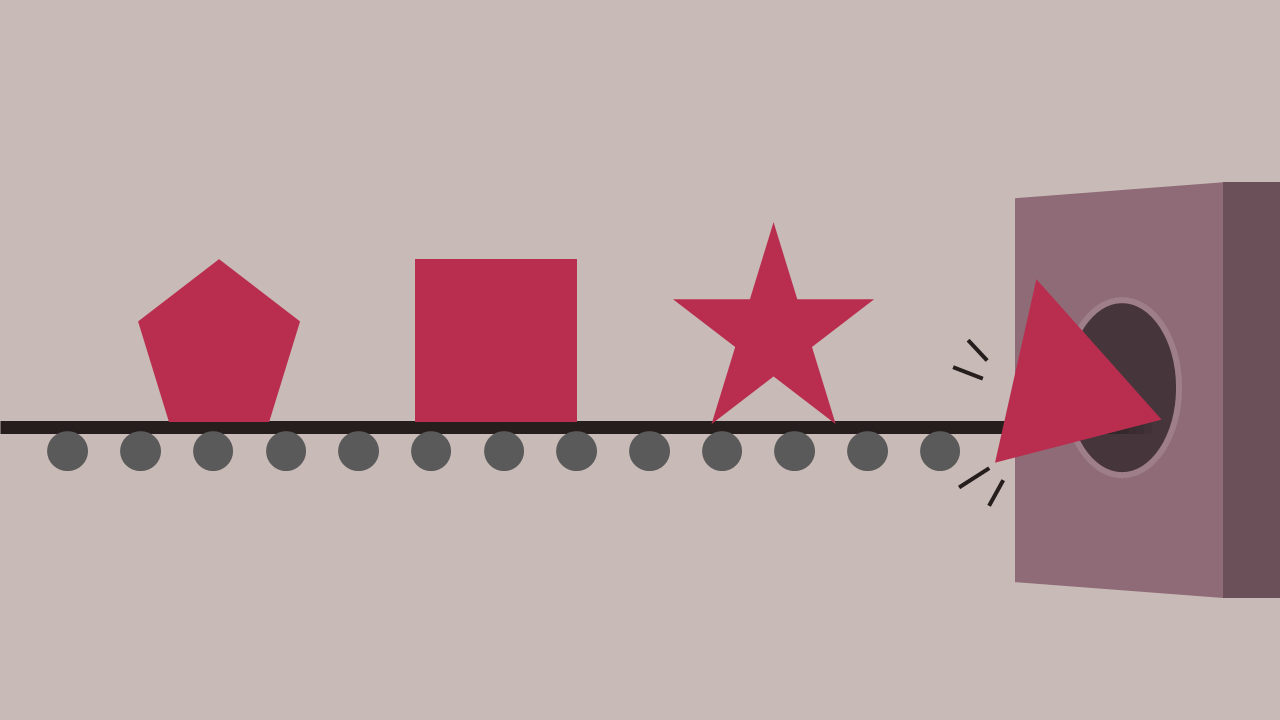
Historically, school improvement has followed a predictable, if flawed, trajectory. District leaders identify a performance gap—often through standardized testing data—and purchase a prepackaged solution designed to address the issue. This "plug-and-play" approach frequently ignores the unique ecological complexities of individual schools. Mehta and Yurkofsky identify four primary reasons why these well-intentioned efforts often fail to gain traction.
First, the people closest to the daily realities of the classroom—the teachers and site-level staff—are frequently excluded from the problem-identification phase. When initiatives are handed down from central offices, they often address what administrators perceive to be the problem, rather than the challenges educators actually face. This lack of agency leads to a disconnect; without a personal or professional stake in the problem, educators are less likely to invest the significant emotional and intellectual energy required for change.
Second, many improvement efforts focus on individual performance rather than systemic flaws. When data indicates a struggle in a specific grade level or subject, the typical response is to target the individuals involved. Yurkofsky argues that a more effective approach involves looking at the systems surrounding the teacher. If a teacher is struggling with literacy standards, the root cause may lie in the onboarding process, the lack of cohesive curriculum, or insufficient coaching structures. Addressing the system rather than the individual not only solves the immediate problem but prevents its recurrence for future staff.
Third, an overemphasis on "fidelity" often stifles the very learning necessary for improvement. In many districts, success is measured by how closely a teacher follows a new program’s script. However, no external program can account for every classroom context. Yurkofsky suggests that "fidelity" is often the enemy of "adaptive integration." For a solution to work, it must be iterated upon based on real-time feedback from the classroom. If the goal is strictly adherence to a manual, the opportunity to learn why a strategy is or isn’t working is lost.
Finally, schools frequently jump to solutions before they have fully diagnosed the problem. This "solutionitis" results in schools adopting expensive programs that may not align with their actual needs. Mehta cites the example of design thinking, where the rush to build a solution—such as private booths for video calls—can overshadow the broader problem, such as a general lack of flexible workspace. By narrowing the focus too early, schools miss out on more creative or effective interventions.
The Framework for Success: Mindsets, Routines, and Practices
Through their research, Mehta and Yurkofsky observed that successful school improvement is not the result of a single program but the alignment of three critical elements: mindsets, routines, and practices.
1. Mindsets
Mindsets refer to the underlying beliefs and assumptions held by staff. Even the most sophisticated literacy program will fail if secondary teachers believe that teaching reading is exclusively the responsibility of elementary educators. Improvement requires a collective shift in belief—a shared understanding that the problem is solvable and that every staff member has a role in that solution. Without this psychological foundation, new tools are likely to be viewed as impositions rather than assets.
2. Routines
Routines are the structural "containers" that allow for collaborative work. These are the scheduled times when educators look at student work, observe one another’s teaching, or analyze data. In districts where innovation happens in silos, teachers often feel isolated. Robust routines ensure that improvement work is a social, rather than individual, endeavor. They provide the consistency needed to move from a one-time workshop to a continuous cycle of inquiry.
3. Practices
Practices are the specific instructional strategies and technical expertise required to execute change. Mehta emphasizes that while the "improvement process" (such as Plan-Do-Study-Act cycles) is important, it cannot replace disciplinary expertise. If a school is failing in mathematics, the staff needs access to high-level mathematical pedagogical knowledge. Whether this expertise comes from internal leads or external consultants, the infusion of new, evidence-based practices is essential to move the needle on student outcomes.
The Role of Leadership in Protecting Improvement Space
For the building blocks of mindsets, routines, and practices to function, school and district leadership must cultivate an environment that supports risk-taking. This involves three primary leadership shifts: protecting time, ensuring psychological safety, and integrating improvement into a broader strategy.

Time remains the most significant barrier to school reform. Teachers are often "time-starved," moving from one period to the next with little room for reflection. Effective leaders must treat "improvement time" as a sacred resource, carving out space in the master schedule that allows teachers to step back from daily operations to focus on long-term systemic goals.
Furthermore, leaders must foster a culture of psychological safety. Improvement inherently involves identifying what is not working, which can be threatening in a high-stakes accountability environment. If teachers fear that admitting a struggle will lead to a poor evaluation, they will hide their challenges rather than solve them. Yurkofsky encourages leaders to "view problems as a gift." When a teacher identifies a flaw in a system, it should be met with curiosity and support rather than defensiveness or discipline.
Finally, improvement methods should not be treated as isolated "events." Successful schools integrate these processes into a coherent, long-term strategy. Rather than doing "rounds" or "data dives" for their own sake, these activities are used as specific tools to reach a clearly defined institutional goal.
Historical Context and Broader Implications
The findings of Mehta and Yurkofsky align with decades of research into the "implementation gap" in public policy. Since the 1980s, the "Effective Schools" movement and the subsequent "No Child Left Behind" era have attempted to mandate improvement through top-down accountability. However, data from the National Assessment of Educational Progress (NAEP) has shown that while some gains were made in the early 2000s, progress has largely plateaued, particularly for marginalized student populations.

The shift toward "Improvement Science"—a methodology originally developed in healthcare and manufacturing—represents a departure from these top-down mandates. Organizations like the Carnegie Foundation for the Advancement of Teaching have championed this approach, which emphasizes small-scale testing and local adaptation. Mehta and Yurkofsky’s work builds on this by highlighting that the human element—the "mindset"—is just as important as the technical "routine."
The implications of this research are significant for the future of teacher retention. The "churn" of failed initiatives is a leading cause of teacher burnout and attrition. By shifting to a model where educators are empowered to solve the problems they see in their own classrooms, districts can improve not only student outcomes but also teacher job satisfaction. When teachers are treated as professionals capable of inquiry and problem-solving, the school becomes a place of learning for adults and students alike.
Conclusion: Reframing the Problem
The path toward sustainable school improvement is not found in the next "silver bullet" curriculum or a new suite of software. Instead, it lies in the hard work of building a culture that values the expertise of those on the front lines. By focusing on systems rather than individuals, prioritizing learning over fidelity, and defining problems before seeking solutions, schools can break the cycle of initiative fatigue.
As schools look toward the future, the challenge for leaders will be to resist the urge for quick fixes. True improvement is a slow, iterative process that requires a fundamental trust in the people within the building. By providing the time, safety, and expertise necessary for collaborative problem-solving, districts can turn the perennial goal of "improvement" from a faculty meeting cliché into a lived reality.