The Scientific and Ethical Frontier of Animal Sentience Deciphering Consciousness in Invertebrates and the Future of Welfare Law

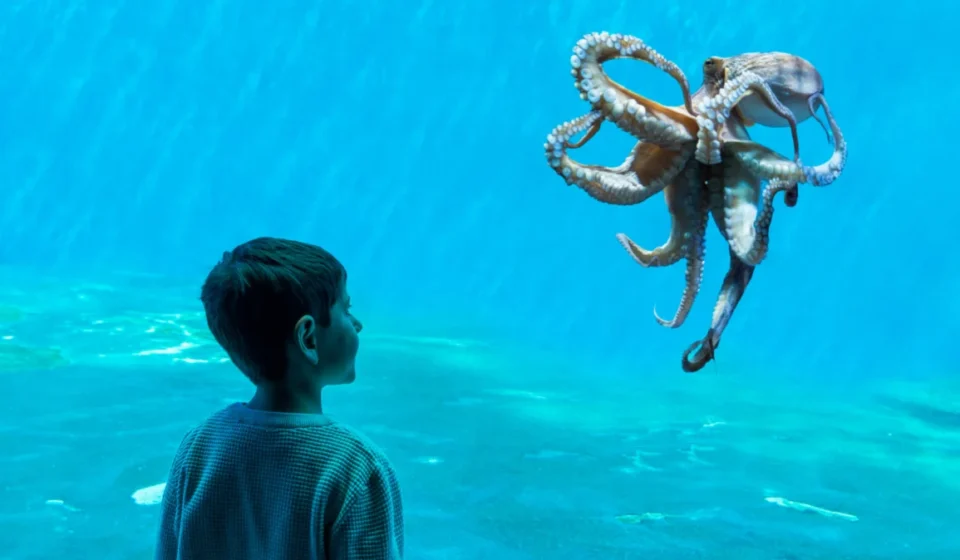
The question of which animals possess consciousness has transitioned from the realm of philosophical speculation to a critical focal point of international law and scientific inquiry. As researchers delve deeper into the internal lives of non-human creatures, the findings are reshaping how societies view everything from industrial farming to the culinary preparation of seafood. At the heart of this evolution is the distinction between "nociception"—the purely physical reflex to harmful stimuli—and "sentience," the capacity to have a subjective, felt experience of the world. This debate has recently gained significant momentum following legislative shifts in the United Kingdom and a growing body of research suggesting that animals previously dismissed as "biological machines," such as octopuses and lobsters, may possess a complex form of awareness.
The Legislative Shift: Recognizing the Invertebrate Mind
In 2022, the United Kingdom formally expanded the scope of its Animal Welfare (Sentience) Act to include cephalopod mollusks (such as octopuses, squid, and cuttlefish) and decapod crustaceans (such as crabs, lobsters, and crayfish). This move followed a comprehensive review led by the London School of Economics and Political Science (LSE), which evaluated over 300 scientific studies. The review concluded that there was "strong evidence" of sentience in these groups.
Prior to this amendment, animal welfare laws primarily protected vertebrates—animals with backbones—based on the assumption that a complex central nervous system and a brain similar to the human model were prerequisites for feeling pain. The inclusion of invertebrates represents a paradigm shift in legal and ethical thought. It acknowledges that consciousness may not be a single, human-like phenomenon but a spectrum of experiences that can arise from vastly different neurological architectures.
The practical implications of these laws are profound. In several jurisdictions, including Switzerland, Norway, and parts of Italy, the practice of boiling lobsters alive has already been banned or restricted, requiring instead that the animals be stunned or killed instantly before cooking. These legal changes reflect a growing public and scientific consensus that if an animal can suffer, humans have a moral obligation to minimize that suffering.
The Case for Widespread Sentience: Behavioral Markers and Evidence
Heather Browning, a philosopher at the University of Southampton and a former zookeeper, argues that consciousness is likely much more widespread than previously assumed. Browning’s approach relies on "inference to the best explanation," a method of reasoning that looks at a suite of behaviors and biological markers to determine the most probable internal state of an animal.
During the LSE review, researchers established eight specific criteria to measure sentience, including:
- Possession of nociceptors (pain receptors).
- Possession of integrative brain regions.
- Connections between nociceptors and integrative brain regions.
- Responses affected by potential analgesics or anesthetics.
- Motivational trade-offs that show a balancing of threat against opportunity.
- Self-protective behaviors in response to injury and threat.
- Associative learning that goes beyond simple habituation.
- Evidence that the animal values the analgesic or anesthetic when injured.
One of the most compelling pieces of evidence for invertebrate sentience comes from studies on hermit crabs. In experiments where hermit crabs were given electric shocks within their shells, researchers found that the crabs were less likely to vacate a "preferred" or high-quality shell than a lower-quality one. This suggests a "motivational trade-off"—the animal is not merely reacting to a reflex but is weighing the unpleasantness of the shock against the value of its home. This type of complex decision-making is often cited by proponents of sentience as evidence of a conscious, evaluative process.
Browning contends that while we may never have 100% certainty regarding the "first-person" experience of an octopus or a crab, the accumulation of behavioral evidence makes the hypothesis of sentience the most scientifically robust conclusion.
The Neurological Counter-Argument: The Role of the Cortex
Despite the behavioral evidence, a significant faction of the scientific community remains skeptical. Deb Brown, a philosopher and director of the Critical Thinking Project at the University of Queensland, working alongside neuroscientist Brian Key, posits that behavior can be deceptive. They argue that complex, seemingly "intelligent" actions can be performed by biological systems without the presence of subjective experience.
The core of this skepticism lies in the "cortical necessity" hypothesis. In humans and other mammals, the experience of pain is intrinsically linked to the cerebral cortex. Clinical data from the 20th century, including observations of soldiers with shrapnel injuries, demonstrated that damage to specific cortical regions resulted in a total loss of the "feeling" of pain, even if the body’s reflexive responses remained intact.
Brown and Key argue that invertebrates lack the specific neural architecture—characterized by hierarchical, multi-layered layers of neurons capable of "reading" lower-level signals—necessary to generate a conscious experience. From this perspective, an octopus might possess 500 million neurons, but if those neurons are organized to facilitate rapid movement and camouflage rather than centralized, higher-order processing, the "lights may not be on" in a conscious sense.
In this view, pain is not the cause of behavior but an explanation for it. For a complex brain, pain serves as an executive "spotlight" that helps the organism understand why it just performed a reflexive action, allowing for better future predictions. If an animal lacks this executive layer, its avoidance of a shock is a sophisticated but non-conscious "nocifensive" reaction, akin to a plant turning toward the light or a cell moving away from a toxin.
The Evolutionary Function of Pain and the Precautionary Principle
The debate over animal consciousness also touches on evolutionary biology. Why would sentience evolve in the first place? If an animal can survive and reproduce using only non-conscious reflexes (nociception), what is the "added value" of feeling pain?
Proponents of widespread sentience argue that "felt" pain allows for greater flexibility. While a reflex is fast, a feeling allows an animal to learn from a single event and apply that knowledge to a variety of new contexts. It allows for the "motivational trade-offs" seen in hermit crabs, which are essential for survival in unpredictable environments.
However, because the "hard problem of consciousness"—the question of how physical matter gives rise to subjective experience—remains unsolved, many researchers advocate for the "Precautionary Principle." This principle suggests that if there is a reasonable possibility that an animal is sentient, we should treat it as such until proven otherwise. The cost of "over-attributing" consciousness (treating a non-conscious crab with care) is minimal, whereas the cost of "under-attributing" it (boiling a sentient creature alive) is a significant ethical failure.
Implications for Industry and Environmental Ethics
The resolution of this debate has immediate consequences for global industries. One of the most contentious issues is the rise of industrial octopus farming. In Spain, the company Nueva Pescanova has proposed the world’s first large-scale octopus farm, intending to produce 3,000 tons of meat annually.
Ethicists and scientists, including Heather Browning, have voiced strong opposition. Beyond the question of sentience, they argue that octopuses are solitary, highly intelligent, and inquisitive animals that are fundamentally unsuited to high-density confinement. In a farm setting, these traits could lead to severe stress, aggression, and cannibalism. If octopuses are recognized as sentient, such farming practices would likely be deemed inhumane under modern welfare standards.
Interestingly, even those who remain skeptical of invertebrate consciousness often support welfare protections. Deb Brown notes that an animal does not need to be conscious to be worthy of protection. Environmental ethics, the preservation of biodiversity, and the maintenance of healthy ecosystems provide sufficient justification for treating all creatures with respect, regardless of their internal lives. This perspective suggests a "common ground" where both skeptics and proponents can agree on the need for humane treatment, albeit for different reasons.
Chronology of Modern Animal Sentience Milestones
- 1997: The Treaty of Amsterdam (EU) recognizes animals as "sentient beings" for the first time in a major political framework.
- 2012: The Cambridge Declaration on Consciousness is signed by a group of prominent neuroscientists, stating that "non-human animals, including all mammals and birds, and many other creatures, including octopuses" possess the neurological substrates that generate consciousness.
- 2018: Switzerland becomes the first country to ban the boiling of lobsters alive without prior stunning.
- 2021: The London School of Economics releases its "Review of the Evidence of Sentience in Cephalopod Mollusks and Decapod Crustaceans."
- 2022: The UK Animal Welfare (Sentience) Act is enacted, officially recognizing octopuses, crabs, and lobsters as sentient.
- 2024: The New York Declaration on Animal Consciousness is launched, signed by hundreds of researchers, advocating for the recognition of consciousness in a wide range of vertebrates and invertebrates, including insects.
Conclusion: A Moving Boundary
As science advances, the boundary between "conscious" and "non-conscious" beings appears to be shifting further down the evolutionary tree. While the "cortical necessity" argument remains a powerful challenge from the field of neuroscience, the sheer complexity of invertebrate behavior continues to push the ethical needle toward greater protection.
The ongoing dialogue between philosophers, neuroscientists, and legislators ensures that animal welfare is no longer based on mere sentimentality but on a rigorous, albeit evolving, understanding of the biological reality of pain. Whether or not we can ever truly know "what it is like to be a bat" or an octopus, the current trajectory of science and law suggests that humanity is becoming increasingly unwilling to take the risk of being wrong. The future of animal welfare lies in this intersection of humility, precaution, and the persistent pursuit of understanding the diverse ways life experiences the world.