Galactic Collision Leaves Galaxies Without Dark Matter Challenging Alternative Gravity Theories

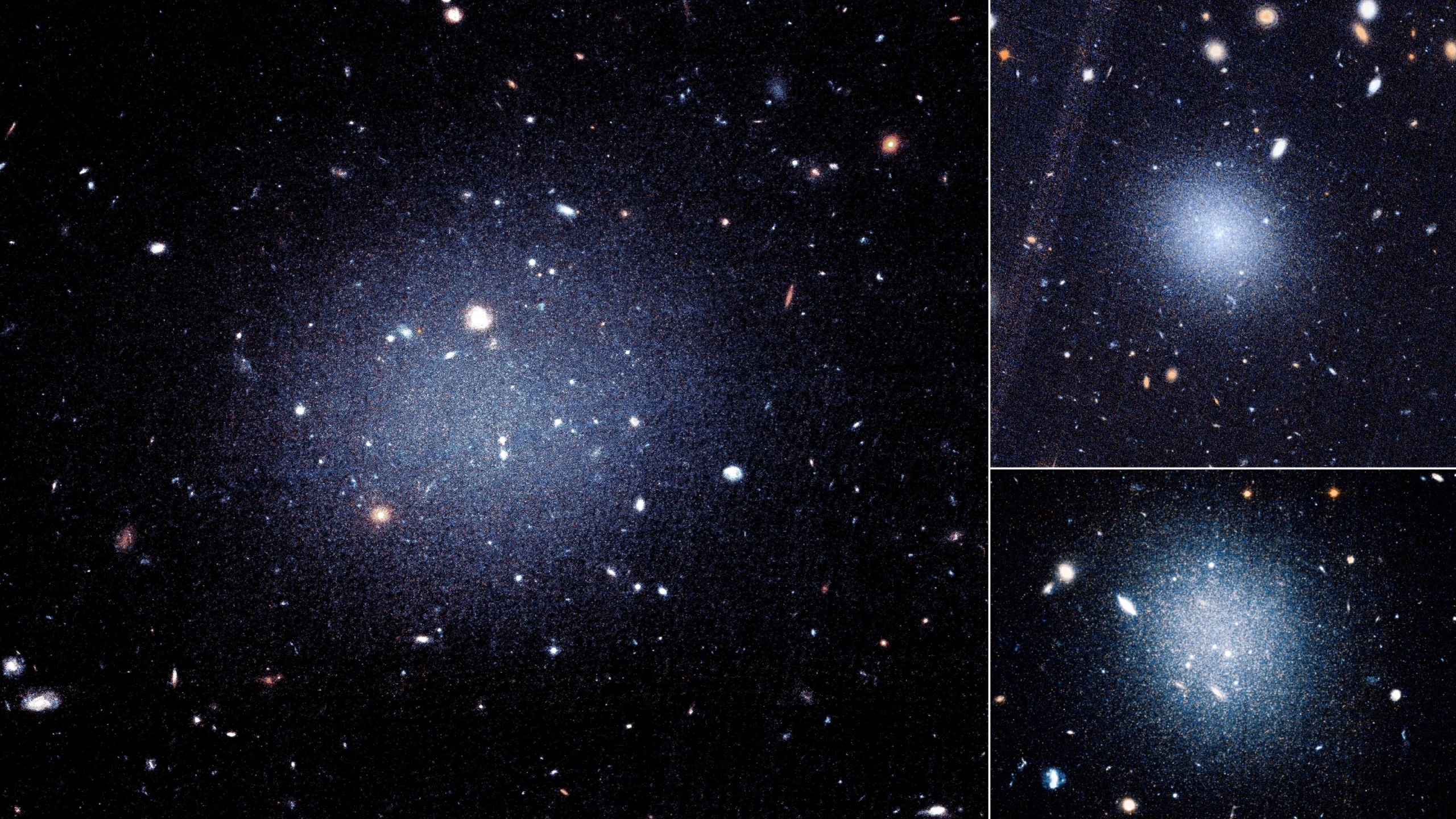
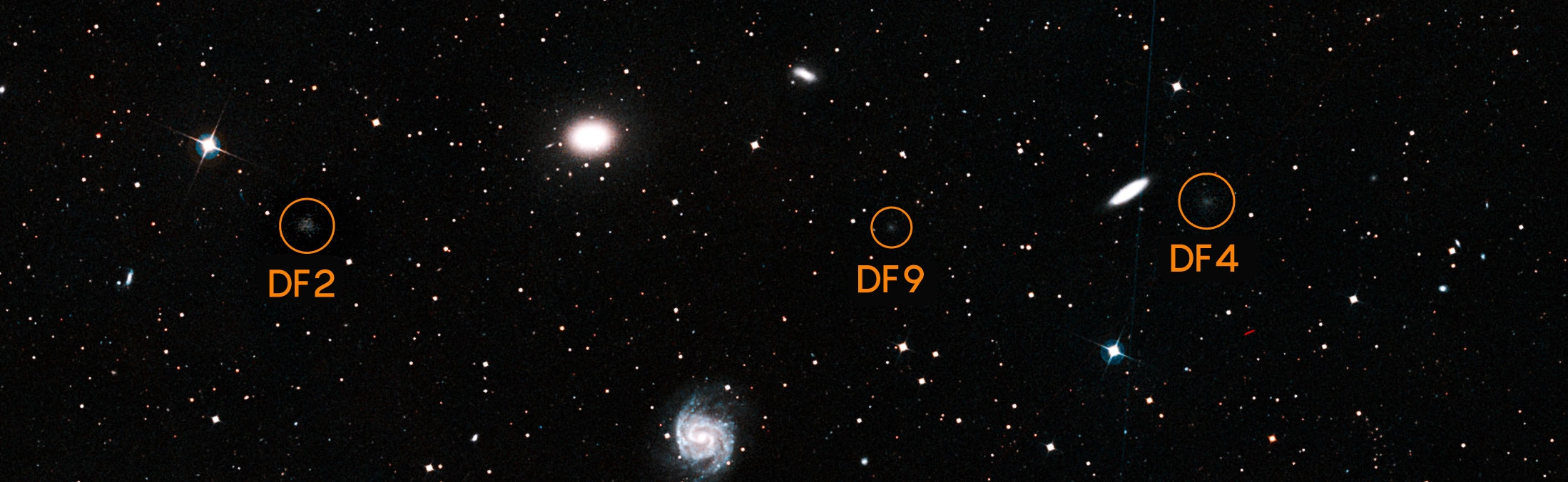
Located approximately 65 million light-years from Earth, a trio of celestial anomalies has ignited a profound debate within the global astrophysical community. These three galaxies, designated as DF2, DF4, and DF9, do not conform to the standard architectural expectations of the cosmos. Eschewing the vibrant, star-cluttered spirals typical of galaxies like the Milky Way, these objects possess a "ghostly" appearance—pallid, diffuse, and dimly illuminated by only a sparse collection of stars. While their visual profile is striking, it is their internal composition—specifically the near-total absence of dark matter—that threatens to dismantle long-standing alternative theories of gravity.
Dark matter has historically been viewed as the invisible "glue" of the universe. Though it has never been directly observed, its presence is inferred through its gravitational influence on visible matter. In a standard galaxy, dark matter acts as an anchor, providing the necessary gravitational pull to prevent stars on the outer edges from being flung into intergalactic space. According to current cosmological models, dark matter accounts for roughly 27% of the universe’s energy density and approximately 85% of its total matter. However, the discovery of DF2, DF4, and DF9 suggests that this "glue" can, under specific high-energy conditions, be stripped away, leaving galaxies to exist as skeletal remains of ordinary matter.
The Discovery of the Dark Matter Deficient Triplet
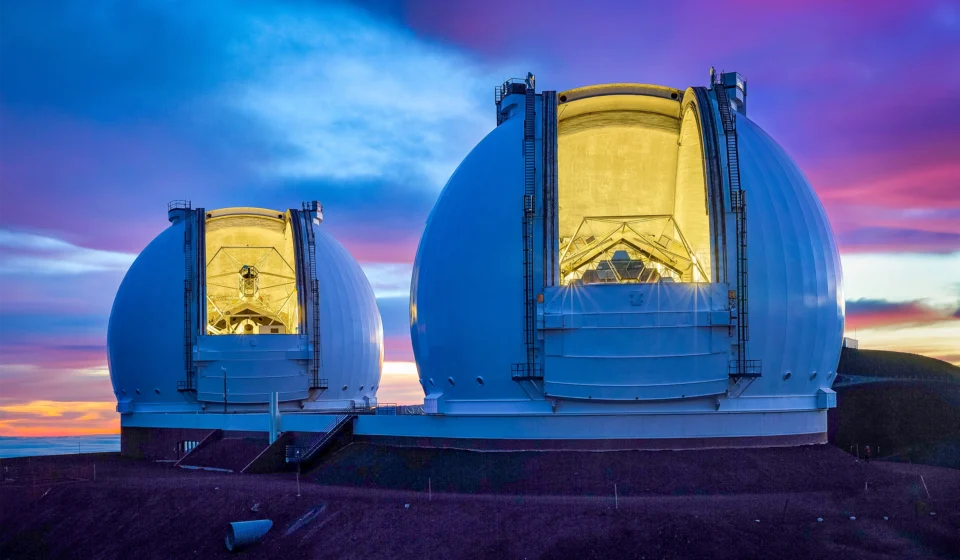
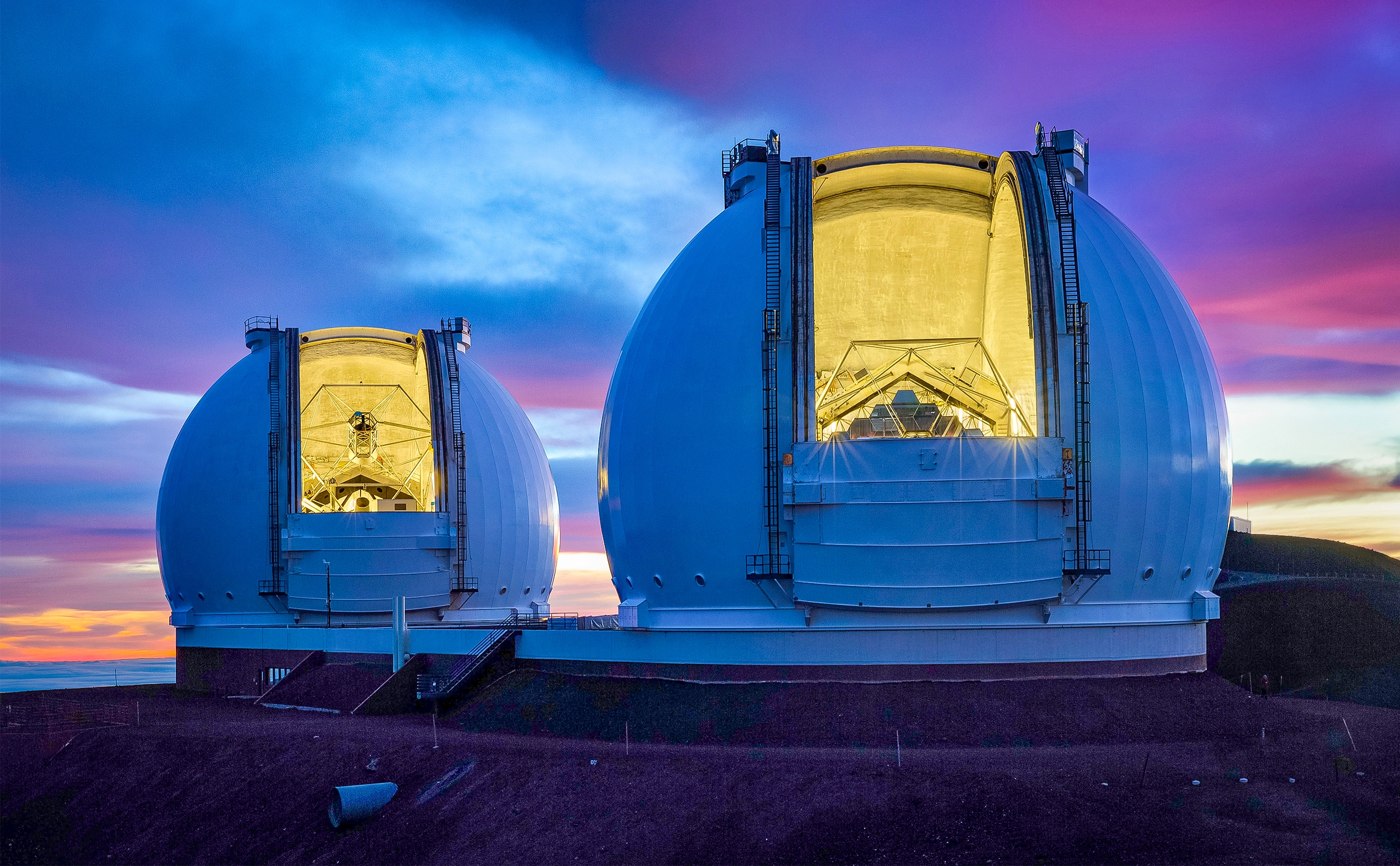
The narrative of these "dark ghosts" began in 2018 with the identification of NGC 1052-DF2 (DF2). Utilizing the Keck Observatory in Hawaii and the Hubble Space Telescope, researchers led by Pieter van Dokkum of Yale University tracked the velocities of globular clusters within the galaxy. The results were startling: the clusters were moving far slower than expected. In a galaxy dominated by dark matter, these clusters should have been whipped around by a massive gravitational field. Instead, their lethargic pace suggested that DF2 contained almost no dark matter—perhaps as much as 400 times less than predicted for a galaxy of its size.
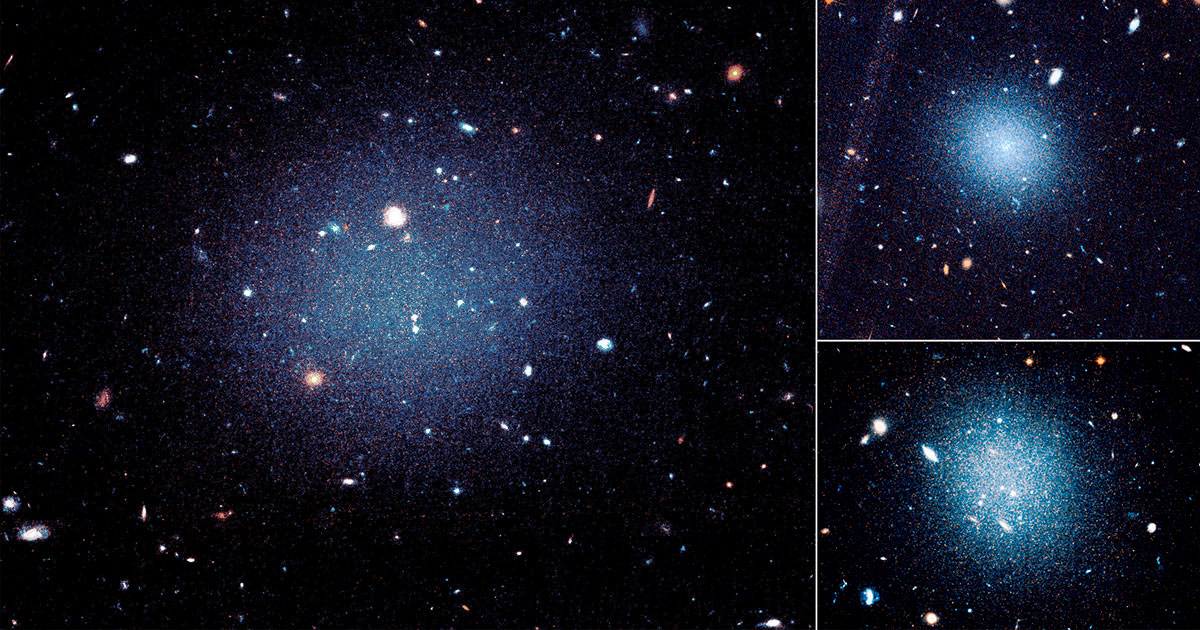
In 2019, a second such galaxy, DF4, was identified, mirroring the properties of its predecessor. By June 2026, a third galaxy, DF9, was confirmed to belong to this rare class of dark matter-deficient objects. All three galaxies are categorized as Ultra-Diffuse Galaxies (UDGs). While they occupy a volume of space comparable to the Milky Way, they contain only about 1% of the stars. Crucially, the three galaxies are aligned in a manner that suggests a shared history, pointing toward a singular, cataclysmic event that occurred hundreds of millions of years ago.
A Cosmic Joust: The Collision Hypothesis
The prevailing explanation for these anomalies, detailed in a study published in The Astrophysical Journal in mid-2026, involves a high-speed galactic collision. This "bullet-style" encounter provides a mechanical solution to how matter and dark matter can be segregated.
To understand the phenomenon, astrophysicists use the analogy of two knights jousting. When two galaxies collide, the ordinary matter—consisting of gas and dust—interacts through multiple fundamental forces, including electromagnetism. This creates "friction" or "drag," causing the gas to clump, swirl, and eventually slow down, much like the knights and their lances clashing and falling into a heap. Dark matter, however, is thought to interact almost exclusively through gravity. It is "collisionless," meaning it does not experience the same drag. In a high-speed encounter, the dark matter halos of the two colliding galaxies would pass right through each other and continue their trajectory, like the knights’ horses galloping away from the crash site.
This process, known as "kinetic decoupling," leaves behind a trail of enriched gas bereft of its original dark matter. Over eons, this isolated gas collapses under its own meager gravity to form new, star-starved galaxies like DF2, DF4, and DF9. Michael Keim, an astrophysicist at Yale and lead author of the study, notes that this segregation is the most compelling evidence to date that dark matter is a physical substance rather than a misunderstanding of gravitational laws.
The Implications for Modified Newtonian Dynamics (MOND)
The existence of galaxies without dark matter presents a significant paradox for proponents of Modified Newtonian Dynamics (MOND). Proposed in 1983 by physicist Mordehai Milgrom, MOND suggests that dark matter is an unnecessary "epicycle" used to fix a flawed understanding of gravity. MOND posits that at very low accelerations—such as those found at the edges of galaxies—the laws of gravity change, becoming stronger than what is predicted by Newton or Einstein.
If MOND were correct, gravity would be a universal law tied strictly to the distribution of visible matter. Therefore, every galaxy of a certain visible mass should exhibit the same "extra" gravitational pull, regardless of its history. The fact that DF2, DF4, and DF9 show no such extra gravity—despite having visible matter—indicates that the "extra" gravity seen in other galaxies cannot be an inherent property of the law of gravity itself.
As theoretical physicist Shyam Balaji of King’s College London explains, "The absence of dark matter is, in a way, some evidence of dark matter." If you can have two galaxies with the same amount of visible matter, but one has extra gravity (attributed to dark matter) and the other does not, the difference must be a physical substance that can be present in one location and absent in another.
Chronology of Evidence and Scientific Consensus
The path to this realization has been marked by several key milestones in modern astronomy:
- 1930s: Fritz Zwicky observes the Coma Cluster and realizes that the visible mass is insufficient to hold the cluster together, proposing "dunkle Materie" (dark matter).
- 1970s: Vera Rubin provides robust evidence for dark matter by observing the rotation curves of spiral galaxies, showing that stars at the edges move as fast as stars near the center.
- 2015: The LIGO observatory detects gravitational waves. This discovery dealt a blow to several versions of modified gravity that predicted gravitational waves would travel at speeds different from the speed of light.
- 2018–2019: Discovery of DF2 and DF4 challenges the assumption that all galaxies must have dark matter.
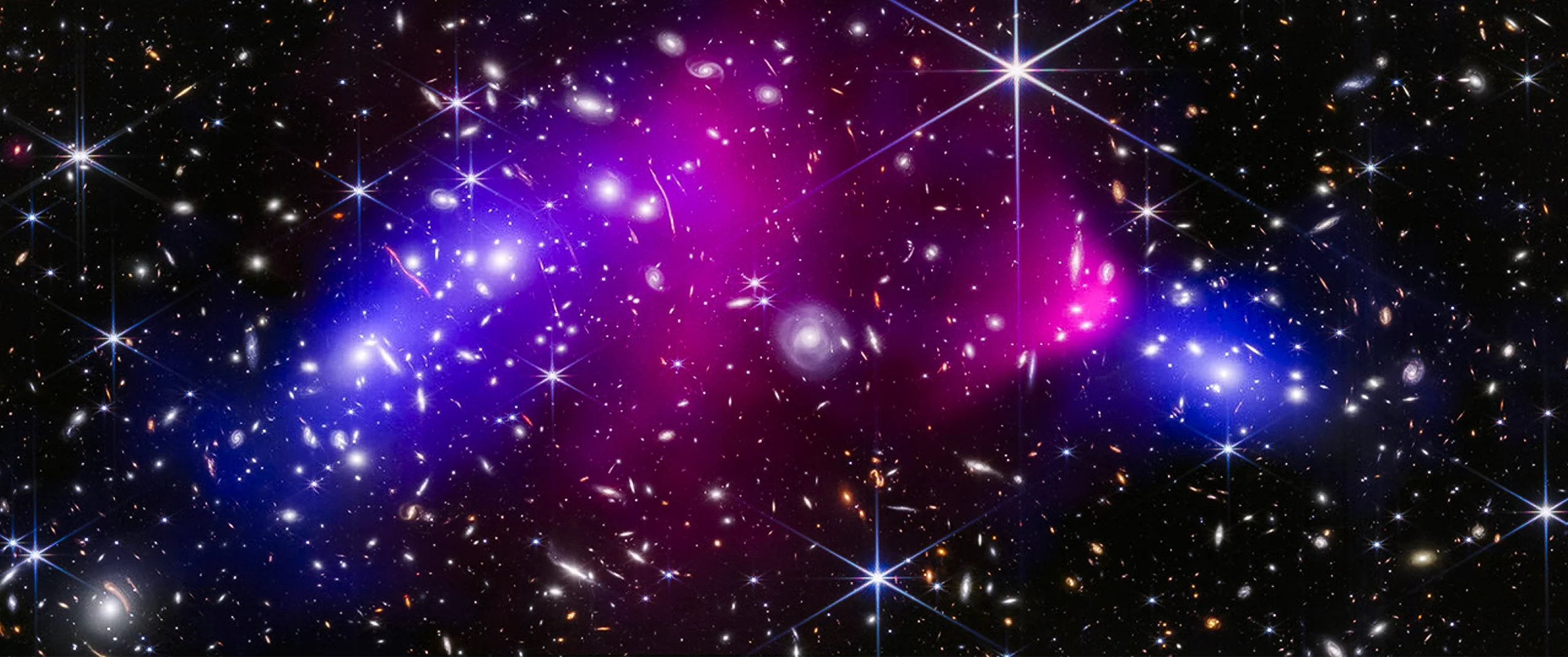
- 2024–2025: The James Webb Space Telescope (JWST) provides high-resolution data on the Bullet Cluster, another instance of dark matter and gas segregation.
- 2026: Confirmation of DF9 and the publication of the collision model provide a unified origin story for the dark matter-deficient triplet.
Dissenting Theories and Ongoing Debate
Despite the strength of the collision hypothesis, the scientific community remains divided on the exact mechanisms at play. Kinwah Wu, a theoretical astrophysicist at University College London, has pointed out that the triplet lacks the "tidal tails"—wispy, elongated structures of stars and gas—typically expected after a violent collision. Wu suggests an alternative: "tidal stripping." In this scenario, the galaxies may have passed through a dense cluster of massive galaxies, whose collective gravity acted like a sieve, peeling away the dark matter halos while leaving the more centrally concentrated stars and gas intact.
Stacy McGaugh, an astronomer at Case Western Reserve University and a prominent advocate for MOND, remains cautious. He argues that while the collision story is "plausible," it relies on an exceptional set of circumstances. McGaugh suggests that the measurements of stellar velocities in such faint galaxies are fraught with uncertainty and that further data is required before declaring the end of modified gravity theories.
Broader Impact on the Search for Dark Matter
The confirmation of galaxies lacking dark matter narrows the search for what dark matter actually is. If it can be separated from ordinary matter during a collision, it must be a particle or an object with mass. This shifts the focus away from "geometric" explanations of gravity and back toward particle physics.
Current candidates for dark matter include:
- WIMPs (Weakly Interacting Massive Particles): Theoretical particles that interact only via gravity and the weak nuclear force.
- Axions: Ultra-light particles that could solve certain problems in quantum chromodynamics.
- Primordial Black Holes: Black holes formed in the immediate aftermath of the Big Bang, which could account for the "missing" mass without the need for new particles.
The discovery of DF2, DF4, and DF9 acts as a cosmic laboratory. By studying what happens to a galaxy when its dark matter is removed, scientists can better understand the role dark matter plays in the lifecycle of more "normal" galaxies. It appears that without dark matter, galaxies struggle to form stars efficiently, resulting in the "ghostly" UDGs observed today.
As the James Webb Space Telescope and future observatories like the Vera C. Rubin Observatory continue to map the deep sky, astronomers expect to find more of these dark matter-deficient outliers. For now, the ghostly triplet 65 million light-years away stands as a silent testament to a violent past and a pivotal clue in solving the greatest mystery of the modern universe. The data suggests that while we cannot see it, dark matter is a tangible, physical part of our reality—one that can be lost in the wreckage of a cosmic collision.