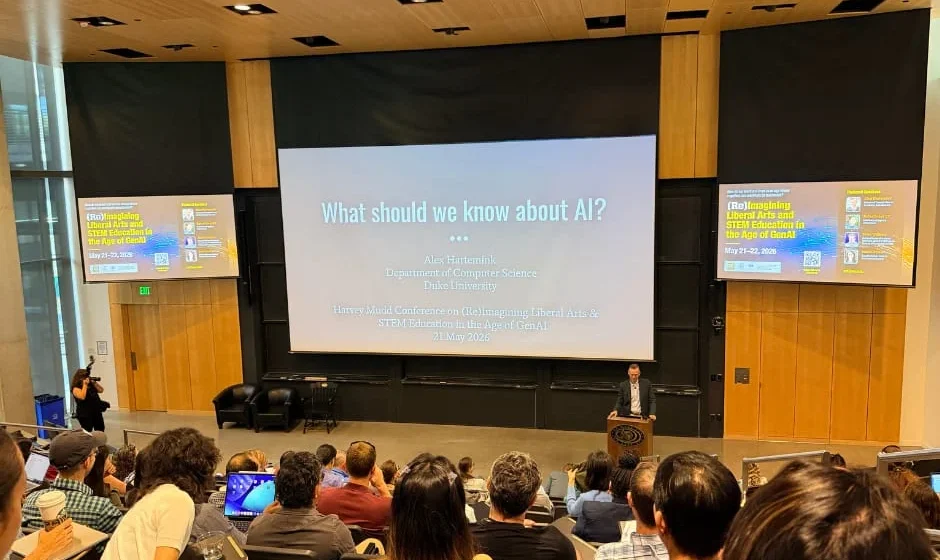
Reimagining Education in the Age of Artificial Intelligence Insights from the Harvey Mudd College Conference

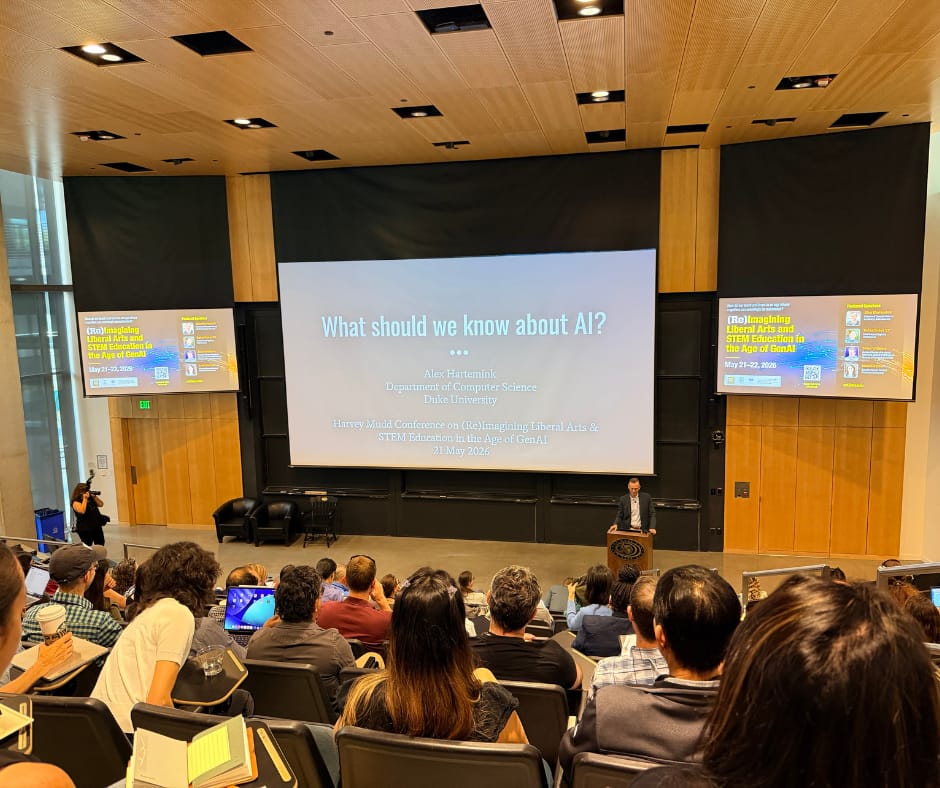
The intersection of the liberal arts and technical education has reached a critical juncture as generative artificial intelligence (GenAI) continues to reshape the landscape of higher education. On May 21 and 22, 2026, Harvey Mudd College (HMC) hosted a landmark symposium titled "(Re)Imagining Liberal Arts & STEM Education in the Age of GenAI." The event brought together educators, technologists, and researchers to address the pedagogical and ethical challenges posed by rapidly evolving machine learning systems. Central to the proceedings was a keynote address by Alex Hartemink, a Professor of Computer Science and Biology at Duke University, who challenged the audience to look beyond technical fluencies and confront the foundational questions of what it means to be an educated human in a machine-augmented world.
The Evolution of Artificial Intelligence: A Historical Trajectory
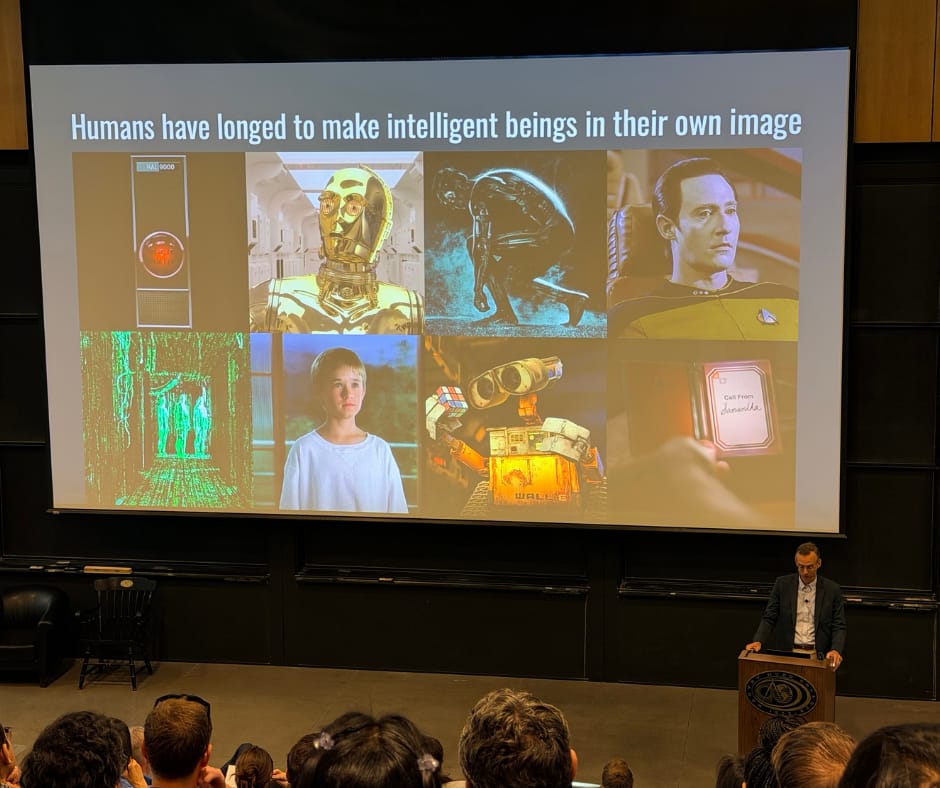
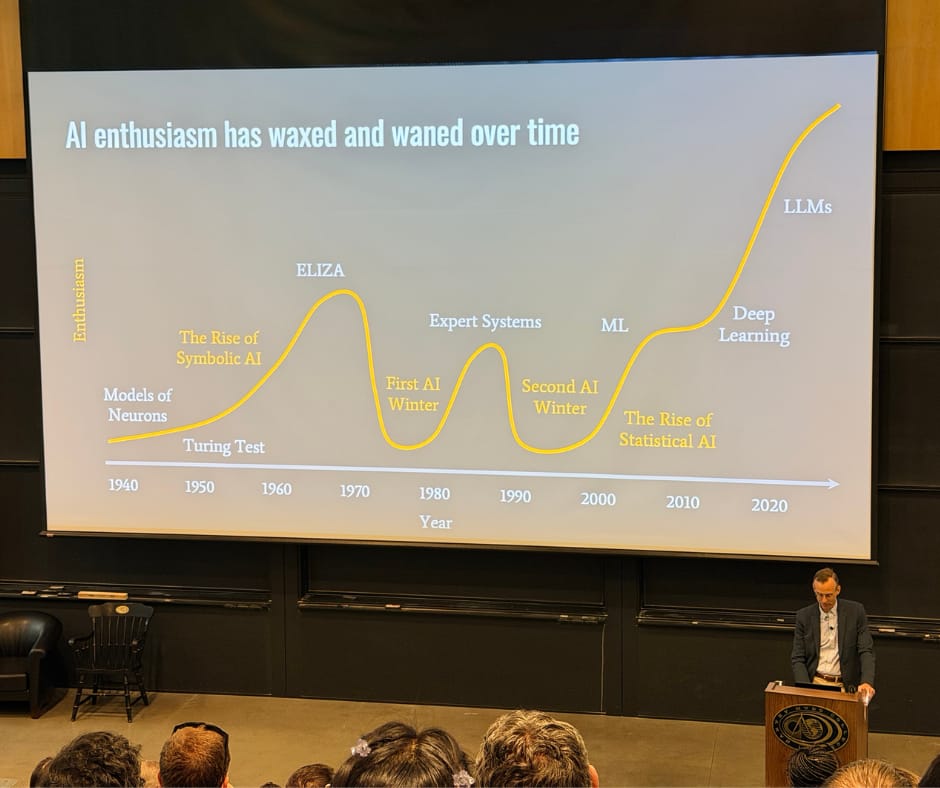
To understand the current state of GenAI, Professor Hartemink argued that one must first understand the cyclical nature of the field’s history. During his presentation, Hartemink provided a chronological overview of AI development, charting the "waves of enthusiasm" and subsequent "AI winters" that have defined the discipline since the mid-20th century.
The timeline began in the 1940s with early mathematical models of neurons, followed by the 1950s, which saw the birth of symbolic AI and the introduction of the Turing Test—a benchmark that still influences how society perceives machine intelligence today. The 1960s were marked by an upsurge in optimism, driven by programs like ELIZA, an early natural language processing tool designed to simulate a psychotherapist. However, the inability of these early systems to scale led to the first "AI winter" in the 1970s, a period characterized by a significant withdrawal of research funding and public interest.
The 1980s saw a resurgence through "expert systems," which attempted to codify human knowledge into rules-based logic. This was followed by a second AI winter in the 1990s when the limitations of these rigid systems became apparent. The turn of the millennium shifted the focus toward machine learning and statistical AI, which eventually paved the way for the deep learning revolution of the 2010s. Hartemink noted that the current era, beginning around 2020, is defined by the explosive growth of Large Language Models (LLMs), which represent a sharp, vertical climb in both technical capability and public fascination.
Distinguishing Between Algorithms, Models, and Products
A significant portion of the conference was dedicated to clarifying the nomenclature of the AI industry. Hartemink posited that for educators to engage effectively with GenAI, they must distinguish between three distinct layers of the technology:
- AI Algorithms: The underlying mathematical frameworks and optimization techniques used to process data.
- AI Models: The specific entities created when an algorithm is trained on a massive dataset (e.g., GPT-4 or Claude 3).
- AI Products: The consumer-facing applications, such as chatbots or image generators, that integrate models into a user interface.
This distinction is crucial for policy-making in higher education. When institutions discuss "banning" or "integrating" AI, they are often referring to products, while the models and algorithms continue to permeate research and infrastructure. Understanding these layers allows for a more nuanced discussion regarding academic integrity and the specific tools being utilized by students.
The Mechanics of the "Stochastic Parrot"
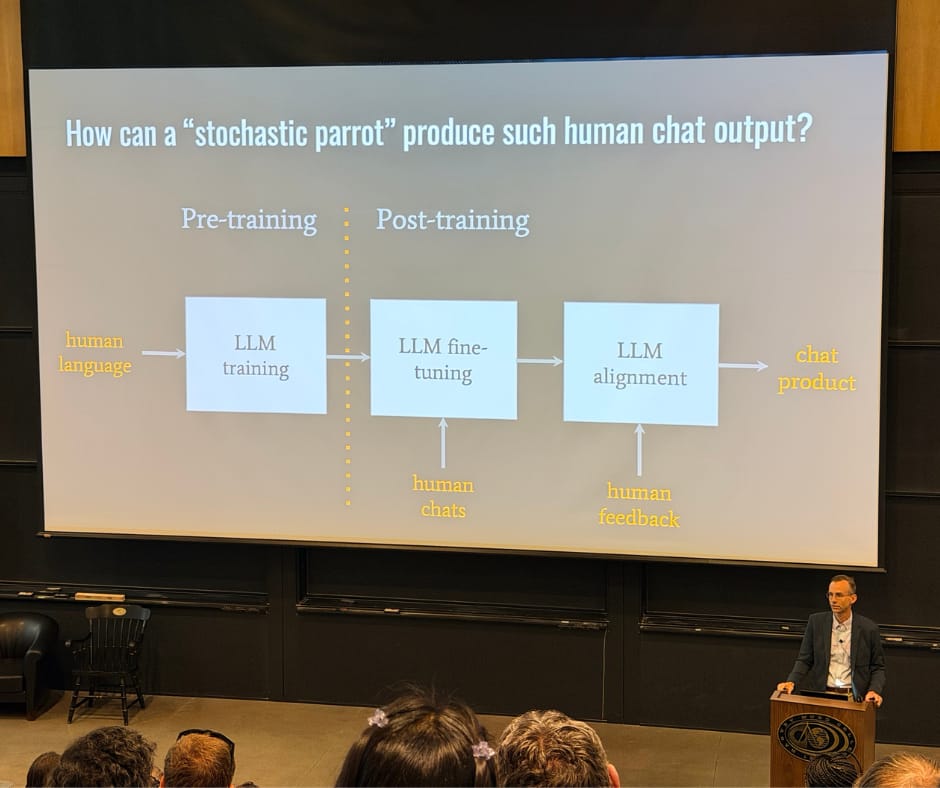
One of the most discussed concepts at the conference was the "Stochastic Parrot" metaphor, originally popularized by linguist Emily Bender and her colleagues. The metaphor suggests that LLMs do not possess a true understanding of language but instead function by probabilistically predicting the next word in a sequence based on vast amounts of training data.
Hartemink expanded on this by illustrating the pipeline from raw data to a finished chat product. He highlighted that while "pre-training" involves massive ingestion of human language, the "human-sounding" nature of modern AI is largely a result of post-training processes. These include:
- LLM Fine-Tuning: The process of refining the model using curated datasets of human dialogues.
- LLM Alignment: The use of human feedback (often through Reinforcement Learning from Human Feedback, or RLHF) to ensure the model’s outputs align with human values, safety guidelines, and conversational norms.
This alignment phase is what creates the illusion of a "persona" or "intentionality," even though the underlying model remains a statistical engine.
Deconstructing Common Misconceptions
The conference addressed two primary misconceptions that frequently cloud the public’s understanding of AI. The first is the "illusion of meaning." Because LLMs produce coherent, grammatically correct, and often insightful text, users frequently assume the AI "means" what it says or possesses an underlying purpose. Hartemink emphasized that AI output is not guided by truth, knowledge, intention, or a sense of reality; it is guided by statistical patterns.
The second misconception is the "myth of inevitability." There is a prevailing sentiment in both the tech industry and academia that the current trajectory of AI development is an unstoppable force of nature. The proceedings at Harvey Mudd College served as a rebuttal to this idea, asserting that educators, policymakers, and the public have the agency to shape how these technologies are integrated into society. In the context of the liberal arts, this agency is vital for ensuring that human-centric values remain at the core of the educational experience.
Supporting Data and Socioeconomic Context
The urgency of the Harvey Mudd conference is reflected in recent data regarding AI adoption in higher education. According to a 2025 survey by the Educause Center for Analysis and Research (ECAR), over 72% of college students reported using generative AI tools at least once a week, yet only 18% of faculty had integrated AI-specific literacy into their curricula. This "fluency gap" has created a volatile environment where academic integrity policies are often reactive rather than proactive.
Furthermore, a 2026 report from the World Economic Forum suggests that while AI may automate up to 30% of routine tasks in professional sectors, it is simultaneously increasing the demand for "soft skills"—critical thinking, ethical reasoning, and complex communication. These are the traditional hallmarks of a liberal arts education, suggesting that the "STEM vs. Liberal Arts" divide may be dissolving in favor of a more integrated, "human-plus-machine" model of expertise.
The Philosophical Core: Education and Imagination
In the final segment of his keynote, Professor Hartemink returned to the etymological roots of the word "education." Derived from the Latin ex ducere, meaning "to lead out" or "to draw forth," the term suggests a process of development that is inherently human. He posed a series of provocative questions to the audience: "Lead out of what? And draw forth into what?"
He further explored the concept of "imagination," from the root imago, meaning to form an image in the mind. Hartemink argued that as we delegate more cognitive tasks to machines, we must consider what kinds of minds are necessary to preserve human imagination. He challenged educators to consider who is responsible for forming a person’s intellect, character, and desires in an age where an algorithm can provide an answer to almost any question.
Broader Impact and Institutional Implications
The (Re)Imagining Liberal Arts & STEM Education conference concludes at a time when universities are being forced to redefine their value proposition. If a machine can generate a passing essay or solve a complex coding problem, the focus of education must shift from the product of learning to the process of formation.
For institutions like Harvey Mudd College, which has long championed a "STEM with a soul" approach, the rise of GenAI is an opportunity to reaffirm the importance of the humanities. The consensus among attendees was that AI should not be viewed merely as a tool for efficiency, but as a mirror that reflects our own definitions of intelligence and creativity.
The implications for the future are clear: the next decade of higher education will not be defined by the sophistication of the software, but by the resilience of the human intellect. As schools move forward, the focus will likely shift toward "AI alignment" in the human sense—ensuring that technology serves to enhance, rather than replace, the essential human qualities of curiosity, empathy, and critical inquiry.
By the end of the two-day event, it was evident that the "Age of GenAI" requires more than just technical updates to the syllabus; it requires a fundamental re-evaluation of the relationship between the teacher, the student, and the machine. The questions raised by Alex Hartemink and the HMC community will likely serve as the framework for this ongoing dialogue as academia navigates the complexities of the mid-21st century.