The Rising Tide of Academic Exhaustion: Reimagining Higher Education Through the Lens of Disability Justice and Labor Reform

The global higher education landscape is currently grappling with the cumulative weight of a multi-year pandemic, a crisis that has transformed from an acute emergency into a chronic state of systemic fatigue. As the academic sector enters the third year of navigating COVID-19, the initial "pivot" to remote learning has given way to a profound sense of burnout among faculty, staff, and students alike. Observers within the industry, including researchers and disability justice activists, note that the current environment is no longer sustainable under traditional capitalist norms of productivity. The challenge now facing institutions is not merely how to survive the pandemic, but how to proactively restructure the educational experience to mitigate exhaustion and prioritize the well-being of all participants.
The Chronology of a Growing Crisis
The trajectory of the current burnout crisis in academia can be traced back to the early months of 2020. When the pandemic first necessitated the closure of physical campuses, the response was characterized by a sense of urgency and "treading water." Faculty across the United States reported feeling overwhelmed and under-supported as they transitioned complex curricula to digital formats overnight. By late 2020, student groups and disability justice activists began prophesying that the "new normal" was placing an untenable burden on the human elements of the university system.
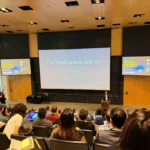
By 2021, the conversation shifted from temporary accommodations to the realization that the pandemic was a long-term reality. It was during this period that scholars such as Aimi Hamraie began advocating for a "slowing down" of teaching and a rejection of the high-speed productivity cycles typical of the modern university. At institutions like Plymouth State University, initiatives such as the Intersectionality Talks highlighted the intersection of overwork, race, and disability, suggesting that the fatigue experienced by the campus community was not merely a side effect of a virus, but a symptom of deeper systemic flaws.
In 2022 and beyond, the data reflects a worsening situation. According to a 2022 survey by the Chronicle of Higher Education, nearly 70% of faculty reported feeling stressed, with a significant portion considering leaving the profession entirely. Similarly, the Healthy Minds Study found that over 60% of college students met the criteria for at least one mental health problem, a sharp increase from pre-pandemic levels. These figures underscore the reality that fatigue has become a primary barrier to student retention and academic success.
Theoretical Frameworks: Crip Time and Spoon Theory
To address the rising tide of exhaustion, educators are increasingly turning to disability justice frameworks. One such concept is "crip time," popularized by scholar Alison Kafer in her work Feminist, Queer, Crip. Crip time refers to a flexible standard of punctuality and the recognition that disabled individuals often require extra time to navigate a world built for the able-bodied. In the context of a pandemic that has introduced universal levels of anxiety and logistical complexity, proponents argue that "crip time" should be applied more broadly to academic expectations.
Cait S. Kirby, an Associate Director at a Center for Teaching and Learning, suggests that acknowledging the "lower threshold" for burnout is essential for modern pedagogy. This involves building "sick time" into the course schedule and recognizing that tasks simply take longer to complete during a public health crisis. By providing students with choices in activity content, quality, and quantity, instructors can promote investment without triggering exhaustion.
Another vital framework is "spoon theory," a metaphor created by Christine Miserandino to describe the limited energy reserves (represented as spoons) available to those with chronic illnesses. Educators are now applying this to the general student body, recognizing that every academic task—reading, writing, attending lectures—consumes a "spoon." When students are also dealing with economic instability, caregiving responsibilities, and health concerns, their energy reserves are depleted faster than traditional syllabi account for. The mantra of "done is better than perfect" is being adopted to normalize work-in-progress and value mental health over unattainable standards of perfection.
The Economic Reality of Student Labor
The fatigue crisis is inextricably linked to the economic pressures facing modern undergraduates. For many students, the university experience is not a singular focus but one of several competing demands. Data from the Georgetown University Center on Education and the Workforce indicates that roughly 70% of all college students work while enrolled, with 25% of working students holding full-time jobs while maintaining a full-time course load.
Asia Merrill, a student advocate, notes that the "new normal" for many involves balancing multiple jobs alongside a rigorous academic schedule. For these students, traditional rigid deadlines are not merely a matter of discipline but a significant barrier to entry. This has led to a push for "ungrading" policies—a pedagogical approach that prioritizes self-evaluation and metacognition over traditional letter grades.
Ungrading is viewed by its proponents as a more ethical model that removes personal bias and focuses on intellectual growth rather than the performance of compliance. While some students initially resist the lack of numerical feedback, many find that it provides the freedom to explore coursework on their own terms. Furthermore, the implementation of HyFlex (Hybrid-Flexible) learning has allowed students with chronic illnesses or heavy work schedules to participate in higher education without the "exhausting performance" of physical presence. However, for these models to be successful, institutions must provide faculty with the training and resources necessary to manage the increased workload associated with flexible teaching.
Analyzing the "40-Hour School Week" and Labor Issues
A central component of the fatigue debate is the definition of a reasonable workload. Nic Helms, a faculty member at Plymouth State University, argues for a mathematical approach to setting academic expectations based on the 40-hour work week—a standard hard-won by the labor movement.
If a full-time student is expected to treat their education like a job, the total time commitment should not exceed 40 hours per week. For a student taking 15 credit hours, this breaks down to approximately 2.33 hours of work per credit hour. For a standard 4-credit course, this equates to roughly 9.3 hours of work per week, including time spent in class. When instructors assign work that exceeds this limit, they are effectively demanding overtime from students who may already be working 20 to 40 hours at external jobs.
This "necroliberal" approach to productivity—where the university functions as a site of constant labor extraction—is increasingly viewed as a form of "white supremacist culture." Characteristics such as a sense of urgency, perfectionism, and individualism are identified by activists as harmful norms that disproportionately affect marginalized groups. By designing courses around what is humanly possible within a 40-hour week, faculty can begin to dismantle the toxic ableism that defines much of higher education.
Structural Solutions and Institutional Responses
While individual faculty members have significant control over their own classrooms, broader systemic shifts are required to address the fatigue crisis comprehensively. Experts suggest several concrete strategies for institutional reform:
- Scaling and Automating Feedback: Reducing the burden on faculty by eliminating "disposable assignments" and focusing on high-impact feedback rather than constant minor grading.
- Module-Based Scheduling: Building breaks into the semester to account for the lack of traditional holidays and the mental toll of the pandemic.
- Shortening Synchronous Time: Recognizing "Zoom fatigue" by reducing the length of video calls and moving non-essential discussions to asynchronous formats.
- Basic Needs Clauses: Including flexible mental health language in syllabi to allow students to prioritize their well-being without fear of academic penalty.
- Pedagogical Care Work: Reinvesting energy into the "care work" of education, which includes reflective exercises and simple pauses during class time to allow for regulation and breathing.
The response from university administrations has been mixed. While some institutions have embraced flexible grading and expanded mental health services, others have pushed for a rapid "return to normalcy" to protect tuition revenue and traditional campus life. However, the data suggests that a return to pre-2020 standards is not only impossible but undesirable for a significant portion of the academic community.
Broader Impact and Long-Term Implications
The current reckoning with fatigue in higher education has implications that extend far beyond the immediate context of COVID-19. It represents a fundamental challenge to the "productivity at all costs" mindset that has dominated the sector for decades. By centering disability justice and labor rights, the movement to "design for fatigue" seeks to create a more equitable and sustainable future for academia.
The analysis of current trends suggests that institutions that fail to adapt to these shifting expectations may face declining enrollment and high faculty turnover. Conversely, those that embrace a "pedagogy of care" are likely to see improved student outcomes and a more resilient workforce. Ultimately, the goal is to transform the university from a site of exhaustion into a community of access and equity. If the lessons of the pandemic are integrated into the core structure of higher education, the post-pandemic campus could become a model for a more humane and sustainable way of living and learning.