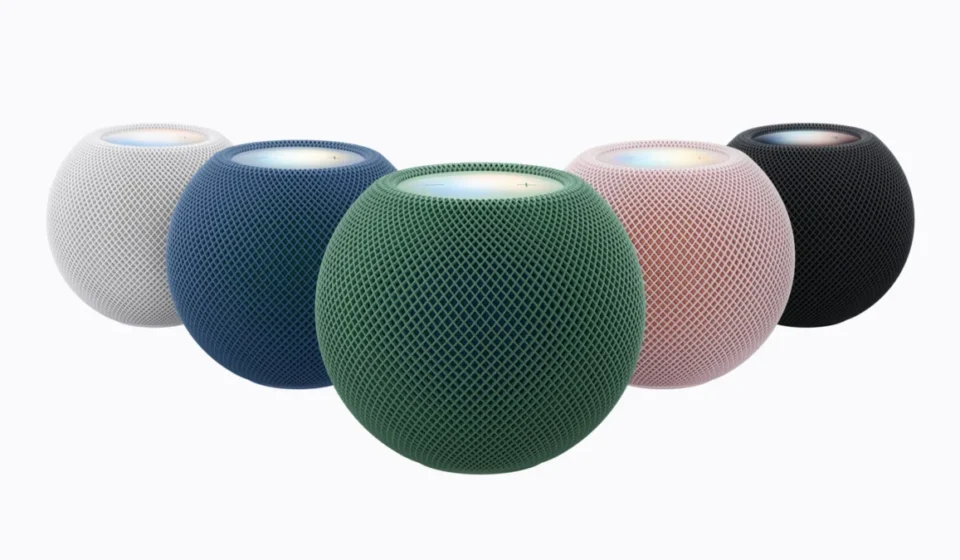

Apple has officially announced the HomePod mini 2, a significant update to its compact smart speaker line that first debuted in 2020. The new iteration promises an enriched audio experience, enhanced integration with Apple’s ecosystem, and a glimpse into the future of AI-powered assistance. This announcement arrives alongside other Home-related innovations, including the debut of HomeView, a dedicated smart home display. The HomePod mini 2 introduces new color options, a dynamic "Sound Glow" top panel, and crucially, support for Siri AI in select markets via a future software update. These advancements are powered by an upgraded internal chip, positioning the HomePod mini 2 as a more capable and versatile addition to the smart home.
A Refined Design with a Visual Flourish
Visually, the HomePod mini 2 retains the familiar, minimalist aesthetic of its predecessor. However, the most striking hardware enhancement is the new "Sound Glow" top panel. This illuminated surface has been re-engineered to serve as a visual canvas, dynamically responding to the audio being played. It pulsates and glows in sync with the music, reacting in real-time to bass and treble frequencies. Beyond mere visual accompaniment, the Sound Glow panel is designed to subtly color-match the album artwork of the currently playing track, drawing inspiration from the "Now Playing" screen in Apple’s Music app. This creates a more immersive and personalized listening experience, transforming the speaker into a piece of ambient art.
Apple has also expanded the color palette for the HomePod mini 2, offering it in a range of appealing hues: pink, green, blue, white, and midnight. These new color options provide consumers with greater choice and allow the device to better integrate with diverse home décor styles. The original HomePod mini was lauded for its compact size and surprisingly robust sound for its dimensions. The new color choices and the visually engaging Sound Glow feature aim to build upon that foundation, making the HomePod mini 2 not only a functional smart speaker but also a more aesthetically pleasing addition to any room.
Enhanced Audio and Computational Power
At the heart of the HomePod mini 2’s enhanced capabilities lies a significant internal upgrade: the S10 chip. This is a notable leap from the S5 chip found in the first-generation HomePod mini. The S10 chip, previously utilized in Apple Watch models, brings increased processing power, enabling real-time audio analysis and the sophisticated visual feedback of the Sound Glow panel. This computational power is also the driving force behind the device’s forthcoming Siri AI integration and its ability to participate in advanced audio configurations.
Apple emphasizes its continued investment in computational audio. The company highlights the inclusion of "Apple-designed force-cancelling passive radiators" within the HomePod mini 2. These components are engineered to improve bass extension and overall sound fidelity. While these technical specifications point towards a richer audio output, a definitive assessment will require hands-on testing and listening. However, the upgrade to the S10 chip strongly suggests a tangible improvement in the clarity, depth, and dynamic range of the sound produced by the HomePod mini 2, further solidifying its position as a premium compact audio device.
Deepening Ecosystem Integration: Apple TV 4K and Mac
The HomePod mini 2 significantly deepens its integration with other Apple products, most notably the Apple TV 4K. The new speaker can now be part of a four-speaker surround sound setup when paired with the fourth-generation Apple TV 4K. This allows users to create a more immersive home theater experience. The system is designed to intelligently recognize the position of each speaker within a room, calibrating audio levels and timings to optimize playback for movies, shows, and music. This capability represents a significant step up from previous multi-speaker configurations, offering a more sophisticated and coordinated audio environment.
For instance, a user could potentially place two HomePod mini 2 speakers in the front and two in the rear to achieve a true surround sound effect. Apple has clarified that for optimal performance, the surround sound configuration requires matching pairs of either HomePod mini 2 or HomePod (2nd generation) speakers, meaning a mix-and-match approach for front and rear channels is not supported. This detail underscores Apple’s commitment to delivering a high-fidelity, cohesive audio experience within its ecosystem. The prospect of four compact speakers delivering a compelling surround sound performance is particularly intriguing for consumers seeking to enhance their home entertainment without the bulk of traditional surround sound systems.
Beyond the Apple TV 4K, the HomePod mini 2 also gains the ability to act as a default speaker for Macs. This feature opens up new possibilities for users seeking to improve their Mac’s audio output. Historically, users have had to rely on third-party solutions or less integrated methods to designate external speakers as the default audio device. The HomePod mini 2’s native support for this function simplifies the process and suggests a more seamless audio experience for Mac users who also own the new smart speaker. This could be a significant draw for those looking to upgrade their desktop audio setup without compromising on smart home integration.
The Dawn of Siri AI on HomePod
Perhaps the most anticipated feature of the HomePod mini 2 is its upcoming support for Siri AI. This advanced iteration of Apple’s virtual assistant promises a more natural, context-aware, and personalized interaction. While the HomePod mini 2 will ship without this functionality enabled, a future software update will unlock its capabilities in select markets. Siri AI is designed to leverage the user’s context from paired Apple devices, offering more intelligent suggestions and performing more complex tasks. The term "device" used by Apple in its announcements suggests that this integration will extend beyond iPhones to include iPads and Macs, further weaving Siri AI into the fabric of the Apple ecosystem.
A particularly interesting aspect of the Siri AI rollout is its accessibility. Apple has stated that even users who do not have Apple Intelligence enabled on their paired iPhone or iPad will still benefit from certain Siri AI features on the HomePod mini 2. Specifically, these users will gain access to Siri AI’s expanded "world knowledge," its ability to engage in richer, more natural conversations, and its improved music discovery capabilities. This broadens the appeal of the HomePod mini 2, ensuring that a wider range of users can experience the advancements in Siri’s intelligence, regardless of their specific device configurations.
This distinction is important. While the full suite of Apple Intelligence features, which involves on-device processing for enhanced privacy and speed, requires specific hardware and software enablement on the iPhone or iPad, the core enhancements to Siri’s knowledge base and conversational abilities will be available through the HomePod mini 2’s connection to the cloud. This tiered approach allows Apple to gradually introduce advanced AI capabilities while managing hardware dependencies and user adoption. The quote from Apple directly states: "Once Siri AI is enabled on a supported HomePod mini speaker, even users without an Apple Intelligence-enabled iPhone or iPad will benefit from Siri AI’s broad world knowledge; its ability to have rich, natural conversations; and its improved music discovery."
However, the exact role of the Mac in this Siri AI integration remains slightly ambiguous, as the quote specifically mentions "iPhone or iPad." This could imply a primary reliance on iOS and iPadOS devices for context sharing, or it might be an oversight in the initial announcement. Further clarification from Apple will be necessary to fully understand the extent of Siri AI’s interaction with macOS.
Pricing, Availability, and Market Positioning
The HomePod mini 2 is priced at $149, a competitive price point that reflects its enhanced feature set and improved capabilities. Pre-orders are available starting today in the U.S. and 23 other countries, with the official launch scheduled for October 30th. It is important to note that the HomePod mini 2 will likely launch without Siri AI functionality, as this is slated for a "future software update." This phased rollout strategy is common for Apple, allowing for thorough testing and refinement of new features before their widespread release.
The introduction of the HomePod mini 2, alongside the new HomeView smart home display, signals Apple’s continued commitment to expanding its smart home offerings. The company aims to provide a cohesive and intelligent home experience powered by its own hardware and software. The HomePod mini 2, with its improved audio, enhanced ecosystem integration, and forthcoming AI capabilities, is positioned to be a central hub for many of these smart home functionalities. Its relatively affordable price point also makes it an accessible entry point into Apple’s smart speaker ecosystem for both existing Apple users and those looking to transition. The availability in Italy and other international markets further emphasizes Apple’s global strategy for its smart home devices. The decision to pre-order, as indicated by the original author, suggests a strong value proposition for early adopters eager to experience the latest in smart speaker technology. The broader impact of these updates will be observed as consumers integrate the HomePod mini 2 into their daily lives and as Apple continues to refine the capabilities of Siri AI.