
Advancements in Global Medical Research and Healthcare Accessibility Addressing Aging Populations and Chronic Conditions

The landscape of modern medicine is undergoing a transformative shift as researchers move beyond traditional treatment paradigms to address some of the most persistent challenges in global health. From pioneering minimally invasive procedures for prostate health to utilizing high-resolution data for mapping healthcare access in remote regions, the current trajectory of medical innovation is defined by a commitment to improving quality of life and clinical outcomes. This comprehensive overview examines four major pillars of contemporary research: the evolution of prostate care through interventional radiology, the development of mucoadhesive technologies for oral mucosal diseases, the strategic combat against vision loss in Asia, and the application of address-level intelligence to bridge the healthcare gap in rural Australia.
Redefining Prostate Care: The Rise of Prostate Artery Embolisation
For decades, the management of Benign Prostatic Hyperplasia (BPH) has followed a rigid clinical pathway. As men age, the prostate gland naturally enlarges, often compressing the urethra and leading to Lower Urinary Tract Symptoms (LUTS) such as frequent urination, weak flow, and nocturia. According to global health statistics, BPH affects approximately 50% of men in their 50s and up to 90% of men over the age of 80. Historically, the treatment ladder began with alpha-blockers or 5-alpha reductase inhibitors—medications that often require lifelong adherence and carry side effects including dizziness and sexual dysfunction. When medications failed, the "gold standard" was Transurethral Resection of the Prostate (TURP), an invasive surgical procedure requiring general anesthesia and a recovery period often marked by discomfort and potential complications.
Associate Professor Nicholas Brown and his research team at the University of Queensland are challenging this status quo through the P-EASY studies. Their focus is on Prostate Artery Embolisation (PAE), a minimally invasive interventional radiology procedure. In PAE, a radiologist makes a small incision in the groin or wrist, threading a catheter to the small arteries supplying the prostate. Microscopic particles are then injected to reduce blood flow, causing the prostate to shrink over time.

The significance of the P-EASY studies lies in their exploration of PAE as an earlier intervention. By intervening before symptoms reach a critical, surgical stage, clinicians may be able to preserve a patient’s quality of life without the risks associated with major surgery. Medical analysts suggest that if PAE becomes a frontline option, it could significantly reduce the burden on hospital surgical theaters and provide a viable alternative for patients who are poor candidates for general anesthesia.
Innovative Solutions for Mucosal Diseases: The 4R Framework
While prostate health addresses a major concern for aging men, Recurrent Aphthous Stomatitis (RAS), commonly known as canker sores, affects a broad demographic across all ages. With a daily point prevalence of 2% to 3% of the global population, RAS is one of the most common oral mucosal conditions. Despite its prevalence, the exact etiology of these painful ulcers remains elusive, and curative treatments have been largely non-existent.
Jean Lycke and his team have introduced a novel approach to this unmet medical need through the development of a mucoadhesive patch. This innovation is not merely about the product itself but the methodology used to bring it to market. Utilizing the "4R" framework—Re-purposing, Re-formulation, Re-positioning, and Re-patenting—the team has streamlined the path from laboratory concept to commercial availability. This Close-to-Market innovation strategy minimizes regulatory hurdles by utilizing known substances in new, more effective delivery systems.
The mucoadhesive patch provides immediate pain relief by shielding the ulcer from external stimuli and is designed to be used as an over-the-counter (OTC) product. Furthermore, the research has branched into the MucoShield program, which focuses on a gel formulation to treat chemotherapy-induced mucositis. This condition, a frequent and debilitating side effect of cancer treatment, can lead to severe oral pain and the inability to eat or drink. By applying the same mucoadhesive principles, researchers are providing a bridge for cancer patients to maintain nutritional intake and reduce the risk of secondary infections during treatment.

Reimagining Vision Care: The TAAP-2 Program in Asia
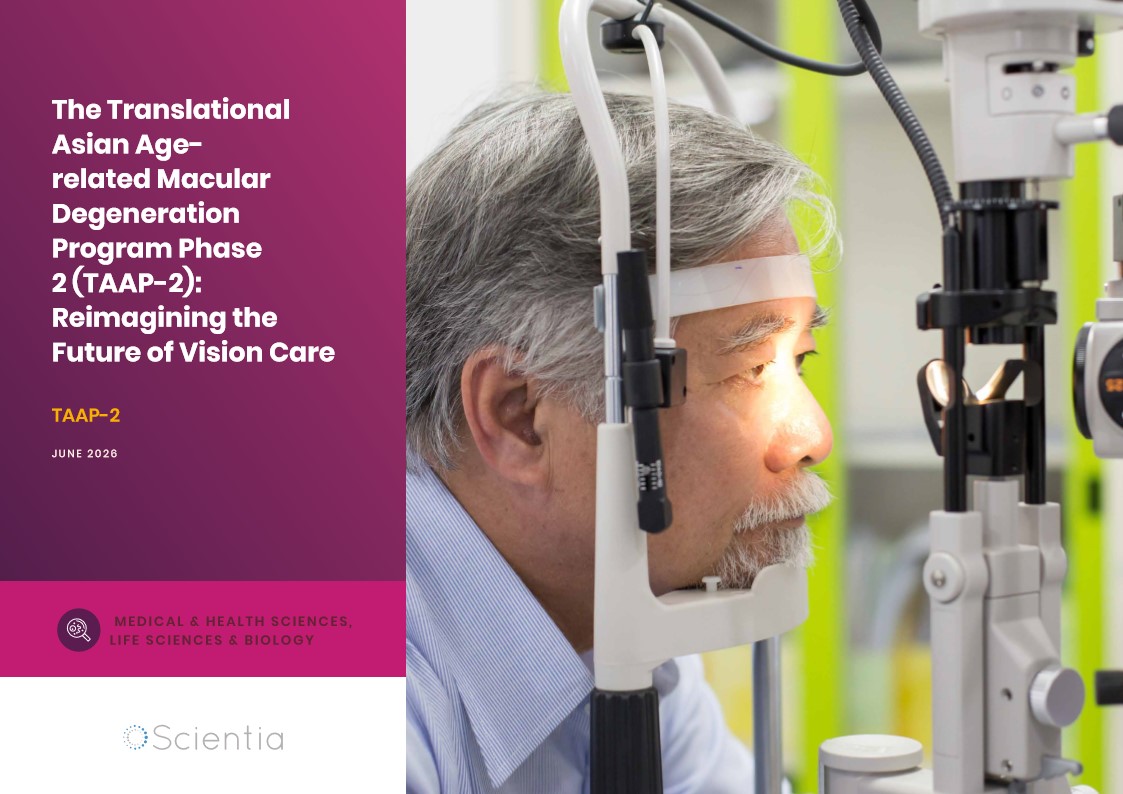
The demographic shift in Asia is one of the most significant social challenges of the 21st century. As populations in countries like Singapore, Japan, and China age at unprecedented rates, the prevalence of age-related macular degeneration (AMD) has surged. AMD is a leading cause of irreversible vision loss, characterized by the deterioration of the central part of the retina. This loss of central vision severely limits a person’s ability to read, recognize faces, and perform daily tasks, leading to a loss of independence and increased rates of depression among the elderly.
The Translational Asian Age-related Macular Degeneration Programme (TAAP) has entered its second phase, TAAP-2, with an ambitious mandate to revolutionize vision care. Unlike earlier studies that focused primarily on Western populations, TAAP-2 is specifically tailored to the unique genetic and environmental factors affecting Asian eyes. This distinction is crucial, as certain subtypes of AMD, such as Polypoidal Choroidal Vasculopathy (PCV), are significantly more common in Asian populations than in Caucasian cohorts.
TAAP-2 represents a move toward translational science—ensuring that laboratory discoveries are quickly moved into clinical settings. By utilizing advanced imaging and biomarker identification, the program aims to identify patients at high risk of vision loss before symptoms become irreversible. The broader impact of this research extends beyond ophthalmology; it serves as a model for how regional medical initiatives can address specific ethnic and geographic health disparities.
Mapping Health Access: Address-Level Intelligence in Australia
While clinical innovations provide new treatments, they are only effective if patients can access them. In Australia, the "tyranny of distance" remains a formidable barrier to healthcare equity. Residents in rural and remote areas often face significantly worse health outcomes compared to their urban counterparts, largely due to delayed diagnoses and limited access to specialist care.

Professors Neil Coffee and Vincent Versace at Deakin University’s Centre for Australian Research into Access (CARA) are tackling this issue using high-resolution data. Their research utilizes address-level intelligence to create sophisticated models of healthcare access across the continent. By combining residential dwelling data with detailed road network information, the CARA team can calculate the exact time and distance required for an individual to reach various levels of medical care.
This data-driven approach moves beyond simple "as-the-crow-flies" distance measurements. It accounts for the realities of travel in the Australian outback, including road quality and the location of specific services like dialysis or emergency trauma care. The implications for health planning are profound. Policymakers can use these maps to identify "health deserts" where service gaps are most acute, allowing for the strategic placement of new clinics, mobile health units, or the expansion of telehealth services. This research also has cross-sector applications, providing insights into access for education and other essential social services.
Chronology and Future Directions of Integrated Healthcare
The timeline of these various research initiatives reflects a broader trend toward precision medicine and localized care.
- 2010s: Initial studies into PAE and early phases of the TAAP program established the foundational data for non-traditional interventions.
- 2020-2022: The COVID-19 pandemic highlighted the vulnerabilities in healthcare access, accelerating the need for programs like CARA’s mapping and decentralized treatments like the RAS mucoadhesive patch.
- 2023-Present: The launch of TAAP-2 and the progression of the P-EASY studies signify a move toward long-term, large-scale clinical validation.
As these projects continue to evolve, the medical community expects a ripple effect across the global healthcare system. The success of minimally invasive procedures like PAE could lead to a reduction in hospital stay durations and healthcare costs. The "4R" framework used in mucosal disease research may be adopted by other MedTech firms to expedite the delivery of life-saving drugs. Meanwhile, the integration of vision care programs in Asia and access mapping in Australia highlights the necessity of considering geography and ethnicity in public health strategy.
Analysis of Implications and Official Responses
Industry experts suggest that the common thread among these diverse research areas is the focus on patient-centricity. Official responses from medical associations have increasingly emphasized the need for "value-based care"—treatments that prioritize patient outcomes and cost-effectiveness over the volume of services provided.
Dr. Nicholas Brown’s work is particularly noted for its potential to change the urological guidelines, which have remained largely static for years. Similarly, the CARA project at Deakin University has received interest from government health departments looking to optimize the distribution of the National Disability Insurance Scheme (NDIS) and other social welfare programs.
In conclusion, the convergence of these four research streams illustrates a dynamic era in medical science. By rethinking how we treat common conditions like BPH and RAS, and by reimagining how we deliver care to aging populations in Asia and remote residents in Australia, these researchers are not just treating diseases—they are redesigning the infrastructure of human health. The transition from broad, generalized treatments to specific, data-informed, and minimally invasive interventions promises a future where healthcare is more effective, more accessible, and more attuned to the needs of the individual.