Navigating the Unprecedented Summer: Academics Adapt to New Realities with Strategic Focus and Well-being

The summer of 2020 ushered in a period of unprecedented global change, profoundly impacting professional and personal lives across the world. For academics, typically accustomed to leveraging the summer months for intensive research, travel, and international collaborations, this period presented a unique challenge. With widespread lockdowns, travel restrictions, and the pervasive uncertainty brought by the global pandemic, traditional summer plans were abruptly upended, necessitating a radical recalibration of work-life strategies.
The Unprecedented Summer of 2020 and its Academic Impact
The initial months of 2020 saw the rapid escalation of the COVID-19 pandemic, leading to a cascade of public health measures, including stay-at-home orders, social distancing mandates, and international travel bans. These measures transformed the landscape of professional work, pushing many sectors, including higher education, into remote operational models. For university faculty and researchers, the summer — historically a time for focused intellectual pursuits away from the demands of teaching — became a period defined by confinement and adaptation.
A specific case in point illustrates this widespread shift: an academic based in Merced, California, found her customary summer plans completely derailed. For over two decades, her strategy for managing the notoriously long and hot summers of California’s Central Valley involved extended periods of escape, often lasting a month or more. However, the summer of 2020 marked a stark departure, compelling her to remain in Merced. This personal experience mirrored the broader reality faced by countless academics globally, as conferences were canceled, fieldwork suspended, and international research collaborations moved entirely online or were indefinitely postponed.
A Forced Recalibration: From Belize Retreats to Local Resilience
The impact of these restrictions was particularly keenly felt in the realm of specialized academic activities. The Merced-based academic, for instance, had to postpone a highly anticipated writing retreat scheduled for a private island in Belize. Such retreats are often vital for academics, providing dedicated, distraction-free environments conducive to deep intellectual work and manuscript completion. The cancellation of such opportunities underscored the profound disruption to established academic rhythms and the personal sacrifices many professionals had to make.
Across the academic landscape, similar stories emerged. Universities and research institutions worldwide issued advisories against non-essential travel, leading to the cancellation of major international conferences, workshops, and fieldwork expeditions. The National Science Foundation (NSF), a significant funder of academic research in the United States, alongside other national and international funding bodies, began issuing guidance on grant extensions, modified reporting requirements, and the re-evaluation of project timelines to accommodate the pandemic’s disruptions. While necessary for public health, these measures had a tangible impact on research progress, publication pipelines, and the professional development trajectories of many scholars.
In response, a prevailing sentiment among the academic community shifted towards resilience and proactive planning. Institutions began offering virtual alternatives for conferences and seminars, and faculty were encouraged to develop strategies for maintaining productivity and well-being within the confines of their homes. This environment fostered an increased focus on individual agency in structuring work, emphasizing self-management and the cultivation of effective routines.
The Core Strategy: Embracing "Deep Work" for Sustained Productivity
Faced with the prospect of three long, hot months without the usual respite, the Merced academic articulated a deliberate strategy centered on emerging from the summer feeling relaxed, rejuvenated, and prepared for the upcoming fall semester. A cornerstone of this strategy was the application of "deep work" principles, a concept popularized by Cal Newport, a computer science professor at Georgetown University and author of the influential book Deep Work: Rules for Focused Success in a Distracted World.
Newport defines "deep work" as "professional activities performed in a state of distraction-free concentration that push your cognitive capacities to their limit." He posits that in an increasingly fragmented and attention-demanding world, the ability to engage in deep work is becoming rarer yet more valuable. For academics, whose primary output often involves the creation of new knowledge through rigorous research and writing, deep work is not merely a productivity hack but a fundamental requirement. Publishing research necessitates a profound understanding of existing literature, followed by the intellectual creativity and ingenuity to formulate novel contributions. This process is inherently demanding, requiring sustained, high-level cognitive engagement that is incompatible with constant interruptions or shallow engagement.
Research consistently supports the benefits of focused work. Studies in cognitive psychology and neuroscience indicate that prolonged, uninterrupted concentration enhances problem-solving abilities, fosters creativity, and leads to higher quality output. Conversely, frequent task switching, often induced by digital distractions like email notifications and social media, has been shown to reduce cognitive performance, increase error rates, and contribute to mental fatigue. During a period of heightened stress and blurred work-life boundaries, cultivating an environment for deep work became even more critical for academics seeking to maintain their research momentum and mental clarity.
Crafting a Personalized Productivity Blueprint: The Merced Model
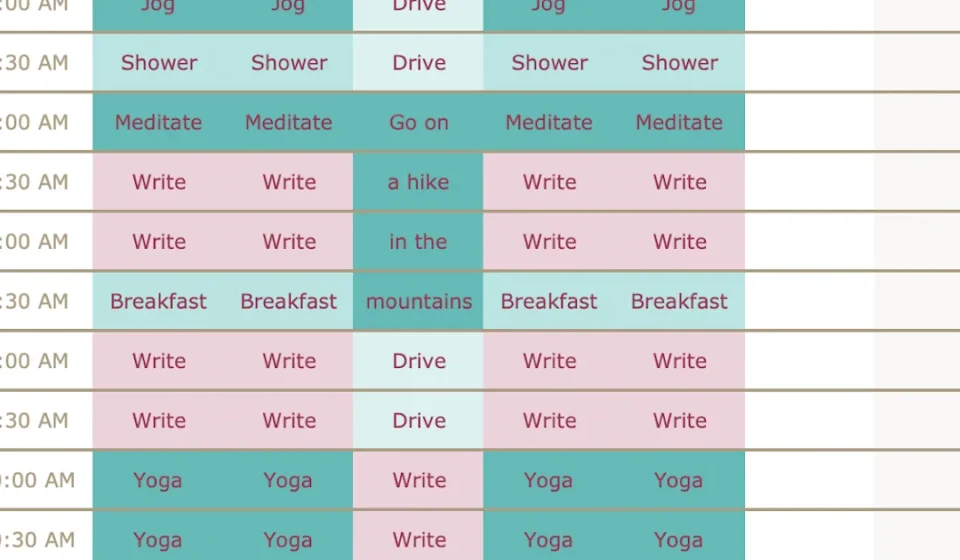
To operationalize the deep work philosophy, the academic developed a structured daily and weekly template designed to maximize productivity while prioritizing well-being. Recognizing that not all knowledge creators have the luxury of extended, isolated retreats, her strategy focused on integrating short, intense bursts of deep work into a comprehensive daily schedule, alongside other professional and personal responsibilities.

Her approach involved carving out two hours each morning specifically for deep work. This duration was not arbitrary; it was informed by over a decade of personal experience tracking her writing time since 2007. This extensive personal data demonstrated that two hours of focused work daily, particularly during weekdays, consistently yielded high levels of productivity, resulting in the completion of multiple books and dozens of journal articles. This empirical foundation provided confidence that a consistent, moderate allocation of deep work time was sufficient for a productive summer, rather than attempting unsustainable long stretches.
Beyond the initial deep work block, the academic allocated another two to three hours each weekday for "shallow work" — essential administrative and managerial tasks. This included managing a team of approximately a dozen employees, responding to emails, and planning or troubleshooting ongoing research projects. This compartmentalization of tasks is crucial; by scheduling distinct blocks for different types of work, it minimizes the cognitive load of context switching and prevents administrative duties from encroaching on valuable deep work time.
Beyond the Desk: Integrating Physical and Mental Well-being
A critical component of the Merced model was the explicit integration of exercise and self-care into the daily schedule. The academic, an early riser, capitalized on the cooler morning hours in Merced, California, for physical activity. Her plan included a 30-minute jog four days a week, immediately upon waking. This strategic timing not only leveraged optimal environmental conditions but also ensured that physical activity was prioritized before the day’s demands could derail it.
Prior to commencing deep work, meditation was incorporated as a preparatory ritual. The academic found that meditating significantly improved her focus, helping her transition into the concentrated mindset required for demanding cognitive tasks. This practice aligns with numerous studies demonstrating that mindfulness meditation can enhance attention, reduce stress, and improve executive functions, all of which are beneficial for sustained intellectual work.
Following meditation and before diving into writing, yoga was included to address the physical demands of prolonged sitting. This proactive approach to physical well-being underscored a holistic understanding of productivity, recognizing that physical comfort and flexibility are integral to mental endurance. After the deep work session, a break for lunch and housework provided a mental reset before transitioning to administrative tasks. The latter part of the day was consciously dedicated to family time, hanging out with her partner and three teenage daughters, reinforcing the importance of work-life balance.
Additionally, one day a week was designated for a longer morning hike, breaking the routine and offering extended physical activity and immersion in nature, again timed to capitalize on cooler temperatures. This variation in routine provided both physical challenge and mental refreshment, preventing monotony and fostering a sense of rejuvenation.
Strategic Distraction Management: Taming Email and Domestic Demands
A key insight embedded in this structured approach was the strategic scheduling of "non-deep work" activities, such as email and housework. By allocating specific times for these tasks within the weekly template, the academic aimed to mitigate their potential to become distractions during crucial deep work periods. The logic is simple yet powerful: knowing that dedicated time is set aside for managing emails or tackling household chores makes it easier to resist the urge to engage with them spontaneously when the focus should be on writing or research. This pre-emption of distractions is a core tenet of effective time management and boundary setting, particularly relevant in remote work environments where the lines between professional and personal spaces can easily blur. It also prevents the common trap of "productive procrastination," where less important tasks are undertaken to avoid more challenging, high-cognitive-load work.
Broader Implications for Academic Life and Beyond
The Merced academic’s detailed strategy for navigating an unprecedented summer offers a microcosm of broader trends and adaptive strategies emerging across academia and other knowledge-intensive professions. The forced shift to remote work during the pandemic accelerated discussions around work-life integration, digital well-being, and the efficacy of traditional work models.
This individual blueprint highlights several universal implications:
- The Enduring Value of Structure: In times of uncertainty, a well-defined routine provides a sense of control and predictability, crucial for mental stability and sustained productivity.
- Prioritizing Well-being: The explicit inclusion of exercise, meditation, and family time underscores the recognition that professional output is inextricably linked to physical and mental health. Burnout, a chronic issue in academia, became an even greater concern during the pandemic, making self-care strategies paramount.
- Strategic Use of Time: The distinction between "deep work" and "shallow work" and the deliberate scheduling of each demonstrates an optimized approach to cognitive energy management.
- Adaptability as a Core Skill: The ability to pivot from established routines (like annual retreats) and create new, effective strategies in response to external shocks is a testament to professional resilience.
Academic institutions, in turn, began to recognize the need for broader support mechanisms. Many universities increased access to mental health resources, offered training on remote teaching and research tools, and re-evaluated performance metrics to account for the unique challenges faced by faculty during the pandemic. The experience of 2020 also spurred discussions about the future of academic work, with many predicting a hybrid model that blends remote and in-person activities, making personal productivity and well-being strategies even more relevant in the long term.
Conclusion: A New Paradigm for Professional Resilience
The summer of 2020 served as a profound global experiment in adaptability, forcing individuals and institutions to redefine productivity and well-being in the face of unforeseen constraints. The detailed strategy implemented by the Merced-based academic offers a compelling example of proactive resilience. By embracing the principles of deep work, meticulously structuring her time, and prioritizing self-care, she charted a course to maintain both her research momentum and personal equilibrium. Her approach provides a valuable template not only for academics grappling with similar challenges but for any professional seeking to navigate demanding periods with intention and efficacy. It underscores that while external circumstances may be unprecedented, the capacity for strategic planning, disciplined execution, and a holistic focus on well-being remains a powerful tool for thriving in a constantly evolving world. The lessons learned from this "unprecedented summer" continue to inform a new paradigm for professional engagement, emphasizing the critical interplay between focused effort, personal care, and adaptive planning.