
The Topography of Life: How Waddington’s Visionary Landscape is Revolutionizing Modern Developmental Biology

By the mid-20th century, the scientific community operated under the burgeoning belief that the fundamental mysteries of biology were nearing a comprehensive resolution. The intellectual framework known as the "Modern Synthesis," articulated by Julian Huxley in 1942, successfully merged Charles Darwin’s theory of natural selection with the burgeoning field of genetics. This synthesis suggested that evolution was driven by genetic mutations, with natural selection acting as the arbiter of fitness. When James Watson, Francis Crick, and Rosalind Franklin elucidated the double-helix structure of DNA in 1953, it appeared that the blueprint of life had been decoded. To many, the remaining work in biology seemed to be a matter of cataloging the specific functions of individual genes.
However, British biologist Conrad Hal Waddington, known to his peers as "Wad," remained unconvinced that a gene-centric view alone could explain the complexity of life. While genetics explained how traits were inherited, it failed to address the mechanics of morphogenesis—how a single fertilized egg reliably transforms into a complex organism with specialized tissues like muscle, bone, and nerves, all arranged in precise configurations. Waddington argued that there was a missing layer between the genotype (the genetic code) and the phenotype (the physical form). To bridge this gap, he proposed a conceptual model that has since become one of the most enduring metaphors in science: the epigenetic landscape.
The Conceptual Architecture of Waddington’s Landscape
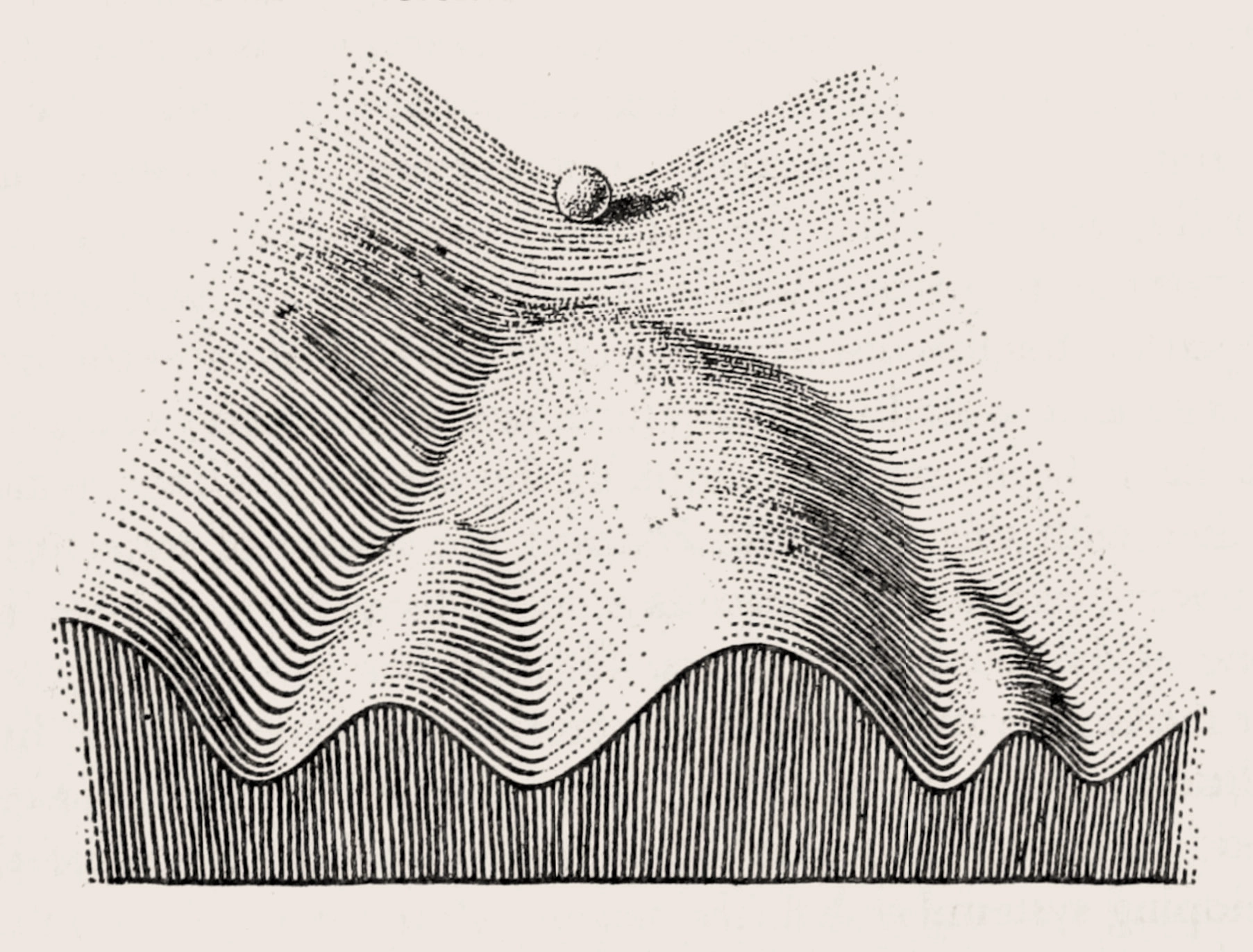
Waddington first introduced his landscape in the 1940s, visualizing embryonic development as a physical terrain of hills and valleys. In this model, a cell—specifically a pluripotent stem cell—is represented as a ball perched at the summit of the highest peak. As development proceeds, the ball rolls downhill under the influence of "gravity," which Waddington used as a metaphor for the inexorable progression of time and biological maturation.
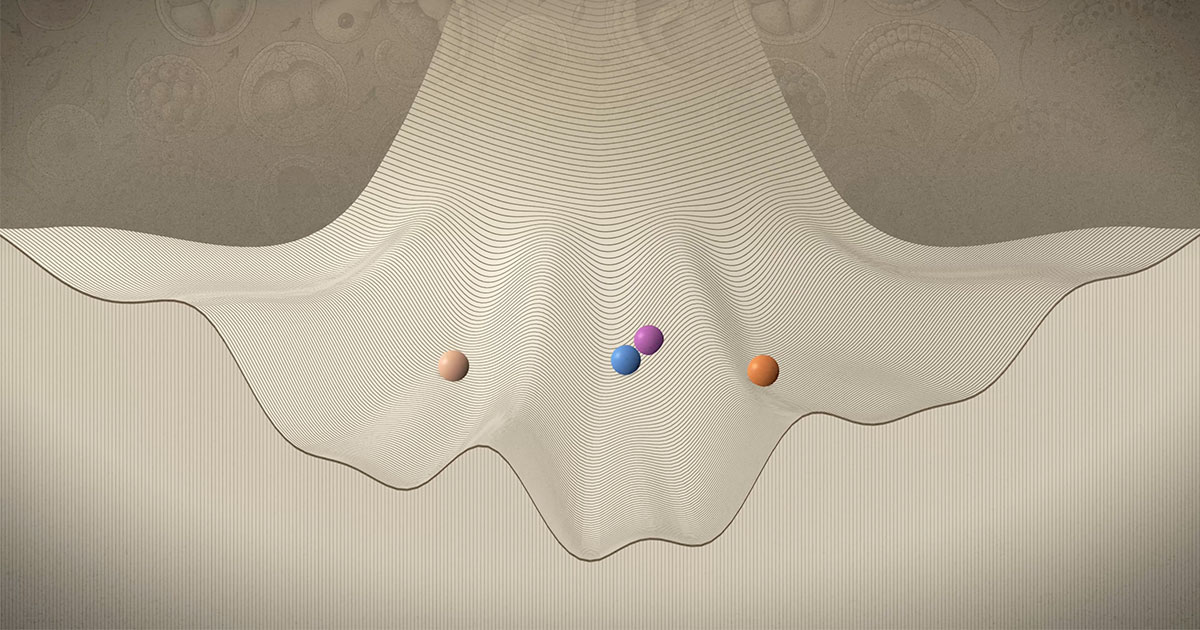
As the ball descends, it encounters bifurcations—points where the valley splits into two or more paths. Each choice represents a developmental decision, such as a cell "deciding" whether to become a part of the nervous system or the skin. Once a path is chosen, the cell becomes increasingly specialized, or "canalized." Waddington used the term canalization to describe the robustness of development; the steep walls of the valleys ensure that even if the ball is slightly jostled by environmental or molecular noise, it will likely stay on its intended path toward a stable, mature cell state.
This imagery provided a framework for understanding how a single set of genetic instructions could yield a vast array of different cell types. However, for decades, Waddington’s landscape was viewed primarily as a visual aid rather than a rigorous mathematical or physical reality. It lacked the quantitative data necessary to make it a predictive tool in the laboratory.
From Metaphor to Mapping: The Rise of Single-Cell Sequencing
The transition of Waddington’s landscape from a schematic drawing to a mathematical reality began in earnest with the advent of single-cell RNA sequencing (scRNA-seq). This technology allows researchers to measure the expression levels of thousands of genes within individual cells simultaneously. By capturing a snapshot of which genes are active in a cell at a specific moment, scientists can define a cell’s "state" with unprecedented precision.
In these high-dimensional datasets, a cell’s identity is defined by its transcriptome—the complete set of RNA transcripts produced by its genome. Because visualizing thousands of dimensions is impossible for the human brain, researchers utilize computational tools like Uniform Manifold Approximation and Projection (UMAP) to collapse this data into two or three dimensions. When these maps are constructed using cells harvested at various stages of an embryo’s growth, the result is a striking visual confirmation of Waddington’s vision.
On a UMAP plot, clusters of points represent distinct cell types, such as blood or muscle cells. The trajectories between these clusters resemble the branching valleys Waddington sketched 80 years ago. These "network flow models" allow biologists to track the movement of cell populations through "pseudo-time," a computational metric that reflects the progression of a cell’s maturation regardless of the actual hours passed.
Supporting Data: The GATA1 and PU.1 Bifurcation
One of the most significant empirical validations of the landscape model came from the work of Sui Huang, a biologist at the Institute for Systems Biology in Seattle. In 2007, Huang and his colleagues investigated the differentiation of myeloid progenitor cells, which serve as the precursors for various types of blood cells.
Huang discovered that the "fate" of these cells was largely determined by the antagonistic relationship between two transcription factors: GATA1 and PU.1. These proteins act like a molecular toggle switch. High levels of GATA1 push the cell toward becoming a red blood cell (erythroid lineage), while high levels of PU.1 drive it toward becoming a white blood cell (myeloid lineage).
By mapping the concentrations of these two proteins, Huang was able to calculate a mathematical "potential landscape." In the progenitor state, the cell sits in a single, shallow basin. As the concentrations of GATA1 and PU.1 fluctuate, the landscape itself changes shape, causing the central basin to flatten and two new, deeper basins to form on either side. These basins are known in dynamical systems theory as "attractors"—stable states toward which a system naturally gravitates. This research provided the first concrete evidence that Waddington’s "valleys" were not just artistic flourishes but were the result of specific gene regulatory interactions.
The Hidden Mechanics: Gene Regulatory Networks
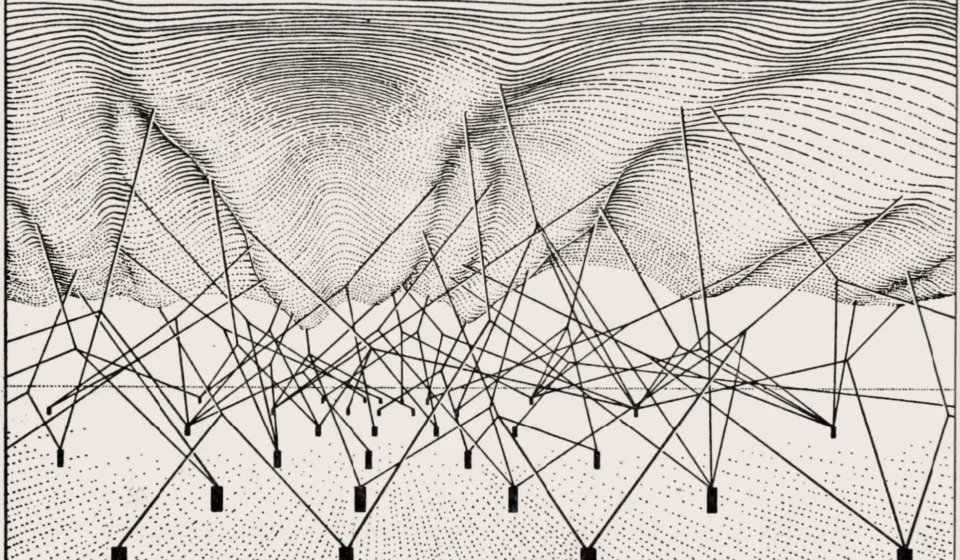
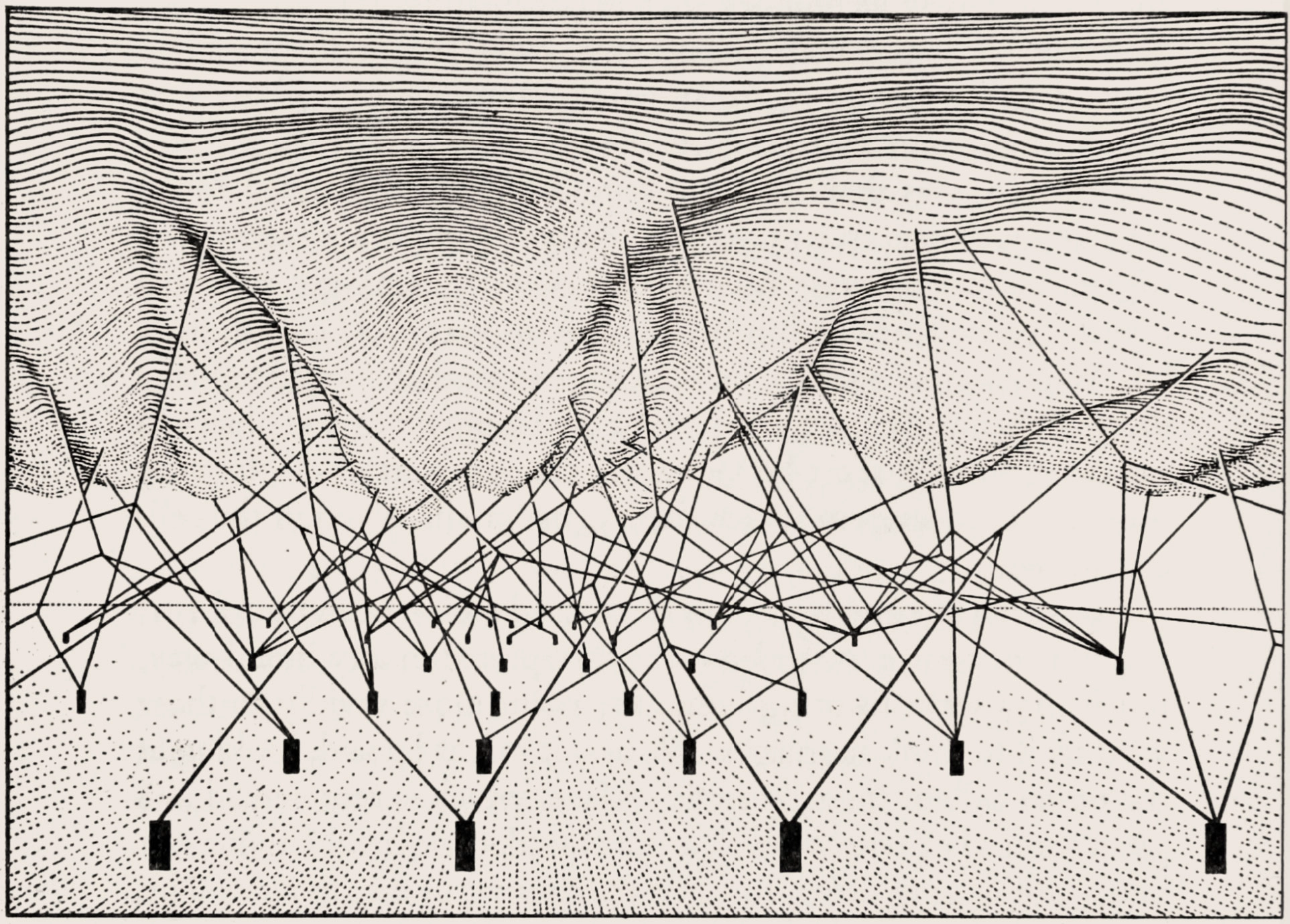
To explain what shaped his landscape, Waddington offered a second, less famous illustration in his 1957 book, The Strategy of the Genes. He depicted the landscape from beneath, showing a complex web of ropes and pegs pulling a flexible sheet into its undulating form. In this allegory, the pegs represented individual genes, and the ropes represented the chemical and molecular interactions between them.
Today, these "ropes and pegs" are known as gene regulatory networks (GRNs). A single gene does not act in isolation; instead, it activates or suppresses other genes, creating a feedback loop that stabilizes a cell’s identity. James Briscoe, a developmental biologist at the Francis Crick Institute, has utilized this perspective to study the formation of the neural tube. His research indicates that cell-fate decisions are driven by a remarkably small number of "master regulator" genes. Once these key genes reach a certain threshold of activity, they trigger a cascade that locks the cell into a specific trajectory, effectively "pulling the ropes" to deepen the valley and prevent the cell from reversing course.
Critical Analysis: A Shifting and Dynamic Terrain
While modern data has validated Waddington’s core concepts, it has also revealed that his original metaphor was perhaps too static. In Waddington’s drawings, the landscape appears as a fixed geographical feature that the ball must navigate. Contemporary research suggests that the landscape is actually dynamic—it is being reshaped by the cells as they move through it.
"In our framework, the landscape is a feature of each cell and is not fixed," notes David Rand, a mathematician at the University of Warwick. As cells grow, they secrete signaling molecules and exert physical forces on their neighbors. These interactions act like tectonic shifts, causing new valleys to open and old ones to close in real-time. This feedback loop between the cell and its environment means that development is not a pre-programmed "readout" of DNA, but a collective negotiation between thousands of cells.

Furthermore, the concept of "gravity" in the model has been re-examined. Biophysicists like Julie Theriot of the University of Washington point out that there is no literal force pulling cells toward differentiation. Instead, the "downhill" motion is an emergent property of the chemical reactions within the cell, which are driven by the laws of thermodynamics toward states of greater stability.
Implications for Regenerative Medicine and Oncology
The ability to map the epigenetic landscape has profound implications for the future of medicine. If scientists can identify the specific bifurcations and attractors in a cell’s developmental path, they can potentially manipulate those paths with surgical precision.
- Regenerative Medicine: Currently, creating specific tissues from stem cells often involves a process of trial and error. By understanding the landscape’s topology, bioengineers could develop "chemical steering" protocols to nudge cell populations into desired states, such as creating new neurons to treat Parkinson’s disease or insulin-producing cells for diabetes.
- Oncology: Sui Huang and other researchers are increasingly viewing cancer through the lens of the epigenetic landscape. Rather than seeing cancer solely as a result of genetic mutations, they propose that a cancer cell has fallen into a "maladaptive attractor"—a stable but harmful state that exists as a latent possibility within the landscape. This shifts the focus of treatment from simply killing cancer cells to "re-differentiation therapy," where drugs are used to push the cells out of the cancer basin and back into a healthy or benign state.
- Synthetic Biology: The landscape framework provides a "rational basis" for generative biology. Researchers may eventually be able to design entirely new landscapes, creating synthetic tissues or organisms with properties not found in nature.
Chronology of Key Developments in Epigenetic Theory
- 1942: Julian Huxley publishes Evolution: The Modern Synthesis, formalizing the gene-centric view of biology.
- 1940s: C.H. Waddington proposes the "epigenetic landscape" to explain morphogenesis.
- 1953: The structure of DNA is discovered, momentarily overshadowing Waddington’s systems-level theories.
- 1957: Waddington publishes The Strategy of the Genes, introducing the "ropes and pegs" model of gene regulation.
- 1961: François Jacob and Jacques Monod discover the lac operon, proving that genes can be turned on and off by other molecules.
- 2007: Sui Huang provides mathematical and experimental evidence for cell-state attractors using blood cell differentiation.
- 2010s: The widespread adoption of single-cell RNA sequencing allows for the high-resolution mapping of developmental trajectories.
- 2020s: Integration of dynamical systems theory and "pseudo-time" analysis turns the landscape into a quantitative tool for regenerative medicine.
Conclusion: An Atlas for the Future
Conrad Hal Waddington’s landscape has evolved from a mid-century philosophical metaphor into a 21st-century atlas of biological possibility. It serves as a vital reminder that life is more than a simple sum of its genetic parts; it is a complex, robust, and dynamic system. By charting the hills and valleys of cell fate, modern science is not just observing the process of development but is beginning to acquire the tools to direct it. As James Briscoe suggests, this framework provides the "rational basis" for a new era of biology where the forms of life can be understood, navigated, and perhaps even sculpted to address the most pressing challenges in human health.