Mastering Travel and Conference Organization Integrating Digital Tools for Enhanced Learning and Productivity

The intersection of personal productivity and academic engagement has reached a new level of sophistication as educators and professionals leverage advanced digital tools to manage the complexities of modern travel and professional development. For many professionals in the higher education sector, the transition from daily administrative duties to the immersive environment of a multi-day conference presents significant cognitive challenges. These challenges include the logistical minutiae of packing and travel, as well as the intellectual demand of processing high volumes of new information. Recent developments in mobile
applications and artificial intelligence (AI) are providing new frameworks for reducing this "cognitive load," allowing travelers to focus on creativity and learning rather than logistical maintenance.
The Logistics of Professional Travel: Beyond Basic Preparation
Travel anxiety and the friction of preparation are common hurdles for professionals. While air travel remains the standard for long-distance professional engagements, a growing number of travelers are finding value in regional travel via personal vehicles. This preference often stems from the desire for "roominess"—the ability to carry necessary materials without the constraints of airline weight limits—and the psychological comfort of a familiar environment. By utilizing their own vehicles, travelers eliminate the need to learn the mechanics of a rental car or navigate the specific stressors of airport security, thereby preserving mental energy for the primary purpose of the trip.
In May 2024, this approach was exemplified during the "(Re)Imagining Liberal Arts and STEM Education in the Age of Generative AI" conference held at Harvey Mudd College in Claremont, California. The event, which drew educators and technologists from across the country, focused on the ethical and practical implications of AI in academia. For attendees, the preparation for such an intellectually rigorous event began weeks in advance, not with the content of the lectures, but with the refinement of the systems used to get there.
Digital Optimization: Refining the Packing Process
For years, productivity experts have advocated for the use of digital checklists to ensure consistency and reduce stress. The Drafts app, a popular text-capture tool for iOS and macOS, has emerged as a leading solution for managing these lists. However, even the most robust systems can become cluttered over time. The process of "cleaning up" a packing list has been revolutionized by the integration of AI coworkers, such as Anthropic’s Claude. By using AI to audit existing lists, travelers can identify redundancies, reorganize categories more granularly, and receive suggestions for missing essentials, such as first-aid basics or specific electronic adapters.
A sophisticated packing list typically categorizes items into clothing, toiletries, health and medications, and electronics. However, seasoned travelers have introduced a critical fifth category: "on person" items. This section includes high-priority essentials that are easily forgotten in the final moments before departure, such as smartphones, smartwatches, prescription glasses, and wallets. By checking these off separately, the traveler creates a fail-safe against the most disruptive types of loss. Furthermore, the addition of a "travel day items" section accounts for perishables or last-minute necessities, such as refrigerated snacks or water bottles, which cannot be packed the night before.
Technological Innovations in Task Management: The Rise of Live Activities
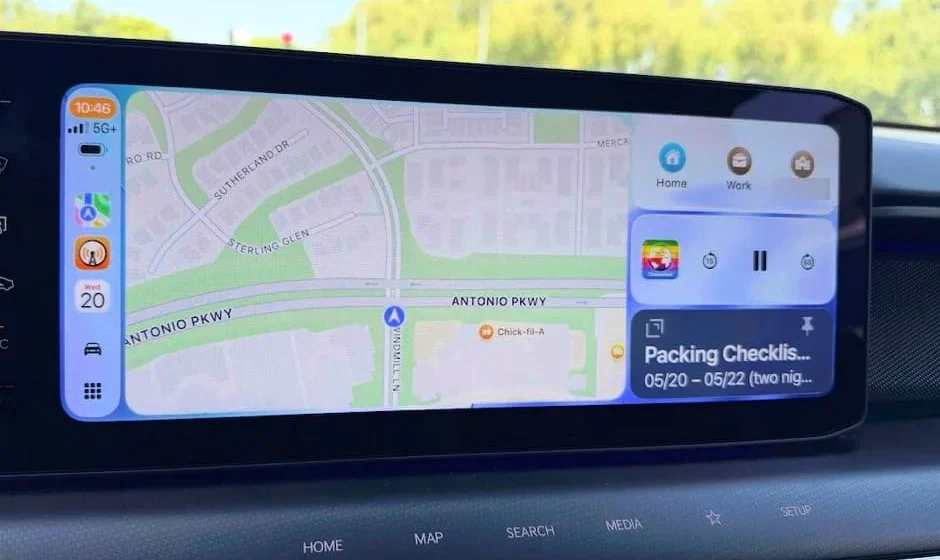
One of the most significant frustrations in mobile productivity is the "sleep" function of smartphones, which requires users to repeatedly unlock their devices to check a list. The introduction of "Toggle Shopping Mode" within the Drafts app addresses this by utilizing Apple’s "Live Activities" and "Dynamic Island" features. When activated, this mode keeps the checklist active and visible on the lock screen or at the top of the interface, even when the phone is not in active use.
This feature represents a shift toward "ambient productivity," where information is available at a glance without requiring active engagement with an application. During the preparation for the Harvey Mudd conference, users found that this persistent visibility extended even to vehicle interfaces like Apple CarPlay. By having the packing list visible on the car’s dashboard, travelers were reminded of remaining tasks even while running errands, effectively integrating their digital planning with their physical movements.
Building an Intellectual Hub: The Obsidian and AI Integration
Once the logistical hurdles are cleared, the focus shifts to the intellectual output of the conference. Harvey Mudd College’s AI conference provided a dense schedule of keynotes, lightning talks, and breakout sessions. To manage this, attendees are increasingly turning to Obsidian, a "local-first" plain-text note-taking application. Unlike cloud-based systems, Obsidian stores files directly on the user’s device, ensuring accessibility regardless of internet connectivity—a common issue in crowded conference halls.
The creation of a "Conference Hub" within Obsidian involves building a centralized, hyperlinked table of contents. This hub acts as a personalized Wikipedia for the event. By feeding the conference schedule and personal priorities into an AI model like Claude, users can generate a structured hub that includes:
- Event metadata (dates, locations, contact info).
- A curated schedule based on personal interests.
- Dedicated notes for each session, pre-populated with abstracts and "things to listen for."
- Links to external resources provided by conference organizers.
This method of "co-creation" with AI allows the attendee to bypass the tedious work of manual data entry. Instead of spending the first day of a conference setting up folders and files, the attendee arrives with a fully functional digital environment, ready for high-level synthesis and note-taking.
Chronology of a Managed Trip: From Planning to Execution
The timeline for a digitally optimized trip typically follows a structured path:
- Three Weeks Out: Audit of the digital packing list using AI to remove duplicates and add necessary items based on the destination’s climate and the event’s nature.
- Two Weeks Out: Construction of the Obsidian Hub. This involves importing the official schedule and using AI to resolve scheduling conflicts between overlapping sessions.
- One Week Out: Finalizing the "On Person" and "Travel Day" lists.
- Departure Day: Activation of "Shopping Mode" or "Live Activities" to ensure all items are loaded into the vehicle.
- Conference Duration: Utilizing the Obsidian Hub to take structured notes, with each session linked to a master "Day Note" for easy retrieval.
Theoretical Framework: The GTD Methodology and Cognitive Offloading
The drive toward these high-tech solutions is rooted in the "Getting Things Done" (GTD) methodology pioneered by David Allen. The central tenet of GTD is that "your mind is for having ideas, not holding them." When a traveler tries to remember to pack a toothbrush while simultaneously trying to remember the name of a keynote speaker, cognitive friction occurs. This friction reduces the brain’s capacity for creative thought and complex problem-solving.
By offloading the "holding" of information to apps like Drafts and Obsidian, professionals free up their mental bandwidth. The use of AI as a "coworker" in this process further enhances this by handling the structural organization of data, which is often the most taxing part of planning. The result is a state of "mind like water," where the individual can react to the conference environment with agility and focus.
Broader Implications for Higher Education and Professional Development
The techniques used for the Harvey Mudd conference reflect a broader trend in higher education: the move toward "augmented intelligence." As Generative AI becomes more integrated into academic workflows, the distinction between human effort and machine assistance is blurring. The ability to quickly synthesize a conference schedule into a usable digital hub is not just a convenience; it is a competitive advantage in a world where information is abundant but attention is scarce.
Furthermore, the reliance on plain-text systems like Obsidian highlights a growing movement toward data sovereignty. Educators are increasingly wary of "subscription fatigue" and the risk of losing access to their notes if a cloud service shuts down. Local-first software ensures that the intellectual capital gained at a conference remains in the hands of the individual, searchable and linkable for decades to come.
Analysis of Impact: Efficiency and Long-term Learning
The impact of these organizational strategies extends beyond the duration of the trip. A well-structured Obsidian hub serves as a permanent archive of professional development. A month after the Harvey Mudd conference, participants using these systems report a higher rate of information retention. Because the notes were organized into a "hub" with clear follow-up actions and key takeaways, the transition from "learning" to "implementation" is much smoother.
In conclusion, the modern professional’s approach to travel and learning is no longer just about the destination or the content of the lectures. It is about the systems they build to support their journey. Through the strategic use of AI, the optimization of mobile task management, and the adoption of robust note-taking frameworks, travelers can transform a stressful logistical exercise into a seamless experience of intellectual growth. As David Allen suggested, by freeing the mind from the burden of remembering, we open the door to true innovation.