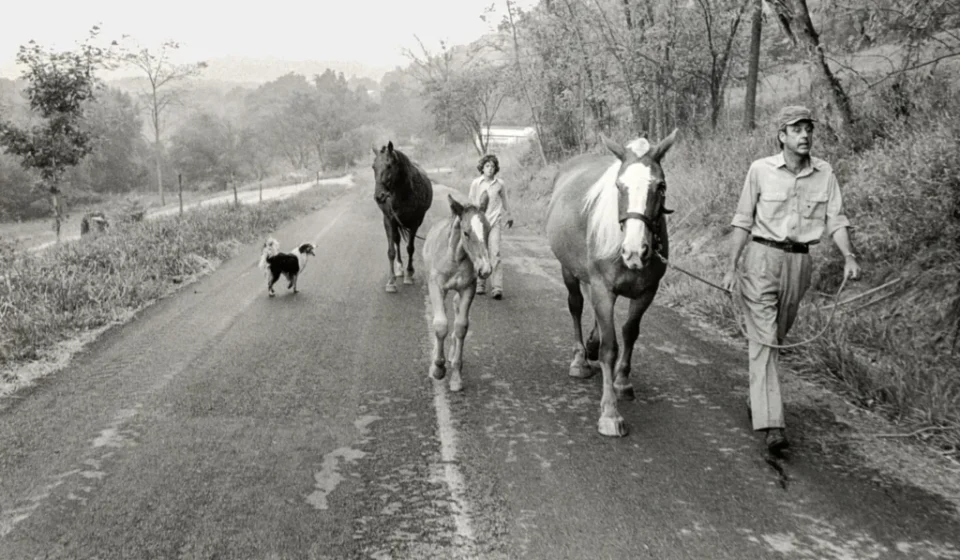

Wendell Berry, the revered agrarian philosopher, poet, and novelist, passed away last week at the age of 92. He died at his home in Port Royal, Kentucky, a place deeply intertwined with his life’s work. Berry was known for his steadfast commitment to traditional farming methods and a writing practice that eschewed modern conveniences, reportedly utilizing pencil and paper in a cabin devoid of electricity. His passing marks the end of an era for a literary and philosophical voice that profoundly influenced discussions on agriculture, community, and intentional living.
While Berry was widely celebrated for his powerful critiques of industrial agriculture and his poignant tributes to the enduring value of family farms and rural communities, his legacy extends far beyond the realm of food production. For individuals not directly involved in farming or able to relocate to rural settings, Berry’s life serves as a profound testament to the deep satisfactions that can be found in living a life of purpose and intention. His unwavering commitment to these principles offers a powerful counterpoint to the prevailing trends of modern existence, characterized by digital mediation, convenience, and often, a disengagement from tangible realities.
Berry’s early life trajectory suggested a path towards an established academic and literary career. After completing his undergraduate and master’s degrees at the University of Kentucky, he pursued a Ph.D. in creative writing at Stanford University. This was followed by a period of study in Italy and France, supported by a prestigious Guggenheim fellowship. He later accepted a professorship at New York University’s Heights campus in the Bronx, establishing a life that, by conventional standards, represented significant professional success. During this period, he married and raised two children.
However, at the age of 29, in 1964, Berry made a momentous decision that would redefine his life and work. He chose to resign from his academic position and return to Henry County, Kentucky, the ancestral home of his family for many generations. This decision was not made lightly but stemmed from a deeply held conviction about the necessity of immersion in the subjects he wished to explore.
As documented by writer David Demaree, the gravity of Berry’s decision was evident to those around him. Demaree recounts an interaction where Berry’s supervisor at NYU, attempting to dissuade him, invoked the famous line from Thomas Wolfe: "You can’t go home again." The supervisor likely believed Berry was forsaking a promising career for obscurity, failing to grasp the profound connection Berry felt to his homeland. The academic world, in the eyes of his supervisor, viewed this move as an "intellectual death," severing him from the "cultural springs of the metropolis." Yet, Berry remained resolute, his resolve fixed on his return to Kentucky.
Berry’s motivation for this radical shift was rooted in his desire to write authentically about the interconnectedness of "people and place." He believed that true understanding and honest representation of rural life and its challenges could only be achieved through direct experience and engagement. In a 2018 interview with The New York Times, Berry articulated this sentiment, stating, "The landscape was there to check me if I was wrong. I could never go away and make up stuff at cocktail parties about the backwoods of Kentucky. I worked with people here in all walks of life and learned from them. It’s been a very rich experience." This commitment to lived experience formed the bedrock of his prolific body of work.
The Modern Dilemma: Numbness and Digital Escape
Berry’s philosophy stands in stark contrast to the prevalent characteristics of 21st-century life. The contemporary world is increasingly defined by a pervasive sense of numbness and an overreliance on convenience, often mediated through digital technologies. There is a discernible trend towards using tools, including artificial intelligence, to circumvent cognitive effort and to find solace from anxiety in algorithmically curated digital content. Office environments often exemplify this trend, with a proliferation of communication channels like Slack, email, and Zoom meetings, the outputs of which are frequently auto-transcribed and transformed into presentations that receive minimal engagement. Political discourse, too, has often been reduced to a simplistic binary, encouraging performative activism from the perceived safety of social media platforms.
Berry, while not directly addressing these nascent digital phenomena of his later years, deeply understood the allure of such escapism. However, he posited that hardship and strain, far from being liabilities, can, when directed towards a conscious life vision, become the very foundation upon which resilience and enduring satisfaction are built. His insistence on a simple life, meticulously focused on what he deemed essential, represented a profound rejection of the digital architecture that increasingly shapes and, in his view, constrains modern existence. The enduring lesson from Berry’s 92 years is the immense possibility of consciously rebuilding one’s life into something of greater depth and meaning.
A Life Dedicated to Place and Purpose: A Chronology
Wendell Berry’s life story is a testament to a deliberate and often counter-cultural path. His journey from academic success to agrarian philosopher can be traced through key milestones:
- 1934: Born in Henry County, Kentucky. This region would become the enduring locus of his life and work.
- Early Education: Pursued higher education at the University of Kentucky, earning both bachelor’s and master’s degrees.
- Mid-1950s: Enrolled at Stanford University to study creative writing, embarking on a path that suggested a conventional literary career.
- Late 1950s – Early 1960s: Engaged in postgraduate studies and fellowships, including a Guggenheim fellowship that facilitated study in Italy and France. He also held a professorship at New York University’s Bronx campus.
- 1964: At the age of 29, Berry made the pivotal decision to leave his academic post and return to Henry County, Kentucky. This marked a significant turning point, prioritizing direct engagement with his ancestral land and community over an urban-centric professional life.
- 1960s onwards: Began actively farming and writing from his Kentucky home. His early works, such as "The Broken Ground" (1964) and "The Long-Legged House" (1969), began to articulate his growing concerns about industrialization and his deep connection to place.
- 1970s – Present: Published a prolific body of work, including novels like "Nathan Coulter" (1960), "A Jonestown" (1983), and "Jayber Crow" (2000), as well as numerous essay collections and poetry volumes that consistently explored themes of agriculture, community, environmental stewardship, and the spiritual dimensions of ordinary life. His essays, particularly those collected in works like "The Unsettling of America: Culture & Agriculture" (1977), gained widespread recognition and influence.
- Ongoing Influence: Throughout his later decades, Berry remained a prominent voice, his writings continuing to shape discussions in environmentalism, sustainable agriculture, and the pursuit of a meaningful life in an increasingly complex world. His dedication to his farming practices remained unwavering, serving as a living example of his philosophy.
- 2023: Passed away at the age of 92 at his home in Port Royal, Kentucky.
The Philosophy of the Deep Life: Beyond Agriculture
While Wendell Berry is inextricably linked to the agrarian ideal, his philosophy offers a profound framework for understanding and cultivating a "deep life" that transcends specific vocational choices or geographic locations. His critique of modern society is not merely an indictment of industrial farming but a broader commentary on the superficiality and detachment fostered by a culture that prioritizes abstraction, speed, and convenience over rootedness, skill, and mindful engagement.
Berry’s emphasis on "people and place" is central to this concept. He argued that our identities and our understanding of the world are shaped by our connections to specific communities and landscapes. When these connections are severed or diluted, individuals risk becoming disoriented, disconnected from the tangible realities that sustain them. This detachment, Berry suggested, can lead to a form of spiritual and intellectual impoverishment.
Supporting Data and Context:
The principles Berry championed have gained increasing traction as societies grapple with the consequences of globalization and technological advancement.
- Economic Disparities and Rural Decline: In many developed nations, the decline of traditional agricultural sectors has led to significant economic challenges in rural areas. This has resulted in outmigration, the erosion of community structures, and a sense of loss for traditional livelihoods. Berry’s work provides a philosophical lens through which to understand the human cost of these economic shifts.
- Environmental Concerns: Berry’s early warnings about the environmental degradation caused by industrial agriculture have been borne out by decades of scientific research. Issues such as soil depletion, water pollution, and loss of biodiversity are now widely recognized as critical global challenges, underscoring the prescience of his concerns.
- Mental Health and Digital Well-being: The rise of digital technologies has coincided with increasing rates of anxiety, depression, and feelings of isolation, particularly among young people. Berry’s advocacy for focused attention, meaningful work, and direct human connection offers an alternative to the often isolating and overwhelming nature of the digital world. Studies by organizations like the Pew Research Center have highlighted concerns about the impact of social media on mental health, echoing Berry’s implicit critique of superficial engagement.
- Resilience and Community: The COVID-19 pandemic highlighted the vulnerabilities of highly globalized and interconnected systems. Communities that possessed stronger local food systems and more robust social networks often demonstrated greater resilience. This practical experience has lent renewed importance to Berry’s emphasis on local economies and strong community bonds.
Reactions and Legacy
While Berry was a private individual, his work has elicited strong reactions and inspired countless individuals and movements.
- Environmental and Agricultural Communities: Organizations focused on sustainable agriculture, organic farming, and land conservation have frequently cited Berry as a foundational influence. His writings have provided both intellectual justification and ethical grounding for their work.
- Academic and Literary Circles: Berry’s contributions to literature and philosophy have been recognized through numerous awards and honors, though he often remained ambivalent about formal accolades. His inclusion in university curricula across disciplines such as literature, environmental studies, and philosophy attests to his enduring academic significance.
- Grassroots Movements: Beyond formal institutions, Berry’s ideas have resonated deeply with individuals seeking a more meaningful and grounded existence. His influence can be seen in the growth of community-supported agriculture (CSA) programs, the local food movement, and the broader re-evaluation of consumerism and lifestyle choices.
Wendell Berry’s passing is a moment to reflect on a life lived with profound integrity and conviction. His legacy is not merely in his eloquent prose or his philosophical insights, but in the enduring challenge he presents to us all: to consider the purpose and depth of our own lives, to cultivate meaningful connections to the places we inhabit, and to actively choose a path of intentionality in a world that often pulls us toward the superficial and the fleeting. His example continues to offer a powerful vision of what it means to live a life of substance, purpose, and deep, abiding satisfaction.