The Evolution of AI Coding Agents: Mastering Software Development Through Reusable Skills

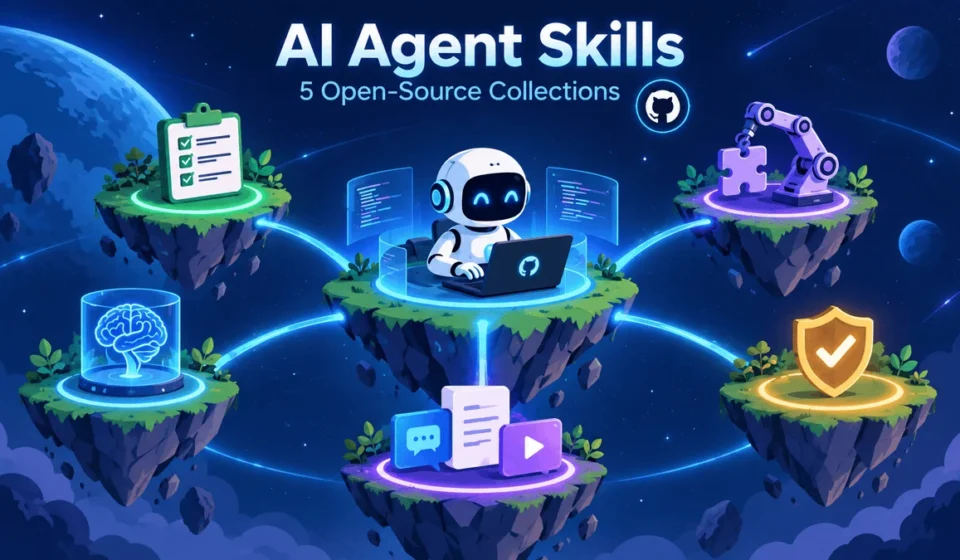
The landscape of software development is undergoing a profound transformation, driven by the rapid advancement of AI coding agents. Tools like Claude Code, Codex, Cursor, and OpenCode have demonstrated remarkable proficiency in generating code, often at speeds and scales previously unimaginable. However, the practice of software engineering extends far beyond mere code generation. Crucial aspects such as understanding intricate requirements, meticulous feature planning, rigorous testing, effective debugging, thorough code reviews, and discerning readiness for deployment remain paramount. It is within this expanded operational domain that "AI agent skills" are emerging as a critical component, offering reusable instructions and workflows that empower these intelligent agents to navigate complex software development tasks without constant, granular guidance. This article delves into five prominent open-source repositories that are pioneering the development and integration of these vital AI agent skills, each offering a distinct philosophy and approach to enhancing the capabilities of AI in real-world software engineering.
The Growing Sophistication of AI in Code Creation
The initial wave of AI coding assistants primarily focused on code completion and generation, significantly accelerating the initial drafting phases of software projects. These tools, often trained on vast datasets of existing code, can suggest lines of code, complete functions, and even generate entire code snippets based on natural language prompts. This capability has been lauded for its potential to democratize coding and boost developer productivity. For instance, a study by GitHub found that developers using their AI-powered Copilot tool reported a 55% increase in the speed of completing coding tasks. Similarly, research from Microsoft indicated that developers using Codex experienced a reduction in the time spent on routine coding tasks, allowing them to focus on more complex problem-solving.
However, the limitations of these initial AI tools became apparent as projects grew in complexity. The nuanced understanding of business logic, the strategic planning of software architecture, the preemptive identification of potential issues through robust testing, and the collaborative process of code review are all areas where human expertise has traditionally been indispensable. The transition from generating code to engineering a complete software solution requires a more holistic and structured approach. This is precisely the gap that the concept of "AI agent skills" aims to bridge.
Defining AI Agent Skills: Beyond Simple Prompts
AI agent skills are not merely advanced prompts or additional functionalities; they represent a paradigm shift in how we interact with and leverage AI in software development. These skills are essentially pre-defined, modular sets of instructions and processes that equip AI agents with the ability to perform specific, complex tasks within the software development lifecycle. They are designed to be reusable, meaning an agent can be taught a specific workflow or problem-solving technique once and then apply it across multiple projects or tasks. This eliminates the need for developers to repeatedly explain the same process or rationale to the AI for each new challenge.
The development and dissemination of these skills through open-source repositories are crucial for fostering collaboration and innovation within the AI development community. By sharing these skill sets, developers can collectively build more sophisticated and capable AI agents, pushing the boundaries of what is possible in automated software engineering. The following repositories represent some of the most influential contributions to this burgeoning field.
1. Superpowers: A Methodological Foundation for AI Development
One of the most impactful projects in the realm of AI agent skills is Superpowers, spearheaded by Jesse Vincent and the team at Prime Radiant. More than just a collection of individual abilities, Superpowers introduces a comprehensive software development methodology specifically designed for coding agents. Its core innovation lies in fundamentally altering how an AI agent approaches the entire software development process, rather than simply augmenting its existing capabilities.
The skills embedded within Superpowers cover a wide spectrum of development activities. For instance, when tasked with building a new feature, an agent equipped with Superpowers would first engage in a brainstorming phase to thoroughly understand user requirements and intentions. This is followed by a structured design approval process. Subsequently, the agent formulates a detailed implementation plan, which might involve the use of sub-agents or a sophisticated plan execution mechanism. Crucially, the methodology emphasizes test-driven development (TDD), ensuring that tests are written before or alongside the code. Following implementation, the agent conducts a thorough code review and verifies all aspects of the change before finalizing the development branch.
This systematic approach extends to debugging. The "systematic-debugging" skill within Superpowers eschews random code modifications, instead employing a structured root-cause analysis process to identify and resolve issues. This ensures that fixes are targeted and effective, rather than merely speculative. By integrating these skills, Superpowers effectively imbues coding agents with a robust and recognized software development process, moving them from mere code generators to more capable engineering partners.
Superpowers is designed for broad compatibility across various AI coding environments. For Claude Code, installation is straightforward:
/plugin install superpowers@claude-plugins-officialThe project also boasts support for a wide array of other popular coding assistants, including Codex, Cursor, Gemini CLI, OpenCode, GitHub Copilot CLI, Kimi Code, and Antigravity, among others, underscoring its commitment to widespread adoption and integration.
2. Skills for Real Engineers: Adaptability and Composability
Matt Pocock’s Skills for Real Engineers offers a distinct perspective, emphasizing small, adaptable, and composable skills designed for practical, "real engineering" rather than what he terms "vibe coding." This collection prioritizes providing developers with granular tools that can be integrated into their existing workflows, allowing for a more personalized and flexible approach to AI-assisted development.
Instead of dictating an entire development process, Pocock’s skills are intended to be selectively utilized and combined. Notable among these are:
grill-with-docs: This skill is particularly innovative in its approach to requirements gathering. It moves beyond simple prompt-based input by actively interviewing the developer about the desired change. During this process, it constructs a shared domain model, refines terminology, and updates critical project documentation, such asCONTEXT.mdand Architecture Decision Records (ADRs). This ensures a deep and shared understanding of the change before implementation begins.tdd: Adhering to the classic red-green-refactor cycle, this skill provides a disciplined framework for test-driven development.diagnosing-bugs: This skill equips the AI agent with a structured debugging methodology, preventing haphazard attempts at fixes and promoting efficient problem resolution.
For more complex tasks, developers can chain these skills together to create sophisticated workflows. A prime example of this is the multi-session development chain documented within the repository:
grill-with-docs → to-spec → to-tickets → implement → code-reviewThis exemplifies how individual skills can be orchestrated into a comprehensive development pipeline.
Installation of these skills is managed via a convenient Node.js package manager command:
npx skills@latest add mattpocock/skillsThe installer intelligently prompts the user to select specific skills and target coding agents. Crucially, the skill files are copied directly into the user’s project directory, allowing for direct customization to align with individual working preferences. Pocock also recommends running setup-matt-pocock-skills within each repository for optimal integration. While Superpowers feels akin to adopting a complete engineering methodology, Matt Pocock’s collection offers a more pragmatic approach, allowing developers to "borrow" the workflows of experienced engineers and tailor them to their specific needs.
3. ECC (Engineering Code Companion): A Comprehensive Engineering Platform
The ECC by Affaan Mustafa stands out as the most extensive collection in terms of sheer breadth of capabilities. Moving beyond a simple directory of skill files, ECC integrates skills with specialized agents, predefined rules, event hooks, sophisticated memory systems, continuous learning mechanisms, robust security tools, and direct integrations with a variety of coding agents.
The current iteration of the ECC repository encompasses a vast array of functionalities, including:
- Advanced Skills: A broad spectrum covering TDD, in-depth research, frontend development, machine learning workflows, security analysis, operational tasks, architectural design, comprehensive testing strategies, and sophisticated agent orchestration.
- Specialized Agents: Dedicated agents for specific domains, enhancing the AI’s ability to tackle niche problems.
- Rules and Hooks: Mechanisms for defining custom logic and automating actions based on specific events within the development process.
- Memory and Learning: Capabilities for preserving context across development sessions and identifying recurring patterns to generate new, reusable skills and learned behaviors.
- Security Tools: Integrated solutions for scanning agent configurations and code for potential vulnerabilities.
Affaan describes the core ECC workflow as a continuous cycle:
plan → test → implement → review → verify → remember → improveThe inclusion of "remember" and "improve" at the end of this cycle is particularly significant. These steps enable ECC to retain valuable context across disparate development sessions and to autonomously transform repeated patterns into formalized, reusable skills and ingrained behaviors.
A standout feature of ECC is AgentShield, a security component designed to meticulously scan agent configurations for potential risks. This includes identifying exposed secrets, overly permissive access rights, potentially malicious hooks, insecure MCP (Message Channel Protocol) settings, and prompt-related security vulnerabilities.
Installation is facilitated by a universal installer:
npx [email protected] setupAlternatively, a guided installation process is available:
npx [email protected] install --guidedWhile ECC demonstrates the strongest integration with Claude Code, it also offers varying levels of support for Codex, Cursor, OpenCode, Kimi Code, Gemini, and other coding agents. ECC may be considered an extensive solution for users who only require minor enhancements to their debugging prompts. However, for those aiming to transform their coding agent setup into a comprehensive engineering platform complete with persistent memory, robust security, and specialized autonomous workers, ECC represents one of the most ambitious and feature-rich options currently available.
4. Awesome LLM Apps: A Broader Ecosystem of AI Applications
Shubham Saboo’s Awesome LLM Apps distinguishes itself from the other repositories by adopting a broader perspective. Rather than focusing exclusively on agent skills, this project curates an expansive collection of over 100 open-source AI agents, agent skills, and Retrieval-Augmented Generation (RAG) applications. These are built around a diverse range of foundational large language models, including GPT, Claude, Gemini, DeepSeek, Llama, and Qwen.
This wider scope is what makes Awesome LLM Apps particularly valuable. It provides a rich tapestry showcasing how agents, tools, retrieval mechanisms, multiple models, and specialized skills are effectively integrated to create functional and innovative AI applications. Developers can explore real-world examples of how these components are combined, offering practical insights into building their own advanced AI solutions.
The "Agent Skills" collection within this repository features:
-
Project Graveyard: This skill exemplifies the practical application of AI in project management. It scans local Git repositories, analyzes their historical data to identify reasons for project abandonment, and then suggests which of these dormant projects might warrant revival. Installation is straightforward:
npx skills add https://github.com/Shubhamsaboo/awesome-llm-apps/tree/main/agent_skills/project-graveyardThis repository serves as an excellent resource for understanding the diverse landscape of LLM applications and for discovering innovative approaches to leveraging AI in software development and beyond.
5. Agent Skills by Addy Osmani: A Focus on Production Software Engineering
Agent Skills by Addy Osmani is meticulously designed with production software engineering as its primary objective. This collection organizes its workflows into six distinct stages, mirroring a typical production software lifecycle:
DEFINE → PLAN → BUILD → VERIFY → REVIEW → SHIPCurrently, the repository houses 24 specialized skills that address critical aspects of software development. These include requirements definition, strategic planning, TDD, frontend development best practices, API design, sophisticated debugging techniques, security protocols, performance optimization, rigorous code review processes, Continuous Integration and Continuous Deployment (CI/CD) pipelines, observability strategies, comprehensive documentation, and the final deployment ("shipping") of software.
The collection also features lifecycle commands, such as /spec, /plan, /build, /test, /review, and /ship. When invoked, these commands automatically load the relevant workflows and skill sets for each respective stage of development.
A particularly insightful aspect of Osmani’s collection is its emphasis on quality gates. The constraint-driven-development skill allows developers to define specific requirements for testing, linting, security checks, code coverage, and performance benchmarks. Crucially, it enables the strategic placement of more resource-intensive checks later in the workflow, thereby optimizing efficiency by avoiding the execution of exhaustive tests after every minor code modification.
The entire collection can be installed using the following command:
npx skills add addyosmani/agent-skillsFor those who wish to explore the available skills before installation, a listing option is provided:
npx skills add addyosmani/agent-skills --listIndividual skills can also be installed directly, for example:
npx skills add addyosmani/agent-skills --skill test-driven-developmentThe Skills CLI is designed for broad compatibility, supporting over 70 coding agents, including prominent platforms like Claude Code, Cursor, Codex, Copilot, and Cline. This focus on production readiness and quality assurance makes Addy Osmani’s collection an invaluable resource for teams striving to implement robust and scalable AI-assisted development practices.
Implications and the Future of AI-Powered Software Development
The proliferation of these diverse approaches to AI agent skills signifies a maturing ecosystem for AI-assisted software engineering. The distinct methodologies offered by Superpowers (holistic methodology), Matt Pocock (adaptable and composable tools), ECC (comprehensive engineering platform), Awesome LLM Apps (exploratory ecosystem), and Addy Osmani (production-quality focus) provide developers with a rich toolkit to choose from.
The underlying implication is clear: the future of software development will likely involve a synergistic relationship between human developers and intelligent AI agents, where AI handles repetitive, complex, or data-intensive tasks, while humans focus on creativity, strategic decision-making, and nuanced problem-solving. The ability to teach AI agents "how we want software to be built," as articulated by the authors of these projects, represents a profound shift towards truly collaborative intelligence.
As these open-source projects continue to evolve, we can anticipate several key developments:
- Increased Standardization: As certain skills and workflows gain traction, there may be a move towards greater standardization, making it easier to share and integrate skills across different AI agent platforms.
- Enhanced Interoperability: Efforts to improve interoperability between different AI agent frameworks and skill repositories will likely increase, creating a more seamless development experience.
- Advanced Learning Capabilities: Future iterations of these skills will undoubtedly incorporate more sophisticated machine learning techniques, enabling agents to learn and adapt more autonomously and effectively.
- Focus on Ethical AI and Security: With the growing power of AI agents, there will be an increased emphasis on developing skills that promote ethical coding practices, bias mitigation, and robust security measures.
Ultimately, the adoption and refinement of these AI agent skills are not just about making AI agents "smarter"; they are about fundamentally reshaping the process of software creation, making it more efficient, more robust, and more aligned with human intent and best practices. The journey from AI code generation to comprehensive AI-assisted software engineering is well underway, and the open-source community is leading the charge.