The Convenience and Efficacy of At-Home Flu Vaccination: FluMist at Home Offers a Streamlined Solution

The annual ritual of obtaining a flu vaccination, a cornerstone of public health preventative measures, has often been hindered by logistical challenges. For many, the primary obstacle to consistent immunization is the sheer difficulty of finding the time and opportunity to visit a clinic or pharmacy during the limited flu shot season. This common predicament, which has led individuals and families to sometimes forgo this vital preventative step, has been significantly addressed by the advent of FluMist at Home, a mail-order flu vaccine service that has been met with increasing adoption and positive user experiences.
This innovative approach to flu vaccination, delivered in the form of a nasal spray, eliminates the need for injections and streamlines the entire process from prescription to administration. Beth Skwarecki, Senior Health Editor at Lifehacker and a certified personal trainer and weightlifting coach with over a decade of experience in health reporting, shares her personal journey with FluMist at Home, highlighting its convenience and effectiveness over the past two flu seasons. Her firsthand account underscores the transformative impact this service can have on routine health maintenance.
A Paradigm Shift in Flu Vaccination Access
The emergence of the at-home flu vaccine marks a significant evolution in public health accessibility. Approved by the U.S. Food and Drug Administration (FDA) in 2024 and becoming available for the first time in 2025, the FluMist nasal spray has been reimagined for home administration. This development is particularly noteworthy given the consistent recommendation from public health organizations, including the Centers for Disease Control and Prevention (CDC), for annual influenza vaccinations for nearly everyone six months of age and older.
According to CDC data, influenza can cause significant illness, leading to millions of cases of illness, hundreds of thousands of hospitalizations, and tens of thousands of deaths annually in the United States. While injectable vaccines have been the primary method of administration for decades, the introduction of a self-administered nasal spray option addresses a critical barrier to widespread vaccination: convenience. Skwarecki’s experience illustrates this point, noting that her previous hesitations were solely due to the time commitment required for traditional vaccination appointments.
Navigating the At-Home Flu Vaccine Process
The FluMist nasal spray, while still requiring a prescription, has been made more accessible through a streamlined online platform. AstraZeneca, the manufacturer of FluMist, has partnered to create a telehealth website that integrates the necessary medical provider approval with an order for an online pharmacy. This integrated system is designed to be efficient, with the company reporting that the process typically takes around five minutes, a timeframe Skwarecki’s personal experience corroborated.
The journey begins with an online questionnaire that collects essential health information, including age, allergies, and relevant medical history. For families, the platform allows for the aggregation of multiple vaccine orders under a single account. This feature proved particularly useful for Skwarecki, who was able to order vaccines for multiple family members simultaneously.
A notable aspect of the FluMist at Home service is its integration with insurance providers. While the vaccine itself is covered by insurance, users are typically charged a nominal fee for physician evaluation, shipping, and processing. Skwarecki reported a fee of $8.99 for her initial order, which covered the physician’s evaluation and shipping for multiple vaccines. This fee structure is designed to be economical, making the convenience of home delivery a financially viable option for many households. When ordering for a larger family, as Skwarecki did in her second year of use, the fee structure adjusts to accommodate additional vaccines, with a slight increase for exceeding the initial four-vaccine limit.

Eligibility and Considerations for FluMist at Home
The FluMist at Home vaccine is identical to the FluMist administered in clinical settings and is approved for individuals aged 2 through 49 years. This age restriction means that infants under six months of age and adults over 49 years old will still need to consult a healthcare provider for the injectable flu vaccine. The CDC recommends that children can begin receiving flu vaccinations as early as six months of age.
A critical consideration for the FluMist nasal spray is its formulation, which contains a live, attenuated (weakened) influenza virus. While this formulation is incapable of causing the actual flu, it can induce mild respiratory symptoms in individuals with compromised immune systems. Consequently, FluMist is not recommended for individuals who are pregnant, have certain underlying medical conditions, are immunocompromised, or have close contact with immunocompromised individuals. In such cases, healthcare providers will typically recommend the inactivated injectable flu vaccine, which does not contain any live virus. This emphasizes the importance of the initial telehealth consultation to ensure the appropriate vaccine is selected for each individual’s health profile.
The Logistics of At-Home Delivery and Administration
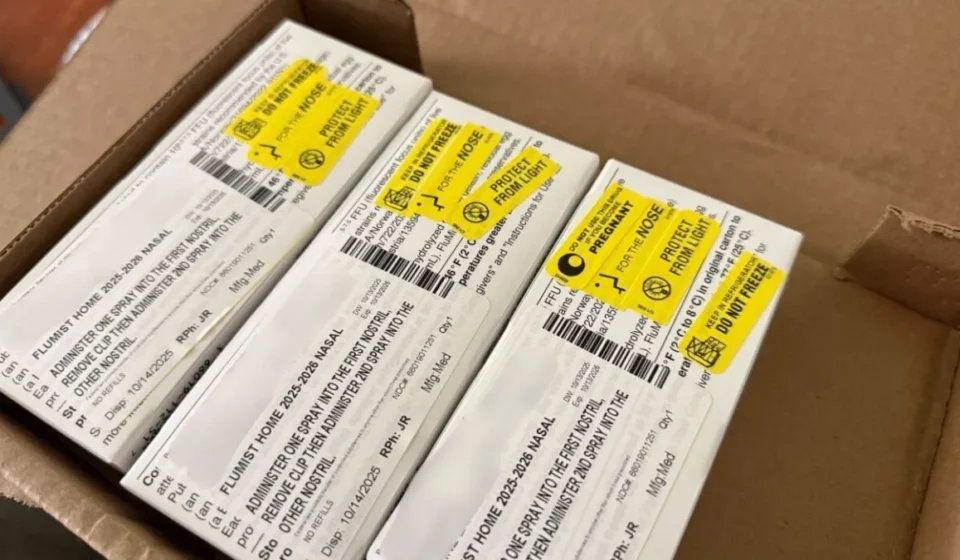
The delivery process for FluMist at Home is designed to maintain vaccine integrity. Users can select a delivery date, ensuring they are available to receive the refrigerated package. Upon arrival, typically via FedEx, the vaccine is packaged with cold packs to maintain its required refrigerator temperature. While the instructions recommend immediate refrigeration, the vaccine can remain unrefrigerated for up to 12 hours before administration, providing a degree of flexibility.
A key component of the delivery system is the inclusion of a "TiveTag" sticker, a temperature monitoring device. By downloading the TiveTag app via a QR code on the package, users can scan the RFID sticker to confirm that the vaccine has remained within the appropriate temperature range throughout its transit. This technological integration offers an added layer of assurance regarding the vaccine’s efficacy.
The administration of the FluMist nasal spray is remarkably simple and requires no special preparation. The process involves removing a rubber cap, squirting the vaccine into one nostril, and then removing a small spacer from the plunger to administer the remaining dose into the second nostril. This design ensures an even distribution of the vaccine. Skwarecki describes the sensation as minimal and non-invasive, a significant comfort for those who may have apprehension about nasal sprays. Adults can self-administer, while children will require adult assistance.
Following administration, a prepaid envelope is provided for the return of the sprayers for proper disposal. Packaging materials, including paper components and inserts, are generally recyclable. The insulated liners and cold packs included in the shipment are also designed for environmental consideration, with options for disposal or reuse.
Broader Implications and Public Health Impact
The availability of at-home flu vaccination services like FluMist at Home has profound implications for public health. By removing significant logistical barriers, these services can contribute to higher vaccination rates, particularly among populations that have historically faced challenges accessing healthcare. Increased vaccination coverage can lead to a substantial reduction in the burden of influenza on individuals and the healthcare system, translating to fewer doctor visits, hospitalizations, and deaths.
The success of this model also paves the way for similar innovations in the delivery of other essential medications and vaccines. As telehealth and mail-order pharmacy services continue to expand, the integration of preventative healthcare solutions directly into the home environment represents a significant step forward in making health maintenance more accessible and less burdensome for individuals and families. The positive user experiences shared by individuals like Beth Skwarecki serve as a testament to the growing demand and effectiveness of such services in bolstering public health initiatives. The ongoing evolution of these platforms promises to further democratize access to critical health interventions, ultimately contributing to healthier communities.