The Art of Articulation: Why a Tweet-Sized Argument is Crucial for Non-Fiction Authors and Academic Publishing

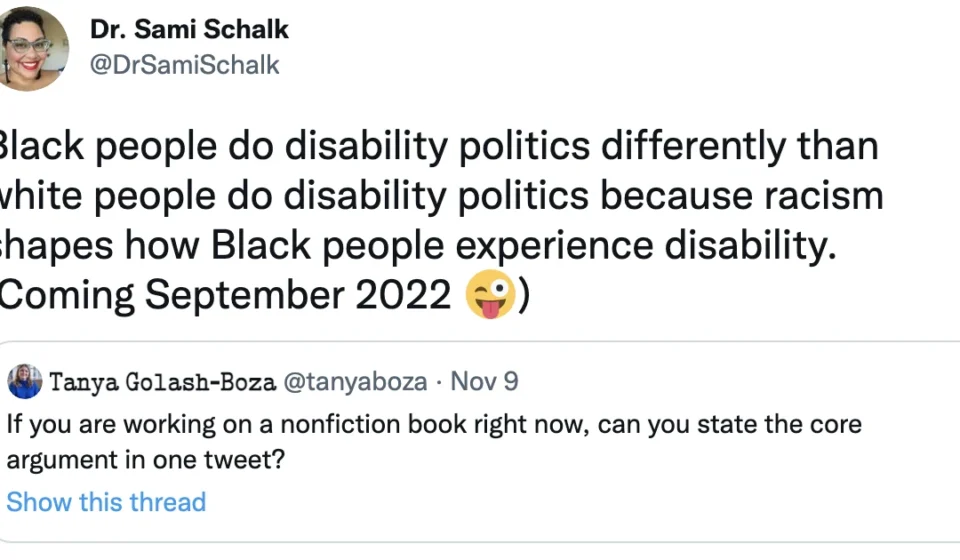
A recent challenge launched on Twitter by academic and author Tanya Boza prompted non-fiction writers to distil the core argument of their books into a single tweet, revealing a fundamental, yet often elusive, step in the manuscript development process. The exercise, initially designed to foster clarity and conciseness, underscored the critical importance of a sharply defined central argument for any non-fiction work, particularly within the competitive landscape of academic publishing. Authors participating in the thread reported the unexpected difficulty of the task, highlighting a common struggle that Boza herself acknowledges, often taking years to crystallize even after significant drafting.
The Indispensable Core: Defining the Argument
At the heart of every successful non-fiction book lies a compelling argument, distinct from a mere topic or a description of themes. According to literary scholar Wendy Belcher, an argument is fundamentally a statement with which someone can reasonably disagree. This definition is echoed by Helen Sword, who posits that every non-fiction book must pose a central question, with the entire narrative serving as the process of leading the reader from that question to the author’s unique answer. This interplay between question and answer forms the backbone of the argument, guiding the reader through the author’s intellectual journey.
The Twitter challenge showcased various examples of authors successfully articulating their complex research in concise, digestible formats. These ranged from incisive social commentary to novel interpretations of historical events, each demonstrating the power of a succinct, debatable claim. For instance, one author might propose, "The widespread adoption of agile methodologies in non-tech sectors inadvertently exacerbates pre-existing hierarchical power structures, contrary to claims of empowerment." Another might offer, "Historical narratives of the American frontier consistently omit the pivotal, yet often unacknowledged, contributions of indigenous women, thereby perpetuating a skewed understanding of westward expansion." Such statements, clear in their assertion, immediately invite engagement, debate, and further exploration, which is precisely the goal of scholarly and impactful non-fiction.
An Author’s Journey: The Iterative Process of Argument Refinement
Boza’s own experience serves as a compelling case study in the iterative nature of defining a book’s argument. Working on a manuscript since 2017, she initially articulated her argument in academic language: "Disinvestment and coercive investment in Black communities in DC have displaced and dispossessed Black residents, making gentrification through racialized reinvestment possible." While academically sound, the Twitter exercise prompted a re-evaluation towards simpler, more accessible language. This led to a refined version: "The choice to use prisons and policing to solve the problems faced by Black communities in DC in the 20th century, instead of investing in schools, community centers, social services, health care, drug treatment, and violence prevention, is what made gentrification possible in the 21st century."
This transformation illustrates a critical lesson for authors: while academic rigor is paramount, clarity and accessibility can broaden a book’s impact without sacrificing intellectual depth. The revised argument, easily understandable, directly answers the guiding question of what factors led to gentrification in DC, presenting a clear, debatable thesis that invites both scholarly and public engagement. This process of continuous refinement is not an exception but rather the norm in successful book authorship, often involving multiple drafts, peer reviews, and editorial consultations.

The Necessity of a Theoretical Framework and Novel Intervention
Beyond a clear argument, a non-fiction book, particularly in academia, demands a compelling theoretical framework. This framework situates the author’s argument within existing scholarship, explaining its novelty and how it contributes to or challenges established knowledge. It is here that an author articulates their intervention – how their work moves the scholarly conversation forward. Without this, even a powerful argument might be deemed redundant.
Consider Michelle Alexander’s seminal work, The New Jim Crow, which persuasively argues that mass incarceration constitutes a new system of racial caste in the United States. Her argument was not merely a restatement of existing critiques of the carceral state but a novel theoretical intervention that reframed the entire discourse around race and justice, demonstrating a profound understanding of previous scholarship while offering a groundbreaking perspective. An author simply repeating "Mass incarceration is the New Jim Crow" today, no matter how true, would struggle to find a publisher because the argument has already been made and established.
Academic book introductions, unlike dissertations, typically feature only a few paragraphs dedicated to literature review, rather than entire chapters. This concise approach is driven by the expectation that the theoretical framework will be seamlessly integrated, highlighting the intervention rather than merely summarizing existing work. Boza’s current manuscript, for example, engages with housing inequality, the War on Drugs, and gentrification. Her introduction outlines current understandings in these fields and then precisely details how her work offers a new lens, explaining how Black communities experienced dispossession, disinvestment, coercive investment, and finally, racialized reinvestment. This tight focus ensures that every element of the book directly supports and elaborates upon the core argument.
Structuring the Argument: From Concept to Chapters
Once the core argument and theoretical intervention are established, the next crucial step is structuring the book to systematically build and support that argument. Each chapter must contribute a distinct piece to the overall thesis, guiding the reader through the evidence and analysis. The structure should be a deliberate, logical progression that reinforces the author’s central claim.
In her book on DC gentrification, Boza structures the narrative into three parts: Disinvestment, Coercive Investment, and Reinvestment. This chronological and thematic progression directly aligns with her argument that historical patterns of disinvestment and coercive investment in Black communities paved the way for contemporary gentrification driven by racialized reinvestment. Each part, containing two chapters, delves into specific facets:
- Part I: Disinvestment
- Ch 1: Disinvestment in Black DC
- Ch 2: The Violence of Disinvestment
- Part II: Coercive Investment
- Ch 3: Crack in the Neighborhood
- Ch 4: Bringing in the Feds
- Part III: Reinvestment
- Ch 5: Chocolate City No More
- Ch 6: Racialized Reinvestment
This modular approach allows for in-depth exploration of each component of the argument without overwhelming the reader, ensuring that the cumulative effect strengthens the overall thesis.

Alternatively, authors might adopt a narrative-driven structure, as Boza did with her book Deported. This work followed the journey of a deportee, from their country of origin to crossing the border, life in the U.S., legal troubles, detention, and post-deportation life. This structure allowed her to demonstrate how global capitalism influenced each stage of the migrant experience, weaving the argument throughout a compelling personal narrative. Such structural choices are not arbitrary but are carefully designed to best serve the argument and engage the target audience. For authors struggling with structural visualization, tools like mind mapping can be invaluable, allowing them to graphically connect elements of their argument and determine the most effective chapter sequence.
Broader Implications for Academic Publishing and Public Engagement
The emphasis on a clear, tweet-sized argument has significant implications for the broader academic publishing ecosystem. Publishing houses, increasingly discerning in a crowded market, prioritize manuscripts with clear, marketable arguments. Industry data suggests that proposals lacking a sharply defined core argument face significantly higher rejection rates, with some estimates indicating that up to 70-80% of initial submissions are dismissed due to a lack of clarity in their central thesis. Editors and literary agents often cite the inability to articulate a book’s "hook" as a primary reason for declining projects. A concise argument not only signals intellectual rigor but also simplifies the marketing and positioning of the book to various audiences.
Furthermore, in an era where academic research is increasingly called upon to demonstrate public relevance and impact, the ability to communicate complex ideas succinctly is paramount. Social media challenges, like the one initiated by Boza, serve as informal training grounds for this essential skill. They encourage scholars to move beyond disciplinary jargon and craft messages that resonate with a wider audience, thereby fostering greater public engagement with critical research. This accessibility is vital for ensuring that scholarly work contributes to public discourse and policy debates.
The journey of writing a non-fiction book is inherently iterative and often solitary. Boza underscores that authors should not expect to produce a polished manuscript in a single attempt. Instead, the process involves drafting, identifying the argument, rewriting to align with that argument, and then refining the argument itself based on the evolving manuscript. This cycle repeats until the book effectively achieves its intended purpose. Recognizing this iterative nature, and embracing the need for continuous refinement, is crucial for success.
Finally, the importance of community support cannot be overstated. The years-long endeavor of writing a book benefits immensely from peer feedback, mentorship, and collective encouragement. The Twitter thread itself, by connecting numerous authors engaged in similar struggles, inadvertently created a temporary community, highlighting the enduring need for authors to seek out and cultivate networks of support. These communities provide not only intellectual feedback but also the emotional resilience necessary to navigate the challenging, yet ultimately rewarding, path of non-fiction authorship. The ability to articulate a book’s core argument, even in the briefest of formats, stands as a testament to an author’s intellectual mastery and their readiness to contribute meaningfully to the world of ideas.