
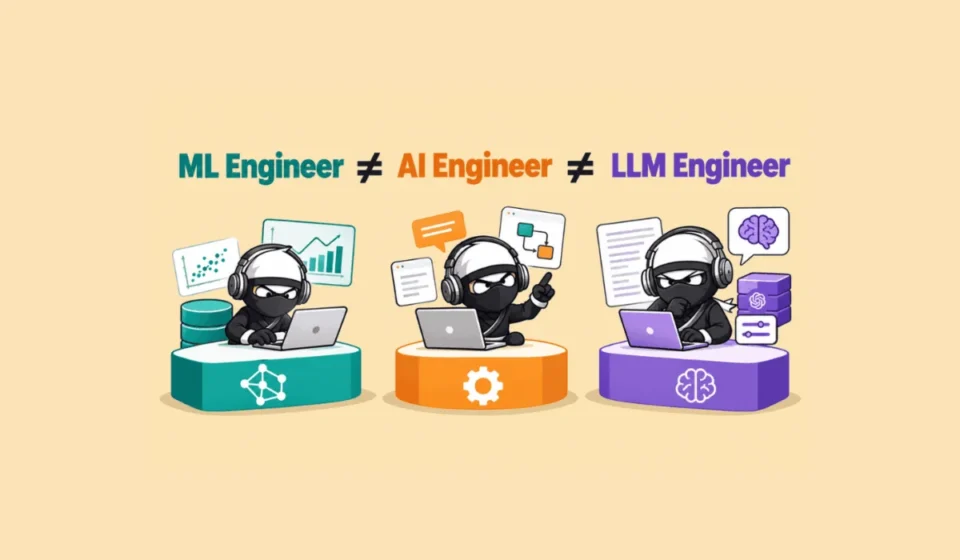
Navigating the Evolving Landscape of AI Job Titles: ML Engineer vs. AI Engineer vs. LLM Engineer

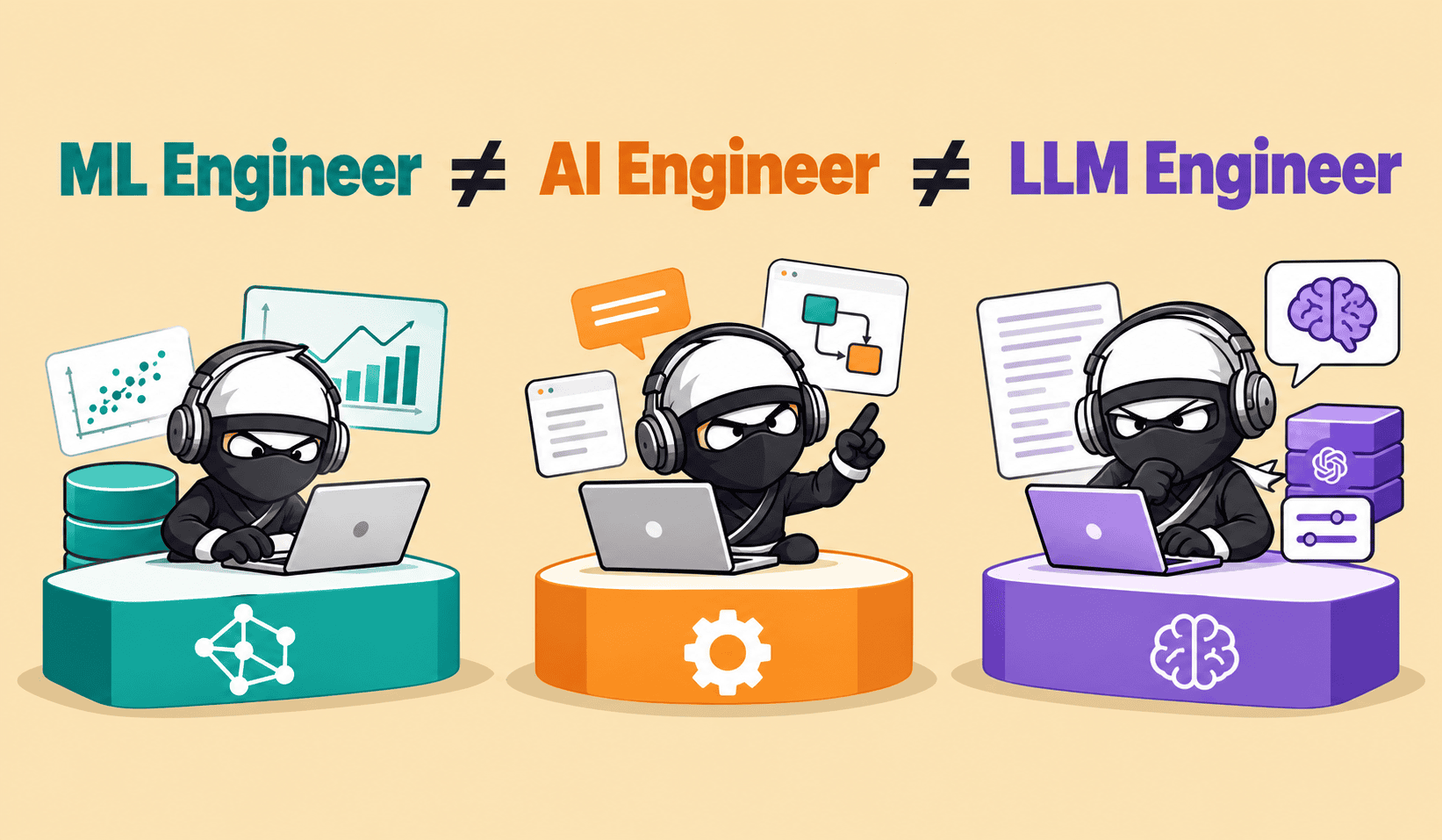
The burgeoning field of Artificial Intelligence is experiencing a significant evolution, not just in its technological advancements, but also in the very language used to define its professional roles. A cursory glance at major job boards reveals a proliferation of titles like "AI Engineer," "Applied AI Engineer," and "LLM Engineer," often accompanied by seemingly overlapping responsibilities. This ambiguity, while reflecting the rapid pace of innovation, can lead to confusion for job seekers and hiring managers alike, potentially misaligning career aspirations with actual day-to-day work. Understanding the distinct contributions and outputs of Machine Learning Engineers, AI Engineers, and LLM Engineers is crucial for navigating this dynamic job market.
The Shifting Sands of AI Terminology
The current confusion surrounding AI job titles stems from a rapid industry evolution. Machine Learning Engineering emerged as a distinct discipline as the process of deploying models into production became a specialized endeavor, separate from pure data science research. More recently, the explosion of generative AI has given rise to entirely new roles, such as the "AI Engineer," a category that was virtually nonexistent before 2022. This rapid creation of new roles outpaces the industry’s ability to establish standardized nomenclature, leading to situations where the same job can be advertised under a multitude of titles, including "AI Engineer," "GenAI Engineer," "Applied AI Engineer," "Prompt Engineer," and "RAG Engineer."
This naming inconsistency has tangible consequences. Salary ranges for postings with nearly identical responsibilities can vary significantly, not based on the actual work performed, but on the chosen title by the hiring company. This highlights a critical disconnect between the perceived value of a title and the actual skills and tasks required for the role.
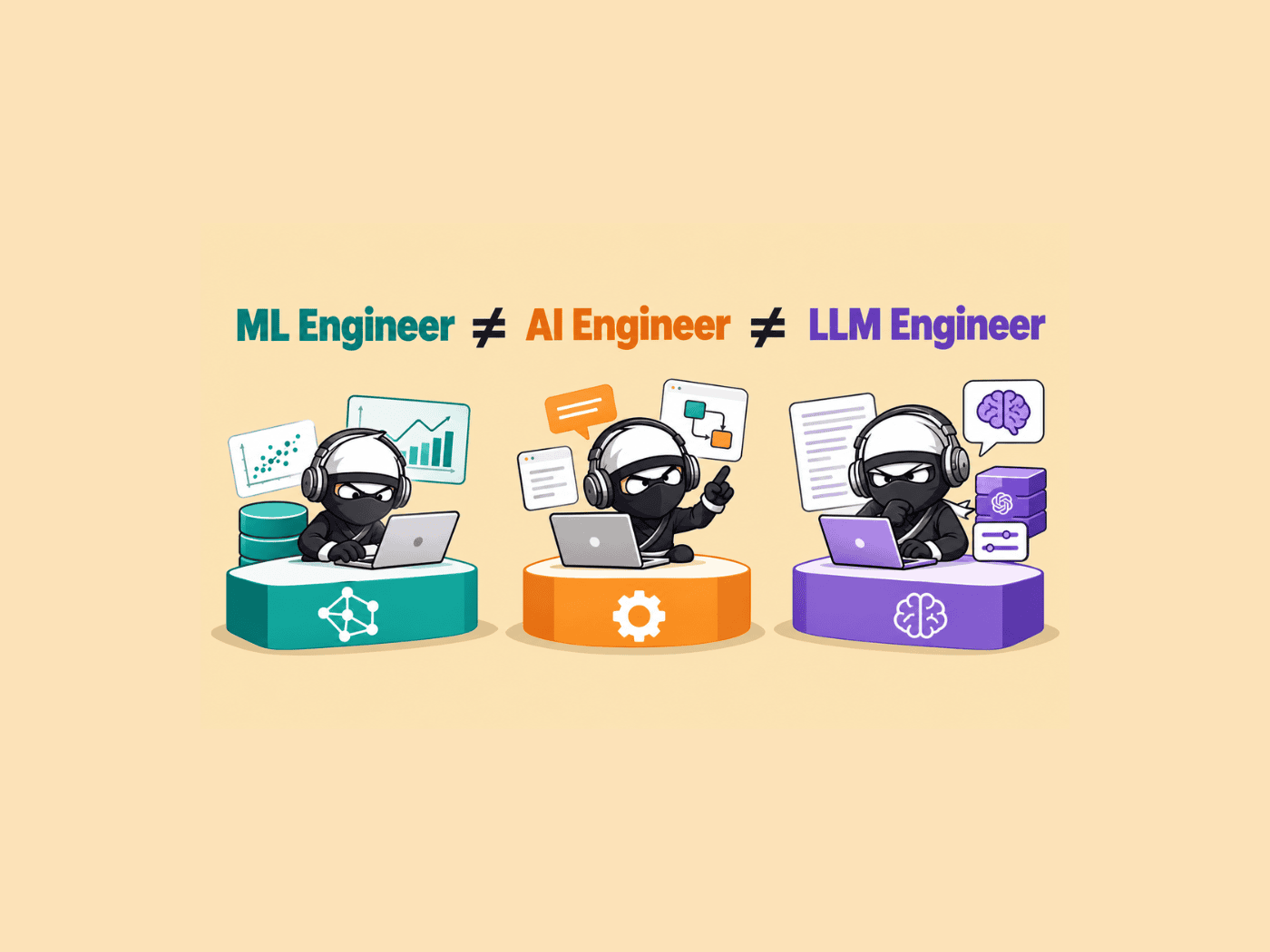
Defining the Roles by Their Deliverables
At the core of differentiating these roles lies an examination of what each professional is tasked with building, owning, and maintaining over time. This distinction moves beyond generic keywords and delves into the practical outputs that define their contributions to an organization.
The Machine Learning Engineer: Building from the Ground Up
A Machine Learning Engineer (MLE) is primarily responsible for the end-to-end development and deployment of machine learning models. Their core workflow typically involves the meticulous process of data collection and cleaning, selecting appropriate algorithms, training models, validating their performance against key metrics (such as RMSE or confusion matrices), and deploying them into production environments. Crucially, MLEs are also tasked with ongoing monitoring and retraining of these models as new data becomes available, ensuring their continued accuracy and relevance.
The technical toolkit for an MLE is robust, heavily relying on Python, alongside popular deep learning frameworks like PyTorch and TensorFlow, and libraries such as scikit-learn. Feature stores, like Amazon SageMaker or Databricks, are also integral to their workflow, enabling efficient data management and feature engineering. The tangible outputs of an MLE are typically specific predictive systems, such as recommendation engines that personalize user experiences, fraud detection models that safeguard financial transactions, or demand forecasting systems that optimize supply chains.
A significant portion of an MLE’s time is dedicated to data quality and feature engineering rather than solely algorithm selection. As experts in the field often note, flawed data granularity, leaked labels, or poorly designed feature windows can derail a model’s performance long before the choice of algorithm becomes a deciding factor. This emphasis on data integrity and production readiness positions the MLE role as a bridge between applied data science and robust software engineering.
The AI Engineer: Orchestrating Intelligence
An AI Engineer operates at a slightly later stage in the AI development lifecycle. Their primary focus is on integrating existing, often pre-trained, large models (typically accessed via APIs) into functional products and applications. The model itself usually exists, developed by others, and the AI Engineer’s challenge is to make it work within a real-world context.
The daily responsibilities of an AI Engineer are multifaceted. A substantial portion of their time is invested in prompt engineering, designing effective retrieval mechanisms, and establishing robust connections to language models. Smaller but critical segments of their day are dedicated to evaluating model outputs, identifying and mitigating issues like hallucinations or performance degradation, and conducting routine monitoring. Standard backend development tasks, including API integration and database management, are also part of their remit. Furthermore, they often engage in prototyping and documenting solutions for other teams.
The technological stack for an AI Engineer commonly includes Python or TypeScript, along with orchestration frameworks like LangChain and LangGraph, or LlamaIndex for managing complex AI workflows. Vector databases, such as Pinecone or Qdrant, are essential for efficient information retrieval. A common misconception among individuals entering this field is the expectation of extensive model training. In reality, AI Engineers often find themselves spending the majority of their time refining data pipelines and iterating on prompts, demonstrating that the work begins after a model has been trained and validated, and concludes when it reliably serves end-users beyond an impressive demonstration.
The LLM Engineer: Specializing in Language Models
The LLM Engineer role can be viewed as a specialized subset of the AI Engineer position, with a particular emphasis on Large Language Models (LLMs). While AI Engineers may work with various AI modalities, including computer vision and recommendation systems, LLM Engineers exclusively focus on language-based AI. The key differentiating factor and added responsibility for an LLM Engineer is the expertise in fine-tuning pre-trained models.

Fine-tuning involves adjusting the weights of an existing model using a domain-specific dataset. This is typically undertaken when a general-purpose model fails to achieve the desired performance on a narrow, specialized task. Techniques such as LoRA (Low-Rank Adaptation) or QLoRA are commonly employed for this purpose. However, skilled LLM Engineers often prioritize exploring alternative solutions before resorting to fine-tuning. They understand that improvements in retrieval mechanisms, the utilization of longer and more sophisticated prompts, or the selection of a different base model can often achieve similar results more cost-effectively and with fewer ongoing maintenance burdens. Fine-tuning is therefore a tool used judiciously, only after all other avenues have been thoroughly investigated and exhausted.
The Disconnect Between Title and Task
The current nomenclature in the AI job market is a reflection of its rapid, and at times chaotic, growth. As these distinct roles emerge and solidify, the industry grapples with establishing clear and consistent definitions. This is evident in the wide array of titles used for roles with overlapping responsibilities, creating a significant naming gap.
This gap also manifests in compensation. It is not uncommon for two job postings with nearly identical day-to-day tasks to command vastly different salary bands, with the disparity often attributable to the chosen job title rather than the actual scope of work. This underscores the importance for job seekers to look beyond the title and scrutinize the detailed responsibilities outlined in a job description.
The size and structure of a company also influence how these roles are defined and distributed. In a small startup, a single individual might effectively perform all three functions – model training, retrieval pipeline development, and feature deployment – under any of these titles. In contrast, larger organizations tend to silo these responsibilities into specialized teams. This can lead to an intricate division of labor, potentially encompassing five or more distinct categories: applied AI product engineers, machine learning engineers focused on model quality, AI research engineers, AI infrastructure engineers, and forward-deployed engineers who implement AI systems directly within customer environments. As companies scale, this specialization becomes increasingly granular.

Preparing for the Future of AI Careers
Regardless of the specific title that appears on an offer letter, the foundational skills and interview preparation remain remarkably consistent across these AI-related roles. A strong command of SQL, proficiency in data manipulation and shaping, and the ability to logically frame and deconstruct problems before writing code are paramount.
Interview processes for these positions often delve into practical coding challenges, frequently centered around common machine learning applications like recommendation systems, time-series forecasting, and text processing. Candidates are also expected to demonstrate theoretical understanding of model evaluation, bias detection, and effective communication of technical concepts. The emphasis is not on rote memorization of algorithms but on a deep understanding of data, problem-solving methodologies, and the ability to articulate the trade-offs involved in different technical approaches.
The central tenet of preparing for these interviews, whether for an ML Engineer, AI Engineer, or LLM Engineer role, is the ability to accurately define the problem, avoid data leakage, and select meaningful signals. Companies are evolving their job titles at a pace that often outstrips their internal evaluation criteria. Therefore, for any candidate navigating this evolving landscape, the most crucial advice is to meticulously review the actual bullet points within a job posting. Understanding what one will be expected to build, own, and maintain in the first 90 days and beyond provides a far more accurate and reliable description of the role than any title alone.
Conclusion
The current era of AI hiring is characterized by significant title inconsistency, a phenomenon that is likely to persist for some time. In essence, a Machine Learning Engineer is instrumental in training and deploying models, an AI Engineer focuses on integrating pre-trained models into functional products, and an LLM Engineer specializes in the fine-tuning and operation of large language models.

The preparation for interviews across these titles remains largely unchanged. A solid foundation in SQL, a clear approach to problem-solving, and the ability to articulate technical trade-offs are invaluable assets in any AI-related interview. As companies continue to rename roles more rapidly than they revise their assessment criteria, candidates are well-advised to prioritize a deep dive into the specific responsibilities outlined in job descriptions. This detailed examination will offer the most accurate roadmap to understanding the true nature of the role, irrespective of the title it carries.