
Mastering Instructional Design A Comprehensive Guide to Backward Design and Unit Planning for Modern Educators

The landscape of modern education is currently undergoing a significant shift as pedagogical experts call for a return to foundational planning principles to combat teacher burnout and improve student proficiency. Central to this movement is the refinement of instructional design—the systematic process by which teachers translate broad educational standards into actionable classroom experiences. Educational analysts suggest that the complexity of contemporary classrooms, characterized by diverse learning needs and rigorous state mandates, requires a more structured approach to unit development. By adopting a "Backward Design" framework, educators can ensure that every minute of classroom instruction is intentionally aligned with specific, measurable goals, thereby reducing the "planning fatigue" that often contributes to the high rate of teacher attrition in the first five years of the profession.
This renewed focus on instructional architecture comes at a critical time. Recent data from the National Center for Education Statistics (NCES) indicates that while teachers spend an average of 52 hours per week on work-related tasks, a disproportionate amount of that time is spent on "reactive planning"—the act of finding or creating materials for the next day without a clear connection to a long-term assessment strategy. To address this, a comprehensive four-part instructional series has been launched to guide educators through the nuances of unit planning, assessment design, lesson execution, and differentiation. This initiative aims to bridge the gap between theoretical pedagogy and the daily realities of the classroom, providing a roadmap for both novice and veteran teachers to enhance their professional practice.
The Foundations of Instructional Design: Standards, Curriculum, and Units
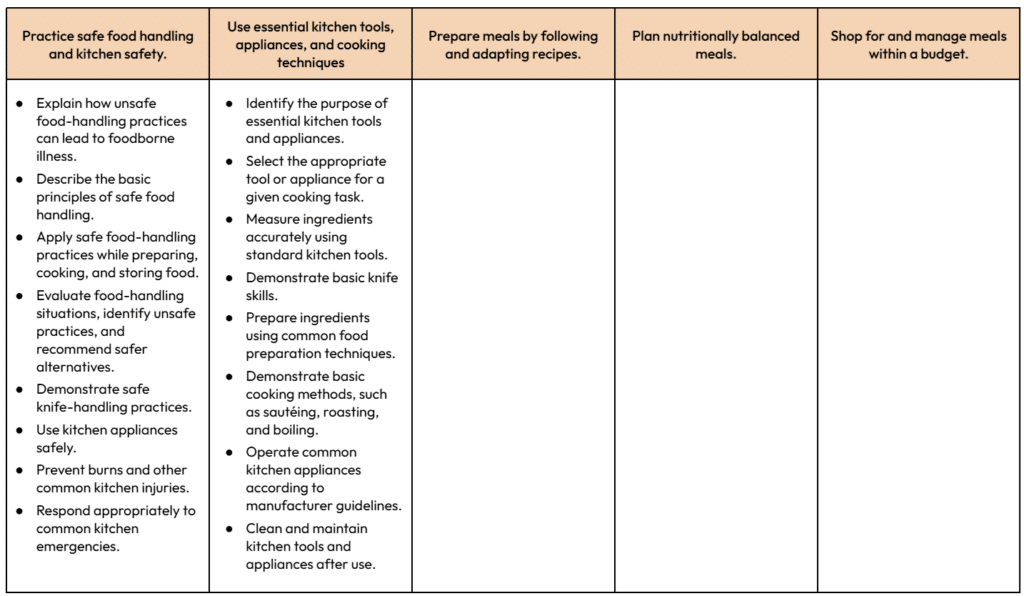
To understand the mechanics of effective teaching, one must first distinguish between the three pillars of educational organization: standards, curriculum, and units. Standards represent the high-level goals often mandated by state or local governing bodies. These are the "what" of education—the specific knowledge and skills students are expected to master by the end of a course or grade level. For instance, in a fundamental vocational course such as "Cooking Fundamentals," a standard might dictate that students must be able to "practice safe food handling and kitchen safety." However, standards themselves are not a roadmap; they are destinations.
The curriculum serves as the bridge between standards and the classroom. It is the comprehensive plan that organizes and sequences standards into a logical progression. A well-constructed curriculum prevents the fragmented delivery of information, ensuring that foundational skills are established before moving to complex applications. Within this curriculum, the "unit" acts as the primary vehicle for instruction. A unit is a thematic or topical cluster of lessons—usually spanning several days to several weeks—that allows students to dive deeply into a specific subset of the curriculum.

Experts in curriculum development argue that the way these units are organized significantly impacts student retention. While some educators prefer "thematic units"—such as building a cooking unit around a specific meal like breakfast—others opt for "topical units" that focus on discrete skill sets like food safety or knife skills. The choice of organization often depends on the specific needs of the student population and the nature of the subject matter, but the underlying requirement remains the same: a unit must be a cohesive collection of lessons that lead toward a demonstrable outcome.
The Chronology of Instructional Rollout: A Four-Phase Strategy
The process of mastering instructional design is being presented to the educational community through a structured four-week timeline. This chronology is designed to mimic the actual workflow of a successful educator, moving from the macro-level of unit design to the micro-level of individual student support.
- Phase One: The Unit Overview. This initial stage focuses on the big-picture planning process. It involves selecting the relevant standards and organizing them into a manageable timeframe. This phase is rooted in the "Backward Design" philosophy, which prioritizes the end goal over the immediate activity.
- Phase Two: Assessment Architecture. In the second week, the focus shifts to the design of assessment plans. This includes diagnostic assessments to gauge prior knowledge, formative assessments to monitor ongoing progress, and summative assessments to measure final mastery.
- Phase Three: Daily Lesson Construction. Once the unit goals and assessments are established, the process moves into the development of individual daily plans. This ensures that every activity, lecture, or lab is a direct stepping stone toward the summative assessment.
- Phase Four: Instructional Differentiation. The final stage of the process addresses the reality of the diverse classroom. It provides strategies for modifying instruction to meet the needs of students with varying ability levels, linguistic backgrounds, and learning styles.
The Mechanics of Backward Design: Starting at the Finish Line
The core of effective unit planning is a methodology known as Backward Design. Popularized by Grant Wiggins and Jay McTighe in their 1991 seminal work, Understanding by Design, this approach flips the traditional planning model on its head. In a traditional model, a teacher might select a topic, find several interesting activities, and then create a test at the end based on what they managed to cover. Backward Design, conversely, requires the teacher to define the evidence of learning before any lessons are planned.
This methodology is divided into three distinct steps:
Step 1: Establishing Measurable Objectives
The first step in Backward Design is the translation of broad standards into specific, measurable learning objectives. A measurable objective must describe an observable action. Educational psychologists note that "understanding" or "learning" happens internally and cannot be directly measured. Therefore, objectives must use active verbs—such as "identify," "describe," "demonstrate," or "analyze"—that allow the teacher to see the student’s progress.
In the context of a food safety unit, a broad goal of "knowing safety" is replaced by specific objectives: "Students will be able to identify common causes of foodborne illness" and "Students will be able to demonstrate the correct procedure for washing hands before food preparation." By framing the unit around these observable outcomes, the teacher creates a clear criteria for success.
Step 2: Designing the Summative Assessment
The second step involves determining how students will prove they have met the objectives. This is where the teacher creates the "final" test or project before planning a single day of instruction. This step ensures that the assessment is a valid measure of the objectives. If the objective is for a student to "demonstrate" a skill, the assessment should be a performance-based task rather than a multiple-choice test.
Critics of this approach sometimes argue that it constitutes "teaching to the test." However, proponents of Backward Design clarify that when the "test" is a high-quality, authentic assessment of essential skills, teaching toward it is simply effective instruction. It ensures that students are not surprised by the final evaluation and that the teacher’s efforts are focused on the most critical content.
Step 3: Planning the Learning Experiences
Only after the objectives and assessments are set does the teacher begin planning the daily lessons. This final step involves selecting the resources, lectures, and activities that will best equip students to succeed on the assessment. This alignment prevents "instructional drift," where a teacher spends too much time on a minor topic simply because the material is engaging, at the expense of the core learning goals.
Supporting Data and Institutional Implications
The adoption of structured unit planning has profound implications for school systems. A 2022 study on teacher efficacy found that educators who utilized a consistent planning framework reported a 30% increase in "instructional confidence" and saw a measurable improvement in student test scores compared to those who used ad-hoc planning methods. Furthermore, structured planning is a key component of "Professional Learning Communities" (PLCs), where teachers collaborate to ensure consistency across different classrooms in the same grade level.
From an administrative perspective, the implementation of Backward Design allows for better resource allocation. When units are clearly defined and objectives are measurable, schools can more easily identify where students are struggling and provide targeted interventions. This data-driven approach is essential for meeting the requirements of the Every Student Succeeds Act (ESSA), which emphasizes the use of evidence-based instructional strategies.
Reactions from the Educational Community
The response to this structured approach to lesson planning has been largely positive, though it highlights a significant gap in teacher preparation programs. Many "new and pre-service teachers" report that while they receive extensive instruction in theory, they often lack practical, step-by-step training in the logistics of unit construction.
"Experienced teachers also benefit from returning to these basics," says one education consultant. "Over time, even the most skilled educators can fall into the trap of ‘coverage’—trying to get through the textbook rather than ensuring students have mastered the objectives. Backward Design forces a refocus on the student’s output rather than the teacher’s input."
Broader Impact and the Future of Instruction
As schools move further into the 21st century, the role of the teacher is evolving from a "purveyor of information" to an "architect of learning." With information readily available via digital platforms, the value of the classroom lies in the application and synthesis of knowledge. Structured unit planning provides the framework necessary for this high-level cognitive work.
The long-term impact of mastering the lesson plan extends beyond individual student success. It contributes to the professionalization of the teaching force. By treating instructional design as a rigorous, systematic discipline, the education sector can improve its retention rates and ensure that the next generation of learners is prepared for the complexities of the modern world. The current movement toward "Mastering the Lesson Plan" is not just a return to basics; it is a strategic investment in the future of global education.