
Global Innovations in Modern Medicine Addressing Unmet Needs from Mucosal Disease to Vision Care and Healthcare Access

The global healthcare landscape is currently undergoing a transformative shift as researchers and innovators move away from traditional, long-term pharmaceutical development cycles toward "Close-to-Market" strategies and translational programs. This evolution is driven by the urgent need to address chronic conditions that affect millions of people daily, ranging from common mucosal ailments and pediatric sleep disorders to the complexities of vision loss in aging populations and the systemic challenges of rural healthcare access. By leveraging existing technologies through re-purposing and applying advanced geospatial intelligence to health policy, the medical community is finding new ways to bridge the gap between laboratory discovery and patient bedside.
Advancing Mucosal Care: The Mucocort Innovation and the 4R Framework
Recurrent Aphthous Stomatitis (RAS), colloquially known as canker sores, remains one of the most prevalent yet underserved oral conditions worldwide. Characterized by painful mucosal ulcers, RAS affects approximately 2% to 3% of the global population on any given day. Despite its prevalence, the medical community has long struggled with the lack of a definitive cure, largely because the etiology of the condition remains idiopathic, involving a complex interplay of genetics, stress, and immune system fluctuations.
Jean Lycke and his research team have introduced a significant breakthrough in this field with the development of the Mucocort mucoadhesive patch. This innovation represents a departure from traditional topical gels, which often wash away due to saliva production, providing only fleeting relief. The Mucocort patch is designed to adhere to the moist environment of the oral mucosa, providing a physical barrier that facilitates rapid pain relief and promotes healing.

The success of the Mucocort program is rooted in the "4R" framework: Re-purposing, Re-formulation, Re-positioning, and Re-patenting. This strategy allows developers to take known, safe substances and adapt them into new delivery systems, significantly reducing the time and financial investment required for regulatory approval. By simplifying the product concept, the team has bypassed the decade-long hurdles typical of new chemical entity (NCE) development.
Furthermore, the innovation is expanding beyond simple oral ulcers. The team is currently developing a mucoadhesive gel formulation aimed at preventing and treating chemotherapy-induced mucositis. This condition, a common side effect of cancer treatment, causes severe inflammation and ulceration of the digestive tract, often leading to interruptions in life-saving chemotherapy. Through the commercial entity MucoShield, this gel-based program seeks to provide a specialized solution for oncology patients, demonstrating how a single innovative platform can be scaled to meet diverse medical needs.
Reimagining Vision Care: The TAAP-2 Initiative in Asia
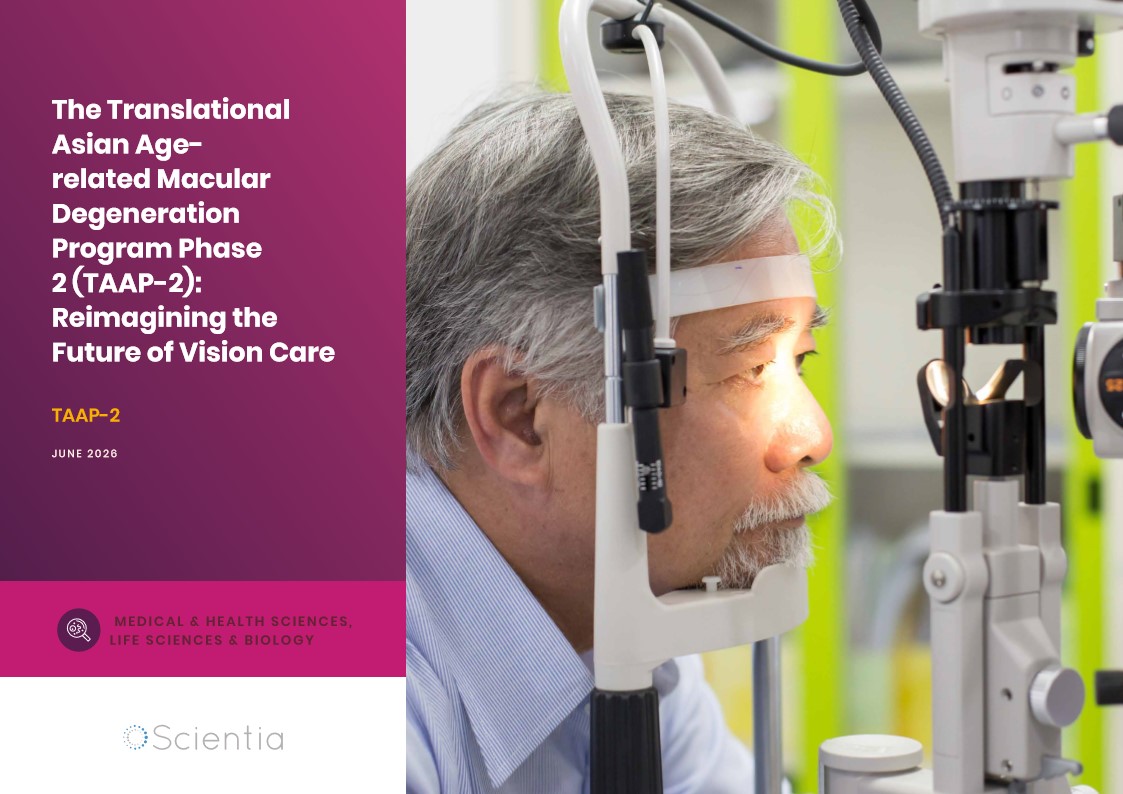
While mucosal health addresses immediate physical discomfort, the Translational Asian Age-related Macular Degeneration Program (TAAP) is tackling a global crisis of sensory loss. Age-related macular degeneration (AMD) is a primary cause of irreversible blindness among the elderly. In Asia, the challenge is particularly acute due to a "silver tsunami"—a rapidly aging demographic that is placing unprecedented pressure on ophthalmological services.
Now in its second phase (TAAP-2), the program represents a shift from basic research to large-scale clinical application. AMD progresses by eroding the macula, the part of the eye responsible for sharp, central vision. For patients, this results in the inability to recognize faces, read, or drive, leading to a significant loss of independence and a high correlation with geriatric depression.

TAAP-2 is unique because it focuses specifically on the Asian phenotype of the disease. Research has indicated that AMD may manifest differently across ethnic groups, with Polypoidal Choroidal Vasculopathy (PCV) being more common in Asian populations than in Western cohorts. By tailoring diagnostic tools and treatment protocols to these specific biological markers, TAAP-2 is reimagining the future of vision care. The program’s ambition is to move beyond reactive treatments, such as periodic intraocular injections, toward predictive and preventative strategies that can be integrated into primary healthcare systems across the continent.
Beyond Snoring: Investigating Pediatric Airway Complexity
In the realm of pediatric medicine, research led by Ms. Aikaterini Dritsoula at The Leeds Teaching Hospitals NHS Trust is challenging long-held assumptions about childhood sleep disorders. For decades, snoring in children was often dismissed as a benign habit or treated simply by the surgical removal of tonsils and adenoids. However, Dritsoula’s work highlights that Obstructive Sleep Apnoea (OSA) is a multifaceted condition that requires a more nuanced diagnostic approach.
OSA in children involves repeated disruptions in breathing during sleep, leading to intermittent hypoxia (low oxygen levels) and fragmented sleep. The implications are profound, extending far beyond nighttime restlessness. Data suggests that untreated OSA is a major contributor to cognitive impairment, developmental delays, and behavioral issues that mimic ADHD.
While adenotonsillectomy remains a standard intervention, Dritsoula’s research indicates that for a significant number of children—particularly the very young or those with underlying craniofacial conditions—surgery alone is not a "silver bullet." The airway is a complex dynamic system; problems can exist at the level of the tongue base, the larynx, or even be related to neuromuscular tone. This research advocates for a multidisciplinary approach to pediatric sleep, utilizing advanced imaging and sleep studies to identify the specific site of obstruction before proceeding with invasive procedures.
Mapping Health Access: Geospatial Intelligence in Rural Australia
The final pillar of modern healthcare innovation involves the logistical and geographical challenges of service delivery. In countries like Australia, the "tyranny of distance" remains a formidable barrier to health equity. Professors Neil Coffee and Vincent Versace at Deakin University’s Centre for Australian Research into Access (CARA) are utilizing address-level intelligence to quantify exactly how difficult it is for rural populations to reach essential services.
Traditional models of healthcare planning often rely on broad regional data, which can obscure the struggles of individual households. The CARA team utilizes road network data and residential dwelling locations to calculate precise travel times and distances to GPs, hospitals, and specialists. This "bottom-up" approach allows for a granular understanding of service gaps.
The implications of this research are vital for policy planning. By quantifying the population with poor access, the government can better allocate resources, such as placing new community clinics or expanding telehealth infrastructure. Furthermore, this data-driven approach is being used to model access to education and emergency services, demonstrating that health outcomes are intrinsically linked to the physical infrastructure of the country. For a patient in a remote township, a 15-minute difference in travel time to an emergency department can be the difference between survival and mortality in the event of a cardiac episode.
Analysis of Implications and Future Outlook
The convergence of these four distinct areas of research—mucosal innovation, ophthalmological translation, pediatric airway analysis, and geospatial health modeling—signals a new era of "Precision Public Health." Each of these initiatives shares a common thread: they move away from generalized medical assumptions toward data-backed, patient-specific solutions.

- Economic Impact: Innovations like the Mucocort patch and the 4R framework offer a pathway to more affordable healthcare. By reducing the costs associated with drug development, these models ensure that effective treatments can reach the market at price points accessible to the general public.
- Demographic Resilience: As the global population ages, programs like TAAP-2 are essential for maintaining the economic productivity and quality of life of the elderly. Preventing vision loss reduces the burden on social care systems and allows older adults to remain active participants in society.
- Preventative Pediatrics: By identifying and treating sleep disorders early through the methods proposed by Ms. Dritsoula, the healthcare system can prevent long-term educational and psychological issues, ultimately leading to better outcomes for the next generation.
- Equity through Data: The work of Professors Coffee and Versace provides the empirical evidence needed to fight for health equity. In an age where "postcode health" (where your health outcomes are determined by your zip code) is a growing concern, geospatial intelligence offers a tool for a more just distribution of medical resources.
In conclusion, the modernization of healthcare is not solely dependent on the discovery of new molecules or expensive technologies. Instead, it is being driven by the intelligent application of existing knowledge, a deeper understanding of specific patient demographics, and the use of sophisticated data to ensure that care is delivered where it is needed most. From the simple application of a mucoadhesive patch to the complex mapping of a continent’s road networks, these innovations are collectively reshaping the boundaries of what is possible in global medicine.