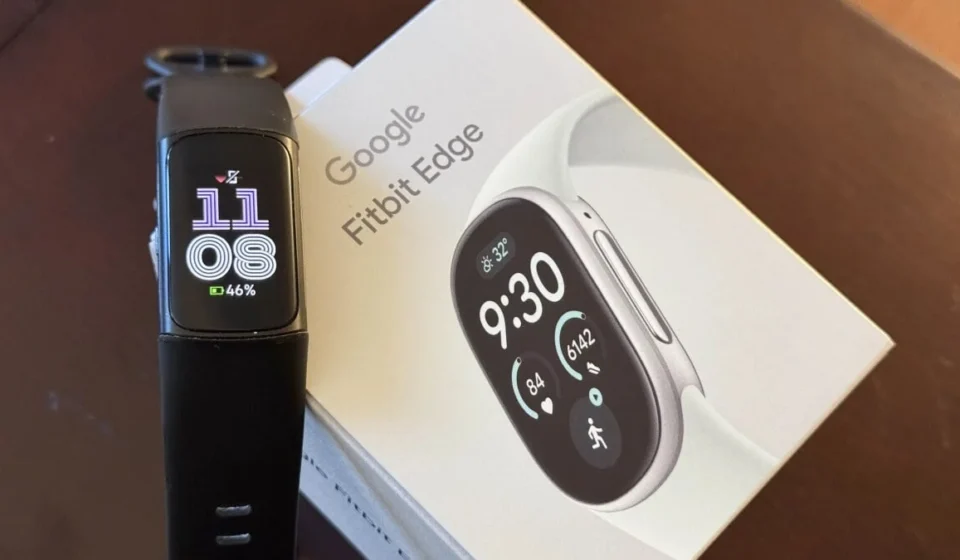
Fitbit Edge vs. Charge 6: A Deep Dive into Google’s Latest Fitness Tracker Evolution

The long-awaited release of the Fitbit Edge marks a significant moment for the brand, prompting a thorough examination of its advancements and potential drawbacks compared to its immediate predecessor with a screen, the Fitbit Charge 6. This transition, occurring three years after the last screen-equipped fitness tracker from Fitbit, signals a strategic shift by Google, which acquired Fitbit in 2021. The Edge aims to carve out a distinct niche within Fitbit’s product line, positioned between the entirely screenless Fitbit Air and the more smartwatch-centric Pixel Watch. Understanding these subtle yet crucial distinctions is paramount for both loyal Fitbit users and prospective buyers navigating the evolving landscape of wearable technology.
Design and Operating System: A Mid-Point Between Extremes
The most immediate divergence between the Fitbit Edge and the Charge 6 lies in their physical design and the underlying operating system. The Edge adopts a form factor that can be described as a harmonious blend, fitting neatly between the minimalist, screenless Fitbit Air and the sleek, curved display of the Pixel Watch. This design choice suggests an effort to appeal to a broader audience, offering a more substantial visual interface than the Air without venturing into the full-fledged smartwatch territory of the Pixel Watch.
Internally, the Fitbit Edge operates on the same operating system as the Fitbit Air. This OS is distinct from the one powering the Pixel Watch, indicating a continued strategy of segmenting Fitbit’s user experience based on device complexity and feature sets. This differentiation allows Google to tailor the software experience to the specific capabilities and intended use cases of each device. Importantly, like its predecessors, the Fitbit Edge maintains broad compatibility, pairing seamlessly with both iOS and Android smartphones, a crucial factor for widespread adoption.
The Return of the Physical Button: A Tactile Improvement
One of the most welcomed updates on the Fitbit Edge is the reintroduction of a physical side button. In contrast to the Charge 6, which featured a haptic "button" that often proved unreliable, the Edge boasts a tangible, clickable button on its right side. Initial unboxing and testing confirm that this button provides satisfying auditory and tactile feedback, functioning even when the device is powered off. This ergonomic enhancement addresses a significant point of frustration for many Charge 6 users, where the imprecise nature of the haptic nub frequently led to missed inputs and a less intuitive user experience. The reliability and responsiveness of a physical button are often critical for quick interactions, especially during physical activity when precise screen touches can be challenging. This move back to a physical button suggests a prioritization of core usability and a response to user feedback regarding the Charge 6’s interface.
Enhanced Health Tracking: Altimeter and Alleged GPS Advancements
The Fitbit Edge introduces a significant hardware upgrade with the inclusion of an altimeter, a feature that has been absent from Fitbit trackers since the Charge 4. This sensor plays a crucial role in providing more granular data about elevation changes. For users engaged in activities like hiking, trail running, or even simply navigating hilly urban environments, the altimeter allows for the measurement of "floors climbed" throughout the day. This data can provide a more comprehensive understanding of daily calorie expenditure and cardiovascular exertion. Furthermore, the altimeter contributes to more accurate mapping of routes that involve significant elevation gains, offering a richer dataset for fitness analysis.
Both the Charge 6 and the Edge are equipped with GPS capabilities, a feature that distinguishes them from the screenless Fitbit Air, which relies on a paired smartphone for location tracking. Built-in GPS offers the convenience of tracking outdoor activities like runs and bike rides without the need to carry a phone. However, the Charge 6’s GPS performance was marred by a notable flaw: overtightening the wristband could reportedly strain the GPS antenna, leading to distorted and inaccurate route mapping. This issue was well-documented and a point of contention for many users. Google claims that the Fitbit Edge features an improved GPS chipset. While definitive performance benchmarks are pending further real-world testing, the acknowledgement of this issue and the promise of an upgraded component suggest a concerted effort to rectify the Charge 6’s GPS shortcomings. The inclusion of an altimeter alongside an allegedly improved GPS system signals a clear intent to elevate the Edge’s capabilities for outdoor and elevation-based fitness tracking.
The Trade-Off: Loss of Google Pay and NFC
Perhaps the most significant compromise introduced with the Fitbit Edge is the removal of Google Pay and NFC capabilities. On the Charge 6, these features enabled contactless payments directly from the wrist, offering considerable convenience for users who prefer to leave their phones behind during workouts or quick errands. The ability to purchase a beverage or a snack after a run without fumbling for a wallet or phone was a highly valued feature for many. The decision to omit NFC and Google Pay on the Edge likely stems from a need to optimize internal space for other components, such as the new altimeter and potentially the upgraded GPS hardware. For users who heavily relied on the contactless payment functionality of the Charge 6, this absence will undoubtedly be a considerable drawback and a key consideration when deciding to upgrade. This strategic trade-off suggests a clear delineation of features between different Fitbit models, with the Edge prioritizing health and fitness metrics over pure smartwatch convenience features.
Expanded Music Control: Beyond YouTube Music
A notable improvement in the Fitbit Edge lies in its music control functionality. The Charge 6 was criticized for its restrictive music player, which only supported YouTube Music. This meant that users had to subscribe to a premium YouTube Music service and exclusively use that platform to control music playback from their phones. This limitation excluded a vast number of users who preferred alternative streaming services like Spotify or Apple Music. The Fitbit Edge addresses this frustration by offering broader music control capabilities. Google has indicated that the Edge will be able to control music playback from virtually any app on the connected smartphone, aligning it with the standard functionality found on most other smartwatches. This enhancement significantly broadens the appeal of the Edge for music-loving fitness enthusiasts, removing a major point of friction associated with its predecessor.
Google Maps Integration: A Future Promise
At launch, the Fitbit Edge does not support Google Maps turn-by-turn directions. This feature was present, albeit in a limited capacity, on the Charge 6, offering basic navigational cues. However, Google’s official specifications for the Edge state that Google Maps integration is "coming soon." It’s worth noting that the Google Maps functionality on the Charge 6 was not particularly robust; it lacked a map view and solely provided directional prompts. Therefore, its absence at launch on the Edge, while a minor inconvenience for existing Charge 6 users, is unlikely to be a dealbreaker for most, especially given the assurance of its future implementation. The delay in this feature suggests a phased rollout of capabilities, with Google likely prioritizing core fitness tracking and connectivity features at the initial release.
Broader Context and Implications for the Wearable Market
The introduction of the Fitbit Edge within Google’s expanding wearable ecosystem is a strategic move that underscores the company’s commitment to both the fitness tracker and smartwatch segments. By leveraging the Fitbit brand’s established reputation for health tracking, Google aims to cater to a diverse range of consumer needs. The Edge’s positioning between the Air and the Pixel Watch suggests a tiered approach, offering varying levels of functionality and price points.
The decision to reintroduce physical buttons and improve GPS on the Edge, while removing NFC and Google Pay, highlights a potential strategic pivot towards prioritizing core fitness metrics and user experience over broader smartwatch functionalities in this particular device. This could indicate a focus on attracting users who are primarily interested in accurate health data and reliable activity tracking, rather than those seeking a comprehensive smartwatch replacement.
The competitive landscape of wearable technology is increasingly saturated. By differentiating its offerings, Google can appeal to specific user demographics. The Fitbit Edge appears to be targeting the segment of the market that values robust health tracking, accurate activity data, and a more traditional fitness tracker experience, albeit with a modern interface and improved performance over older models. The removal of NFC and Google Pay, while a notable concession, might be a calculated risk to streamline the device and focus on its core strengths, potentially allowing for a more competitive price point.
Furthermore, the ongoing integration of Fitbit’s technology into Google’s broader product suite, including Android and Pixel devices, suggests a long-term vision for a cohesive and interconnected digital health experience. The evolution of Fitbit devices like the Edge will be closely watched as Google continues to refine its strategy in the competitive wearable technology market. The success of the Edge will ultimately depend on its ability to deliver on its promised improvements, particularly in GPS accuracy and music control, while justifying the trade-off of its removed payment functionalities.
Looking Ahead: The Future of Fitbit and Google’s Wearable Strategy
The Fitbit Edge represents a significant iteration in Google’s wearable strategy, building upon the legacy of Fitbit while integrating Google’s technological advancements. The reintroduction of physical buttons, the inclusion of an altimeter, and the promise of enhanced GPS and music controls address key user pain points from previous models. However, the decision to forgo NFC and Google Pay indicates a deliberate choice to segment its product offerings and cater to distinct user needs.
As Google continues to refine its wearable portfolio, the performance and reception of the Fitbit Edge will provide valuable insights into the company’s direction. The device’s ability to strike a balance between advanced health tracking and accessible functionality will be crucial in solidifying its place in the market. The impending rollout of features like Google Maps directions will further shape the user experience and determine the long-term appeal of the Edge. The ongoing evolution of the Fitbit brand under Google’s stewardship promises to be a dynamic and closely watched development in the ever-expanding world of wearable technology.