Building a Robust JSON Serialization Pipeline for Machine Learning in Python

In the contemporary landscape of machine learning engineering, the architectural design of a neural network or the selection of a specific algorithm often represents only a fraction of the total development lifecycle. Industry practitioners frequently cite the "80/20 rule," where approximately 80 percent of an engineer’s time is consumed by what is colloquially known as "data plumbing." This encompasses the cleaning, preprocessing, and transformation of data to ensure it is digestible for downstream models. Central to this plumbing is the necessity of moving structured datasets across varied environments, including local files, distributed processes, microservices, and cloud-based APIs. To facilitate this movement, a reliable method for serializing and deserializing data is not merely a convenience but a fundamental requirement for system stability.
JavaScript Object Notation (JSON) has established itself as the global "lingua franca" for data exchange due to its human-readable format and near-universal support across programming languages. However, in the context of Python-based machine learning pipelines, standard JSON libraries encounter significant limitations. These libraries are natively designed to handle basic primitives—strings, integers, floats, booleans, and nulls—alongside simple structures like lists and dictionaries. Machine learning configurations, conversely, frequently utilize complex Python types such as datetimes for versioning, sets for unique feature indexing, Path objects for cross-platform file management, and Enums for model type categorization. When a standard Python JSON encoder encounters these types, it inevitably triggers a TypeError, potentially crashing a production pipeline. To mitigate these risks, engineers must implement a robust serialization pipeline capable of handling custom types, managing schema evolution, and recovering gracefully from malformed data.
The Technical Barrier: JSON’s Native Impedance Mismatch
The primary challenge arises from the "impedance mismatch" between Python’s rich object-oriented type system and the minimalist specification of JSON. Consider a typical machine learning experiment configuration. An engineer might define a dictionary containing an experiment ID, a model type defined by an Enum, a set of feature names, a Path object pointing to a training dataset, and a timestamp for when the experiment was initiated.
Under standard conditions, attempting to pass this dictionary through the json.dumps() function results in an immediate failure. The error message—"TypeError: Object of type ModelType is not JSON serializable"—highlights the rigid boundaries of the default JSON library. For a data pipeline to be considered "production-ready," it must bridge this gap without stripping away the semantic meaning of the data. Converting everything to a string is a common but flawed workaround, as it loses the underlying type information required for the data to be functional upon reconstruction.
Phase One: The Implementation of a Metadata-Aware Custom Encoder
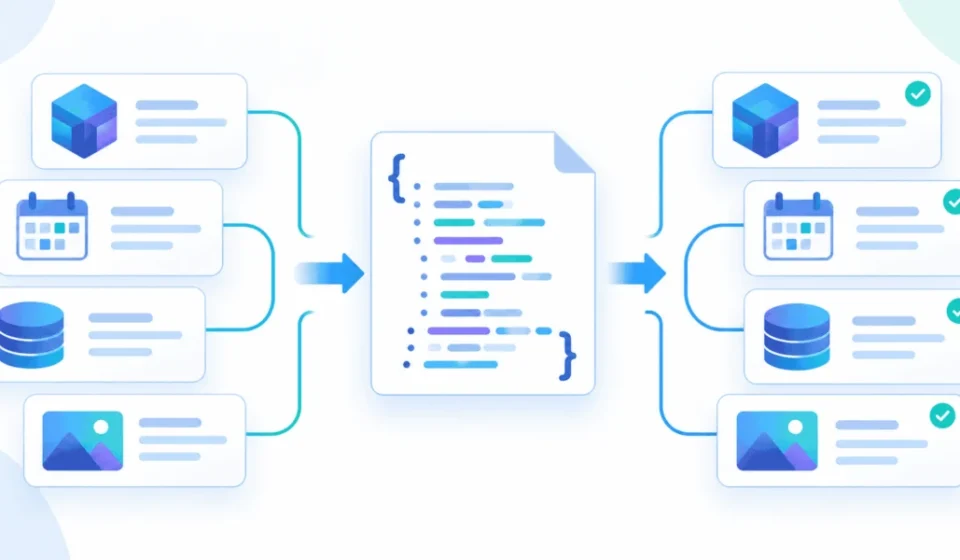
To resolve the serialization bottleneck, the first step involves the creation of a custom encoder class that extends the functionality of json.JSONEncoder. By subclassing the native encoder and overriding the default() method, developers can inject custom logic that instructs the system on how to interpret non-primitive types.
A sophisticated approach to this involves the use of "type markers." When the encoder encounters a datetime object, for instance, it does not merely convert it to an ISO-formatted string. Instead, it wraps the value in a specialized dictionary containing a metadata key, such as __type__. This marker acts as a signal for the eventual decoder, indicating that the associated string should be reinterpreted as a specific Python object rather than a literal string.
This methodology extends to other critical data types. A Python set, which is often used in ML to track unique feature headers, is converted into a list (a JSON-compatible format) but tagged with the "set" marker. Similarly, pathlib.Path objects are converted to strings but preserved with a "path" identifier. Enums are handled by extracting their underlying value, ensuring that the model’s configuration remains consistent even if the internal Enum naming changes. By utilizing this tagging system, the resulting JSON string becomes a self-describing packet of information that retains its structural integrity across the wire.
Phase Two: Logic-Driven Decoding and Error Resilience
The inverse of serialization—deserialization—requires an equally robust mechanism to transform the tagged JSON back into live Python objects. While the encoding process uses a class-based approach, the decoding process in Python’s json.loads() function is best handled through the object_hook parameter.
The object_hook is a callback function that is triggered for every dictionary decoded from the JSON input. A robust decoder function scans these dictionaries for the aforementioned __type__ markers. Upon finding a marker, the function executes the appropriate reconstruction logic: converting ISO strings back into datetime objects, lists back into sets, and strings back into Path objects.
A critical component of this phase is the integration of defensive programming. In distributed systems, data corruption or "malformed" inputs are an inevitable reality. A robust decoder must include exception handling—specifically ValueError and TypeError blocks—to catch instances where a tagged value does not conform to its expected format. Rather than allowing the entire pipeline to fail, a professional-grade decoder logs a warning and falls back to the raw value. This ensures that the system remains operational, providing a "safe-fail" environment that is essential for high-availability machine learning services.
Phase Three: Managing Schema Evolution and Model Metadata
In the lifecycle of a machine learning project, data schemas are rarely static. As research progresses, engineers may add new hyperparameters, such as a "learning rate" or "dropout ratio," or deprecate older metrics. This evolution creates a significant challenge: "legacy" JSON configurations from previous experiments may lack the fields required by the current version of the code.
To address this, a "validation layer" or "factory function" is implemented. This function acts as a mediator between the raw deserialized dictionary and the application logic. After the robust decoder has reconstructed the Python types, the validation layer applies schema migrations and provides default values for missing fields.
For example, if an older configuration file is loaded into a newer model that requires a learning_rate parameter, the factory function detects the absence of this key and injects a sensible default value, such as 0.001. This practice prevents "KeyError" exceptions and allows for backward compatibility, enabling researchers to audit and re-run historical experiments even as the codebase evolves. This layer also serves as a point for discarding deprecated fields, ensuring that the internal state of the application remains clean and focused only on relevant parameters.
Comparative Analysis: JSON vs. Alternative Serialization Formats
While this robust JSON pipeline offers a powerful solution, it is important to contextualize it within the broader spectrum of serialization technologies. Alternatives such as Pickle, MessagePack, and Protocol Buffers (Protobuf) offer different trade-offs:
- Pickle: Native to Python and capable of serializing almost any object. However, it is notoriously insecure, as loading a malicious pickle file can lead to arbitrary code execution. Furthermore, it is not cross-language compatible.
- MessagePack: A binary format that is faster and smaller than JSON. While efficient, it lacks the human-readability that is often vital for debugging ML configurations.
- Protocol Buffers: Highly efficient and strictly typed. Protobuf is excellent for high-performance microservices but requires the pre-definition of schemas in
.protofiles, which can be cumbersome during the rapid prototyping phase of an ML project.
The robust JSON pipeline described here represents a "middle ground." It maintains the human-readability and cross-platform ubiquity of JSON while adding the type-safety and structural rigor typically associated with more complex binary formats.
Industry Implications and Best Practices
The implementation of robust serialization has far-reaching implications for the field of MLOps (Machine Learning Operations). As organizations move toward "Model-as-a-Service" (MaaS) architectures, the ability to pass complex configurations between decoupled systems becomes a bottleneck. Systems that lack a formal serialization strategy often suffer from "silent failures," where data types are coerced into incorrect formats (e.g., a Path becoming a string), leading to logic errors that are difficult to trace.
Industry experts recommend several best practices for maintaining these pipelines:
- Centralized Schema Registry: For large-scale operations, maintain a centralized definition of custom types to ensure that different microservices use the same
__type__markers. - Automated Testing: Implement unit tests that specifically target the "round-trip" integrity of the data—ensuring that an object serialized and then deserialized remains identical to its original state.
- Logging and Monitoring: In production, any fallback triggered by the decoder should be monitored. A high frequency of "malformed data" warnings may indicate a version mismatch between the sender and receiver.
Conclusion: The Path to Industrial-Grade Data Plumbing
Mastering the serialization and deserialization of complex data types is a hallmark of a mature machine learning engineer. By moving beyond the limitations of standard JSON libraries and implementing a three-step pipeline—consisting of a custom encoder, a logic-driven decoder, and a schema validation layer—engineers can build systems that are both flexible and resilient.
These techniques do more than just prevent code from crashing; they facilitate a culture of reproducibility and transparency. When every experiment configuration is stored in a robust, self-describing format, the path from research to production becomes significantly smoother. As the complexity of machine learning models continues to grow, the importance of the "plumbing" that supports them will only increase, making these serialization strategies an essential part of the modern engineering toolkit.