Bridging the Bioinformatics Divide: Bioconductor-Physalia Collaboration Empowers Researchers in Low- and Middle-Income Countries

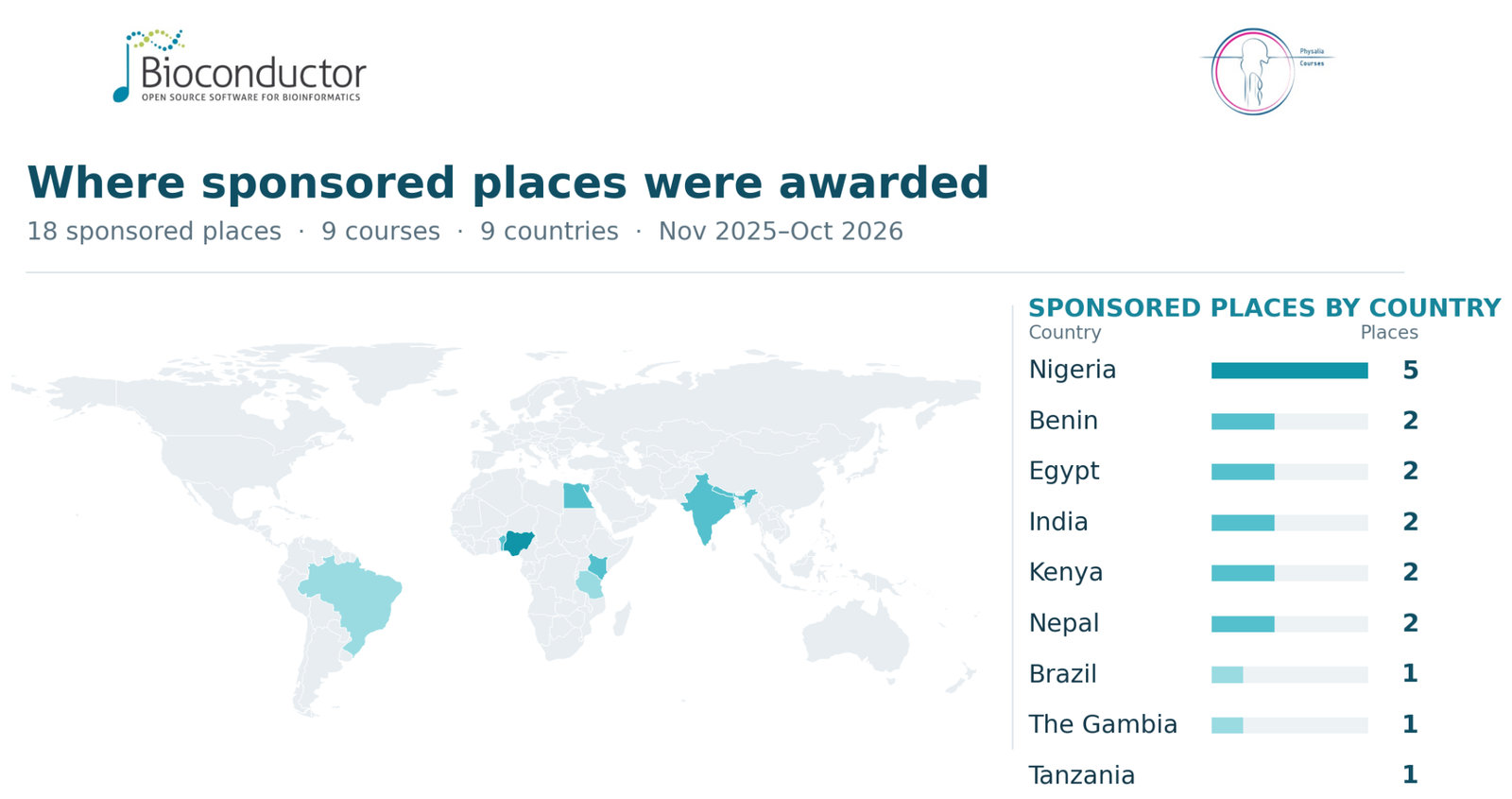
The Bioconductor-Physalia collaboration is making significant strides in democratizing access to advanced bioinformatics training, offering crucial opportunities to researchers in low- and middle-income countries (LMICs) who might otherwise face insurmountable financial barriers. Between November 2025 and October 2026, this initiative successfully provided 18 sponsored places across nine specialized courses, covering a diverse spectrum of critical bioinformatics domains including RNA-seq analysis, proteomics, microbiome studies, epigenomics, and network biology. The program’s impact extends beyond mere course attendance, fostering skill development, enabling novel research approaches, and building a stronger global scientific community.
The core objective of the Bioconductor-Physalia partnership is to dismantle the economic obstacles that frequently prevent talented researchers in resource-constrained settings from acquiring essential computational skills. These skills are increasingly indispensable for tackling complex biological questions and contributing meaningfully to the global scientific discourse. By offering two complimentary places on eligible courses, the collaboration directly addresses this disparity, ensuring that promising individuals are not left behind due to financial limitations. The application process is meticulously managed by the Bioconductor Community Manager, who collaborates with the Training Committee co-chairs to select deserving candidates. Bioconductor actively promotes these invaluable training opportunities through its extensive community channels, amplifying their reach and impact.
A Timeline of Empowerment: From Initiative to Impact
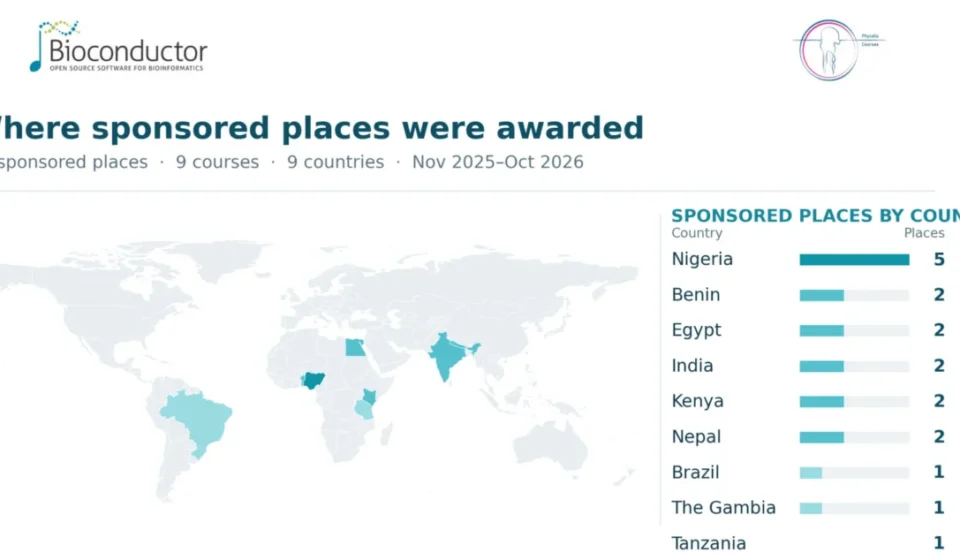
The Bioconductor-Physalia collaboration, formalized through a strategic partnership announced in June 2025, began its operational phase in November 2025 with the commencement of its first sponsored course cohort. This initial phase, spanning a full year until October 2026, was designed to assess the program’s effectiveness and gather crucial feedback from participants. The initiative’s structure involves a continuous cycle of course offerings, application periods, and participant selection, with the aim of expanding its reach and offerings in subsequent years. The distribution of the 18 sponsored places across nine countries – Nigeria (5), Benin (2), Egypt (2), India (2), Kenya (2), Nepal (2), Brazil (1), The Gambia (1), and Tanzania (1) – reflects a deliberate effort to target regions with a demonstrable need for enhanced bioinformatics capacity.
Democratizing Access: Overcoming Financial Hurdles
A recurring and potent theme in the feedback from program participants is the profound impact of enhanced accessibility. For many, the sponsored place was not just a learning opportunity but a gateway to knowledge that would have been financially unattainable. Blessing Chioma Oselu, a PhD student and Bioinformatics Research Assistant at Covenant University in Nigeria, articulated this sentiment powerfully. Her participation in the "Single-cell RNA-seq Analysis with R/Bioconductor" course provided her with direct access to expert instruction and a curated collection of structured learning materials.
"The access to expert teaching and the structured materials were the most valuable parts for me," Oselu stated in her post-course reflection. She further elaborated on her intention to leverage these resources by continuing to engage with the recorded sessions at her own pace, a crucial benefit for researchers juggling demanding academic and professional responsibilities. This flexibility in learning is a testament to the program’s understanding of the diverse needs of its participants.
Similarly, a participant from Benin, who opted to remain anonymous, shared their experience attending the "Epigenomics Data Analysis" course. Entering the program with no prior experience in epigenomics, they found the meticulously designed step-by-step walkthroughs of advanced methodologies such as ChIP-seq and ATAC-seq instrumental in demystifying complex concepts. "I left the course at a clearly higher level than I started, and I feel ready to work with my own data when the time comes," the participant remarked. This sentiment underscores the transformative power of targeted training in building confidence and competence. The individual also emphasized the scarcity of such specialized training opportunities within their region, highlighting the pivotal role of the Bioconductor and Physalia sponsorship in making this educational advancement possible.
Translating Knowledge into Research Innovation
Beyond the immediate acquisition of skills, a significant outcome of the Bioconductor-Physalia initiative is its direct contribution to advancing ongoing and future research endeavors. Participants are actively seeking to integrate the newly acquired methods and knowledge into their respective fields, leading to potential breakthroughs and novel research trajectories.
Amira M. F. Abozaid, a PhD student and Assistant Lecturer at Alexandria University and E-JUST in Egypt, found the "RNA-seq data analysis with R/Bioconductor" course to be a pivotal experience. It provided her with a comprehensive and deepened understanding of the entire RNA-seq workflow, from initial quality control and normalization to advanced differential expression analysis and sophisticated visualization techniques. Abozaid reported an immediate application of these learned workflows to her cancer genomics projects. Furthermore, she has taken an active role in disseminating these skills within her academic institutions, sharing her knowledge with colleagues and students, thereby creating a ripple effect of enhanced research capabilities.
Idris Ishola Adejumobi, a Research Associate at the International Institute of Tropical Agriculture in Nigeria, benefited immensely from the "Epigenomics Data Analysis" course. His participation broadened his understanding of how epigenetic variations can profoundly influence complex traits and complement existing genomic information, particularly in the context of crop improvement. Adejumobi identified the integration of epigenomic, genomic, and transcriptomic data as a critical next step for agricultural and plant-breeding research, signaling a forward-looking research agenda directly informed by the training.
Rabiath Adigoun, a postdoctoral researcher at the University of Abomey-Calavi in Benin, underscored the direct relevance of the "Orchestrating Microbiome Analysis with Bioconductor" course to her current and future research on plant microbiomes. "The expertise and methodological skills I have acquired will substantially strengthen my ongoing and future research on the plant microbiome in Benin and across Africa," Adigoun stated, emphasizing the potential for regional impact.
Sally Karimi Kinyua, a Research Assistant based in Kenya, attended the "Network Analysis in Systems Biology with R/Bioconductor" course. She expressed her intention to apply the principles of gene network analysis to her research on mutations associated with malaria resistance. Kinyua also reiterated the financial barrier that the sponsored place overcame, granting her access to high-caliber training that would have otherwise been inaccessible due to resource limitations. These diverse examples illustrate a common thread: participants are actively seeking to bridge the gap between sophisticated computational methodologies and the pressing biological questions they aim to address.
Navigating Uncharted Territories: Mastering New Data Modalities
For many researchers, the Bioconductor-Physalia program serves as a crucial entry point into complex and previously unfamiliar areas of bioinformatics. The training is designed to make these initially daunting subjects more approachable and manageable.
A participant in the "Statistical Methods for Metatranscriptomics" course highlighted the effectiveness of the practical sessions in clarifying intricate concepts. They particularly valued the introductory explanations of foundational terminology, which laid a solid groundwork before delving into more technical material. This pedagogical approach proved invaluable for individuals transitioning from undergraduate studies, providing one of their first in-depth exposures to this specialized area of bioinformatics. The course equipped them with the computational tools and reproducible workflows necessary for analyzing microbial gene expression data.
Binod Rayamajhee, a Research Fellow at the Kathmandu Research Institute for Biological Sciences in Nepal, commended the course’s blend of theoretical instruction and hands-on experience with Bioconductor tools. His work directly involves microbiome data analysis, and he anticipates applying the learned methods to investigate host-microbe interactions within the context of bowel disease models. Rayamajhee also expressed his commitment to knowledge dissemination, planning to conduct workshops and provide one-on-one mentoring to colleagues and junior researchers, particularly those operating in resource-limited environments.
Cultivating a Culture of Knowledge Sharing
The impact of the Bioconductor-Physalia collaboration extends beyond individual skill enhancement, fostering a culture of knowledge sharing and collaborative advancement within scientific communities. Participants are actively planning to share their newfound expertise, thereby amplifying the program’s reach and impact.
Sandra Achieng Otieno, an MSc student at icipe in Kenya, attended the microbiome analysis course with a specific interest in learning how to structure microbiome data using TreeSummarizedExperiment and understanding the influence of different data transformations on downstream analyses, including diversity estimation and ordination. She aims to apply these skills to research that integrates microbiome data with target gene expression and elemental analysis. Otieno aptly summarized the course’s value, stating it provided her with "a clearer framework for integrating multi-omics biological data in a structured and reproducible way."
For some participants, the training opens doors to actively contributing to the broader scientific ecosystem. Marco Antonio Campañário Sampaio, a PhD student in Brazil who participated in the "Developing R/Bioconductor Packages for Genomics" course, expressed a clear aspiration: "I hope to become a contributor to the Bioconductor community soon." This ambition signifies a potential long-term engagement with the Bioconductor project, promising further development and support for open-source bioinformatics tools.
While the full, long-term outcomes of these newly acquired skills are yet to be realized, the participants’ articulated plans for applying specific methods, analyzing particular datasets, and sharing knowledge with colleagues provide a tangible measure of the program’s immediate success. These plans represent diverse stages of engagement, from immediate research application to long-term community contribution.
The Road Ahead: Sustaining and Expanding Impact
The feedback gathered thus far offers invaluable insights into the key elements that make specialist bioinformatics training effective and impactful. Expert instruction, well-organized learning materials, and practical exercises that demystify complex methodologies are paramount. Equally crucial is the participants’ desire to connect their learning directly to their research questions and existing work.
The Bioconductor team extends its sincere gratitude to all participants for sharing their valuable reflections, as well as to the instructors and organizers whose dedication made these courses possible. Special recognition is also due to Laurah Nyasita Ondari for her instrumental role in promoting these opportunities through Bioconductor’s social media channels.
The initiative’s success serves as a powerful reminder of the critical importance of accessible training. By equipping researchers with new methods and analytical approaches, such programs empower them to explore their research questions more effectively, contribute more meaningfully to their respective scientific fields, and foster a more collaborative and equitable global scientific landscape.
For those interested in exploring the full range of courses and workshops offered by Physalia, the official website, www.physalia-courses.org, provides comprehensive details. Prospective participants seeking to apply for a sponsored place or to learn more about the ongoing Bioconductor-Physalia collaboration can find detailed information on the Bioconductor training website, including upcoming course listings and application procedures.
Physalia actively encourages potential instructors to propose new course ideas, demonstrating a commitment to expanding the scope and relevance of its training offerings. The organization welcomes discussions on potential topics, content development, and innovative formats, inviting collaboration from individuals and institutions interested in contributing to the bioinformatics education landscape. Interested parties are encouraged to contact Physalia directly through their website to explore collaborative opportunities.
This article, originally published on the Physalia website, highlights the significant impact of this collaborative effort in advancing bioinformatics education and research capacity worldwide.
© 2026 Bioconductor. Content is published under Creative Commons CC-BY-4.0 License for the text and BSD 3-Clause License for any code. | R-Bloggers